English

The Legend of the Ceibo Flower - Guaraní
A Guaraní legend from South America that explains the origin of the vibrant red Ceibo flower as the…
Reads at Grades K-2 Listens at K–3
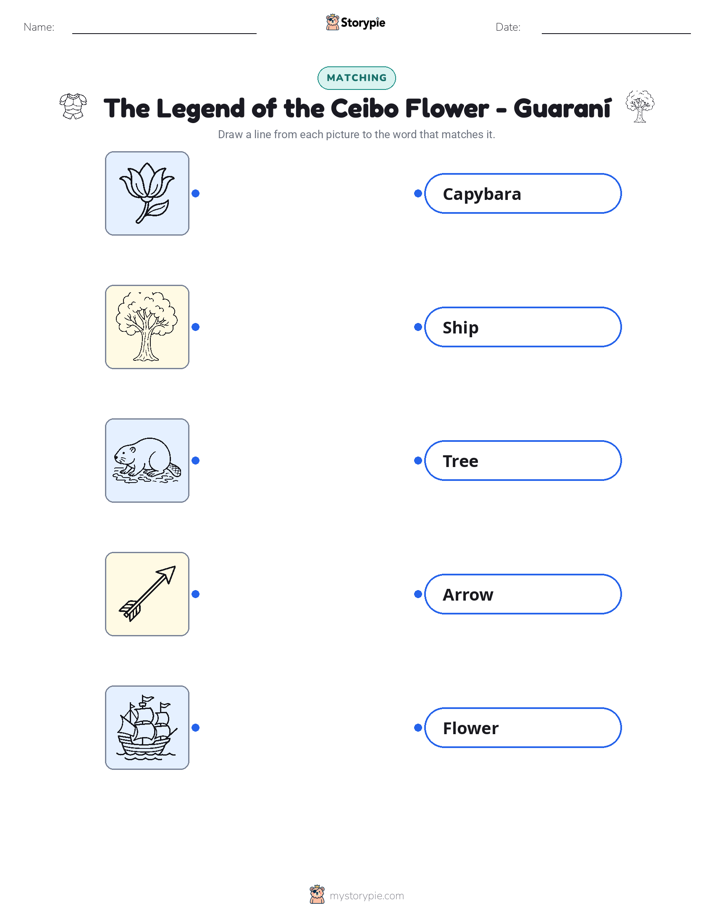
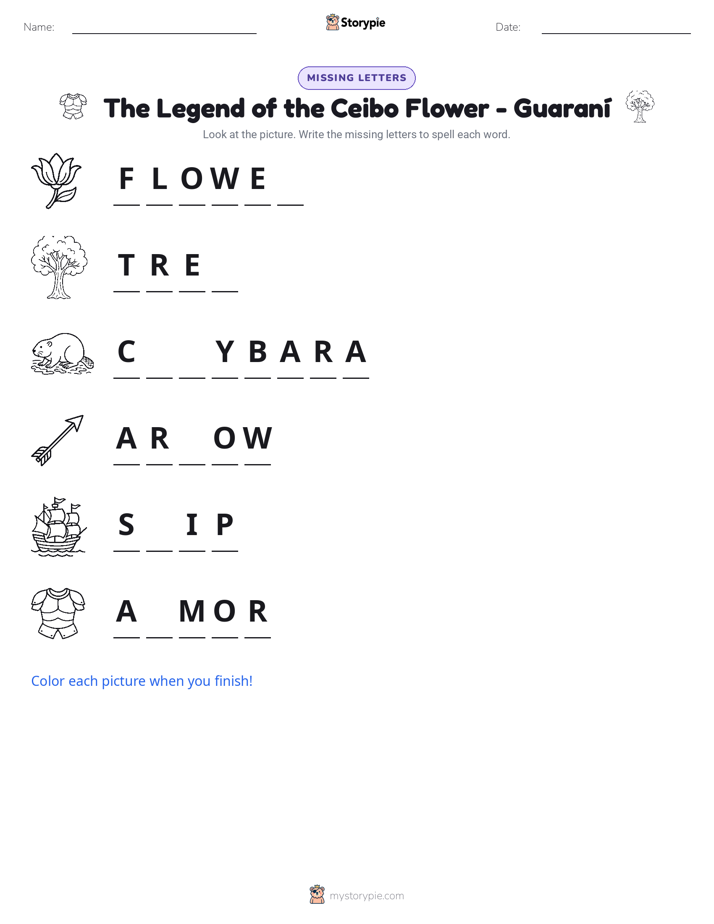
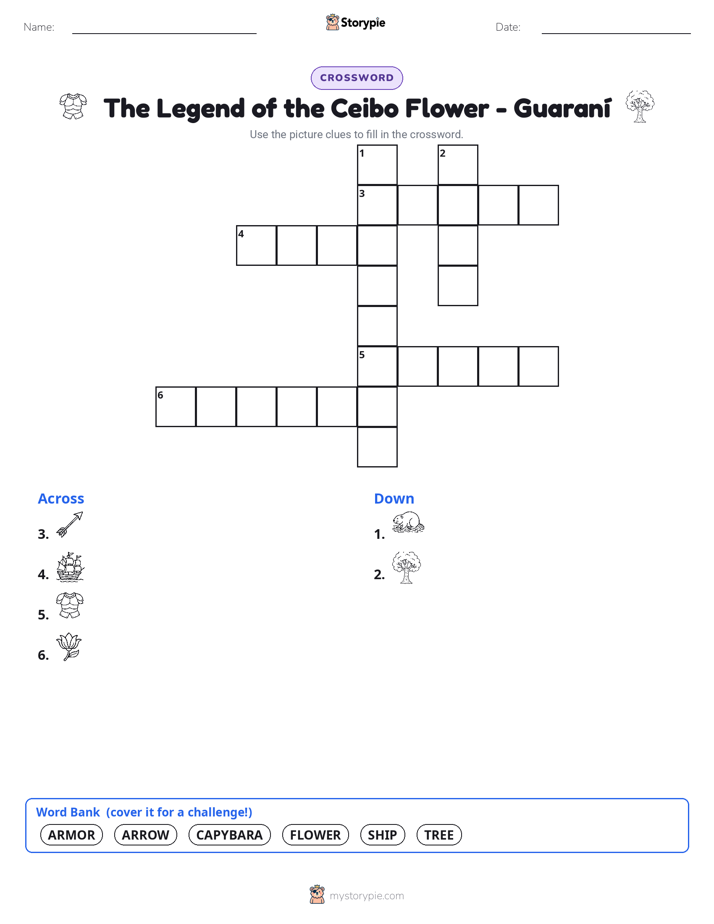
Print & create
Answer keys·No prep·Free with an account
28 worksheets · answer keys · full story · quiz · Ages 6-8 · CEFR A2
Plus adds 164,000+ more stories in 27 languages, audio for every one, and printables for all of them.
Just want The Legend of the Ceibo Flower - Guaraní?
My voice used to dance with the river breeze, floating over the wide, shimmering waters of the Paraná. My name is Anahí, and I loved to sing the songs of my people, the Guaraní. Our village was nestled in the deep green forest, and my songs told stories of the sun, the moon, and the brave spirits that protected our home. This is the story of how my last song became a flower, a tale known as The Legend of the Ceibo Flower.
One day, strange men in shining armor arrived in our forest. They came from far away, across the great water, and they did not understand our ways. They saw the trees not as living spirits but as wood to be cut, and they wanted our land for themselves. My people, the Guaraní, were peaceful, but we were also brave. We decided we had to protect our homes and our freedom. We fought hard, but the strangers had loud weapons and hard hearts. Soon, a deep sadness fell over our village like a heavy cloud because many of our people were captured and our forest was being hurt.
During a fight to protect my village, the strangers captured me. They thought that by taking me, they could silence the spirit of the Guaraní. They tied me to a tree in the center of a clearing to make an example of me for everyone to see. But they could not silence my heart or my voice. As night fell and they lit a fire near my feet, I was not afraid. I lifted my head and began to sing my most beautiful song. I sang of the shimmering river, of the strong jaguar, and of the unshakeable spirit of my people. My voice rose above the crackling flames, a final lullaby for the forest I loved so much.
The Legend of the Ceibo Flower
My voice used to dance with the river breeze, floating over the wide, shimmering waters of the Paraná. My name is Anahí, and I loved to sing the songs of my people, the Guaraní. Our village was nestled in the deep green forest, and my songs told stories of the sun, the moon, and the brave spirits that protected our home. This is the story of how my last song became a flower, a tale known as The Legend of the Ceibo Flower.
One day, strange men in shining armor arrived in our forest. They came from far away, across the great water, and they did not understand our ways. They saw the trees not as living spirits but as wood to be cut, and they wanted our land for themselves. My people, the Guaraní, were peaceful, but we were also brave. We decided we had to protect our homes and our freedom. We fought hard, but the strangers had loud weapons and hard hearts. Soon, a deep sadness fell over our village like a heavy cloud because many of our people were captured and our forest was being hurt.
During a fight to protect my village, the strangers captured me. They thought that by taking me, they could silence the spirit of the Guaraní. They tied me to a tree in the center of a clearing to make an example of me for everyone to see. But they could not silence my heart or my voice. As night fell and they lit a fire near my feet, I was not afraid. I lifted my head and began to sing my most beautiful song. I sang of the shimmering river, of the strong jaguar, and of the unshakeable spirit of my people. My voice rose above the crackling flames, a final lullaby for the forest I loved so much.
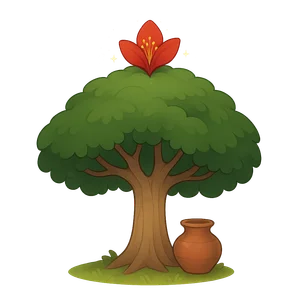
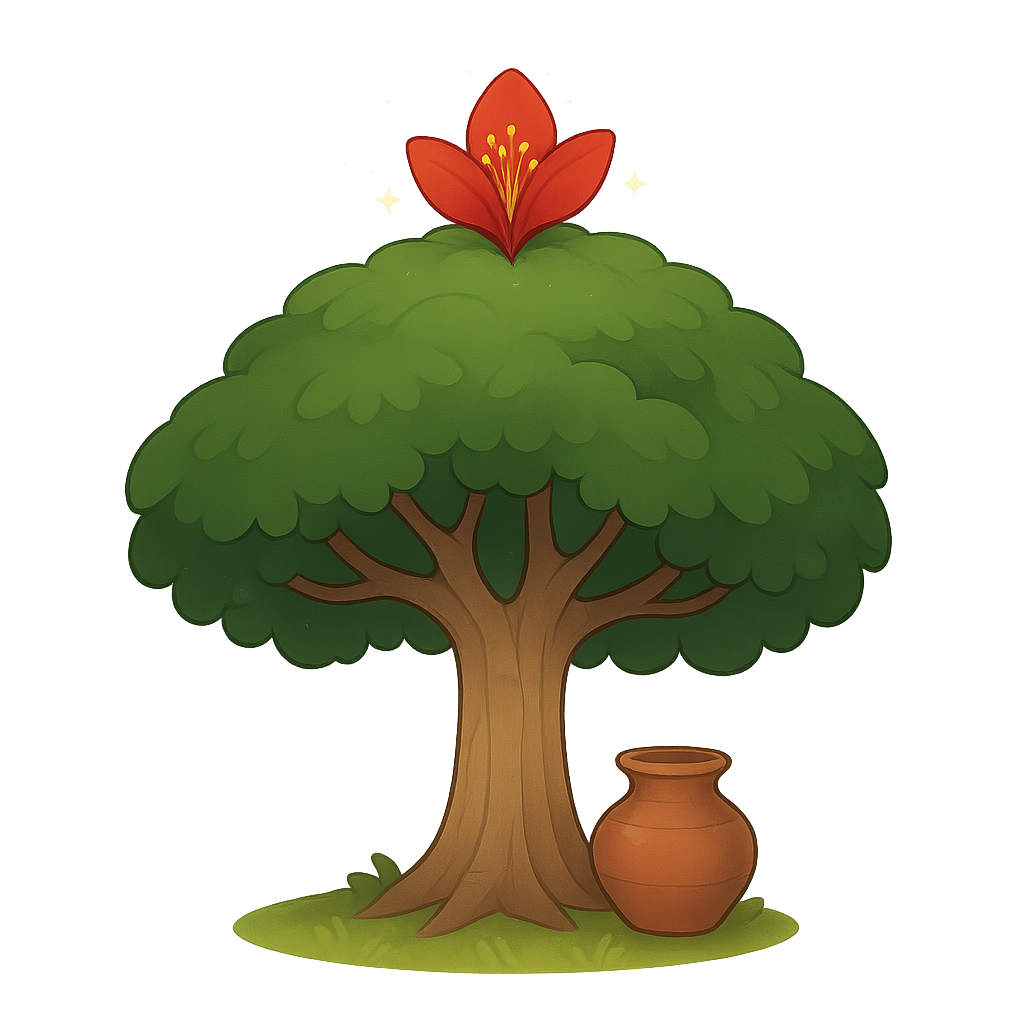
As I sang, I felt a strange warmth spread through me, but it was not from the fire. It felt like it was coming from the earth itself, traveling up through the roots of the tree I was tied to. The tree seemed to hold me gently in its branches. When the sun rose on the morning of May 25th, the conquerors returned and stared in amazement. Where I had been, there was no sign of ash or fire. Instead, the tree had burst into bloom with brilliant, fiery red flowers. Each petal was shaped like a teardrop but burned with the bright color of courage. My body was gone, but my spirit had become the tree, and my voice had become its beautiful flowers.
The Ceibo tree, with its red blossoms, became a sacred symbol for my people, a sign of hope and strength. Today, it is the national flower of Argentina and Uruguay. When people see it bloom, they don't just see a pretty flower. They see a story of bravery that can never be extinguished or forgotten. This legend reminds us that even when things seem darkest, a strong and loving spirit can transform into something beautiful and everlasting. My song lives on in every Ceibo flower, inspiring artists, storytellers, and anyone who believes in the power of courage and freedom.
Wow facts
About
A Guaraní legend from South America that explains the origin of the vibrant red Ceibo flower as the transformation of a brave indigenous woman named Anahí.
Take a Quiz
Question 1 of 4
Why were the Guaraní people sad after the strange men arrived?
Explore next






Want to do even more?
Go beyond exploring. Unlock tools that turn every story into real learning.

Storypie Plus for families
Full stories, quizzes, and printables. Nights and car rides, sorted.
- Unlimited audio stories
- Create Mode: your child stars in the story
- Offline downloads
- Printable worksheets & coloring pages

Why Storypie for Schools
Students engaged. Prep in seconds. Evenings back to you.
- Worksheets & Quizzes
- Classroom Management
- Formative Assessment
- Custom Curriculum & Lesson Plans
- 27 Languages

Why Storypie for Homeschool
Curriculum done. They'll ask for more. Hours back in your day.
- Worksheet Generator
- First-Person Audio Stories
- Built-in Comprehension Quizzes
- Custom Curriculum & Lesson Plans
- Print & Go Activities