English


The Lorelei - German
The Lorelei is a legendary figure from German literature, created by Clemens Brentano in 1801…
Reads at Grades 6–8 Listens at Grades 4–8
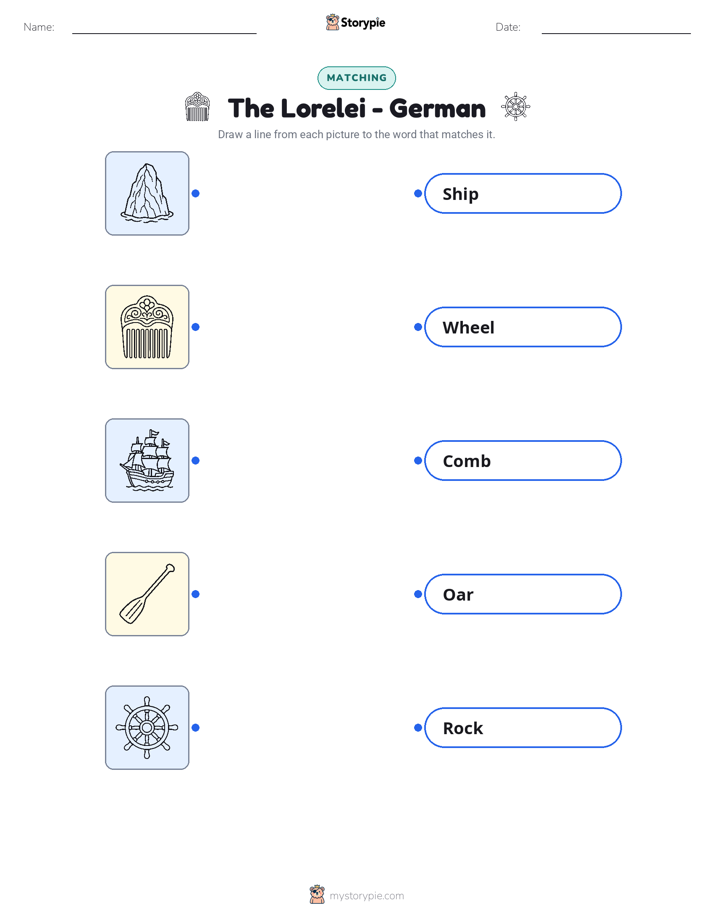
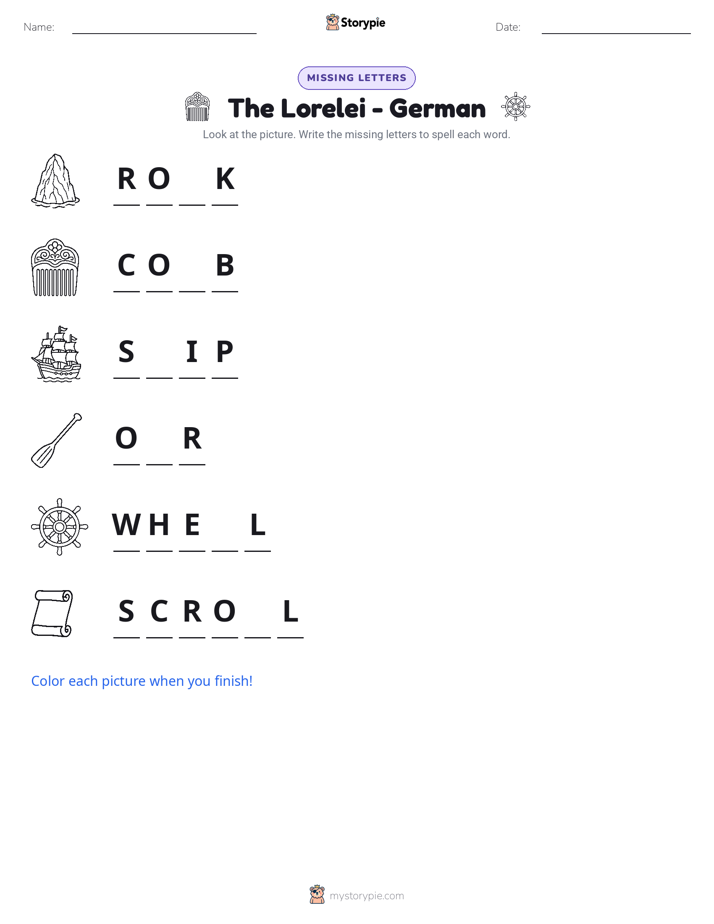
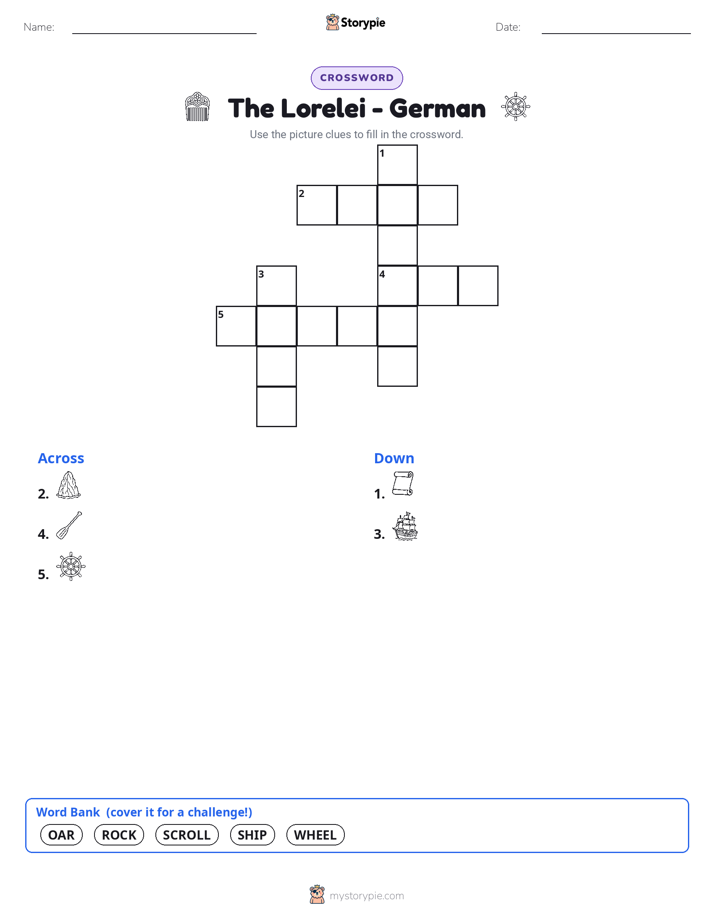
Print & create
Answer keys·No prep·Free with an account
28 worksheets · answer keys · full story · quiz · Ages 10-12 · CEFR B2
Plus adds 164,000+ more stories in 27 languages, audio for every one, and printables for all of them.
Just want The Lorelei - German?

The river mists curl around my home, a great slate rock that juts into the sky near Sankt Goarshausen. My name is Lorelei, and from here, I watch the Rhine River flow, its currents deep and swift. Sailors who pass below say my voice is a melody that promises untold beauty, a song that can capture a heart, but they do not understand the river's power or the sorrow in my song; this is the story of the Lorelei. At twilight, the world transforms along this treacherous bend of the river. The setting sun paints the water in strokes of liquid gold, but the long, creeping shadows hint at the dangers concealed beneath the shimmering surface. The towering rock, a colossal 433-foot-tall sentinel of slate, looms over the narrow passage, its sheer face darkened by the fading light. The air grows still, and the only sounds are the deep, insistent gurgle of the current and a strange, whispering echo that seems to dance between the cliffs, a prelude to the tragedy that so often unfolds here.
The Sailor's Gaze A sturdy merchant vessel, its hull heavy with valuable cargo, navigated the perilous channel with practiced ease. At the helm stood a captain whose weathered face was a map of this very river; he knew every treacherous whirlpool and submerged, jagged rock as if they were old adversaries. He barked orders with confidence, guiding his crew as they skillfully maneuvered the ship through the swift, muscular currents. The men worked in rhythm, their movements efficient and their minds focused solely on the task of safe passage. Suddenly, a sound, unlike any they had ever heard, drifted down from the colossal clifftop. It was a song, a melody of such profound and enchanting sadness that it seemed to weave itself into the very fabric of the twilight air. Instantly, ropes were dropped. Oars paused mid-stroke. The rhythmic work ceased as every sailor, as if pulled by an invisible string, turned their face upward, their expressions a mixture of awe and disbelief. There, perched atop the rock like a golden eagle, sat a maiden of otherworldly beauty. Her hair, the color of spun sunlight, cascaded down her back as she rhythmically drew a golden comb through its length. This was Lorelei. Her voice, a sublime instrument of sorrow and allure, sang of ancient river treasures and a heart steeped in deep, inconsolable grief. The melody was a siren's call to the soul, promising a world of beauty while masking the imminent danger. The sailors were utterly captivated, their senses imprisoned by the song. The helmsman, his hands frozen on the wheel, stared with wide, unblinking eyes, his duty forgotten. The captain's urgent shouts, desperate warnings of the approaching rocks, became nothing more than a distant, meaningless noise against the overwhelming power of the melody. Their minds were no longer on the ship or the river; they were lost in the golden vision above, adrift in a sea of sound. The magnificent vessel, now unguided and at the mercy of the relentless current, began to drift. It turned slowly, inexorably, toward the jagged teeth of the rocks lining the shore. The sense of impending doom was palpable, a silent tension that hung in the air just before the inevitable impact. The sharp, violent crack of splintering wood shattered the evening's calm, a sound of pure destruction. But even that terrible noise was swiftly swallowed by the river's mighty roar and the lingering, haunting notes of Lorelei's song, which continued to echo from the cliff as the ship and its crew were consumed by the dark, swirling waters.
The Lorelei of the Rhine
The river mists curl around my home, a great slate rock that juts into the sky near Sankt Goarshausen. My name is Lorelei, and from here, I watch the Rhine River flow, its currents deep and swift. Sailors who pass below say my voice is a melody that promises untold beauty, a song that can capture a heart, but they do not understand the river's power or the sorrow in my song; this is the story of the Lorelei. At twilight, the world transforms along this treacherous bend of the river. The setting sun paints the water in strokes of liquid gold, but the long, creeping shadows hint at the dangers concealed beneath the shimmering surface. The towering rock, a colossal 433-foot-tall sentinel of slate, looms over the narrow passage, its sheer face darkened by the fading light. The air grows still, and the only sounds are the deep, insistent gurgle of the current and a strange, whispering echo that seems to dance between the cliffs, a prelude to the tragedy that so often unfolds here.
The Sailor's Gaze
A sturdy merchant vessel, its hull heavy with valuable cargo, navigated the perilous channel with practiced ease. At the helm stood a captain whose weathered face was a map of this very river; he knew every treacherous whirlpool and submerged, jagged rock as if they were old adversaries. He barked orders with confidence, guiding his crew as they skillfully maneuvered the ship through the swift, muscular currents. The men worked in rhythm, their movements efficient and their minds focused solely on the task of safe passage. Suddenly, a sound, unlike any they had ever heard, drifted down from the colossal clifftop. It was a song, a melody of such profound and enchanting sadness that it seemed to weave itself into the very fabric of the twilight air. Instantly, ropes were dropped. Oars paused mid-stroke. The rhythmic work ceased as every sailor, as if pulled by an invisible string, turned their face upward, their expressions a mixture of awe and disbelief. There, perched atop the rock like a golden eagle, sat a maiden of otherworldly beauty. Her hair, the color of spun sunlight, cascaded down her back as she rhythmically drew a golden comb through its length. This was Lorelei. Her voice, a sublime instrument of sorrow and allure, sang of ancient river treasures and a heart steeped in deep, inconsolable grief. The melody was a siren's call to the soul, promising a world of beauty while masking the imminent danger. The sailors were utterly captivated, their senses imprisoned by the song. The helmsman, his hands frozen on the wheel, stared with wide, unblinking eyes, his duty forgotten. The captain's urgent shouts, desperate warnings of the approaching rocks, became nothing more than a distant, meaningless noise against the overwhelming power of the melody. Their minds were no longer on the ship or the river; they were lost in the golden vision above, adrift in a sea of sound. The magnificent vessel, now unguided and at the mercy of the relentless current, began to drift. It turned slowly, inexorably, toward the jagged teeth of the rocks lining the shore. The sense of impending doom was palpable, a silent tension that hung in the air just before the inevitable impact. The sharp, violent crack of splintering wood shattered the evening's calm, a sound of pure destruction. But even that terrible noise was swiftly swallowed by the river's mighty roar and the lingering, haunting notes of Lorelei's song, which continued to echo from the cliff as the ship and its crew were consumed by the dark, swirling waters.
The Echo of the Legend
For centuries before a single poem was written, the river itself told a story. The strange echoes that bounced off the slate cliff and the treacherous, swirling waters below were a source of fear and superstition for the sailors and villagers who lived along the Rhine. They needed an explanation for the many wrecks and the unsettling sounds. So, they spoke of a spirit, a mischievous water nymph, or perhaps a powerful sorceress who dwelled upon the rock, luring the unwary to their doom. These were cautionary tales, born from the river's raw power. The legend as we now know it, however, was truly born from the ink of a poet's pen. On November 24th, 1801, the German writer Clemens Brentano published a ballad within his novel 'Godwi.' For the first time, the spirit was given a name and a tragic human history. He wrote of a beautiful enchantress from the town of Bacharach, a woman named Lore Lay, who had been betrayed by her truest love. Heartbroken and accused of witchcraft for her mesmerizing beauty, she was being taken to a convent. As she passed the great rock, she asked to climb it one last time to see the river. Believing she saw her lover's ship, she threw herself into the Rhine's embrace, becoming the vengeful spirit who haunts the cliff. Brentano's story gave the old folk beliefs a new, romantic soul. This tragic character captured the public's imagination, but it was another poet who would make her immortal. In 1824, the celebrated Heinrich Heine penned 'Die Lorelei.' His poem stripped away the specific backstory of betrayal and instead presented her as a timeless, elemental figure, a siren whose magnificent beauty and enchanting song were an irresistible and fatal force of nature, as much a part of the landscape as the river and the rock themselves. It was Heine's vision that transformed a local German legend into a powerful and enduring symbol of romanticism, a myth that explores the fatal connection between beauty, nature, and inescapable destiny.
A Timeless Melody
The story of Lorelei is far more than a simple ghost story used to explain a dangerous river passage; it is a profound myth that resonates with timeless themes. Her legend represents the dangerous allure of beauty, showing how something overwhelmingly lovely can lead to destruction. It is also a powerful metaphor for the overwhelming force of nature, reminding us that for all our skill and technology, we are still at the mercy of the world's mighty rivers and currents. Most of all, it speaks to the depths of human emotion, capturing the profound sorrow of a broken heart and the captivating power of art. The myth has transcended its German origins to become a global icon of folklore. This was cemented when Heinrich Heine's poem was set to music by the composer Friedrich Silcher in 1837. Silcher's melody was so perfect, so deeply resonant with the poem's mood, that it became one of the most beloved folk songs in Germany. Its popularity was so immense that it continued to be sung across the nation, even during dark times in history when Heine's other works were banned. The haunting figure of Lorelei has inspired countless other works of art, including dramatic paintings of the tragic scene, grand operas, and numerous books. Today, a statue of the siren sits near the base of the rock, a permanent tribute to the legend she inspired. The myth of the Lorelei teaches us that some stories are as powerful and enduring as the landscapes that gave them birth. It is a timeless reminder to listen for the music in the world around us, to respect the beauty and mystery of nature, and to marvel at how a simple story, first whispered on a riverbank long ago, can continue to capture the human imagination forever.
Wow facts
About
The Lorelei is a legendary figure from German literature, created by Clemens Brentano in 1801, often depicted as a siren or nymph who sits on a steep rock above the Rhine River, luring sailors to their doom with her enchanting song and beauty.
Take a Quiz
Question 1 of 5
Based on the story, what motivates the sailors to ignore the captain's warnings and the river's dangers?
Explore next






Want to do even more?
Go beyond exploring. Unlock tools that turn every story into real learning.

Storypie Plus for families
Full stories, quizzes, and printables. Nights and car rides, sorted.
- Unlimited audio stories
- Create Mode: your child stars in the story
- Offline downloads
- Printable worksheets & coloring pages

Why Storypie for Schools
Students engaged. Prep in seconds. Evenings back to you.
- Worksheets & Quizzes
- Classroom Management
- Formative Assessment
- Custom Curriculum & Lesson Plans
- 27 Languages

Why Storypie for Homeschool
Curriculum done. They'll ask for more. Hours back in your day.
- Worksheet Generator
- First-Person Audio Stories
- Built-in Comprehension Quizzes
- Custom Curriculum & Lesson Plans
- Print & Go Activities