English

Bombay Natural History Society
A pan-India wildlife research organization founded in 1883…
Reads at Grades 6–8 Listens at Grades 4–8
Print & create
Answer keys·No prep·Free with an account
28 worksheets · answer keys · full story · quiz · Ages 10-12 · CEFR B2
Plus adds 116,000+ more stories in 27 languages, audio for every one, and printables for all of them.
Just want Bombay Natural History Society?
We are the Bombay Natural History Society, or BNHS for short, and our purpose is to work for the conservation of nature. Our story began more than a century ago in a city then called Bombay, which is now known as Mumbai, India. On September 15th, 1883, a group of eight people met in a building on the Esplanade and decided to form a society dedicated to their shared passion for the natural world. This founding group was made up of six British residents—H. M. Phipson, Dr. D. MacDonald, Col. C. Swinhoe, Dr. G. A. Maconachie, Mr. J. C. Anderson, and Mr. J. Johnston—and two Indian naturalists, Dr. Atmaram Pandurang and Mr. Sakharam Arjun. At the time, there was no single organization focused on gathering information about the incredible variety of life across India. Our founders wanted to change that. Their initial goal was straightforward but ambitious: to create a space where they and others could share observations, present wildlife specimens, and collectively build a detailed record of the natural history of India.
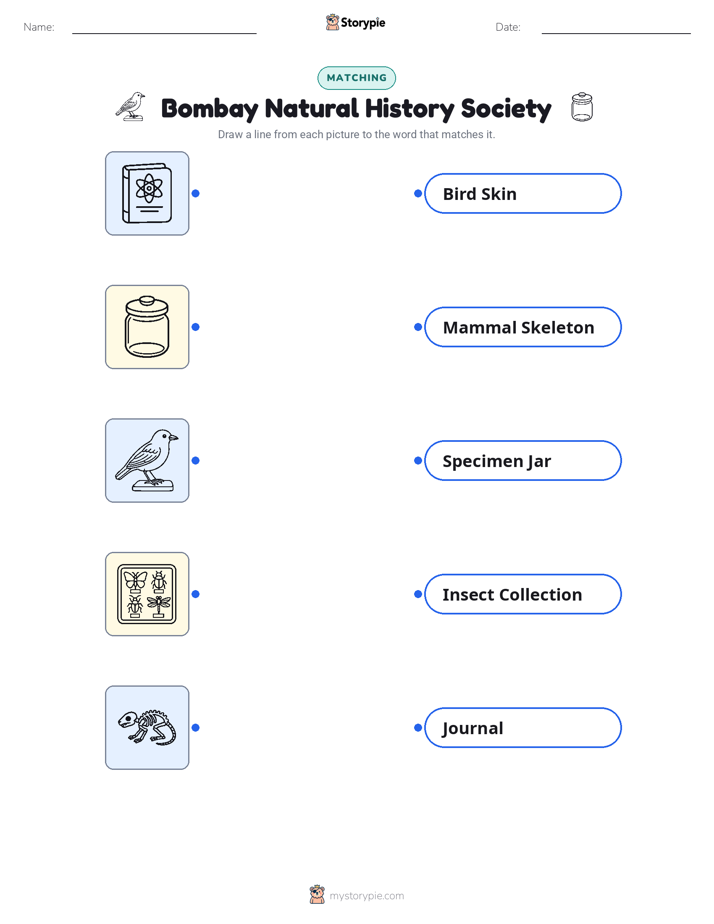
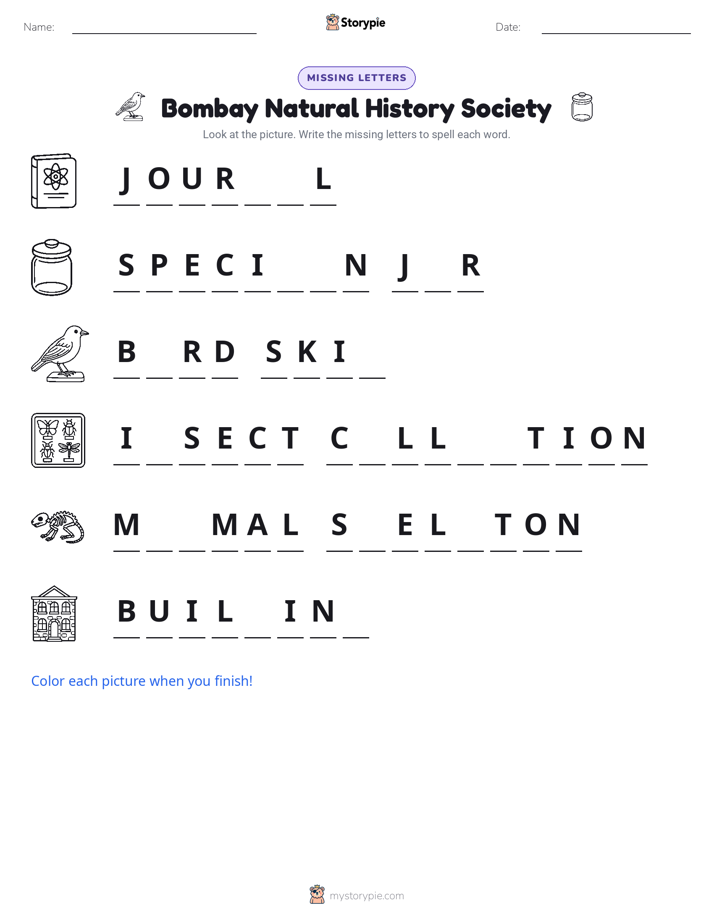
To achieve our goal of sharing knowledge, we knew we needed a way to communicate our findings widely and permanently. Just three years after our founding, in 1886, we began publishing the *Journal of the Bombay Natural History Society*. This publication became the heart of our work. In its pages, members could share detailed notes on animal behavior, discoveries of new plant species, and scientific studies of different ecosystems. The journal was not just for experts; it encouraged amateur naturalists to contribute their observations, creating a rich and diverse collection of information. Over the decades, it grew in prestige and became a highly respected scientific journal, used by researchers in India and all over the world to understand the subcontinent’s unique flora and fauna. At the same time, we began to build an enormous physical collection of specimens—carefully preserved insects, bird skins, mammal skeletons, and more. This collection was like a library of life, allowing scientists to compare species, track changes over time, and understand the complex web of biodiversity.
The Story of the Bombay Natural History Society
We are the Bombay Natural History Society, or BNHS for short, and our purpose is to work for the conservation of nature. Our story began more than a century ago in a city then called Bombay, which is now known as Mumbai, India. On September 15th, 1883, a group of eight people met in a building on the Esplanade and decided to form a society dedicated to their shared passion for the natural world. This founding group was made up of six British residents—H. M. Phipson, Dr. D. MacDonald, Col. C. Swinhoe, Dr. G. A. Maconachie, Mr. J. C. Anderson, and Mr. J. Johnston—and two Indian naturalists, Dr. Atmaram Pandurang and Mr. Sakharam Arjun. At the time, there was no single organization focused on gathering information about the incredible variety of life across India. Our founders wanted to change that. Their initial goal was straightforward but ambitious: to create a space where they and others could share observations, present wildlife specimens, and collectively build a detailed record of the natural history of India.
To achieve our goal of sharing knowledge, we knew we needed a way to communicate our findings widely and permanently. Just three years after our founding, in 1886, we began publishing the Journal of the Bombay Natural History Society. This publication became the heart of our work. In its pages, members could share detailed notes on animal behavior, discoveries of new plant species, and scientific studies of different ecosystems. The journal was not just for experts; it encouraged amateur naturalists to contribute their observations, creating a rich and diverse collection of information. Over the decades, it grew in prestige and became a highly respected scientific journal, used by researchers in India and all over the world to understand the subcontinent’s unique flora and fauna. At the same time, we began to build an enormous physical collection of specimens—carefully preserved insects, bird skins, mammal skeletons, and more. This collection was like a library of life, allowing scientists to compare species, track changes over time, and understand the complex web of biodiversity.
For the first few decades of our existence, we did not have a building of our own. Our meetings were held in rented rooms, and our growing collection of specimens was stored wherever we could find space. This made our work challenging. But in 1921, we finally found a permanent home. We moved into a building in a busy area of South Mumbai and named it ‘Hornbill House.’ The name was chosen in honor of the Great Hornbill, a magnificent bird that we feature on our logo. This bird symbolizes the wild and wonderful nature we are dedicated to protecting. Hornbill House was more than just an office; it became the nerve center for natural history in India. For the first time, our vast collections had a secure and organized home. We established a library filled with books and journals for researchers. Our staff finally had offices to coordinate research projects and publications. Hornbill House solidified our identity and provided the stability we needed to expand our mission for the decades to come.
As time went on, our work began to change. Through our studies and the observations of our members across the country, we saw that India’s natural landscapes and wildlife were facing increasing threats from human activities. We came to a crucial realization: it was no longer enough to simply observe and document nature. If we wanted future generations to see the same wonders we studied, we had to take an active role in protecting them. This marked a major shift in our mission, from pure observation to hands-on conservation. We started to pioneer new research projects designed to answer specific questions about how to protect vulnerable species. For example, we became leaders in bird migration studies using a technique called bird ringing. This involves safely capturing a bird, placing a lightweight, numbered ring on its leg, and then releasing it. When a ringed bird is spotted or found later, the number provides valuable information about its travel routes, lifespan, and population health.
This new, scientifically-grounded information became a powerful tool for advocacy. We could now go to government officials and the public with solid evidence to support our calls for protection. We used our research to champion the cause of many endangered species and their habitats. One such species was the Great Indian Bustard, a large, ground-dwelling bird whose grassland home was rapidly disappearing. Our studies helped highlight its critical situation and pushed for the creation of protected areas for its survival. Our influence grew, and our scientific expertise became highly valued. This led to one of our most important and lasting achievements: helping to shape India's national conservation laws. Our research, data, and advocacy played a significant role in the drafting and creation of the Indian Wildlife (Protection) Act of 1972. This landmark law provided a legal framework for conservation across the entire country. It led to the establishment of national parks and wildlife sanctuaries, and it banned the hunting of many threatened species, giving them a chance to recover. A central figure in our work during this transformative period was Dr. Salim Ali, a world-famous ornithologist who was closely associated with us for most of his life. His research and unwavering dedication to conservation helped guide our efforts and shape India’s environmental future.
Today, we carry this legacy forward as one of India’s oldest and largest conservation organizations. Our work continues to be grounded in our founding principle of using science to understand and protect nature. We conduct a wide range of scientific research projects, from tracking tiger populations to studying the impact of climate change on coastal ecosystems. We also believe that conservation is a shared responsibility, so we run extensive nature education programs for students and the public to inspire a love for the natural world. In many parts of the country, we are directly involved in managing and restoring critical habitats and nature reserves. Of course, our work is not without its challenges. India’s biodiversity still faces immense pressure from habitat loss, pollution, and the growing effects of climate change. However, we remain firmly dedicated to our mission: to conserve the rich biodiversity of the Indian subcontinent through actions that are always based on sound science.
Wow facts
About
A pan-India wildlife research organization founded in 1883, dedicated to the conservation of nature and biological diversity through research, education, and public awareness.
Take a Quiz
Question 1 of 5
Who were the original founders of the Bombay Natural History Society in 1883?
Explore next






Want to do even more?
Go beyond exploring. Unlock tools that turn every story into real learning.

Storypie Plus for families
Full stories, quizzes, and printables. Nights and car rides, sorted.
- Unlimited audio stories
- Create Mode: your child stars in the story
- Offline downloads
- Printable worksheets & coloring pages

Why Storypie for Schools
Students engaged. Prep in seconds. Evenings back to you.
- Worksheets & Quizzes
- Classroom Management
- Formative Assessment
- Custom Curriculum & Lesson Plans
- 27 Languages

Why Storypie for Homeschool
Curriculum done. They'll ask for more. Hours back in your day.
- Worksheet Generator
- First-Person Audio Stories
- Built-in Comprehension Quizzes
- Custom Curriculum & Lesson Plans
- Print & Go Activities