English

CSIRO
The Commonwealth Scientific and Industrial Research Organisation (CSIRO) is Australia's national science…
Reads at Grades 6–8 Listens at Grades 4–8
Print & create
Answer keys·No prep·Free with an account
28 worksheets · answer keys · full story · quiz · Ages 10-12 · CEFR B2
Plus adds 164,000+ more stories in 27 languages, audio for every one, and printables for all of them.
Just want CSIRO?
We are the Commonwealth Scientific and Industrial Research Organisation, but we are most often known by our acronym, CSIRO. As Australia's national science agency, our purpose is to use scientific research to help solve the country's greatest challenges and create a better future for all. Our story began more than a century ago, but our modern form started to take shape in 1926 when we were established as the Council for Scientific and Industrial Research, or CSIR. In 1949, our name changed to what it is today. From the very beginning, our mission has been clear: to apply excellent science in ways that benefit the Australian people, support its industries, and protect its unique and precious environment. We work on problems that are too big or complex for any single university or company to tackle alone.
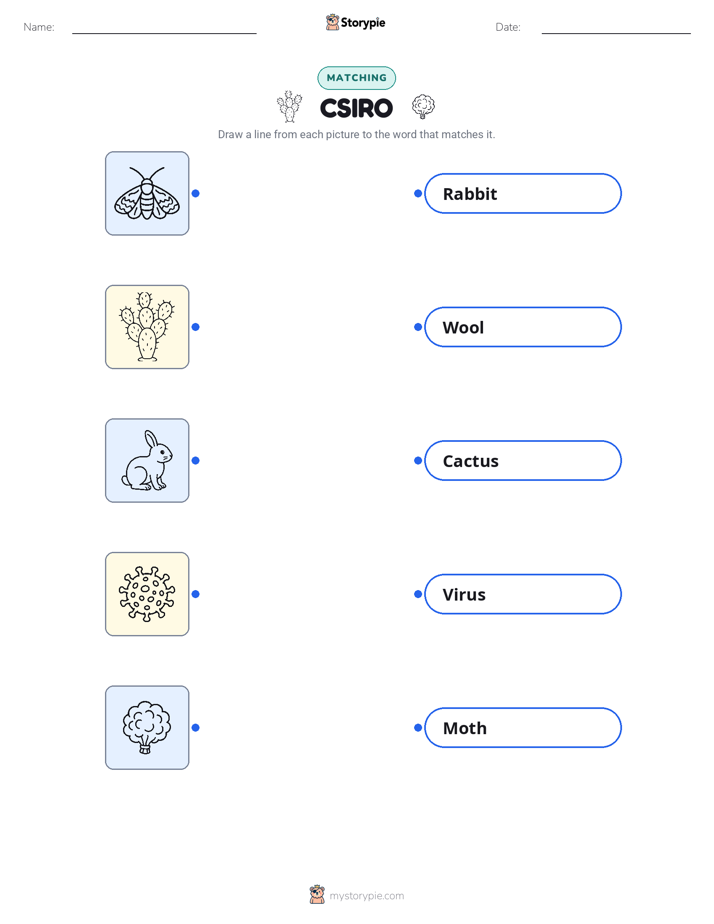
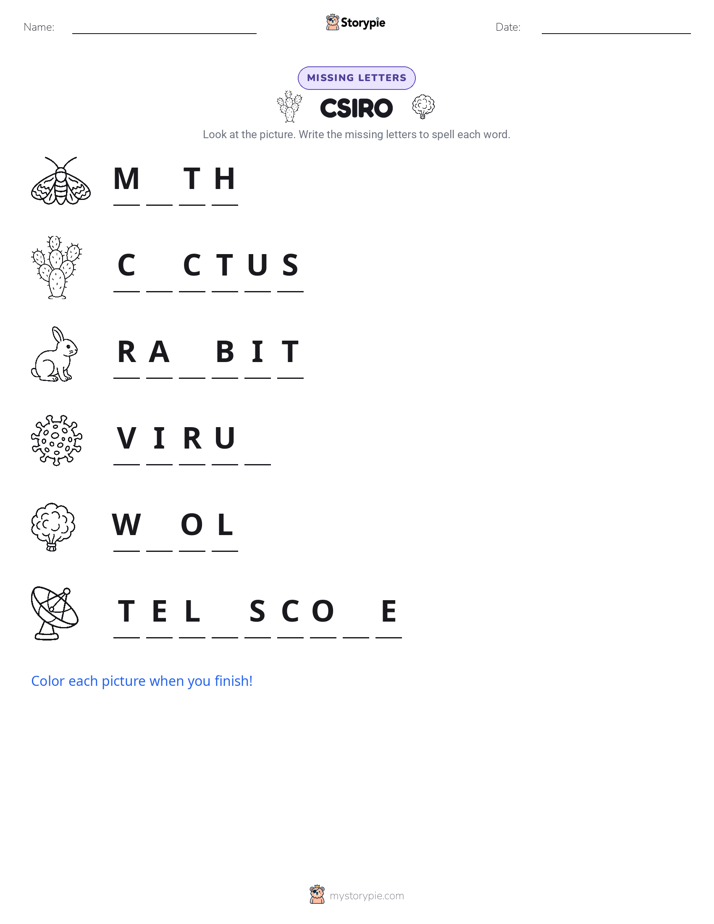
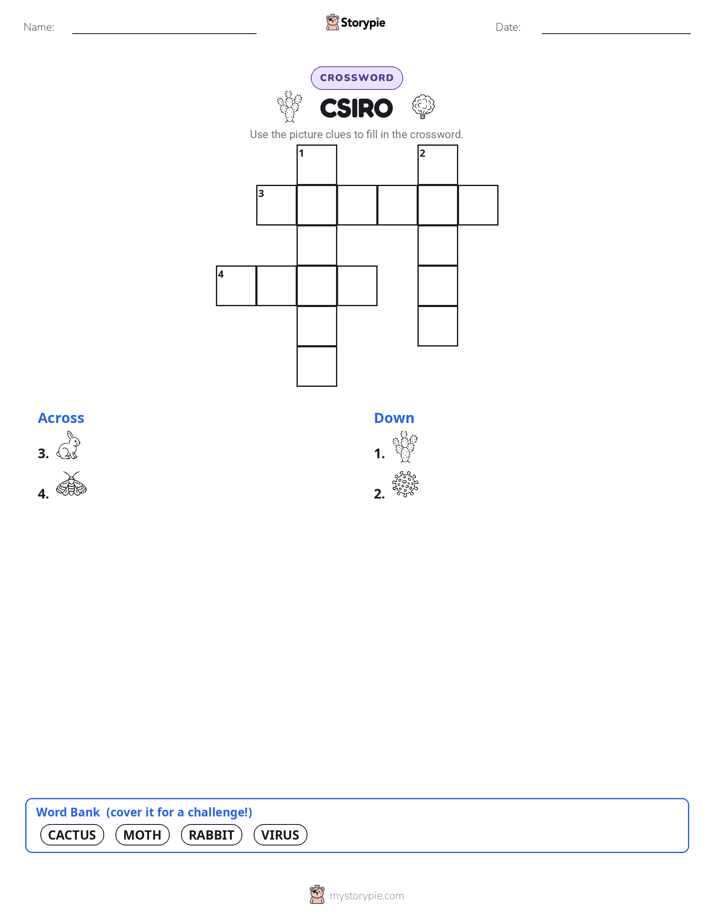
In our early decades, much of our focus was on the land. Australia’s primary industries, especially farming and agriculture, faced enormous obstacles. One of the most destructive was an invasive cactus called prickly pear. It had spread across millions of acres of valuable farmland, forming dense, impassable thickets that made the land useless. To solve this, we used a method called biological control. We searched for a natural enemy of the cactus and found a small moth from South America, the *Cactoblastis cactorum*. We introduced the moth to Australia, and its caterpillars feasted on the prickly pear, clearing vast areas of land within just a few years. We used a similar approach to address another environmental disaster: the rabbit plague. Rabbits, which are not native to Australia, had multiplied into the hundreds of millions, destroying crops and damaging ecosystems. We developed and released the myxoma virus, a disease that specifically targeted rabbits. This greatly reduced their population, allowing native plants and animals a chance to recover. We also worked to support the country's vital wool industry by inventing new treatments for wool fabric, including a method to give it permanent creases, which made wool clothing much easier to care for.
CSIRO: Australia's Science Storytellers
We are the Commonwealth Scientific and Industrial Research Organisation, but we are most often known by our acronym, CSIRO. As Australia's national science agency, our purpose is to use scientific research to help solve the country's greatest challenges and create a better future for all. Our story began more than a century ago, but our modern form started to take shape in 1926 when we were established as the Council for Scientific and Industrial Research, or CSIR. In 1949, our name changed to what it is today. From the very beginning, our mission has been clear: to apply excellent science in ways that benefit the Australian people, support its industries, and protect its unique and precious environment. We work on problems that are too big or complex for any single university or company to tackle alone.
In our early decades, much of our focus was on the land. Australia’s primary industries, especially farming and agriculture, faced enormous obstacles. One of the most destructive was an invasive cactus called prickly pear. It had spread across millions of acres of valuable farmland, forming dense, impassable thickets that made the land useless. To solve this, we used a method called biological control. We searched for a natural enemy of the cactus and found a small moth from South America, the Cactoblastis cactorum. We introduced the moth to Australia, and its caterpillars feasted on the prickly pear, clearing vast areas of land within just a few years. We used a similar approach to address another environmental disaster: the rabbit plague. Rabbits, which are not native to Australia, had multiplied into the hundreds of millions, destroying crops and damaging ecosystems. We developed and released the myxoma virus, a disease that specifically targeted rabbits. This greatly reduced their population, allowing native plants and animals a chance to recover. We also worked to support the country's vital wool industry by inventing new treatments for wool fabric, including a method to give it permanent creases, which made wool clothing much easier to care for.
While much of our work is grounded here on Earth, our research has also reached for the stars. On July 20th, 1969, the world watched in awe as humans first walked on the Moon during the Apollo 11 mission. What many people don't know is that we played a crucial role in that historic moment. Because of Australia's position on the globe, our Parkes radio telescope was perfectly placed to receive the television signals broadcast from the Moon. We received those faint signals, amplified them, and sent them to a global audience of over 600 million people. Decades later, in the 1990s, one of our teams made a breakthrough that changed the world again. A group of our radio astronomers, including Dr. John O'Sullivan, was trying to solve a complex problem involving faint radio signals from distant galaxies. In the process, they developed a brilliant solution that could send and receive wireless data signals clearly inside buildings. This was an accidental discovery, but it turned out to be a key technology for high-speed wireless LAN, which is the basis for the Wi-Fi we all use every day in our homes, schools, and offices.
Today, our research continues to shape lives in countless ways. We are deeply involved in protecting Australia's natural wonders. Our scientists study the health of the Great Barrier Reef, develop strategies for managing and preventing devastating bushfires, and research the impacts of climate change to help Australia adapt. In the field of human health, we created the popular Total Wellbeing Diet, a scientifically formulated eating plan that has helped many people live healthier lives. We also invented the world's first extended-wear contact lenses, allowing people to wear them safely for much longer periods. Another of our famous innovations is the plastic polymer banknote. We developed the technology to create these clean, durable, and colourful banknotes, which are now used in many countries. They last much longer than paper money and have advanced security features that make them extremely difficult to counterfeit. Our work also extends to developing renewable energy sources and finding more sustainable ways to grow food for a growing population.
As we look toward the future, our core mission remains the same as it was in 1926: to use the power of science to create a better world. The challenges facing Australia and the planet are constantly evolving, and our work must evolve with them. We don't do this work alone; collaboration is at the heart of everything we do. We partner with universities, governments, and businesses in Australia and around the world to share knowledge and accelerate discovery. From helping to develop new vaccines that protect public health to creating smarter materials for advanced manufacturing, we are always working on the next big breakthrough. We are committed to turning brilliant science into real-world solutions that benefit our nation and all of humanity for generations to come.
Wow facts
About
The Commonwealth Scientific and Industrial Research Organisation (CSIRO) is Australia's national science agency, responsible for scientific research to address national challenges and opportunities.
Take a Quiz
Question 1 of 5
What was our organization's original name when it was formed in 1926?
Explore next






Want to do even more?
Go beyond exploring. Unlock tools that turn every story into real learning.

Storypie Plus for families
Full stories, quizzes, and printables. Nights and car rides, sorted.
- Unlimited audio stories
- Create Mode: your child stars in the story
- Offline downloads
- Printable worksheets & coloring pages

Why Storypie for Schools
Students engaged. Prep in seconds. Evenings back to you.
- Worksheets & Quizzes
- Classroom Management
- Formative Assessment
- Custom Curriculum & Lesson Plans
- 27 Languages

Why Storypie for Homeschool
Curriculum done. They'll ask for more. Hours back in your day.
- Worksheet Generator
- First-Person Audio Stories
- Built-in Comprehension Quizzes
- Custom Curriculum & Lesson Plans
- Print & Go Activities