English

Green Belt Movement
The Green Belt Movement is a Kenyan environmental organization that empowers communities, particularly women…
Reads at Grades 3–5 Listens at Grades 1–5
Print & create
Answer keys·No prep·Free with an account
28 worksheets · answer keys · full story · quiz · Ages 8-10 · CEFR B1
Plus adds 116,000+ more stories in 27 languages, audio for every one, and printables for all of them.
Just want Green Belt Movement?
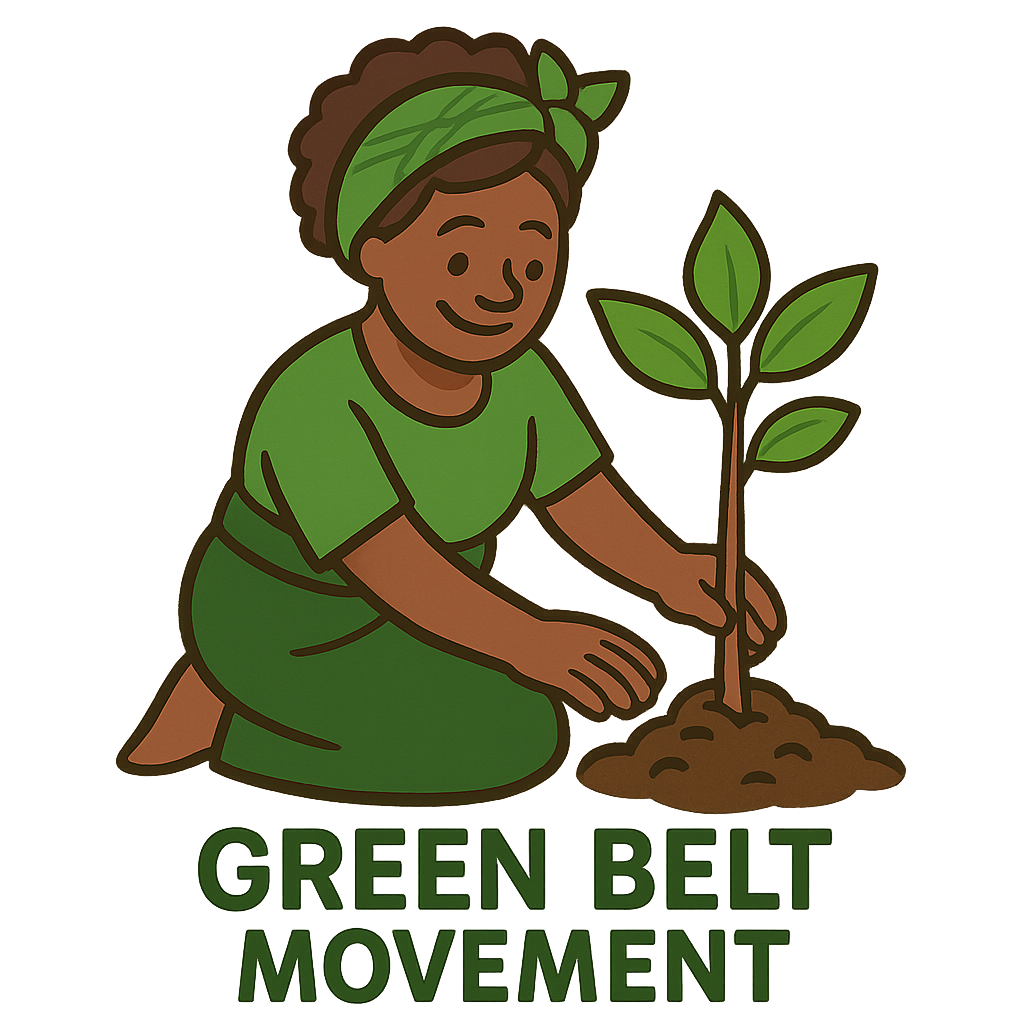
Hello, we are the Green Belt Movement. Our story is one of simple ideas growing into big changes, like a tiny seed sprouting into a tall, strong tree. We began our work in the country of Kenya on June 5th, 1977. Our founder was a remarkable woman named Wangari Maathai, who saw a problem spreading across her homeland. In many villages, the beautiful forests that had stood for generations were disappearing. People were cutting down trees for fuel and to clear land, but new ones were not being planted to take their place.
This caused serious trouble for local communities, especially for women and their families. Without trees, the land began to change. There was less wood available for cooking fires, which meant women had to walk farther and farther each day just to find fuel to prepare meals. The soil, no longer held in place by strong tree roots, would wash away when it rained. This made it very difficult to grow healthy crops, so families had less food to eat. Seeing this, we knew we had to act. Our mission became clear: we would help communities improve their lives and heal the land by planting trees.
Our approach has always been about working together with people in their own towns and villages. We call our idea community empowerment, which means giving people the tools and knowledge to create a better future for themselves. We don't just show up and plant trees for them. Instead, we provide groups of local people with tree seedlings, which are baby trees ready to be planted. We also teach them the best ways to plant the seedlings and how to care for them as they grow. This knowledge helps ensure the new trees have a good chance of survival.
We Are the Green Belt Movement
Hello, we are the Green Belt Movement. Our story is one of simple ideas growing into big changes, like a tiny seed sprouting into a tall, strong tree. We began our work in the country of Kenya on June 5th, 1977. Our founder was a remarkable woman named Wangari Maathai, who saw a problem spreading across her homeland. In many villages, the beautiful forests that had stood for generations were disappearing. People were cutting down trees for fuel and to clear land, but new ones were not being planted to take their place.
This caused serious trouble for local communities, especially for women and their families. Without trees, the land began to change. There was less wood available for cooking fires, which meant women had to walk farther and farther each day just to find fuel to prepare meals. The soil, no longer held in place by strong tree roots, would wash away when it rained. This made it very difficult to grow healthy crops, so families had less food to eat. Seeing this, we knew we had to act. Our mission became clear: we would help communities improve their lives and heal the land by planting trees.
Our approach has always been about working together with people in their own towns and villages. We call our idea community empowerment, which means giving people the tools and knowledge to create a better future for themselves. We don't just show up and plant trees for them. Instead, we provide groups of local people with tree seedlings, which are baby trees ready to be planted. We also teach them the best ways to plant the seedlings and how to care for them as they grow. This knowledge helps ensure the new trees have a good chance of survival.
To make our work even more effective, we decided to connect the health of the environment directly to the well-being of families. For each tree that a woman planted and successfully cared for, we gave her a small payment. This payment, called a stipend, provided women with money they could use to buy food, pay for school, or support their families in other ways. This simple but powerful system did two amazing things at once. It helped restore the forests and repair the damaged land, and it gave women more control over their own lives. It showed that taking care of nature was also a way of taking care of people.
Our journey was not always a smooth one. Protecting forests meant we sometimes had to challenge powerful people and businesses who wanted to cut them down to build new buildings or create large farms. We believed that these natural spaces were too important to lose. Our founder, Wangari Maathai, was incredibly brave. She was not afraid to speak out and defend the rights of both the environment and the people who depended on it. We always used peaceful methods to make our voices heard. Through our actions, we helped show the world that fighting to protect a forest was also a way to fight for a fair and just society where everyone’s needs are respected.
In 2004, our work and the courage of our founder received a very special honor. Wangari Maathai was awarded the Nobel Peace Prize. This is one of the most respected awards in the world, given to people who have done extraordinary work to create peace. It was a historic moment, as she was the first African woman ever to receive this prize. The award sent a powerful message to everyone. It recognized that our work of planting trees was not just about the environment. It was an act of peace that helped build more stable, healthy, and prosperous communities for all.
Today, our green legacy continues to grow. Since we first began our work in 1977, we have helped communities across Kenya plant over 51 million trees. These trees provide shade, food, fuel, and clean air. They hold the soil in place and protect precious water sources. Our work now includes more than just tree planting. We also teach communities about how to protect their rivers and streams, grow a variety of healthy foods, and adapt to the challenges of climate change. The simple idea of planting a tree has blossomed into a global movement, inspiring people all over the world to take action and care for our shared home, our planet Earth.
Wow facts
About
The Green Belt Movement is a Kenyan environmental organization that empowers communities, particularly women, to conserve the environment and improve livelihoods through tree planting.
Take a Quiz
Question 1 of 5
Who was the founder of the Green Belt Movement?
Explore next






Want to do even more?
Go beyond exploring. Unlock tools that turn every story into real learning.

Storypie Plus for families
Full stories, quizzes, and printables. Nights and car rides, sorted.
- Unlimited audio stories
- Create Mode: your child stars in the story
- Offline downloads
- Printable worksheets & coloring pages

Why Storypie for Schools
Students engaged. Prep in seconds. Evenings back to you.
- Worksheets & Quizzes
- Classroom Management
- Formative Assessment
- Custom Curriculum & Lesson Plans
- 27 Languages

Why Storypie for Homeschool
Curriculum done. They'll ask for more. Hours back in your day.
- Worksheet Generator
- First-Person Audio Stories
- Built-in Comprehension Quizzes
- Custom Curriculum & Lesson Plans
- Print & Go Activities