English

International Red Cross and Red Crescent Movement
A global humanitarian network that provides protection and assistance to people affected by armed conflict…
Reads at Grades 6–8 Listens at Grades 4–8
Print & create
Answer keys·No prep·Free with an account
28 worksheets · answer keys · full story · quiz · Ages 10-12 · CEFR B2
Plus adds 116,000+ more stories in 27 languages, audio for every one, and printables for all of them.
Just want International Red Cross and Red Crescent Movement?
We are the International Red Cross and Red Crescent Movement, a global network dedicated to helping people in crisis. Our story does not begin in a grand hall or a government office, but on a battlefield. In 1859, a Swiss businessman named Henry Dunant was traveling in Italy when he came upon the aftermath of the Battle of Solferino. He was horrified by what he saw. Thousands of wounded soldiers from different armies were left on the field, suffering and dying without any medical attention or basic care. Moved by this tragedy, Dunant refused to stand by. He organized local people, mostly women and girls from the nearby town, to come and help. Together, they cared for all the soldiers, no matter which side they had fought for. This powerful idea—that help should be given to anyone in need without discrimination—is the foundation of our entire mission. It was a simple act of compassion that would soon inspire a worldwide movement.
Henry Dunant knew that one person’s efforts were not enough. He believed the world needed a permanent system to prevent such suffering in the future. He returned home and wrote a book about his experience, in which he proposed two major ideas that would change history. First, he argued that every country should form permanent societies of trained volunteers who could provide care to the wounded during wartime. Second, he called for an international agreement, a set of rules that all countries would promise to follow, to protect wounded soldiers and the medical personnel who cared for them. These ideas quickly gained support. In 1863, a committee met in Geneva, Switzerland, and we were officially founded as the International Committee for Relief to the Wounded. Just one year later, in 1864, the first Geneva Convention was signed. This historic treaty turned our humanitarian principles into international law and established our emblem—a red cross on a white background—as a universal symbol of neutral protection on the battlefield.
A Symbol of Hope: The Story of the International Red Cross and Red Crescent Movement
We are the International Red Cross and Red Crescent Movement, a global network dedicated to helping people in crisis. Our story does not begin in a grand hall or a government office, but on a battlefield. In 1859, a Swiss businessman named Henry Dunant was traveling in Italy when he came upon the aftermath of the Battle of Solferino. He was horrified by what he saw. Thousands of wounded soldiers from different armies were left on the field, suffering and dying without any medical attention or basic care. Moved by this tragedy, Dunant refused to stand by. He organized local people, mostly women and girls from the nearby town, to come and help. Together, they cared for all the soldiers, no matter which side they had fought for. This powerful idea—that help should be given to anyone in need without discrimination—is the foundation of our entire mission. It was a simple act of compassion that would soon inspire a worldwide movement.
Henry Dunant knew that one person’s efforts were not enough. He believed the world needed a permanent system to prevent such suffering in the future. He returned home and wrote a book about his experience, in which he proposed two major ideas that would change history. First, he argued that every country should form permanent societies of trained volunteers who could provide care to the wounded during wartime. Second, he called for an international agreement, a set of rules that all countries would promise to follow, to protect wounded soldiers and the medical personnel who cared for them. These ideas quickly gained support. In 1863, a committee met in Geneva, Switzerland, and we were officially founded as the International Committee for Relief to the Wounded. Just one year later, in 1864, the first Geneva Convention was signed. This historic treaty turned our humanitarian principles into international law and established our emblem—a red cross on a white background—as a universal symbol of neutral protection on the battlefield.
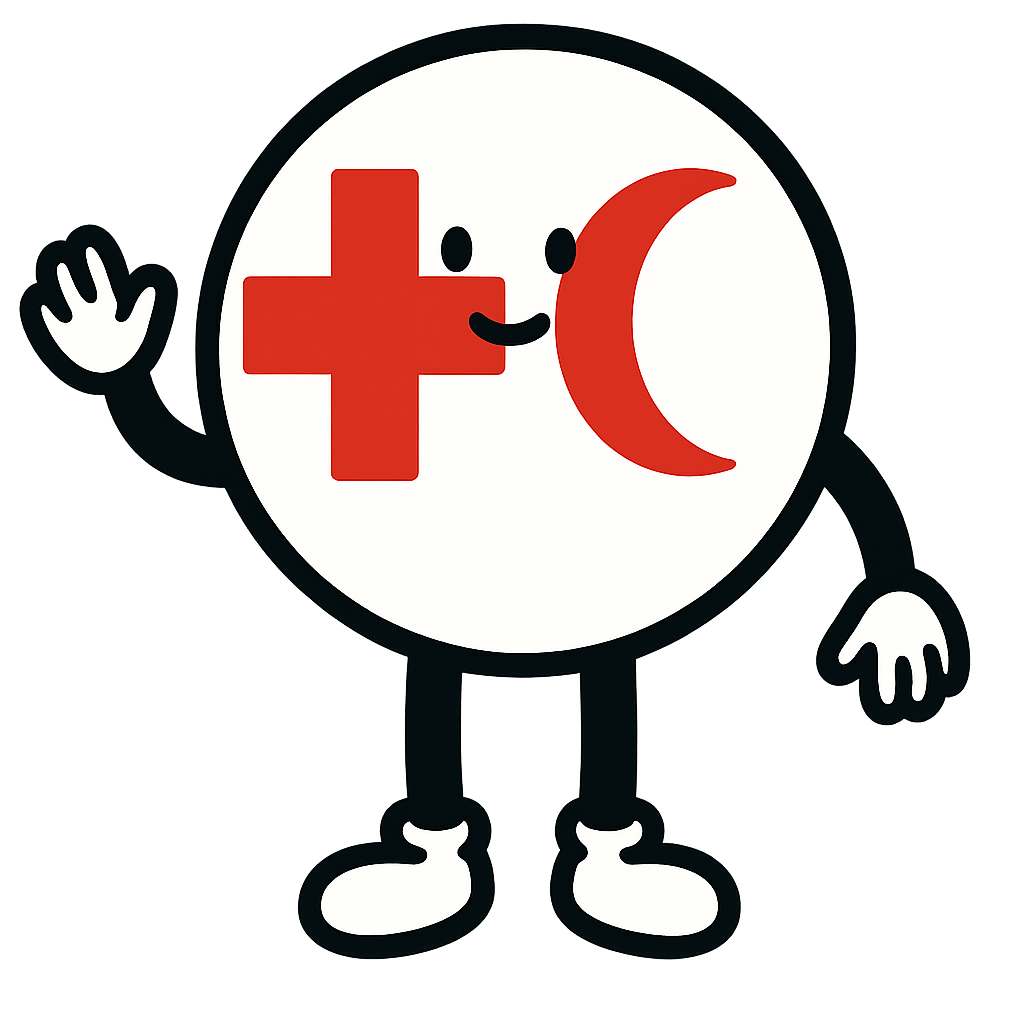
It is important to understand that we are not one single organization, but a vast global movement with three distinct parts that work together to fulfill our mission. The first part is the International Committee of the Red Cross, or the ICRC. The ICRC is the founding body of our movement and has a special role defined by international law to protect the lives and dignity of victims of armed conflict. The second part is the International Federation of Red Cross and Red Crescent Societies, or the IFRC. The IFRC coordinates the work of all the national societies, helping them respond to natural disasters, health emergencies, and other crises that are not related to war. The third and largest part of our movement is the network of 191 National Societies that exist in nearly every country on Earth. You might know them as the American Red Cross, the British Red Cross, or the Turkish Red Crescent. These societies carry out our work on the ground, providing a wide range of services to their local communities. The Red Crescent emblem, which is used in place of the Red Cross in many Muslim-majority countries, was officially adopted in 1876 to ensure our symbols were seen as neutral and welcoming to all.
Throughout our history, we have been present during some of humanity’s most difficult moments, working to bring relief and hope. During the immense conflicts of World War I and World War II, our volunteers and staff performed critical tasks that no one else could. Because of our commitment to neutrality, we were able to cross front lines and work on all sides of the conflicts. We inspected prisoner-of-war camps to ensure that captured soldiers were being treated humanely. We organized and delivered millions of relief packages containing food, medicine, and letters from home. One of our most important services was an information bureau that handled messages between soldiers and their families. This service reconnected millions of people who had been separated by the chaos of war, easing their fears and letting them know their loved ones were safe. Our unwavering dedication to helping all victims of war has been recognized several times with the Nobel Peace Prize, a testament to the importance of our impartial work.
To ensure our work is consistent and trusted everywhere, every part of our movement is guided by seven Fundamental Principles. They are Humanity, Impartiality, Neutrality, Independence, Voluntary Service, Unity, and Universality. Humanity means our purpose is to protect life and health and ensure respect for all human beings. Impartiality means we provide aid based on need alone, without any discrimination. Neutrality is especially crucial; it means we do not take sides in conflicts or engage in political, racial, religious, or ideological controversies. This allows us to gain the trust of all parties and reach people in the most dangerous places. Independence means that while National Societies work with their governments, they must always maintain their autonomy to act according to our principles. These guiding rules are the heart of our identity, allowing us to operate effectively and safely around the world.
Today, our mission to alleviate human suffering continues to evolve and expand far beyond the battlefields where we began. Our work is more critical than ever as the world faces new and complex challenges. When earthquakes, floods, hurricanes, or other disasters strike, our National Societies are among the first to respond, providing emergency shelter, clean water, food, and medical care to affected communities. We also play a vital role in public health. We run the world’s largest network of community-based blood donation services, ensuring a safe and reliable supply for hospitals. We teach first aid and disaster preparedness skills to millions of people, empowering them to help themselves and their neighbors in an emergency. From war zones to local communities affected by disaster, our goal remains unchanged: to help people in need, guided by our principles and the power of humanity.
Wow facts
About
A global humanitarian network that provides protection and assistance to people affected by armed conflict, disasters, and other emergencies.
Take a Quiz
Question 1 of 5
What event inspired Henry Dunant to organize humanitarian aid and eventually found our movement?
Explore next




Want to do even more?
Go beyond exploring. Unlock tools that turn every story into real learning.

Storypie Plus for families
Full stories, quizzes, and printables. Nights and car rides, sorted.
- Unlimited audio stories
- Create Mode: your child stars in the story
- Offline downloads
- Printable worksheets & coloring pages

Why Storypie for Schools
Students engaged. Prep in seconds. Evenings back to you.
- Worksheets & Quizzes
- Classroom Management
- Formative Assessment
- Custom Curriculum & Lesson Plans
- 27 Languages

Why Storypie for Homeschool
Curriculum done. They'll ask for more. Hours back in your day.
- Worksheet Generator
- First-Person Audio Stories
- Built-in Comprehension Quizzes
- Custom Curriculum & Lesson Plans
- Print & Go Activities