English

Korea Aerospace Research Institute
The Korea Aerospace Research Institute (KARI) is the national space agency of South Korea…
Reads at Grades 3–5 Listens at Grades 1–5
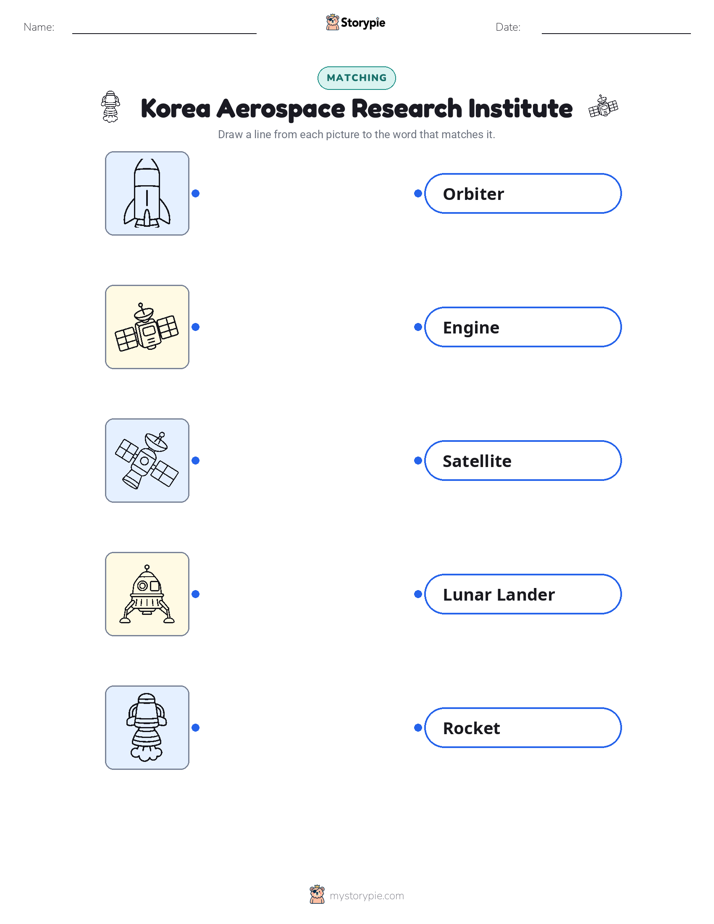
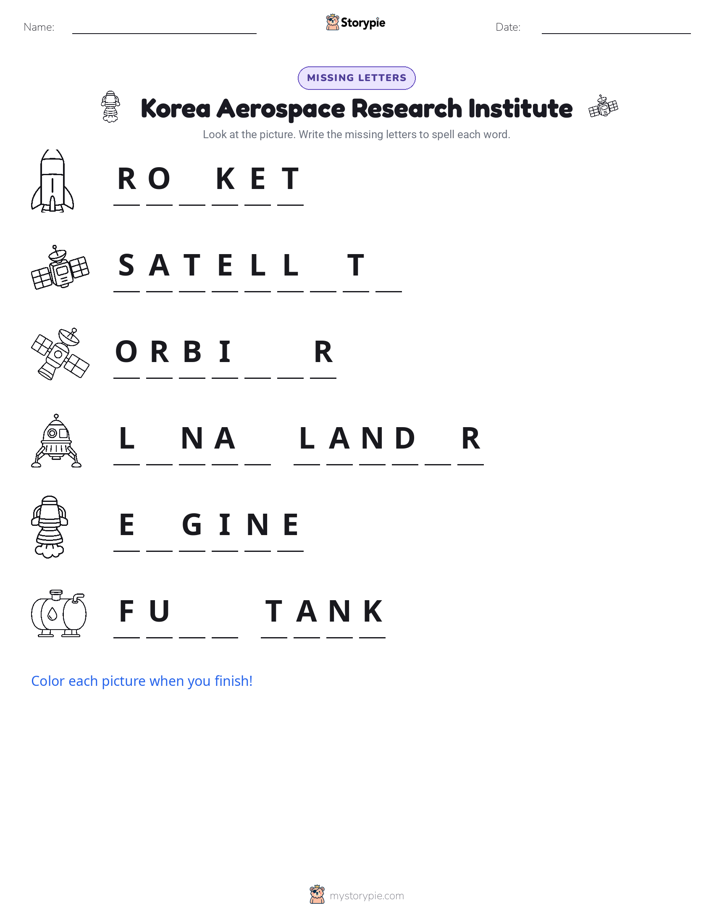
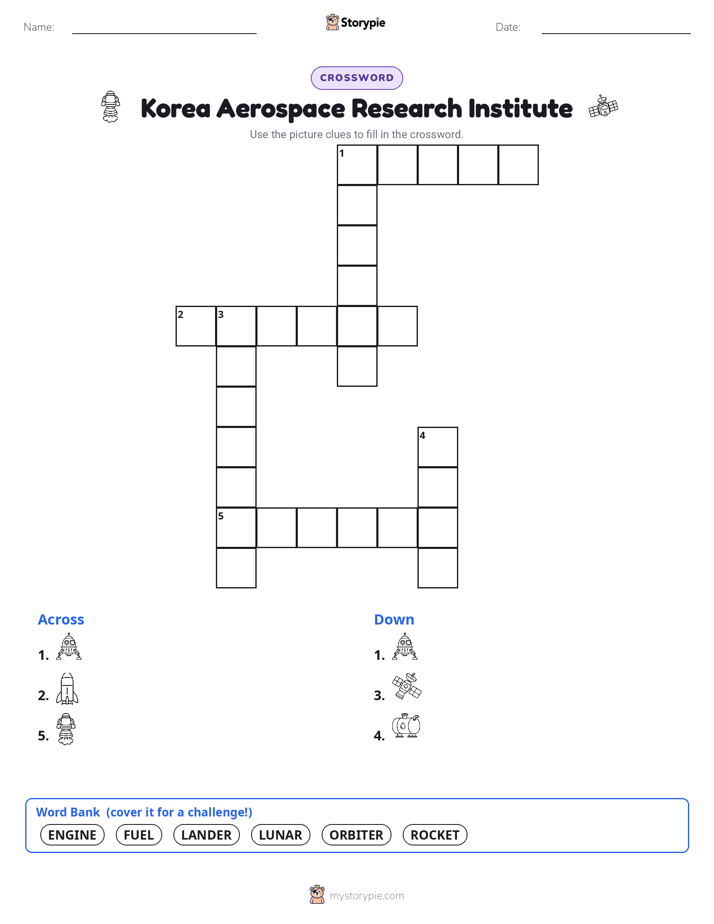
Print & create
Answer keys·No prep·Free with an account
28 worksheets · answer keys · full story · quiz · Ages 8-10 · CEFR B1
Plus adds 116,000+ more stories in 27 languages, audio for every one, and printables for all of them.
Just want Korea Aerospace Research Institute?
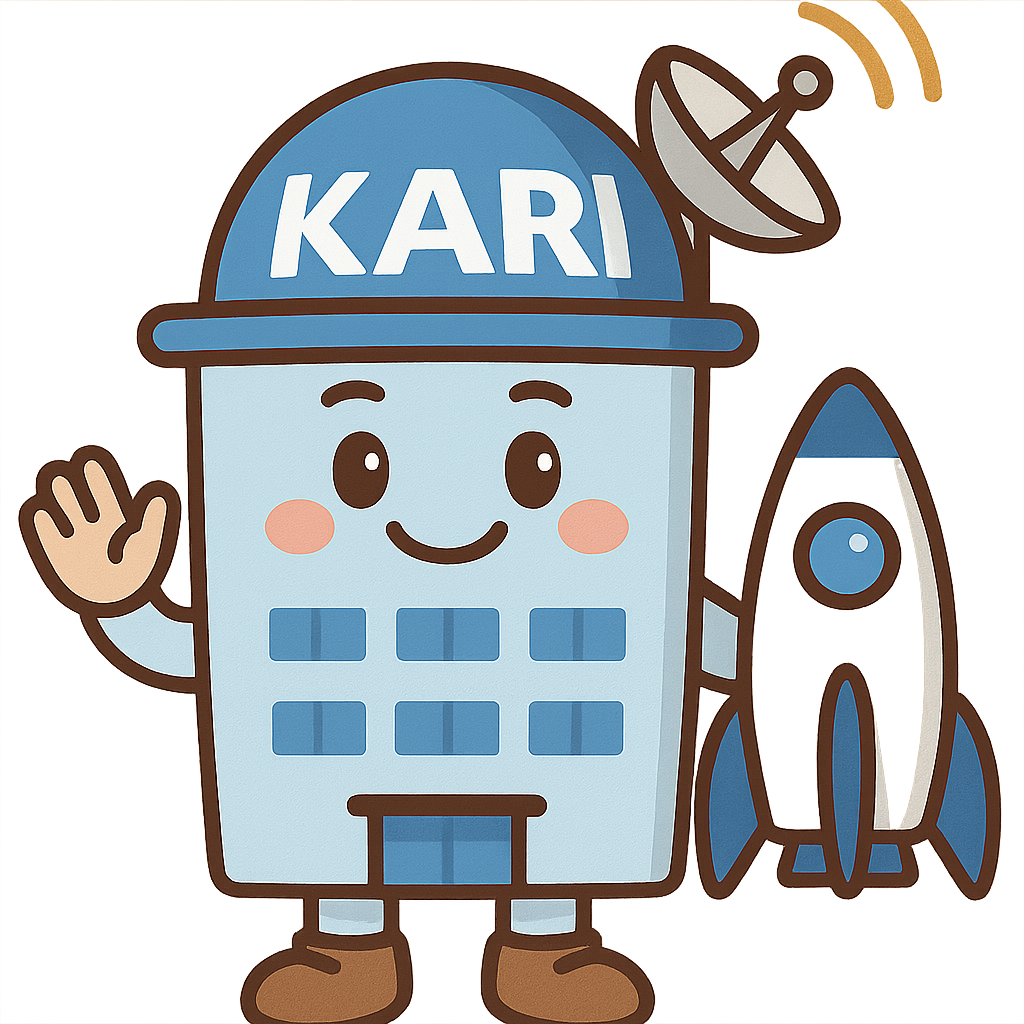
Hello! We are the Korea Aerospace Research Institute, but most people call us by our nickname, KARI. We were created on October 10th, 1989, with a very important mission: to lead South Korea's national space program. Our main job is to research, design, and build advanced aerospace technology. This includes powerful rockets that can travel far from Earth, as well as smart satellites that perform important jobs in space. Everything we do is to help our country explore the universe, learn more about our home planet, and develop new technologies that can make life better for everyone.
Like any big journey, our path to space began with small steps. Before we could build giant rockets capable of reaching orbit, we had to start with something simpler to practice and learn. In the 1990s and early 2000s, we developed a series of scientific rockets known as sounding rockets. We built three main types, which we named KSR-I, KSR-II, and KSR-III. These rockets were not designed to go into orbit around the Earth. Instead, they flew very high into the atmosphere to carry scientific instruments and run experiments. Each launch was a valuable lesson for our scientists and engineers, teaching us how to design engines, control flight paths, and manage a launch successfully. They were the perfect training for the bigger challenges ahead.
While rockets are the vehicles that get us to space, a big part of our work is building what they carry: satellites. We are especially known for our family of Earth-observing satellites called ARIRANG. The first ARIRANG satellite was launched back in 1999, and we have sent many more into space since then. These satellites act like our eyes in the sky, constantly circling the globe and looking down at our planet. They carry powerful cameras that take very detailed pictures of the land and sea. This information is incredibly useful. We use the images to make precise maps, monitor the environment, and check on the health of forests and farm crops. The satellites also help us watch for natural disasters, like floods or wildfires, giving people on the ground important warnings.
Our Journey to the Stars: The Story of KARI
Hello! We are the Korea Aerospace Research Institute, but most people call us by our nickname, KARI. We were created on October 10th, 1989, with a very important mission: to lead South Korea's national space program. Our main job is to research, design, and build advanced aerospace technology. This includes powerful rockets that can travel far from Earth, as well as smart satellites that perform important jobs in space. Everything we do is to help our country explore the universe, learn more about our home planet, and develop new technologies that can make life better for everyone.
Like any big journey, our path to space began with small steps. Before we could build giant rockets capable of reaching orbit, we had to start with something simpler to practice and learn. In the 1990s and early 2000s, we developed a series of scientific rockets known as sounding rockets. We built three main types, which we named KSR-I, KSR-II, and KSR-III. These rockets were not designed to go into orbit around the Earth. Instead, they flew very high into the atmosphere to carry scientific instruments and run experiments. Each launch was a valuable lesson for our scientists and engineers, teaching us how to design engines, control flight paths, and manage a launch successfully. They were the perfect training for the bigger challenges ahead.
While rockets are the vehicles that get us to space, a big part of our work is building what they carry: satellites. We are especially known for our family of Earth-observing satellites called ARIRANG. The first ARIRANG satellite was launched back in 1999, and we have sent many more into space since then. These satellites act like our eyes in the sky, constantly circling the globe and looking down at our planet. They carry powerful cameras that take very detailed pictures of the land and sea. This information is incredibly useful. We use the images to make precise maps, monitor the environment, and check on the health of forests and farm crops. The satellites also help us watch for natural disasters, like floods or wildfires, giving people on the ground important warnings.
For many years, we had a very big dream. We wanted to be able to launch our own satellites into orbit using a rocket that was built right here in South Korea. This is a very difficult thing to do, and only a few countries in the world have this ability. This dream led to our biggest and most challenging project: developing our own space launch vehicle, the Nuri rocket. Our teams worked for years, solving countless problems and testing every part carefully. Finally, after all that hard work, we were ready. In June 2022, we had a historic success. We launched the Nuri rocket, and it flew perfectly, placing several satellites into their correct orbits around Earth. This amazing achievement made South Korea one of the world's space powers with its own launch technology.
After proving we could reach Earth's orbit on our own, we set our sights even higher: the Moon. Our next great adventure was launching our country's first-ever lunar mission. In August 2022, we launched an orbiter named Danuri. An orbiter is a spacecraft that is designed to circle, or orbit, another world instead of landing on it. Danuri traveled through space for several months before successfully entering into orbit around the Moon. Its mission is to explore the Moon from above. It is busy creating a detailed map of the entire lunar surface, studying the Moon's strange magnetic field, and looking for resources like water ice. Danuri is also searching for the best and safest places where future missions could land, helping us prepare for the next steps in our exploration of the solar system.
Today, our work continues, and we are busier than ever. We keep launching Nuri rockets to carry new satellites into space, and our teams are always developing new technologies to make our spacecraft even better. We have big goals for the future. We are planning to land our own robotic spacecraft on the Moon, and we are also working on new kinds of airplanes and other advanced aerospace technologies. Every project we work on, whether it's a satellite watching over Earth or a mission heading to the Moon, helps scientists make new discoveries. Our work not only expands human knowledge but also creates technology that can improve life for people right here on our home planet.
Wow facts
About
The Korea Aerospace Research Institute (KARI) is the national space agency of South Korea, responsible for developing aerospace technology, including rockets, satellites, and lunar exploration missions.
Take a Quiz
Question 1 of 5
What is the main job of the Korea Aerospace Research Institute (KARI)?
Explore next






Want to do even more?
Go beyond exploring. Unlock tools that turn every story into real learning.

Storypie Plus for families
Full stories, quizzes, and printables. Nights and car rides, sorted.
- Unlimited audio stories
- Create Mode: your child stars in the story
- Offline downloads
- Printable worksheets & coloring pages

Why Storypie for Schools
Students engaged. Prep in seconds. Evenings back to you.
- Worksheets & Quizzes
- Classroom Management
- Formative Assessment
- Custom Curriculum & Lesson Plans
- 27 Languages

Why Storypie for Homeschool
Curriculum done. They'll ask for more. Hours back in your day.
- Worksheet Generator
- First-Person Audio Stories
- Built-in Comprehension Quizzes
- Custom Curriculum & Lesson Plans
- Print & Go Activities