English

Korea Aerospace Research Institute
The Korea Aerospace Research Institute (KARI) is the national space agency of South Korea…
Reads at Grades 6–8 Listens at Grades 4–8
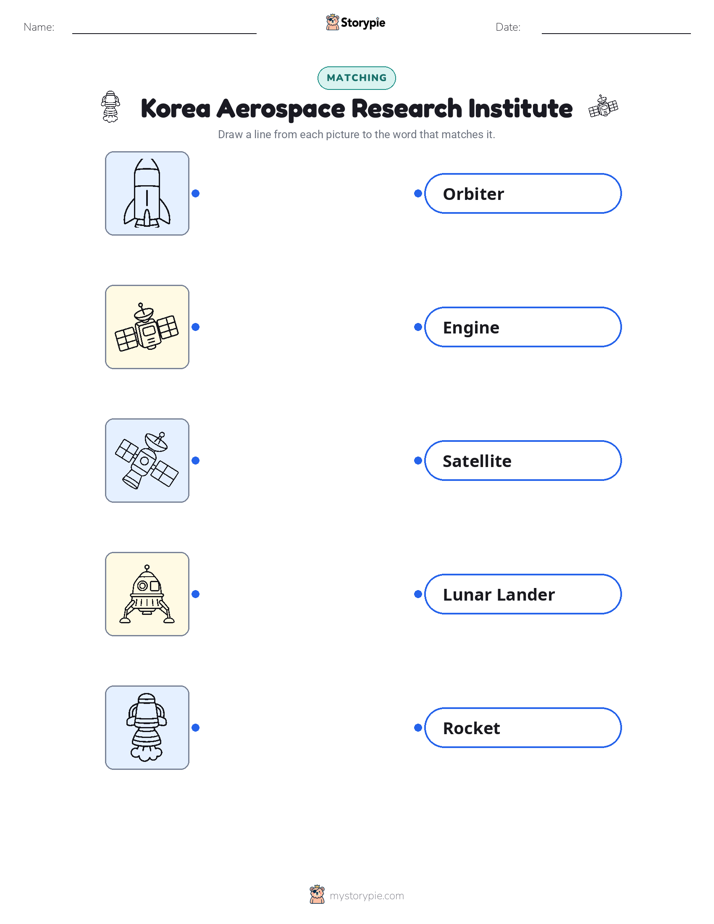
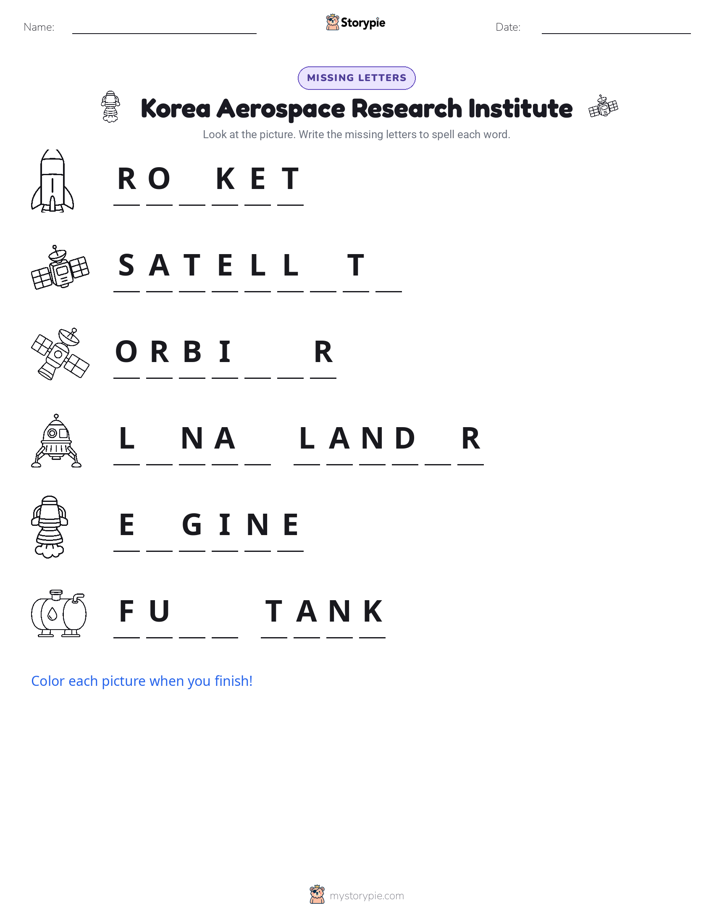
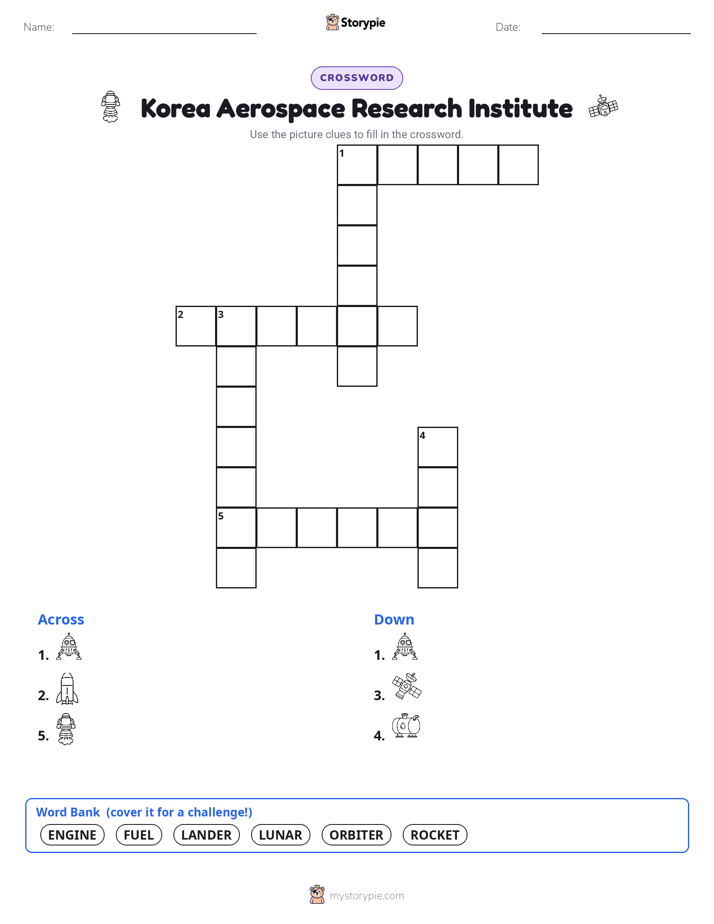
Print & create
Answer keys·No prep·Free with an account
28 worksheets · answer keys · full story · quiz · Ages 10-12 · CEFR B2
Plus adds 116,000+ more stories in 27 languages, audio for every one, and printables for all of them.
Just want Korea Aerospace Research Institute?
Hello. We are the Korea Aerospace Research Institute, an organization known by our acronym, KARI. Our story began on October 10th, 1989, when we were established with a clear and ambitious purpose: to lead South Korea's journey into the vast world of aerospace science and technology. From our very first day, our mission has been to develop our country's own satellites, rockets, and advanced aircraft. We do this not just for the sake of exploration, but to use the knowledge we gain to benefit our nation and its people, helping to solve problems on Earth from the unique vantage point of the sky and beyond.
In our early years, we knew that reaching for the stars required building a strong foundation here on the ground. Like learning to walk before you can run, we focused on mastering fundamental skills. A major part of this work involved developing a series of multipurpose satellites that we named ARIRANG. These satellites were designed to be our eyes in the sky, observing the Earth with incredible detail. Their work is vital for many reasons: they help create precise maps, they allow scientists to monitor the health of our environment, and they provide crucial information for managing natural disasters. At the same time, we began designing and testing scientific sounding rockets. These smaller rockets fly to the upper atmosphere for brief experiments, providing essential data. We also developed advanced unmanned aerial vehicles, or UAVs. Each of these projects, from the satellites to the rockets and UAVs, taught us invaluable lessons, preparing our engineers and scientists for the more complex and challenging missions that lay ahead.
Korea Aerospace Research Institute: Our Journey to the Stars
Hello. We are the Korea Aerospace Research Institute, an organization known by our acronym, KARI. Our story began on October 10th, 1989, when we were established with a clear and ambitious purpose: to lead South Korea's journey into the vast world of aerospace science and technology. From our very first day, our mission has been to develop our country's own satellites, rockets, and advanced aircraft. We do this not just for the sake of exploration, but to use the knowledge we gain to benefit our nation and its people, helping to solve problems on Earth from the unique vantage point of the sky and beyond.
In our early years, we knew that reaching for the stars required building a strong foundation here on the ground. Like learning to walk before you can run, we focused on mastering fundamental skills. A major part of this work involved developing a series of multipurpose satellites that we named ARIRANG. These satellites were designed to be our eyes in the sky, observing the Earth with incredible detail. Their work is vital for many reasons: they help create precise maps, they allow scientists to monitor the health of our environment, and they provide crucial information for managing natural disasters. At the same time, we began designing and testing scientific sounding rockets. These smaller rockets fly to the upper atmosphere for brief experiments, providing essential data. We also developed advanced unmanned aerial vehicles, or UAVs. Each of these projects, from the satellites to the rockets and UAVs, taught us invaluable lessons, preparing our engineers and scientists for the more complex and challenging missions that lay ahead.
Our first great challenge was to achieve something only a handful of nations had done: launch a satellite into orbit from our own country, using a rocket we helped build. To accomplish this, we created our first launch vehicle, named Naro-1, which is also known as the KSLV-I. This was an enormous undertaking, and we knew that collaboration would be key. We partnered with Russia, which provided the powerful first stage of the rocket—the main engine that lifts the vehicle off the ground. Building and launching a rocket is incredibly difficult, and success is never guaranteed. Our first two launch attempts, one in 2009 and the next in 2010, were not successful. These moments were disappointing, but they were also powerful learning opportunities. We carefully studied what went wrong, made improvements, and prepared for our next attempt with renewed determination. Finally, on January 30th, 2013, our hard work paid off. We watched as Naro-1 successfully launched into space, a historic moment that marked our entry into the world's space-faring community.
After the success of Naro-1, we set an even more ambitious goal for ourselves. Our next great challenge was to build a powerful rocket using entirely South Korean technology, from the engines to the fuel tanks to the guidance systems. This new rocket was named Nuri, which means "world" in Korean, and is also called the KSLV-II. This project was a true national effort. We worked with hundreds of different Korean companies, each contributing their expertise to design and build the thousands of components required. In 2021, we were ready for our first test launch. The rocket performed beautifully, but it came just short of placing its test satellite into a stable orbit. It was very close, but not a complete success. Just as with Naro-1, we learned from this experience and refined our designs. On our second attempt, on June 21st, 2022, Nuri performed perfectly. It successfully delivered its satellites into orbit, making South Korea one of the few nations in the world with the proven capability to launch its own satellites with its own rocket technology.
With a powerful and reliable rocket of our own, we could confidently set our sights on destinations beyond Earth's orbit. Our next destination was the Moon. We developed our very first lunar mission, an orbiter named Danuri. The name is a combination of two Korean words meaning "enjoy" and "moon." The Danuri spacecraft was launched in August of 2022. Instead of flying directly to the Moon, it took a longer, more fuel-efficient path through space, a journey that lasted several months. In December of that year, it successfully fired its engines and entered a stable orbit around the Moon, beginning its scientific mission. Danuri's job is to circle the Moon and study it in great detail. It is tasked with creating a comprehensive map of the lunar surface, searching for important resources like water ice that could be used by future astronauts, and testing new technologies that will be essential for future exploration missions.
Today, we continue our work at the forefront of aerospace technology, building on the successes of our past missions. Our teams are developing more advanced satellites for improved communication and Earth observation, ensuring we can better understand our planet and connect our world. We are also constantly working to improve our Nuri rocket, making it more efficient and capable for future launches. Our ambitions continue to grow. Our future plans include designing and building a robotic lunar lander to explore the Moon's surface up close. Through these projects and further exploration of space, we remain committed to our founding mission: using science and technology to create a better, safer, and more connected future for everyone on Earth.
Wow facts
About
The Korea Aerospace Research Institute (KARI) is the national space agency of South Korea, responsible for developing aerospace technology, including rockets, satellites, and lunar exploration missions.
Take a Quiz
Question 1 of 5
What was the main difference between the Naro-1 rocket and the Nuri rocket?
Explore next






Want to do even more?
Go beyond exploring. Unlock tools that turn every story into real learning.

Storypie Plus for families
Full stories, quizzes, and printables. Nights and car rides, sorted.
- Unlimited audio stories
- Create Mode: your child stars in the story
- Offline downloads
- Printable worksheets & coloring pages

Why Storypie for Schools
Students engaged. Prep in seconds. Evenings back to you.
- Worksheets & Quizzes
- Classroom Management
- Formative Assessment
- Custom Curriculum & Lesson Plans
- 27 Languages

Why Storypie for Homeschool
Curriculum done. They'll ask for more. Hours back in your day.
- Worksheet Generator
- First-Person Audio Stories
- Built-in Comprehension Quizzes
- Custom Curriculum & Lesson Plans
- Print & Go Activities