English

The National Trust
A conservation charity that works to preserve and protect historic places and spaces in England, Wales…
Reads at Grades 6–8 Listens at Grades 4–8
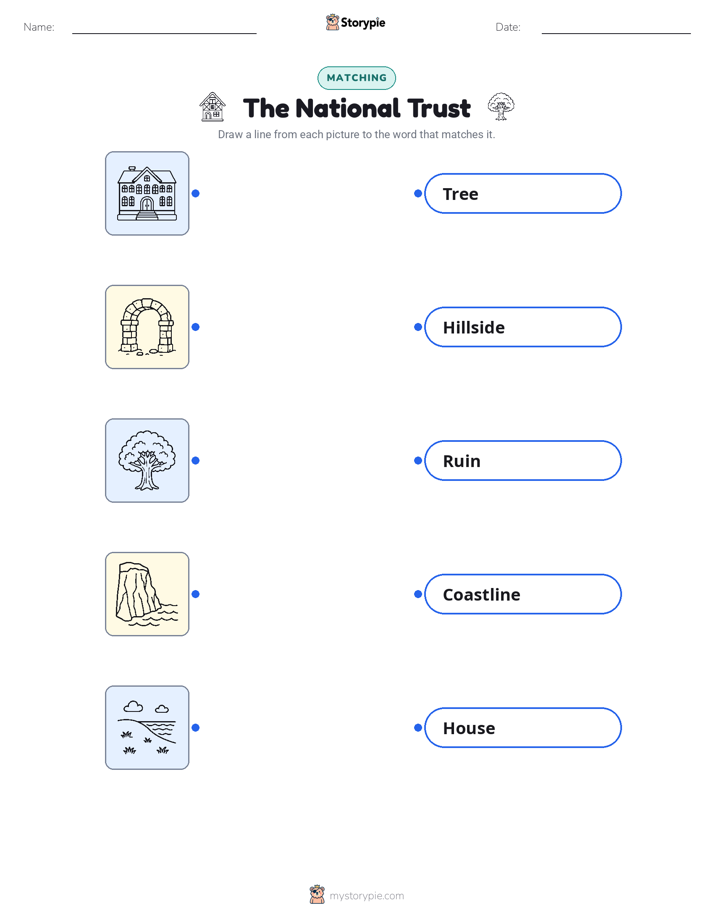
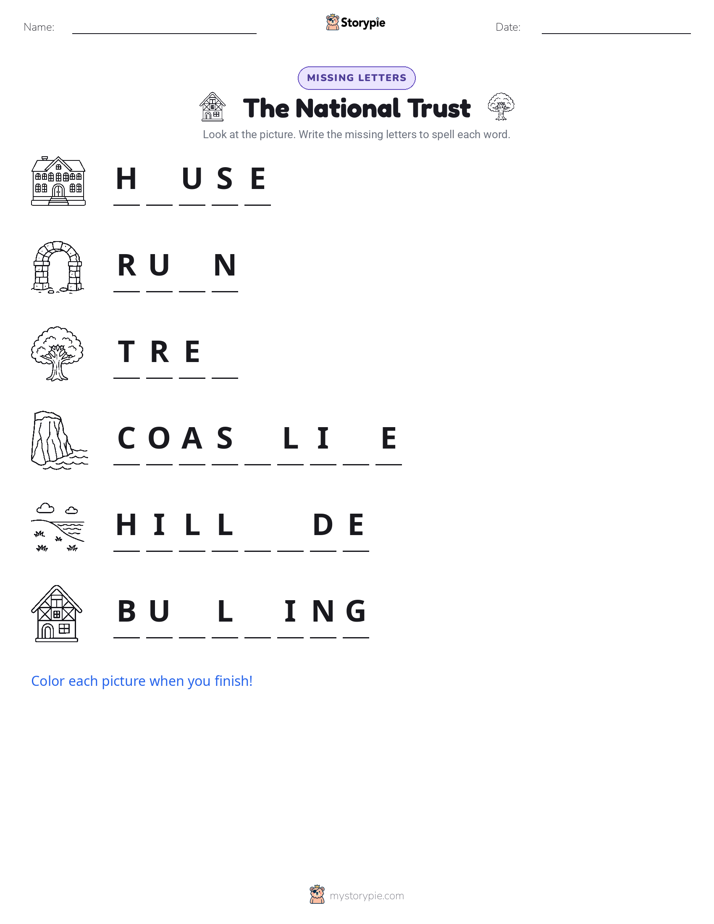
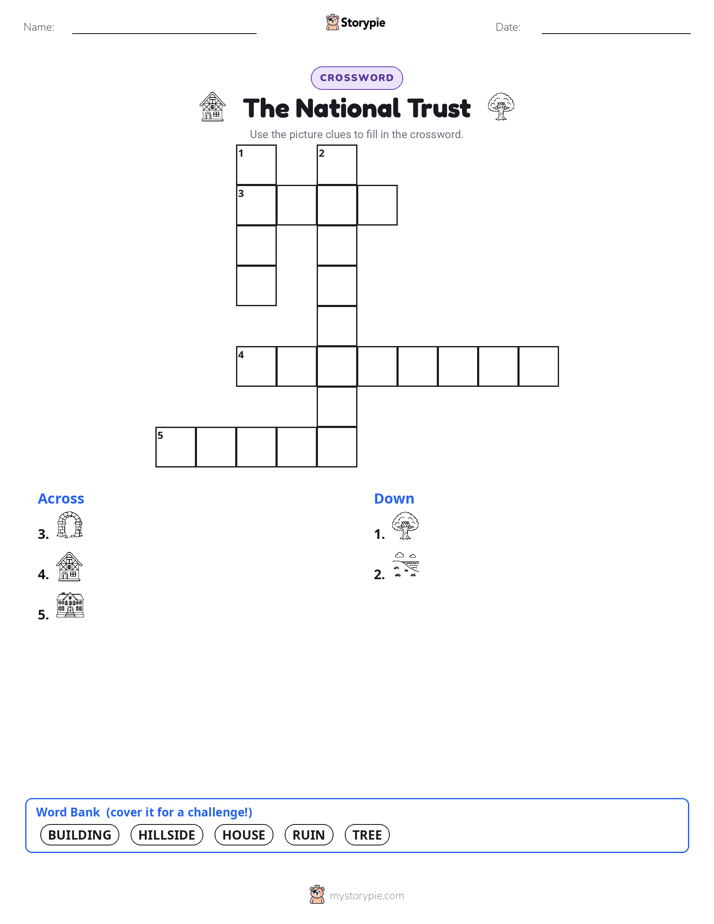
Print & create
Answer keys·No prep·Free with an account
28 worksheets · answer keys · full story · quiz · Ages 10-12 · CEFR B2
Plus adds 116,000+ more stories in 27 languages, audio for every one, and printables for all of them.
Just want The National Trust?
Hello. We are The National Trust for Places of Historic Interest or Natural Beauty, but most people know us simply as the National Trust. Our purpose is to protect special places throughout England, Wales, and Northern Ireland, keeping them safe forever so that everyone can enjoy them. We are a promise made to the future, a promise that began on January 12th, 1895. On that day, our three founders—Octavia Hill, Sir Robert Hunter, and Canon Hardwicke Rawnsley—came together with a shared concern. They lived during a time of great change, when the rapid growth of cities and industry was transforming the landscape. They saw beautiful countryside disappearing and historic buildings falling into ruin, and they decided that these treasures needed a guardian.
Our founders believed that access to nature and history was essential for people's well-being. They envisioned an organization that could acquire and protect these places not for a king or a government, but for the entire nation. This was a new idea at the time. They wanted to create a permanent trust that would hold land and property for the benefit of all, ensuring that future generations could walk the same coastlines, wander through the same woodlands, and explore the same historic halls that they did. This founding idea remains at the heart of everything we do: to care for these places on behalf of everyone, for all time.
From our very beginning, we have operated as a charity, which means we are independent of the government. This independence is important because it allows us to focus entirely on our mission of conservation. However, it also means that we rely completely on the generosity of others. Our work is powered by the support of millions of members who pay an annual fee, thousands of dedicated volunteers who give their time and skills, and countless donors who believe in our cause. Without them, we could not keep the doors of historic homes open or protect fragile ecosystems. This community of supporters is the foundation of our ability to fulfill our promise.
The National Trust: Guardians of Beauty and History
Hello. We are The National Trust for Places of Historic Interest or Natural Beauty, but most people know us simply as the National Trust. Our purpose is to protect special places throughout England, Wales, and Northern Ireland, keeping them safe forever so that everyone can enjoy them. We are a promise made to the future, a promise that began on January 12th, 1895. On that day, our three founders—Octavia Hill, Sir Robert Hunter, and Canon Hardwicke Rawnsley—came together with a shared concern. They lived during a time of great change, when the rapid growth of cities and industry was transforming the landscape. They saw beautiful countryside disappearing and historic buildings falling into ruin, and they decided that these treasures needed a guardian.
Our founders believed that access to nature and history was essential for people's well-being. They envisioned an organization that could acquire and protect these places not for a king or a government, but for the entire nation. This was a new idea at the time. They wanted to create a permanent trust that would hold land and property for the benefit of all, ensuring that future generations could walk the same coastlines, wander through the same woodlands, and explore the same historic halls that they did. This founding idea remains at the heart of everything we do: to care for these places on behalf of everyone, for all time.
From our very beginning, we have operated as a charity, which means we are independent of the government. This independence is important because it allows us to focus entirely on our mission of conservation. However, it also means that we rely completely on the generosity of others. Our work is powered by the support of millions of members who pay an annual fee, thousands of dedicated volunteers who give their time and skills, and countless donors who believe in our cause. Without them, we could not keep the doors of historic homes open or protect fragile ecosystems. This community of supporters is the foundation of our ability to fulfill our promise.
Our collection of protected places is incredibly diverse. We look after grand country houses filled with art and history, as well as carefully designed gardens that change with the seasons. We are the stewards of ancient ruins that tell stories of the distant past, vast forests that are home to precious wildlife, and hundreds of miles of stunning coastline. Our very first acquisition was a piece of land in Wales called Dinas Oleu, a beautiful hillside overlooking the sea. Soon after, we took on our first building, Alfriston Clergy House, a rare medieval home. These first two places set the course for our future, showing our commitment to protecting both natural beauty and historic architecture. To make our promise of 'forever' a reality, a special Act of Parliament gives us a unique power. We can declare the land we hold to be 'inalienable.' This is a powerful legal status which means that, once a place is in our care, it can almost never be sold, built upon, or developed. It is legally protected for generations to come.
Over the decades, our work grew in ways our founders might never have imagined. A major turning point came in the years following World War II. Many owners of large country estates found they could no longer afford the enormous cost of maintaining their historic homes. These magnificent buildings, part of the nation’s heritage, were at risk of being sold off or demolished. To prevent this loss, we had created the Country Houses Scheme back in 1937. This plan allowed owners to donate their homes, estates, and collections to us. In return, we would take on the responsibility of preserving them and opening them to the public. Thanks to this scheme, we became the caretaker for many of the most famous stately homes in the country, saving them from destruction.
As the 20th century continued, a new threat emerged: the rapid development of the coastline. Beautiful, wild stretches of coast were at risk of being lost to construction and industry. In response, we launched one of our most ambitious campaigns in 1965, which we called 'Project Neptune.' The goal was to raise money to buy and protect significant stretches of coastline before they were lost forever. The public response was incredible. People from all over the country donated to the cause, helping us secure cliffs, beaches, and coastal paths. Because of Project Neptune, we now look after more than 780 miles of coast, keeping it beautiful, open, and accessible for walkers, families, and wildlife.
Today, our founding mission to protect special places is more critical than ever, but we face new and complex challenges. Climate change is one of the most serious threats. Rising sea levels and powerful storms cause erosion that eats away at the coastlines we fought so hard to protect. Changing weather patterns also affect the rare and delicate plants that grow in our historic gardens. Alongside these environmental pressures, the simple task of caring for very old buildings is a constant and expensive job. Roofs need mending, ancient stonework needs repair, and precious interiors need to be protected from damp and decay.
In response to these challenges, our work continues to evolve. Our conservation efforts now focus heavily on helping nature recover. We plant millions of trees to create new woodlands, restore peatlands to capture carbon, and create healthy habitats for wildlife to thrive. At the same time, we are always working to make sure our historic places are welcoming and accessible to everyone, fulfilling that key part of our founders' vision. With the continued help of our members and volunteers, we carry forward the promise made over a century ago: to stand as guardians for these irreplaceable sites, ensuring they will be here for future generations to learn from, explore, and enjoy.
Wow facts
About
A conservation charity that works to preserve and protect historic places and spaces in England, Wales, and Northern Ireland, making them accessible to the public.
Take a Quiz
Question 1 of 5
What problem in the late 19th century led Octavia Hill, Sir Robert Hunter, and Canon Hardwicke Rawnsley to create the National Trust?
Explore next






Want to do even more?
Go beyond exploring. Unlock tools that turn every story into real learning.

Storypie Plus for families
Full stories, quizzes, and printables. Nights and car rides, sorted.
- Unlimited audio stories
- Create Mode: your child stars in the story
- Offline downloads
- Printable worksheets & coloring pages

Why Storypie for Schools
Students engaged. Prep in seconds. Evenings back to you.
- Worksheets & Quizzes
- Classroom Management
- Formative Assessment
- Custom Curriculum & Lesson Plans
- 27 Languages

Why Storypie for Homeschool
Curriculum done. They'll ask for more. Hours back in your day.
- Worksheet Generator
- First-Person Audio Stories
- Built-in Comprehension Quizzes
- Custom Curriculum & Lesson Plans
- Print & Go Activities