English

The Ocean Cleanup
A non-profit environmental engineering organization developing technology to extract plastic pollution from…
Reads at Grades 6–8 Listens at Grades 4–8
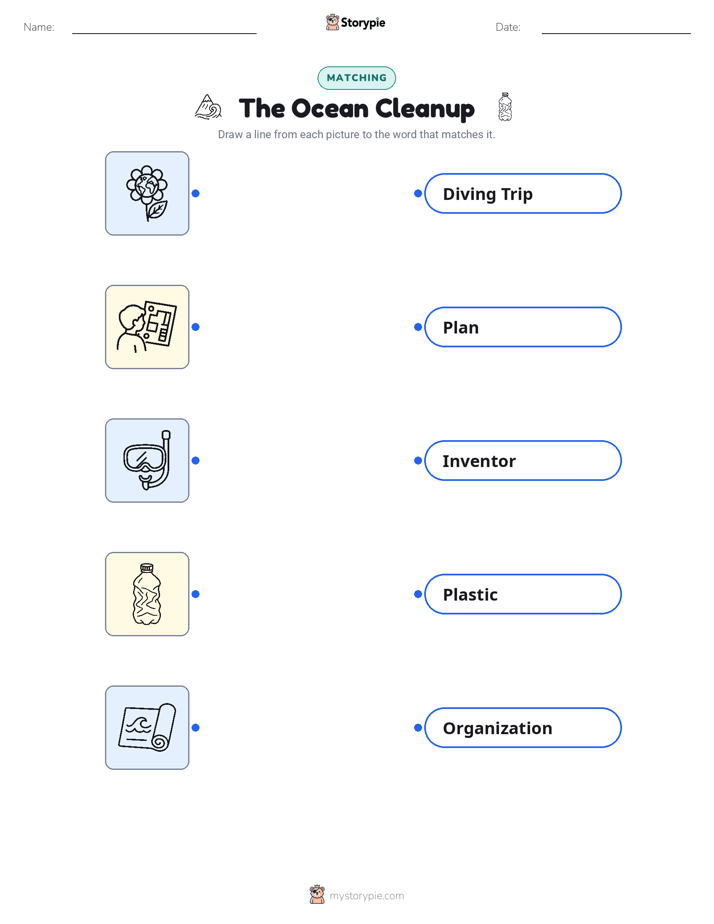
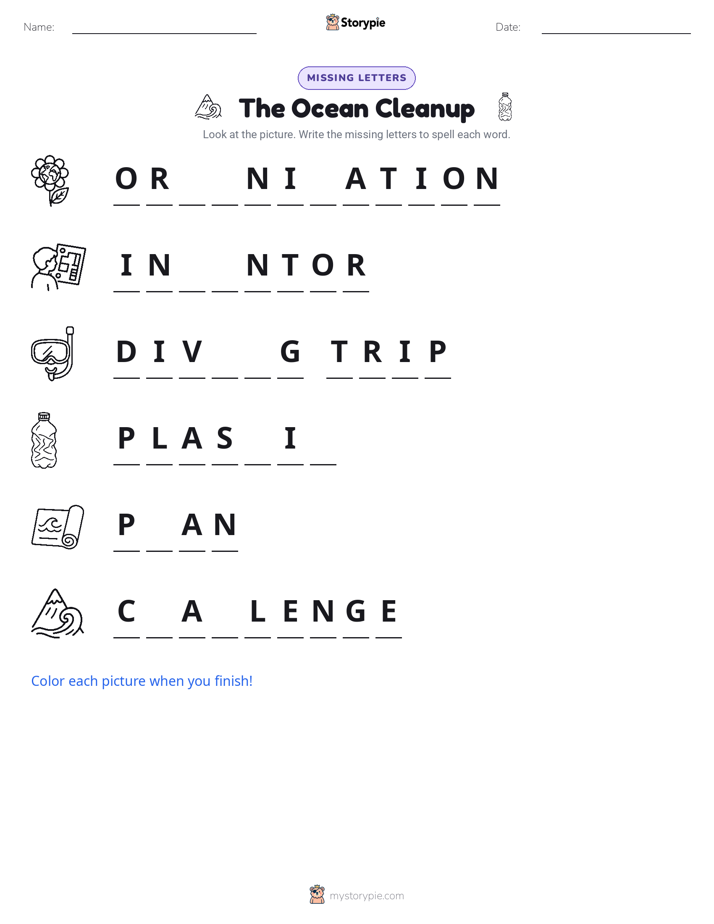
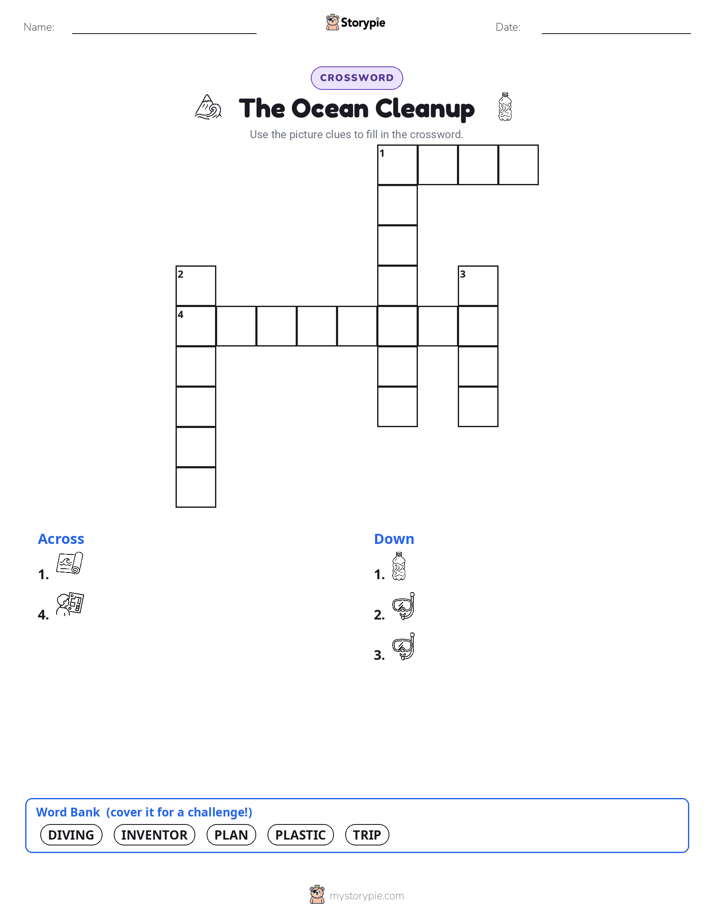
Print & create
Answer keys·No prep·Free with an account
28 worksheets · answer keys · full story · quiz · Ages 10-12 · CEFR B2
Plus adds 164,000+ more stories in 27 languages, audio for every one, and printables for all of them.
Just want The Ocean Cleanup?
Hello. We are The Ocean Cleanup, a non-profit organization dedicated to a single, ambitious mission: to rid the world's oceans of plastic pollution. Our work began with an idea from a young inventor named Boyan Slat. In 2013, when he was just 18 years old, he founded our organization. His inspiration came from a diving trip where he was shocked to see a huge amount of plastic floating in the water. This experience sparked a bold plan to solve one of the planet's biggest environmental challenges. He decided we should start with the most difficult part of the problem—the massive accumulation of plastic debris known as the Great Pacific Garbage Patch, which is the largest collection of ocean plastic anywhere in the world.
Our first major task was to figure out how to remove all the plastic that was already out there, which we call “legacy plastic.” This is the plastic that has been accumulating in the oceans for many decades. We needed to invent a technology that could operate in the middle of the ocean, far from land. Our team designed a very long, U-shaped barrier that floats on the surface. Hanging below this barrier is a large screen that extends downward into the water. The idea was to create a system that could passively collect plastic. Instead of using boats to chase down trash, we designed our system to be pushed by the natural forces of the ocean—the wind, waves, and currents. These forces would move the barrier slightly faster than the plastic, allowing the U-shape to concentrate the debris in one spot for collection. A key part of the design was ensuring that marine animals could swim safely underneath the screen, unharmed.
The Ocean Cleanup: A Plan to Clean Our Seas
Hello. We are The Ocean Cleanup, a non-profit organization dedicated to a single, ambitious mission: to rid the world's oceans of plastic pollution. Our work began with an idea from a young inventor named Boyan Slat. In 2013, when he was just 18 years old, he founded our organization. His inspiration came from a diving trip where he was shocked to see a huge amount of plastic floating in the water. This experience sparked a bold plan to solve one of the planet's biggest environmental challenges. He decided we should start with the most difficult part of the problem—the massive accumulation of plastic debris known as the Great Pacific Garbage Patch, which is the largest collection of ocean plastic anywhere in the world.
Our first major task was to figure out how to remove all the plastic that was already out there, which we call “legacy plastic.” This is the plastic that has been accumulating in the oceans for many decades. We needed to invent a technology that could operate in the middle of the ocean, far from land. Our team designed a very long, U-shaped barrier that floats on the surface. Hanging below this barrier is a large screen that extends downward into the water. The idea was to create a system that could passively collect plastic. Instead of using boats to chase down trash, we designed our system to be pushed by the natural forces of the ocean—the wind, waves, and currents. These forces would move the barrier slightly faster than the plastic, allowing the U-shape to concentrate the debris in one spot for collection. A key part of the design was ensuring that marine animals could swim safely underneath the screen, unharmed.
Developing this technology was incredibly difficult. The open ocean is one of the harshest environments on Earth. Our system had to be strong enough to withstand powerful storms, constant waves, and the corrosive effects of saltwater for very long periods. Our first full-scale system was deployed in the Great Pacific Garbage Patch in 2018, which was a major milestone for us. However, it soon ran into problems. We discovered that the system was not holding onto the plastic it captured effectively. Even more seriously, the barrier experienced a structural failure when a section broke off due to the constant stress of the ocean. This was a significant setback, but we viewed it as a crucial learning opportunity. Instead of giving up, our engineering team brought the system back to shore to analyze what went wrong. We studied the data, identified the weaknesses, and completely re-engineered the technology to be stronger and more efficient.
This process of testing, facing challenges, and making improvements is fundamental to how we operate. While we were refining our ocean technology, we also took a closer look at the bigger picture of plastic pollution. Our research confirmed that the vast majority of new plastic entering the oceans each year flows from rivers. It became clear that cleaning up the legacy plastic in the garbage patches was only half the battle. If we didn't stop the source, the oceans would continue to fill up with more trash. This realization led us to develop a second, equally important strategy. We created a different technology specifically for rivers, which we call the Interceptor. These are autonomous, solar-powered barges that are placed in some of the world's most polluting rivers. They use a barrier to guide floating trash onto a conveyor belt, which then deposits the waste into dumpsters on the barge. By capturing trash in rivers, we can prevent it from ever reaching the sea.
Today, our work continues on these two important fronts. Our improved ocean cleanup systems are now successfully operating in the Great Pacific Garbage Patch, capturing and removing large quantities of plastic. When we fill our collection systems, we bring the plastic back to land. There, it is sorted, and we work with partners to recycle it into new, sustainable products, creating a circular system where the waste is given a new purpose. At the same time, our Interceptors are deployed in rivers around the globe, stopping the flow of trash at the source. Our ultimate goal is ambitious but clear: we aim to remove 90% of all floating ocean plastic by the year 2040. We believe that by continuing to improve and scale up our technologies in both the oceans and rivers, we can turn our vision of clean oceans into a reality for future generations.
Wow facts
About
A non-profit environmental engineering organization developing technology to extract plastic pollution from oceans and intercept it in rivers.
Take a Quiz
Question 1 of 5
What inspired Boyan Slat to found The Ocean Cleanup?
Explore next





Want to do even more?
Go beyond exploring. Unlock tools that turn every story into real learning.

Storypie Plus for families
Full stories, quizzes, and printables. Nights and car rides, sorted.
- Unlimited audio stories
- Create Mode: your child stars in the story
- Offline downloads
- Printable worksheets & coloring pages

Why Storypie for Schools
Students engaged. Prep in seconds. Evenings back to you.
- Worksheets & Quizzes
- Classroom Management
- Formative Assessment
- Custom Curriculum & Lesson Plans
- 27 Languages

Why Storypie for Homeschool
Curriculum done. They'll ask for more. Hours back in your day.
- Worksheet Generator
- First-Person Audio Stories
- Built-in Comprehension Quizzes
- Custom Curriculum & Lesson Plans
- Print & Go Activities