English

UN Environment Programme
The UN Environment Programme (UNEP) is the leading global authority on the environment…
Reads at Grades 6–8 Listens at Grades 4–8
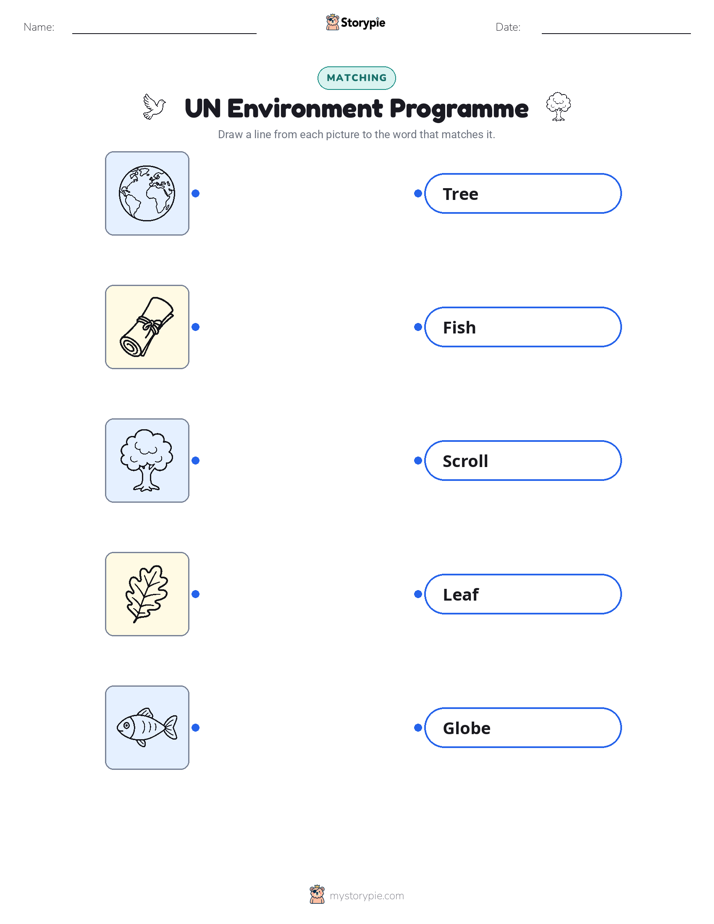
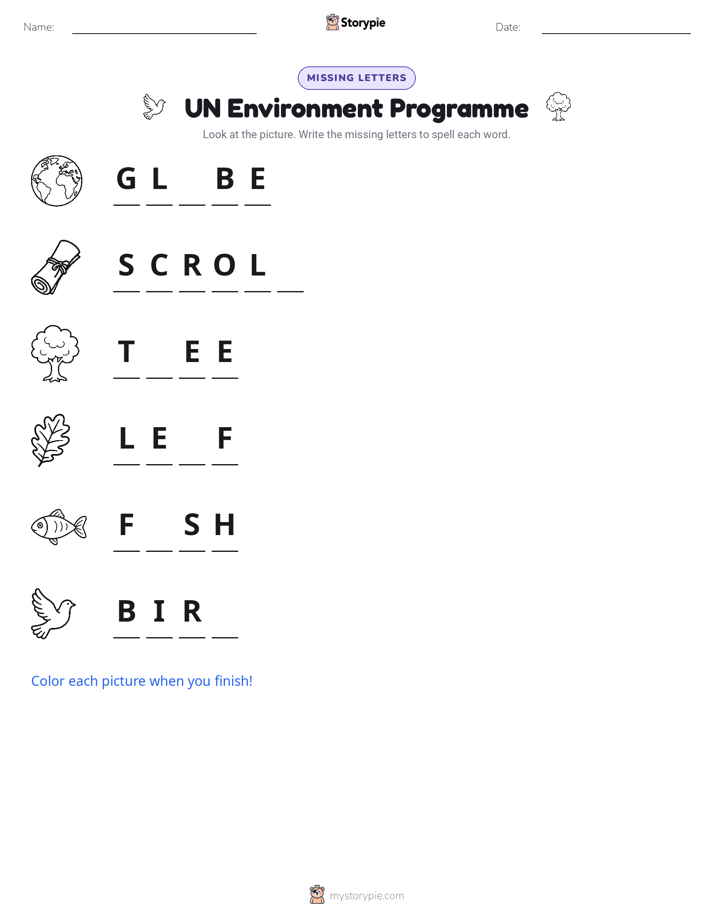
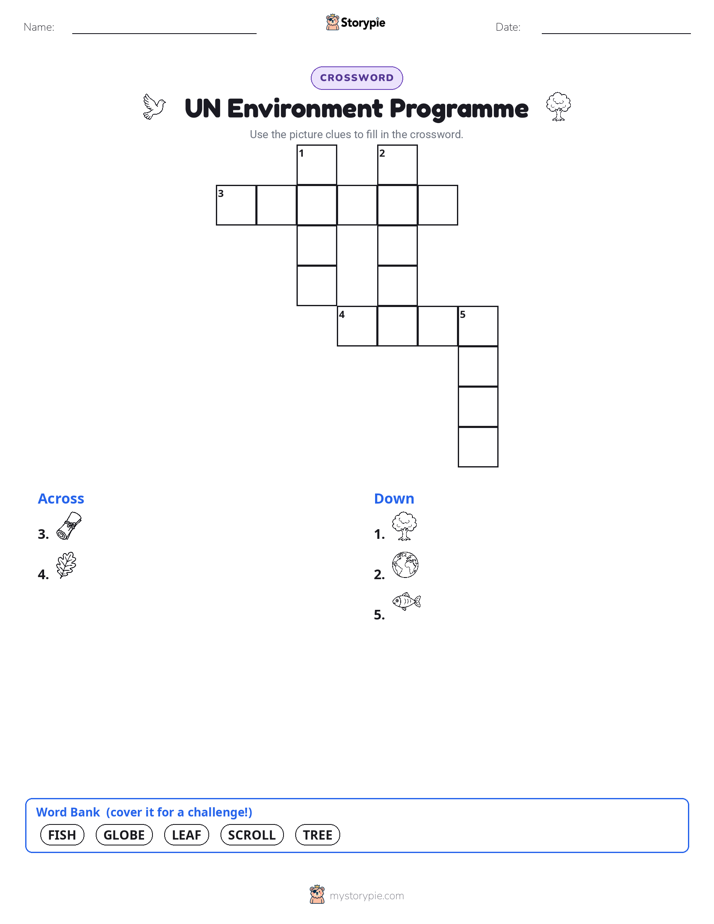
Print & create
Answer keys·No prep·Free with an account
28 worksheets · answer keys · full story · quiz · Ages 10-12 · CEFR B2
Plus adds 116,000+ more stories in 27 languages, audio for every one, and printables for all of them.
Just want UN Environment Programme?
We are the UN Environment Programme, though many people know us by our acronym, UNEP. We are part of the larger United Nations system, and our specific purpose is to be the leading global authority on the environment. Our work involves guiding international efforts and encouraging partnerships all dedicated to caring for our shared planet. Our story begins in 1972, at a landmark event called the United Nations Conference on the Human Environment, which took place in Stockholm, Sweden. For the first time, leaders and representatives from countries all over the world gathered to discuss the health of the Earth. They recognized that serious environmental problems were no longer just local issues. Pollution from one country could travel through the air and water to another. The loss of forests and wildlife—what is known as habitat loss—in one region could have effects that ripple across the globe. Everyone at the conference agreed that these were global challenges, and solving them would require a global team. We were created to be that team.
Our mission is to provide leadership and to make sure that the latest scientific knowledge about the environment is shared and understood. We don't make laws for countries, but we help them make well-informed decisions for themselves and for the planet. We act as a bridge between science and policy, taking complex research and presenting it in a way that helps governments create effective environmental laws and strategies. We focus our energy on the most urgent and interconnected challenges facing the world today. These include the rapid changes in our climate, the alarming loss of nature and biodiversity, and the widespread problem of pollution and waste. To tackle these issues, we bring countries together to work on solutions that no single nation could achieve on its own. Our role is to facilitate, to inform, and to inspire collective action for a healthier world.
A Voice for the Planet: Our Story at the UN Environment Programme
We are the UN Environment Programme, though many people know us by our acronym, UNEP. We are part of the larger United Nations system, and our specific purpose is to be the leading global authority on the environment. Our work involves guiding international efforts and encouraging partnerships all dedicated to caring for our shared planet. Our story begins in 1972, at a landmark event called the United Nations Conference on the Human Environment, which took place in Stockholm, Sweden. For the first time, leaders and representatives from countries all over the world gathered to discuss the health of the Earth. They recognized that serious environmental problems were no longer just local issues. Pollution from one country could travel through the air and water to another. The loss of forests and wildlife—what is known as habitat loss—in one region could have effects that ripple across the globe. Everyone at the conference agreed that these were global challenges, and solving them would require a global team. We were created to be that team.
Our mission is to provide leadership and to make sure that the latest scientific knowledge about the environment is shared and understood. We don't make laws for countries, but we help them make well-informed decisions for themselves and for the planet. We act as a bridge between science and policy, taking complex research and presenting it in a way that helps governments create effective environmental laws and strategies. We focus our energy on the most urgent and interconnected challenges facing the world today. These include the rapid changes in our climate, the alarming loss of nature and biodiversity, and the widespread problem of pollution and waste. To tackle these issues, we bring countries together to work on solutions that no single nation could achieve on its own. Our role is to facilitate, to inform, and to inspire collective action for a healthier world.
One of the most important ways we do our work is by helping to create and support international environmental agreements. These are formal promises between countries to work together toward a common goal. A well-known example is the Paris Agreement on climate change. Through this agreement, nations across the globe have committed to taking steps to lower their greenhouse gas emissions, the gases that trap heat in our atmosphere and cause the planet to warm. We played a key part in the process that led to this agreement, providing scientific assessments and a platform for countries to negotiate. But our work isn't just with governments. We also believe in the power of people. That’s why we run global campaigns to raise awareness and encourage everyone to get involved. Our most famous campaign is World Environment Day, an annual event that inspires millions of people to take positive action for our planet, from planting trees to cleaning up local communities.
To understand the impact of global cooperation, look no further than one of our most significant success stories: the protection of the Earth’s ozone layer. The ozone layer is a shield high in the atmosphere that protects all life from the sun's harmful ultraviolet radiation. In the 1970s and 1980s, scientists discovered that it was thinning, creating a dangerous “hole.” Our organization gathered and presented the scientific reports that proved certain chemicals, used in things like refrigerators and aerosol cans, were causing the damage. This clear evidence spurred the world to act. In 1987, countries came together to sign the Montreal Protocol, a historic treaty to phase out and eventually stop using those harmful substances. It worked. Today, the scientific community has confirmed that the ozone layer is slowly but surely healing. This achievement shows what is possible when science guides policy and when the world works together.
While we celebrate the success of the Montreal Protocol, we also know that our planet faces immense challenges today. We refer to the current situation as the “triple planetary crisis.” This term describes three major, interconnected emergencies that threaten our well-being and the health of the planet. The first is the crisis of climate change, as the Earth continues to warm at an unprecedented rate. The second is the crisis of nature and biodiversity loss, which means that ecosystems are being damaged and species are disappearing faster than ever before. The third is the crisis of pollution and waste, as harmful substances contaminate our air, land, and water. These are not separate problems; they are deeply linked and make each other worse. Our work is now focused on addressing this complex, three-part crisis with the same urgency and global cooperation that helped save the ozone layer.
Today, from our headquarters in Nairobi, Kenya, and through our network of offices around the world, we continue our essential mission. Our primary strategy for tackling the triple planetary crisis is to promote what is known as sustainable development. This is a powerful idea that guides all of our work. Sustainable development means finding ways for people and societies to thrive and live well today without damaging the ability of future generations to do the same tomorrow. It’s about balance—balancing economic progress with social fairness and environmental protection. It requires us to think about the long-term consequences of our actions and to find clever, innovative solutions that allow both people and nature to flourish. Our ultimate goal is to inspire, inform, and enable all nations and peoples to improve their quality of life without compromising the natural world that sustains us all. The challenges are great, but the story of the ozone layer reminds us that a better future is possible when we choose to work together.
Wow facts
About
The UN Environment Programme (UNEP) is the leading global authority on the environment, responsible for coordinating the UN's environmental activities and assisting countries in implementing environmentally sound policies. It was established in 1972 to provide leadership and encourage partnership in caring for the environment.
Take a Quiz
Question 1 of 5
According to the story, what major global agreement was created in 1987 to address the hole in the ozone layer?
Explore next





Want to do even more?
Go beyond exploring. Unlock tools that turn every story into real learning.

Storypie Plus for families
Full stories, quizzes, and printables. Nights and car rides, sorted.
- Unlimited audio stories
- Create Mode: your child stars in the story
- Offline downloads
- Printable worksheets & coloring pages

Why Storypie for Schools
Students engaged. Prep in seconds. Evenings back to you.
- Worksheets & Quizzes
- Classroom Management
- Formative Assessment
- Custom Curriculum & Lesson Plans
- 27 Languages

Why Storypie for Homeschool
Curriculum done. They'll ask for more. Hours back in your day.
- Worksheet Generator
- First-Person Audio Stories
- Built-in Comprehension Quizzes
- Custom Curriculum & Lesson Plans
- Print & Go Activities