English

Austronesian peoples
A large group of diverse peoples in Maritime Southeast Asia, Oceania, and Madagascar…
Reads at Grades 6–8 Listens at Grades 4–8
Print & create
Answer keys·No prep·Free with an account
28 worksheets · answer keys · full story · quiz · Ages 10-12 · CEFR B2
Plus adds 116,000+ more stories in 27 languages, audio for every one, and printables for all of them.
Just want Austronesian peoples?
We are the Austronesian peoples, a vast and diverse family made up of hundreds of unique cultures spread across the globe. You can find our communities from the island of Madagascar, home to the Malagasy people, to the islands of Indonesia where the Javanese live, all the way to New Zealand, the home of the Māori. Though our traditions and ways of life are distinct, we are all connected by a shared family of languages that stretches back thousands of years. Our very name, Austronesian, comes from words that mean “southern islands,” a name that beautifully captures the immense ocean world that we have called home for generations.
Our collective story begins more than 5,000 years ago on the island of Taiwan. It was from this starting point that our ancestors embarked on one of the most remarkable sea migrations in all of human history, a journey that would take us across thousands of miles of open water. This incredible expansion was made possible by our ingenuity and skill as sailors and boatbuilders. We developed amazing maritime technology to master the challenges of the ocean. The most important of these inventions was the outrigger canoe, a special kind of boat designed with a float attached to its side. This outrigger provided crucial stability, preventing the canoe from tipping over in rough seas and allowing us to travel safely and confidently across the vast, unpredictable Pacific Ocean.
Our ancestors sailed across the world’s largest ocean long before the invention of modern maps, compasses, or GPS. To find our way, we relied on a deep and sophisticated understanding of the natural world, a skill passed down through generations. Our expert navigators, who are known as wayfinders, were masters of reading nature’s clues. They did not need written charts because they carried complex maps in their minds. They memorized the precise paths of hundreds of stars as they moved across the night sky, using them as a celestial compass. During the day, they could read the subtle patterns of ocean swells, the long, rolling waves that travel for thousands of miles. They knew how these swells would bend and reflect when they bounced off distant, unseen islands, pointing the way to land. Wayfinders also followed the flight paths of specific birds, knowing which species flew out to sea to fish in the morning and which ones returned to land at dusk.
The People of the Southern Islands
We are the Austronesian peoples, a vast and diverse family made up of hundreds of unique cultures spread across the globe. You can find our communities from the island of Madagascar, home to the Malagasy people, to the islands of Indonesia where the Javanese live, all the way to New Zealand, the home of the Māori. Though our traditions and ways of life are distinct, we are all connected by a shared family of languages that stretches back thousands of years. Our very name, Austronesian, comes from words that mean “southern islands,” a name that beautifully captures the immense ocean world that we have called home for generations.
Our collective story begins more than 5,000 years ago on the island of Taiwan. It was from this starting point that our ancestors embarked on one of the most remarkable sea migrations in all of human history, a journey that would take us across thousands of miles of open water. This incredible expansion was made possible by our ingenuity and skill as sailors and boatbuilders. We developed amazing maritime technology to master the challenges of the ocean. The most important of these inventions was the outrigger canoe, a special kind of boat designed with a float attached to its side. This outrigger provided crucial stability, preventing the canoe from tipping over in rough seas and allowing us to travel safely and confidently across the vast, unpredictable Pacific Ocean.
Our ancestors sailed across the world’s largest ocean long before the invention of modern maps, compasses, or GPS. To find our way, we relied on a deep and sophisticated understanding of the natural world, a skill passed down through generations. Our expert navigators, who are known as wayfinders, were masters of reading nature’s clues. They did not need written charts because they carried complex maps in their minds. They memorized the precise paths of hundreds of stars as they moved across the night sky, using them as a celestial compass. During the day, they could read the subtle patterns of ocean swells, the long, rolling waves that travel for thousands of miles. They knew how these swells would bend and reflect when they bounced off distant, unseen islands, pointing the way to land. Wayfinders also followed the flight paths of specific birds, knowing which species flew out to sea to fish in the morning and which ones returned to land at dusk.
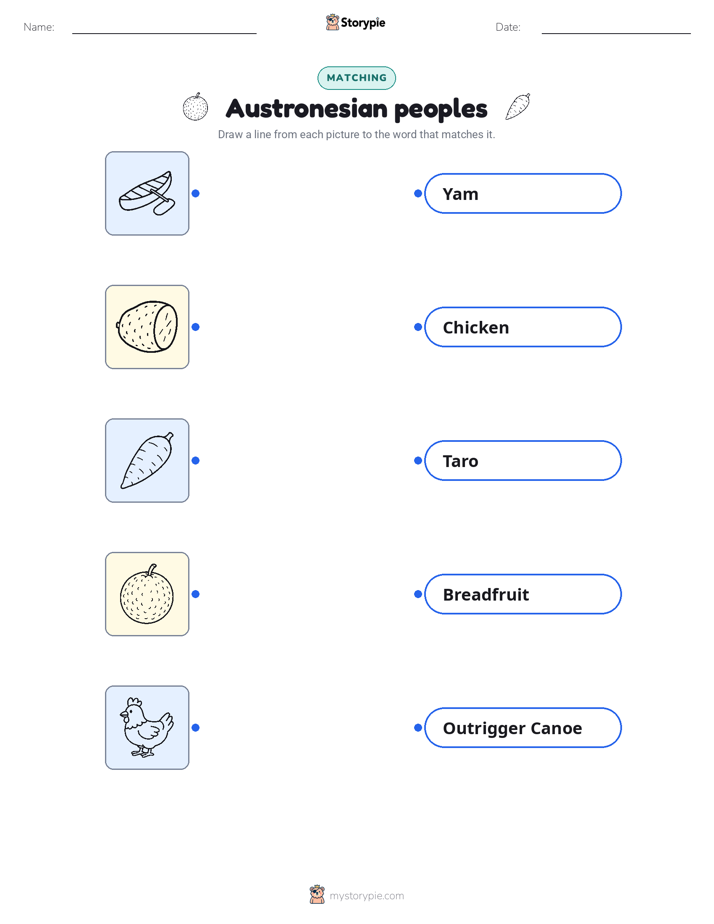
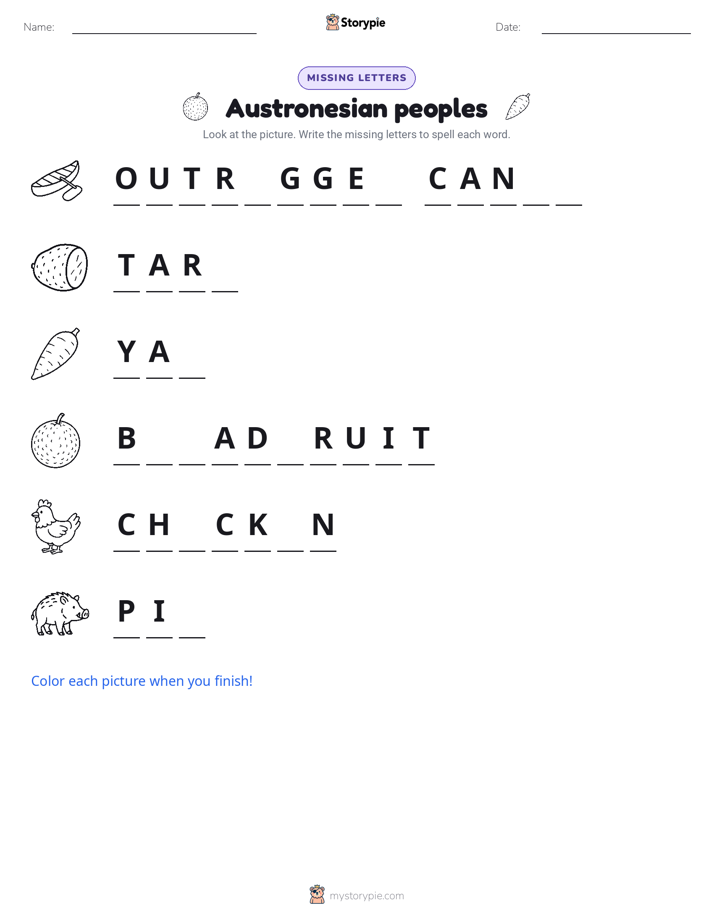
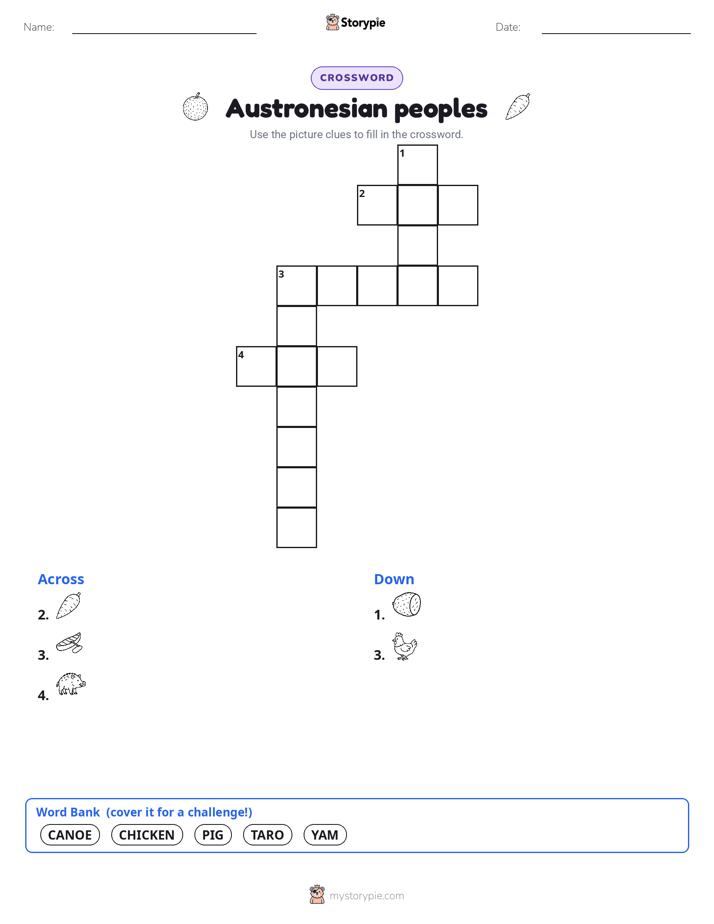
When we arrived at new islands, we did not come unprepared. We carried with us what we call a “transported landscape,” which included everything we needed to build a new life in an unfamiliar place. In our canoes, we carefully packed important plants that were central to our diet and culture, such as the starchy root vegetable taro, versatile yams, and the nourishing breadfruit. We also brought essential animals with us, including chickens for eggs and meat, and pigs. By bringing these familiar plants and animals, we could establish sustainable farms and food sources wherever we settled. This ability to carry our way of life with us allowed us to transform previously uninhabited islands into thriving, vibrant homes. Our voyages took us across a massive expanse of the globe, from the islands of Southeast Asia to the remote and isolated shores of Easter Island.
Today, the story of the Austronesian peoples continues. More than 380 million of us live in countries all over the world, carrying on the legacy of our ancestors. Like many communities, we face modern challenges, including the serious effects of climate change on our island homes. Yet, we work hard to keep our diverse cultures alive and strong for future generations. In many of our communities, there is a powerful movement to revive ancient traditions. People are learning and speaking our native languages once again. We are also building and sailing traditional voyaging canoes using the same techniques as our ancestors, reconnecting with the sea and sharing our rich heritage of exploration and resilience with the entire world.
Wow facts
About
A large group of diverse peoples in Maritime Southeast Asia, Oceania, and Madagascar, linked by a family of related languages and a shared history of maritime migration originating from Taiwan.
Take a Quiz
Question 1 of 5
What key piece of technology enabled the Austronesian peoples to travel safely across the open ocean?
Explore next



Want to do even more?
Go beyond exploring. Unlock tools that turn every story into real learning.

Storypie Plus for families
Full stories, quizzes, and printables. Nights and car rides, sorted.
- Unlimited audio stories
- Create Mode: your child stars in the story
- Offline downloads
- Printable worksheets & coloring pages

Why Storypie for Schools
Students engaged. Prep in seconds. Evenings back to you.
- Worksheets & Quizzes
- Classroom Management
- Formative Assessment
- Custom Curriculum & Lesson Plans
- 27 Languages

Why Storypie for Homeschool
Curriculum done. They'll ask for more. Hours back in your day.
- Worksheet Generator
- First-Person Audio Stories
- Built-in Comprehension Quizzes
- Custom Curriculum & Lesson Plans
- Print & Go Activities