English

Lenape
The Lenape are a Native American people of the Northeastern Woodlands, whose ancestral homeland, Lenapehoking…
Reads at Grades 6–8 Listens at Grades 4–8
Print & create
Answer keys·No prep·Free with an account
28 worksheets · answer keys · full story · quiz · Ages 10-12 · CEFR B2
Plus adds 116,000+ more stories in 27 languages, audio for every one, and printables for all of them.
Just want Lenape?
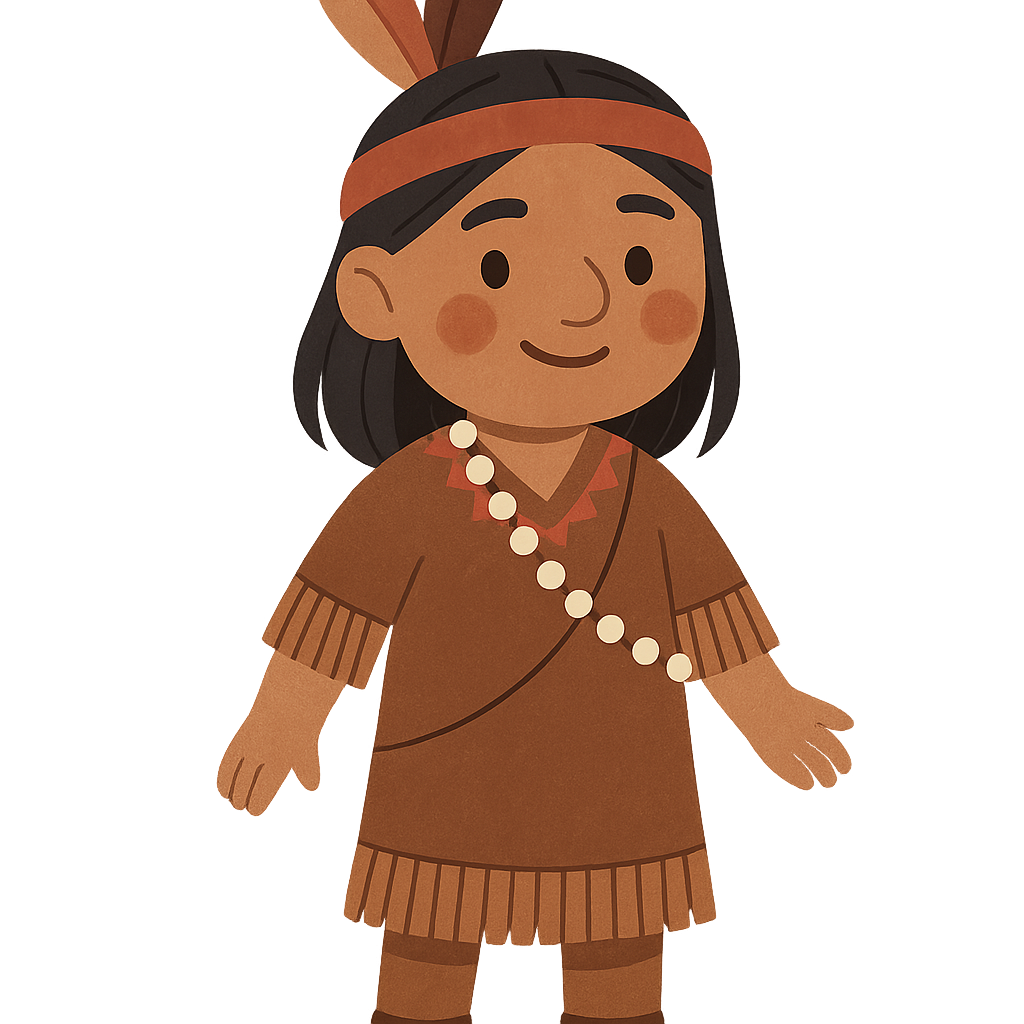
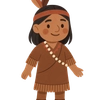
We are the Lenape, the original people of this land. Our ancestral home is called Lenapehoking, which means 'land of the Lenape.' For thousands of years, our communities thrived here, in a territory that stretched across what is now New Jersey, eastern Pennsylvania, southeastern New York, and northern Delaware. We were organized into communities based on our three main dialects—Munsee, Unami, and Unalachtigo. Our society was also structured around three matrilineal clans: the Turtle, the Wolf, and the Turkey. This means that a person's clan was passed down from their mother, connecting each generation through the maternal line.
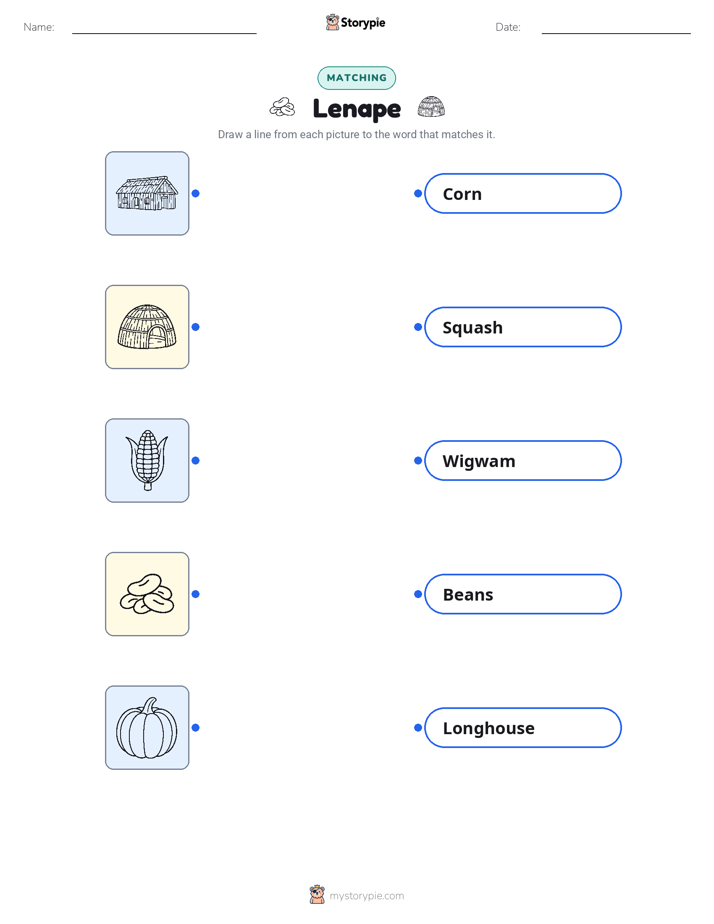
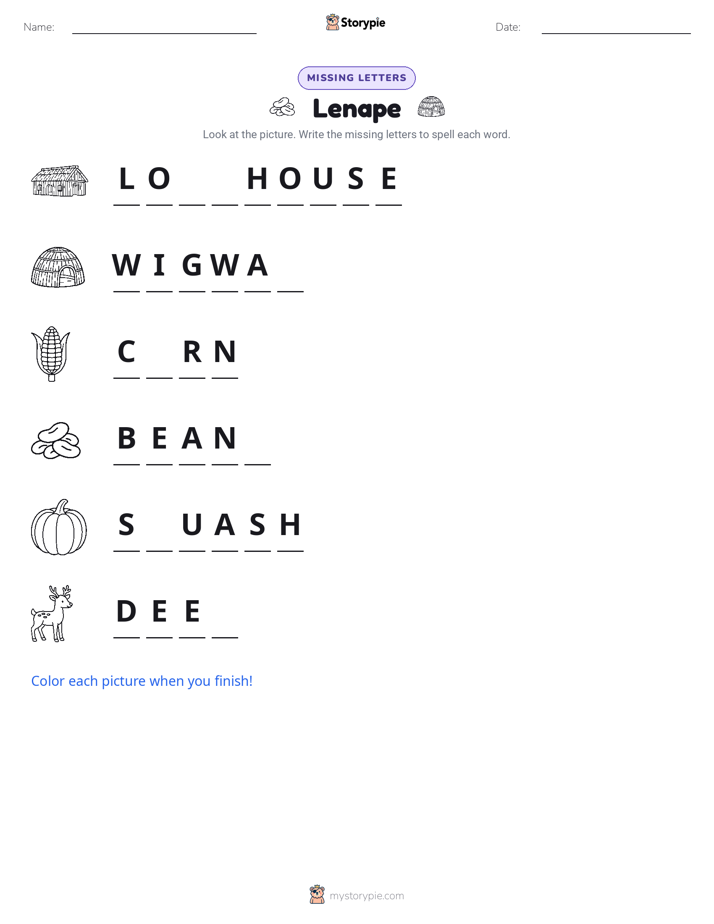
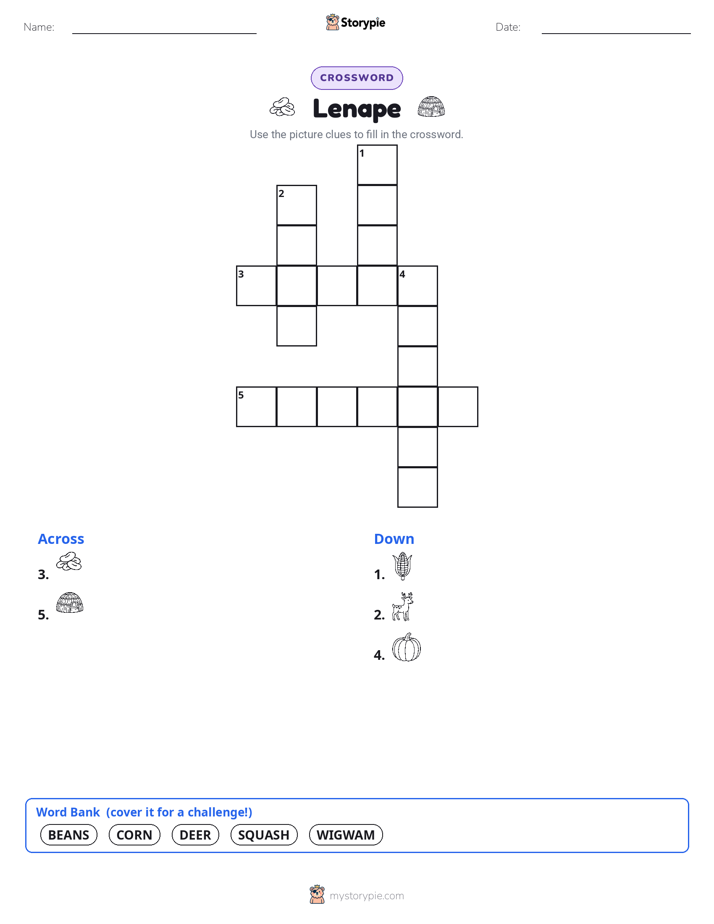
Our lives followed the rhythm of the seasons, deeply connected to the world around us. We lived in villages of longhouses or wigwams, often built near the rivers that served as our highways for travel and trade. In the warm months, our days were filled with tending to our gardens. We cultivated corn, beans, and squash, which we call the 'Three Sisters' because they grow together and support one another. When the cold of winter arrived, our families would move to hunting camps to find deer, bear, and other game that provided food and materials. We held a deep knowledge of the plants and animals, using them for food, medicine, and to craft everything we needed. We also created wampum, which are sacred beads made from shells. We used wampum to record our history, to mark treaties and important agreements, and in our ceremonies.
In the early 1600s, our world began to change in ways we could not have imagined. European ships arrived on our shores, bringing newcomers to Lenapehoking. At first, we established a relationship based on trade. We offered furs from our forests, and in return, we received new items like metal pots and cloth. However, the newcomers also brought things that caused great harm. Diseases that our people had never known before spread through our communities, leading to immense sorrow and loss. Their ideas about land were also very different from ours. We viewed the land as a shared resource, while they believed it could be bought and sold forever as private property. This fundamental difference led to conflicts and agreements that were not always fair, such as the 'Walking Purchase' of 1737. This event cost us a vast part of our homeland because of a deceptive interpretation of a treaty, forever altering our relationship with our land.
Our Story from Lenapehoking
We are the Lenape, the original people of this land. Our ancestral home is called Lenapehoking, which means 'land of the Lenape.' For thousands of years, our communities thrived here, in a territory that stretched across what is now New Jersey, eastern Pennsylvania, southeastern New York, and northern Delaware. We were organized into communities based on our three main dialects—Munsee, Unami, and Unalachtigo. Our society was also structured around three matrilineal clans: the Turtle, the Wolf, and the Turkey. This means that a person's clan was passed down from their mother, connecting each generation through the maternal line.
Our lives followed the rhythm of the seasons, deeply connected to the world around us. We lived in villages of longhouses or wigwams, often built near the rivers that served as our highways for travel and trade. In the warm months, our days were filled with tending to our gardens. We cultivated corn, beans, and squash, which we call the 'Three Sisters' because they grow together and support one another. When the cold of winter arrived, our families would move to hunting camps to find deer, bear, and other game that provided food and materials. We held a deep knowledge of the plants and animals, using them for food, medicine, and to craft everything we needed. We also created wampum, which are sacred beads made from shells. We used wampum to record our history, to mark treaties and important agreements, and in our ceremonies.
In the early 1600s, our world began to change in ways we could not have imagined. European ships arrived on our shores, bringing newcomers to Lenapehoking. At first, we established a relationship based on trade. We offered furs from our forests, and in return, we received new items like metal pots and cloth. However, the newcomers also brought things that caused great harm. Diseases that our people had never known before spread through our communities, leading to immense sorrow and loss. Their ideas about land were also very different from ours. We viewed the land as a shared resource, while they believed it could be bought and sold forever as private property. This fundamental difference led to conflicts and agreements that were not always fair, such as the 'Walking Purchase' of 1737. This event cost us a vast part of our homeland because of a deceptive interpretation of a treaty, forever altering our relationship with our land.
Over the next two centuries, the pressures from the newcomers became too great, and we were forced to leave Lenapehoking. Our people were pushed westward in a series of removals, a long and difficult journey that took us far from our ancestral home. Despite this profound hardship and displacement, we endured. We established new homes in places that are now Oklahoma, Wisconsin, and Ontario, Canada. In these new places, we worked hard to keep our culture alive for future generations. Today, we are a vibrant and modern people. There are three federally recognized Lenape nations in the United States. We are actively working to revitalize our languages, practice our traditions, and share our story with the world. Though we live in many different places, our connection to our homeland, Lenapehoking, remains strong in our hearts and our history.
Wow facts
About
The Lenape are a Native American people of the Northeastern Woodlands, whose ancestral homeland, Lenapehoking, encompasses the Delaware River watershed and surrounding areas. They are also known as the Delaware Indians.
Take a Quiz
Question 1 of 5
According to the story, what are the 'Three Sisters' that the Lenape cultivated?
Explore next



Want to do even more?
Go beyond exploring. Unlock tools that turn every story into real learning.

Storypie Plus for families
Full stories, quizzes, and printables. Nights and car rides, sorted.
- Unlimited audio stories
- Create Mode: your child stars in the story
- Offline downloads
- Printable worksheets & coloring pages

Why Storypie for Schools
Students engaged. Prep in seconds. Evenings back to you.
- Worksheets & Quizzes
- Classroom Management
- Formative Assessment
- Custom Curriculum & Lesson Plans
- 27 Languages

Why Storypie for Homeschool
Curriculum done. They'll ask for more. Hours back in your day.
- Worksheet Generator
- First-Person Audio Stories
- Built-in Comprehension Quizzes
- Custom Curriculum & Lesson Plans
- Print & Go Activities