English

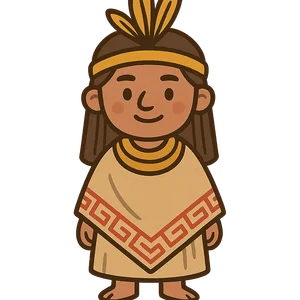
Muisca
The Muisca were an advanced Chibcha-speaking civilization that flourished on the Altiplano Cundiboyacense in…
Reads at Grades 3–5 Listens at Grades 1–5
Print & create
Answer keys·No prep·Free with an account
28 worksheets · answer keys · full story · quiz · Ages 8-10 · CEFR B1
Plus adds 116,000+ more stories in 27 languages, audio for every one, and printables for all of them.
Just want Muisca?
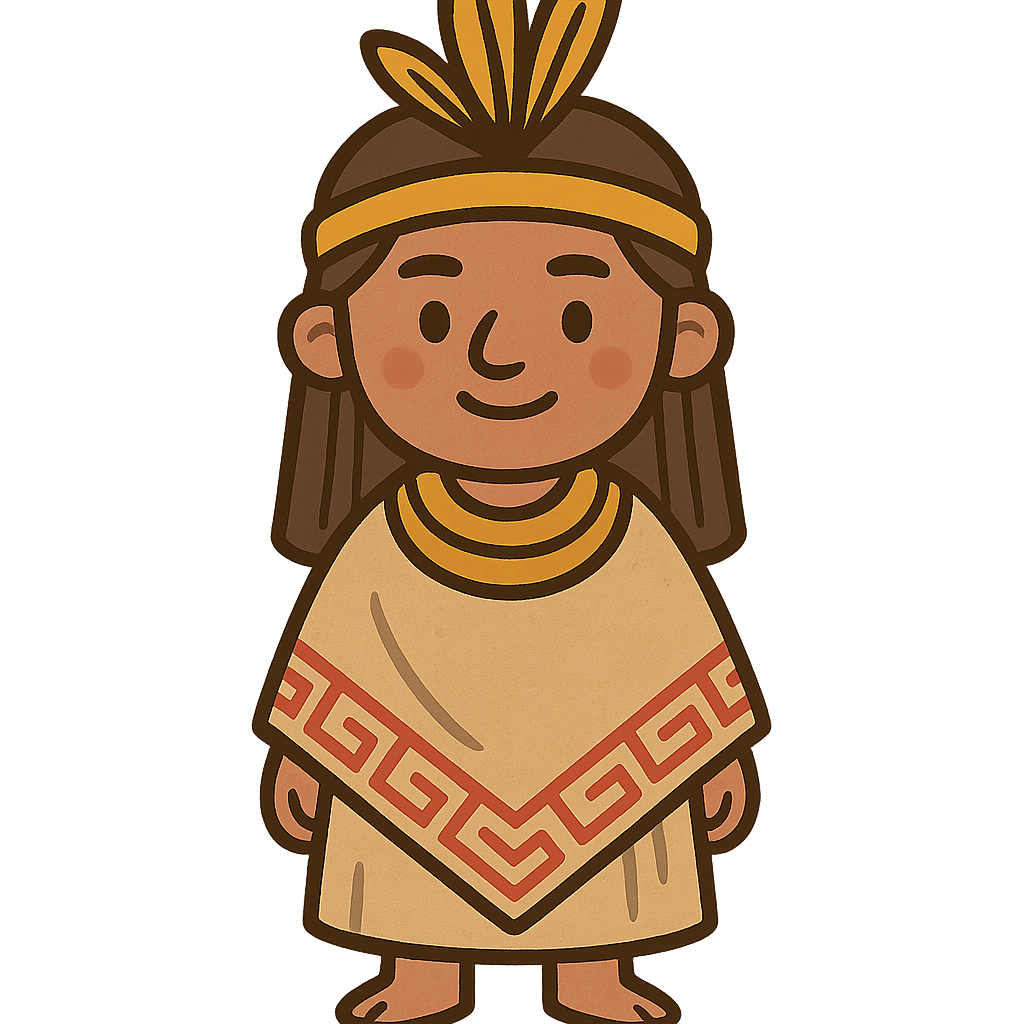
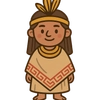
Hello, we are the Muisca people, and we want to share the story of our home and our history with you. Our ancestors built a flourishing civilization high in the Andes Mountains, in a land that is now part of the country of Colombia. We lived on a beautiful, vast plateau called the Altiplano Cundiboyacense. Our communities began to thrive here around the year 800 CE. The land was full of natural wonders, and we felt a deep connection to it. We especially honored the many lakes scattered across the plateau. We considered these bodies of water, like the famous Lake Guatavita, to be sacred places, gateways to connect with our gods and the world around us.
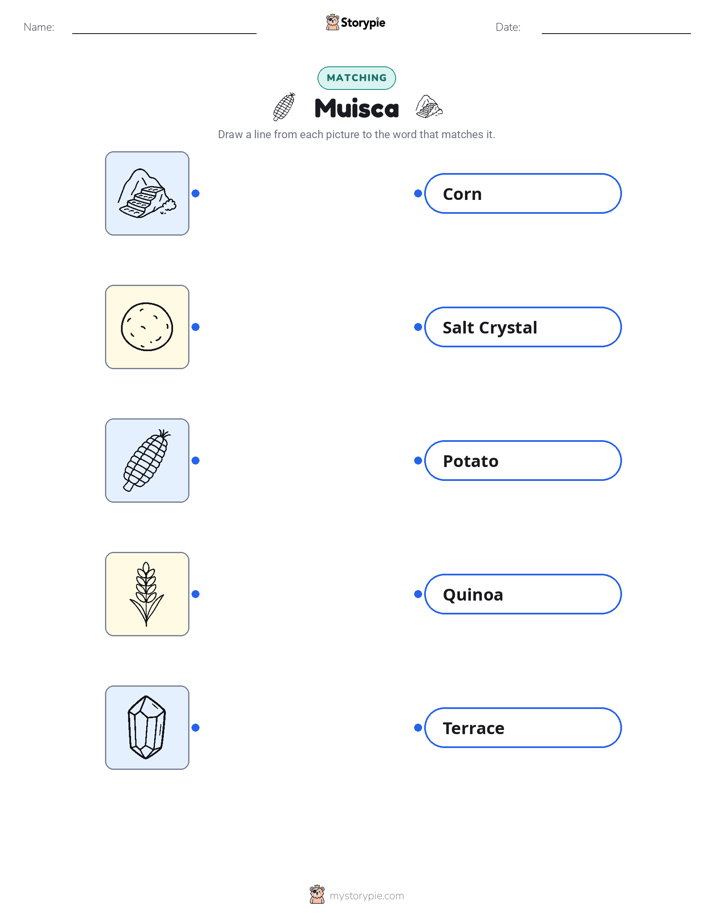
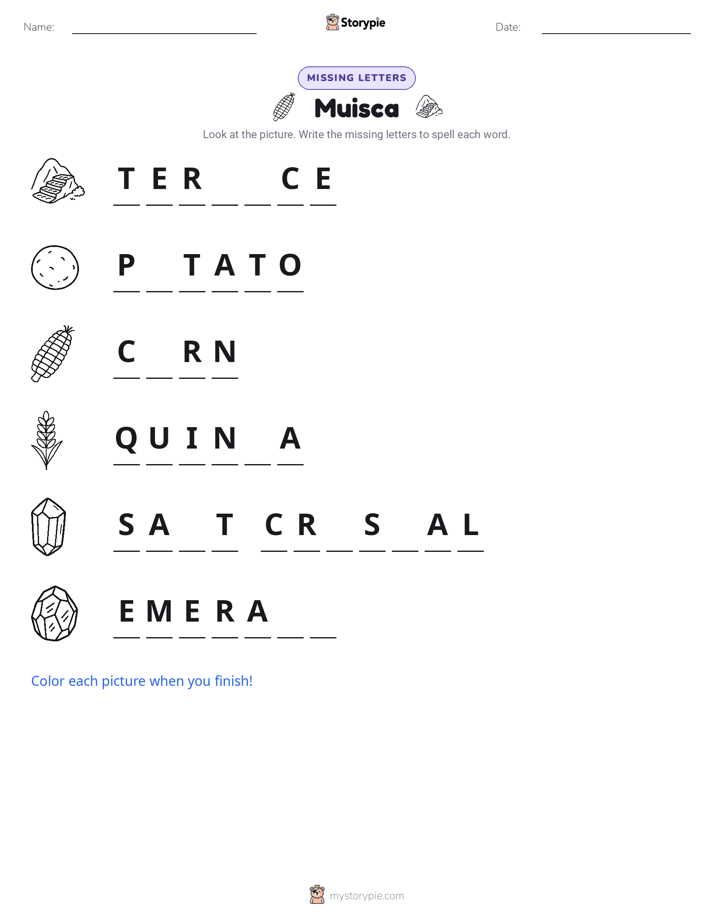
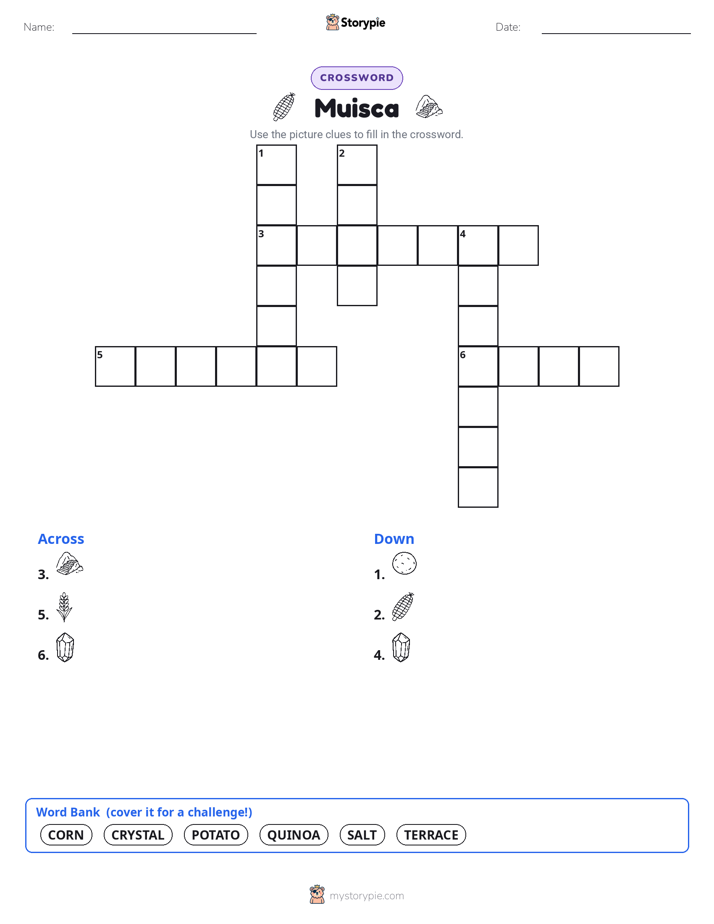
Our society was well-organized into a group of states that worked together. We called this the Muisca Confederation. It was led by powerful rulers. The southern region was governed by a ruler known as the 'zipa,' while the northern region was led by the 'zaque.' This system allowed our different communities to support one another and prosper. We were skilled farmers, and the mountain soil was perfect for growing important crops like corn and potatoes, which were central to our diet. We were also expert miners. From the earth, we carefully extracted precious resources, including salt and brilliant green emeralds. Salt was very valuable for preserving food, and our emeralds were some of the finest in the world. Because we had these valuable goods, we became active traders, exchanging our salt and emeralds with other peoples for things we needed, like cotton for our clothing and gold for our sacred ceremonies.
The People of the Mountains and Lakes
Hello, we are the Muisca people, and we want to share the story of our home and our history with you. Our ancestors built a flourishing civilization high in the Andes Mountains, in a land that is now part of the country of Colombia. We lived on a beautiful, vast plateau called the Altiplano Cundiboyacense. Our communities began to thrive here around the year 800 CE. The land was full of natural wonders, and we felt a deep connection to it. We especially honored the many lakes scattered across the plateau. We considered these bodies of water, like the famous Lake Guatavita, to be sacred places, gateways to connect with our gods and the world around us.
Our society was well-organized into a group of states that worked together. We called this the Muisca Confederation. It was led by powerful rulers. The southern region was governed by a ruler known as the 'zipa,' while the northern region was led by the 'zaque.' This system allowed our different communities to support one another and prosper. We were skilled farmers, and the mountain soil was perfect for growing important crops like corn and potatoes, which were central to our diet. We were also expert miners. From the earth, we carefully extracted precious resources, including salt and brilliant green emeralds. Salt was very valuable for preserving food, and our emeralds were some of the finest in the world. Because we had these valuable goods, we became active traders, exchanging our salt and emeralds with other peoples for things we needed, like cotton for our clothing and gold for our sacred ceremonies.
Our use of gold led to a famous story you might have heard—the legend of El Dorado. Many people came to believe that we lived in a magnificent city made of pure gold, but the real story is about one of our most important religious traditions. When a new ruler was chosen, we held a sacred ceremony to honor him and our gods. The new leader would be covered from head to toe in sticky clay and then coated with shimmering gold dust until he shone like the sun. He would then board a raft and sail to the middle of Lake Guatavita. As a sign of respect and devotion, he would offer beautiful gold treasures and jewels to the gods by releasing them into the deep, dark water of the sacred lake. This was a powerful religious ritual for us, a way to maintain balance with the spiritual world, not a city of endless gold.
For centuries, we lived in our mountain home, following our traditions. But this began to change in the year 1537 when Spanish explorers arrived in our lands. They had heard the stories of El Dorado and were searching for the mythical city of gold that they imagined. Their arrival brought great challenges that our people had never faced before. The explorers carried powerful new weapons that we could not defend against. They also brought diseases from Europe that our bodies had no protection from, and many of our people became very sick. After a period of conflict, our lands were conquered. This difficult time led to the end of the Muisca Confederation and changed our way of life forever.
Even though our confederation ended long ago, we, the Muisca people, did not disappear. Today, our descendants continue to live in communities throughout the highlands of Colombia. We are working hard to keep our culture alive for future generations. We are reviving our ancestral language, called Muysccubun, and we continue to practice our traditions. The Colombian government now officially recognizes our communities and our rights. We still feel a powerful connection to our ancestral lands, and we continue to honor the sacred mountains and lakes that have always been our home. Our story is not just in the past; it is a living history that we carry with us every day.
Wow facts
About
The Muisca were an advanced Chibcha-speaking civilization that flourished on the Altiplano Cundiboyacense in the eastern Andes of present-day Colombia. They were renowned for their sophisticated agriculture, salt mining, and exquisite goldwork, which inspired the legend of El Dorado.
Take a Quiz
Question 1 of 5
What were the two main crops the Muisca farmed in the Andes Mountains?
Explore next



Want to do even more?
Go beyond exploring. Unlock tools that turn every story into real learning.

Storypie Plus for families
Full stories, quizzes, and printables. Nights and car rides, sorted.
- Unlimited audio stories
- Create Mode: your child stars in the story
- Offline downloads
- Printable worksheets & coloring pages

Why Storypie for Schools
Students engaged. Prep in seconds. Evenings back to you.
- Worksheets & Quizzes
- Classroom Management
- Formative Assessment
- Custom Curriculum & Lesson Plans
- 27 Languages

Why Storypie for Homeschool
Curriculum done. They'll ask for more. Hours back in your day.
- Worksheet Generator
- First-Person Audio Stories
- Built-in Comprehension Quizzes
- Custom Curriculum & Lesson Plans
- Print & Go Activities