English

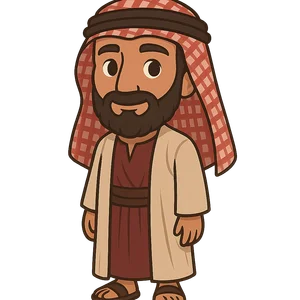
Nabataeans
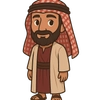
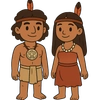
The Nabataeans were an ancient Arab people who inhabited northern Arabia and the Southern Levant.
Reads at Grades 6–8 Listens at Grades 4–8
Print & create
Answer keys·No prep·Free with an account
28 worksheets · answer keys · full story · quiz · Ages 10-12 · CEFR B2
Plus adds 164,000+ more stories in 27 languages, audio for every one, and printables for all of them.
Just want Nabataeans?
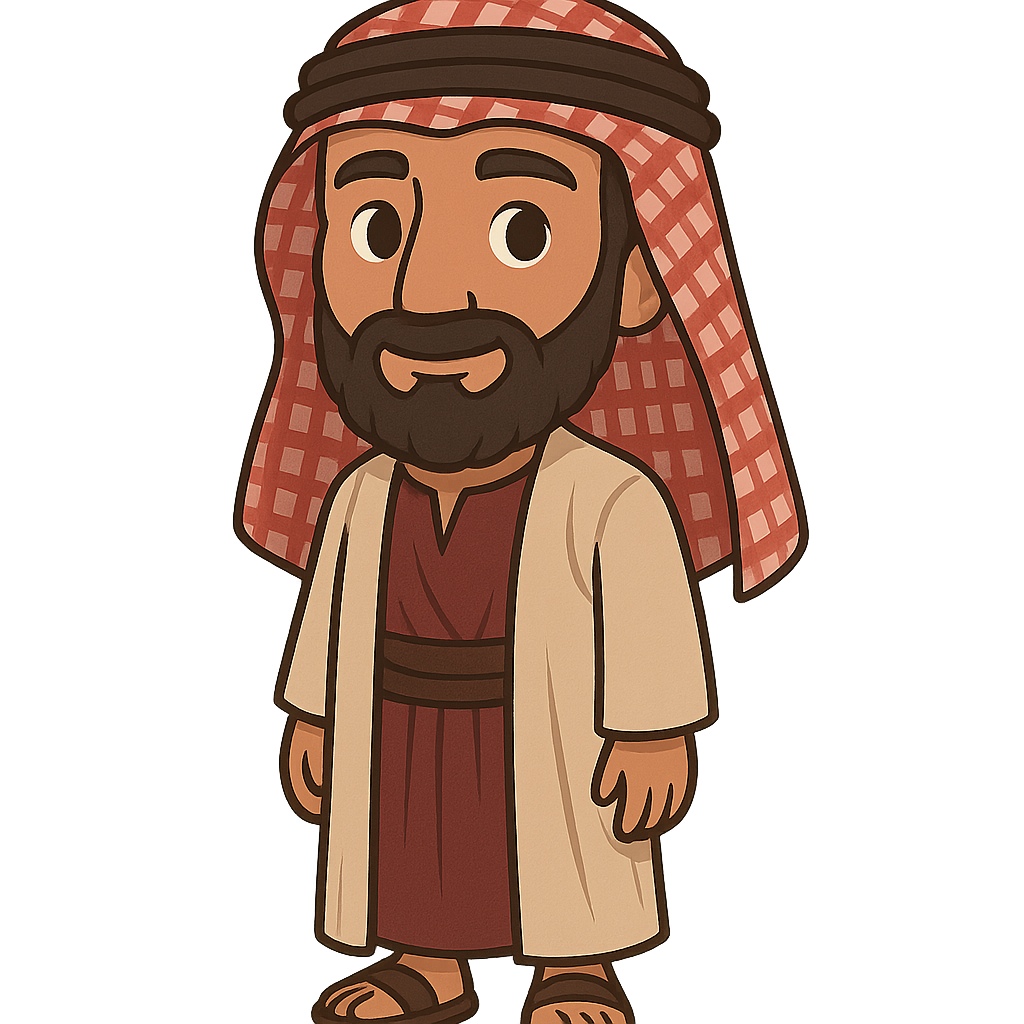
We are the Nabataeans, an ancient Arab people who mastered the desert and built a kingdom that amazed the world. Our story unfolds in the vast, rocky deserts of what is now the country of Jordan. For centuries, from about the 4th century BCE until the year 106 CE, our civilization thrived in this challenging landscape. While our independent kingdom has long since passed into history, our legacy is not forgotten. We are remembered for our skill in controlling the great trade routes that crossed our lands and, most famously, for carving breathtaking cities directly into the sides of sandstone cliffs. Our capital city, Petra, stands as the greatest testament to our ingenuity, a wonder of art and engineering that still inspires awe today.
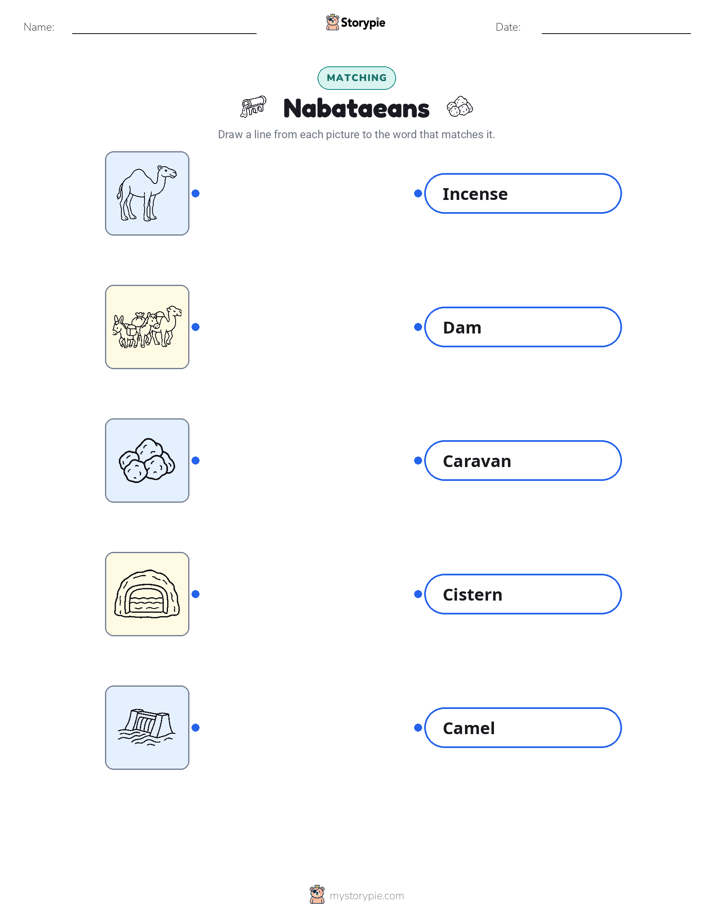
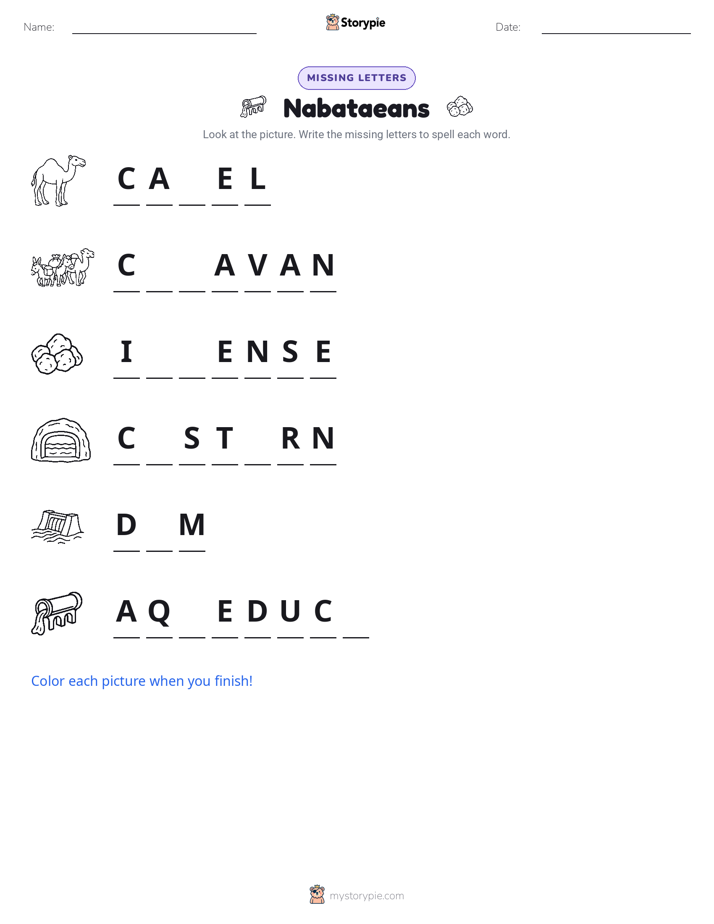
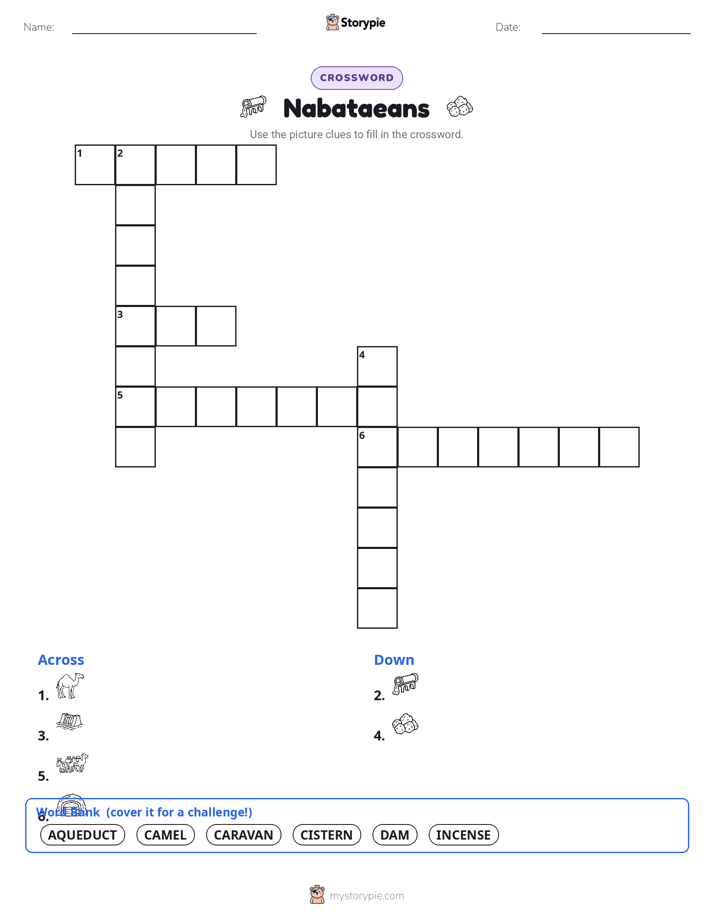
Our prosperity grew from the shifting sands of the desert. We became powerful and wealthy by controlling the Incense Road, a vital trade route that connected the ancient world. This path was the main highway for precious goods, especially frankincense and myrrh, which were highly valued resins used for perfumes and religious ceremonies. Our expert knowledge of the desert allowed our camel caravans to navigate the difficult terrain, finding hidden water sources and safe passages. We not only managed our own trade but also offered protection to other traders crossing our territory. In exchange for this safe passage, we collected taxes. This income was the foundation of our kingdom's wealth, funding the construction of our magnificent cities and allowing our culture to flourish in the heart of the arid wilderness.
We Carved a Kingdom from Stone
We are the Nabataeans, an ancient Arab people who mastered the desert and built a kingdom that amazed the world. Our story unfolds in the vast, rocky deserts of what is now the country of Jordan. For centuries, from about the 4th century BCE until the year 106 CE, our civilization thrived in this challenging landscape. While our independent kingdom has long since passed into history, our legacy is not forgotten. We are remembered for our skill in controlling the great trade routes that crossed our lands and, most famously, for carving breathtaking cities directly into the sides of sandstone cliffs. Our capital city, Petra, stands as the greatest testament to our ingenuity, a wonder of art and engineering that still inspires awe today.
Our prosperity grew from the shifting sands of the desert. We became powerful and wealthy by controlling the Incense Road, a vital trade route that connected the ancient world. This path was the main highway for precious goods, especially frankincense and myrrh, which were highly valued resins used for perfumes and religious ceremonies. Our expert knowledge of the desert allowed our camel caravans to navigate the difficult terrain, finding hidden water sources and safe passages. We not only managed our own trade but also offered protection to other traders crossing our territory. In exchange for this safe passage, we collected taxes. This income was the foundation of our kingdom's wealth, funding the construction of our magnificent cities and allowing our culture to flourish in the heart of the arid wilderness.
At the center of our kingdom was our spectacular capital, Petra. It was not a city built with bricks and mortar on an open plain, but one sculpted from the earth itself. We carved its most incredible buildings—temples, tombs, and homes—into the faces of towering red sandstone cliffs. The most famous of these structures is Al-Khazneh, also known as the Treasury, with its ornate facade emerging from the solid rock. The city's location was a secret we guarded carefully. To enter Petra, one had to pass through the Siq, a long and narrow canyon with walls that soared high on either side. This winding passage served as a dramatic gateway to our capital, but it was also a brilliant natural defense that kept our city safe from enemies and hidden from the outside world.
Living in the desert meant that water was more precious than any treasure our caravans carried. Our survival and success depended on our ability to find, collect, and save every drop. We became masters of water engineering, developing sophisticated systems that allowed us to make the desert bloom. To capture the rare but powerful flash floods that swept through the canyons, we built a complex network of dams, channels, and aqueducts. These structures guided the rainwater into vast underground reservoirs called cisterns, which we carved into the rock. This stored water sustained our people throughout the long, dry months. Our ingenuity in water management was so advanced that we could support a large population in Petra and even cultivate gardens and grow crops, creating an oasis of life in an otherwise dry and unforgiving land.
Our culture was as rich and complex as our engineering. Our spiritual lives centered on the worship of gods like Dushara, our principal male deity, and the goddess Al-Uzza. Because we were at a crossroads of the ancient world, our art and architecture reflected the many cultures we met through trade. As you walk through Petra, you can see how we blended our own artistic traditions with styles from the Greeks and Romans, creating something uniquely our own. Our society also had distinctive features. Historical evidence shows that, unlike in many other ancient cultures, Nabataean women possessed significant legal rights, allowing them to own and inherit property and conduct business independently. This gave women an important and respected role within our community.
Our time as an independent kingdom came to a peaceful end in the year 106 CE. The powerful Roman Empire was expanding, and our rulers chose to join it rather than fight. Our kingdom was incorporated into the empire and became a new province known as Arabia Petraea. For a time, our cities continued to thrive under Roman rule. However, the world was changing. Over time, traders discovered that it was faster and cheaper to transport goods by sea rather than by land. The old caravan routes, including the Incense Road that had been the source of our wealth, were used less and less. Without the constant flow of trade and money, our magnificent desert cities slowly began to decline.
After our cities were abandoned, they were gradually forgotten by much of the world, their secrets guarded by the desert for centuries. It was not until 1812 that our capital, Petra, was rediscovered by a European explorer, reintroducing its wonders to the Western world. Today, the memory of our people lives on in the stone we carved. Petra is now recognized as a UNESCO World Heritage site, and people from all over the globe travel to walk through the Siq and gaze upon the Treasury. Our story is a powerful reminder of how a resourceful and determined people can create a thriving and beautiful civilization in even the most challenging of environments. Our legacy is written in rock, a lasting monument to our mastery of the desert.
Wow facts
About
The Nabataeans were an ancient Arab people who inhabited northern Arabia and the Southern Levant. They are best known for their capital city of Petra, carved from rock, and their control over the lucrative incense and spice trade routes.
Take a Quiz
Question 1 of 5
What was the main source of the Nabataeans' wealth?
Explore next



Want to do even more?
Go beyond exploring. Unlock tools that turn every story into real learning.

Storypie Plus for families
Full stories, quizzes, and printables. Nights and car rides, sorted.
- Unlimited audio stories
- Create Mode: your child stars in the story
- Offline downloads
- Printable worksheets & coloring pages

Why Storypie for Schools
Students engaged. Prep in seconds. Evenings back to you.
- Worksheets & Quizzes
- Classroom Management
- Formative Assessment
- Custom Curriculum & Lesson Plans
- 27 Languages

Why Storypie for Homeschool
Curriculum done. They'll ask for more. Hours back in your day.
- Worksheet Generator
- First-Person Audio Stories
- Built-in Comprehension Quizzes
- Custom Curriculum & Lesson Plans
- Print & Go Activities