English

Nazca Culture
The Nazca culture was an ancient civilization that flourished on the arid southern coast of Peru from…
Reads at Grades 3–5 Listens at Grades 1–5
Print & create
Answer keys·No prep·Free with an account
28 worksheets · answer keys · full story · quiz · Ages 8-10 · CEFR B1
Plus adds 116,000+ more stories in 27 languages, audio for every one, and printables for all of them.
Just want Nazca Culture?
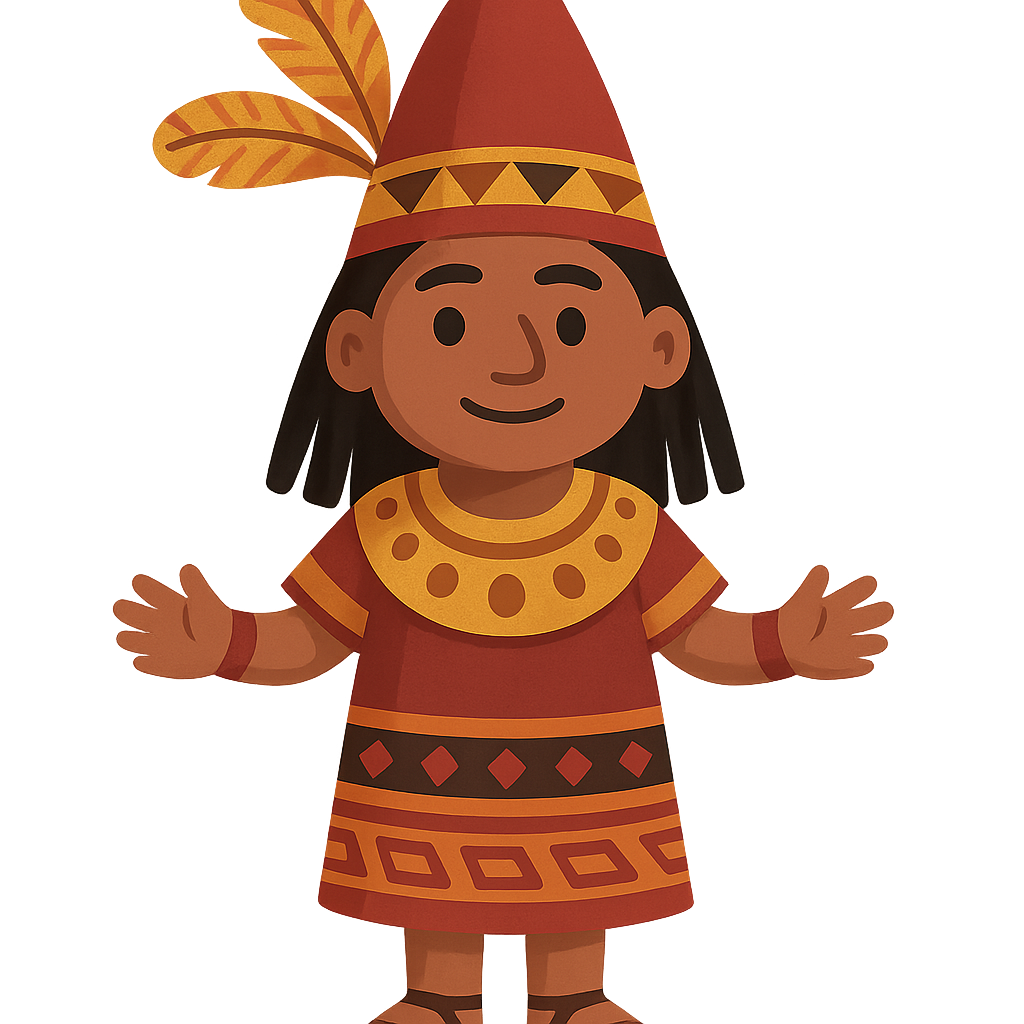
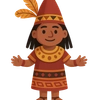
Hello, we are the Nazca people. For hundreds of years, our home was in the beautiful but challenging desert valleys of southern Peru. We lived here from around 100 BCE to 800 CE. Our land is one of the driest places on Earth, where rain almost never falls. For many, this would make it impossible to grow food and build a community. But we were clever and learned to work with the land to survive and flourish.
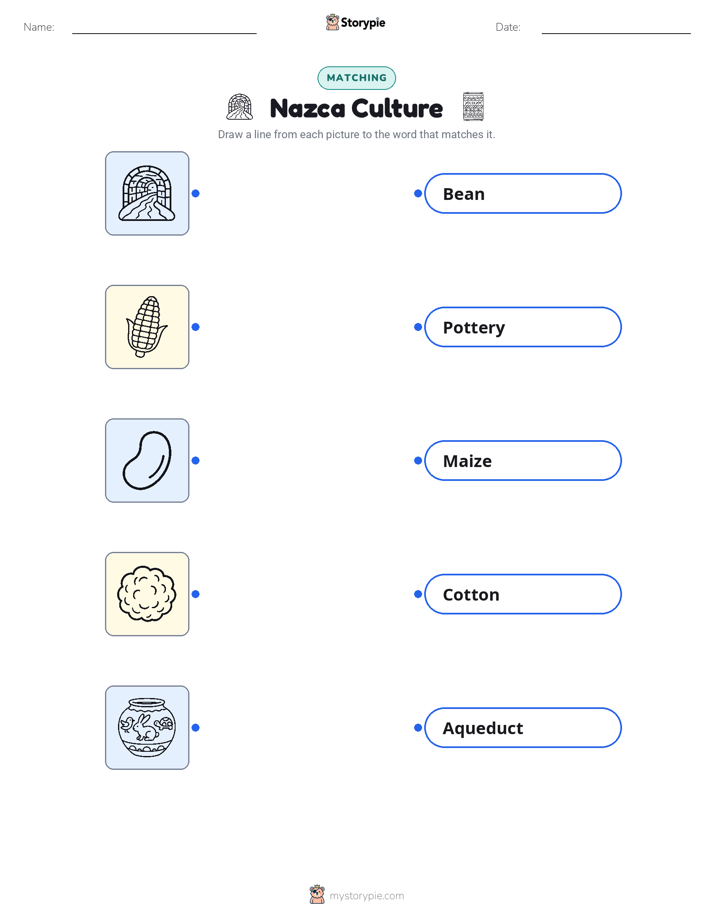
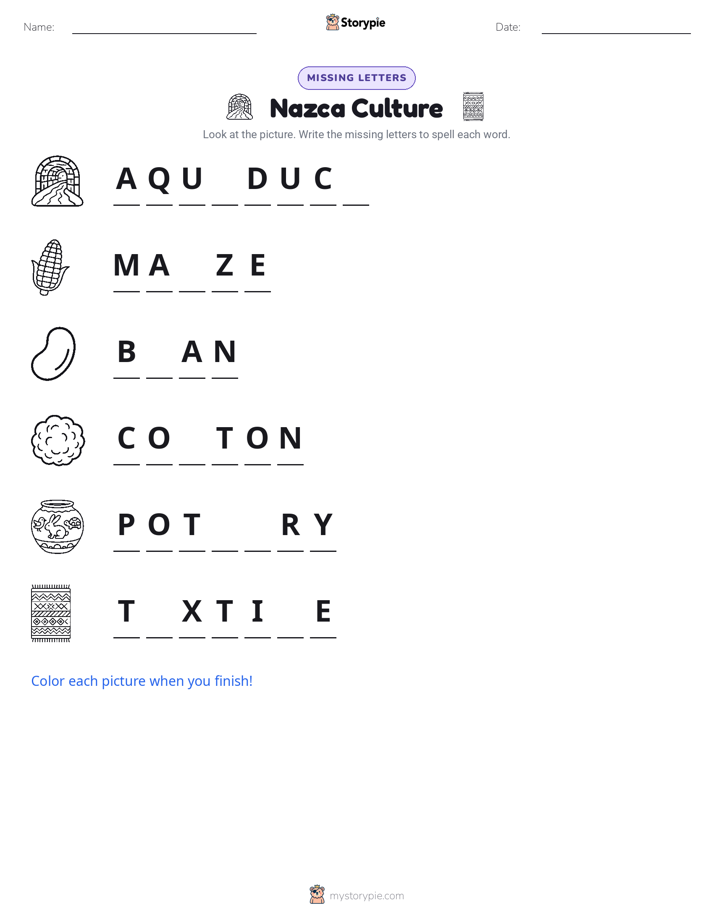
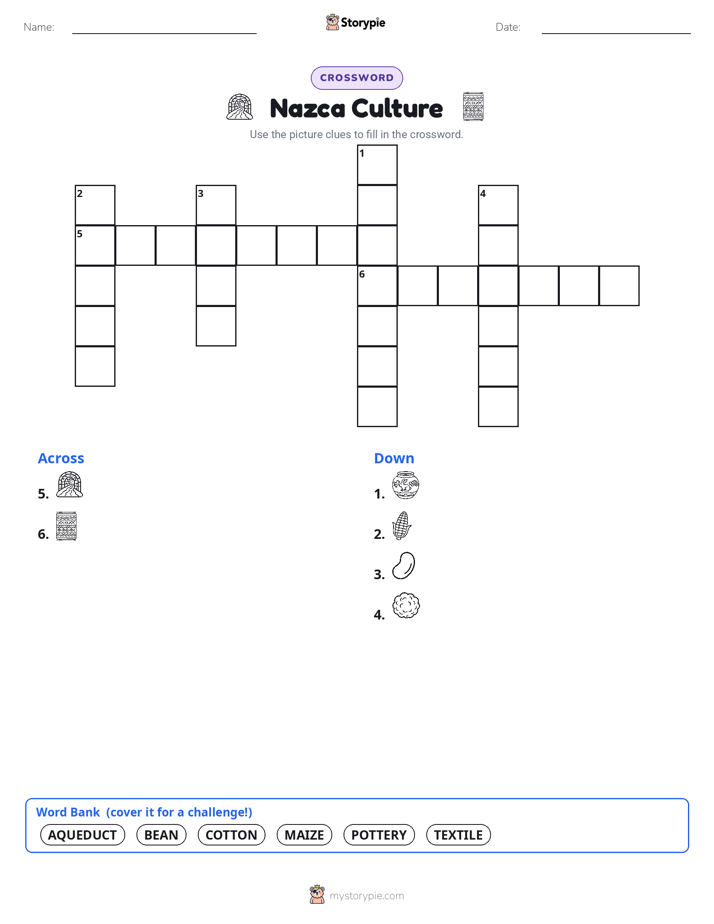
Our greatest challenge was water. How could we farm without rain? We looked beneath the surface of the earth for our answer. We discovered that water flowed deep underground, hidden from the sun. So, we built an incredible system of underground aqueducts, which we called puquios. These were like secret, underground rivers that we carefully engineered. We dug tunnels and channels to guide the water from its source to our fields. This clean water allowed us to grow crops and feed our families, allowing our communities to thrive in the middle of the desert. Our puquios were a testament to our understanding of the land and our ability to solve difficult problems.
We were not only engineers; we were also skilled artists who loved to tell stories through our creations. We used the clay from the earth to make beautiful pottery. Our pots and vessels were not just plain brown; we painted them with many colors, creating bright and lively designs. On our ceramics, you can see the world as we saw it. We painted animals from our environment, like birds, fish, and lizards. We also painted the plants we grew and even powerful, mythical beings from our beliefs. Each piece of pottery told a story or held a special meaning.
The Desert Artists of Nazca
Hello, we are the Nazca people. For hundreds of years, our home was in the beautiful but challenging desert valleys of southern Peru. We lived here from around 100 BCE to 800 CE. Our land is one of the driest places on Earth, where rain almost never falls. For many, this would make it impossible to grow food and build a community. But we were clever and learned to work with the land to survive and flourish.
Our greatest challenge was water. How could we farm without rain? We looked beneath the surface of the earth for our answer. We discovered that water flowed deep underground, hidden from the sun. So, we built an incredible system of underground aqueducts, which we called puquios. These were like secret, underground rivers that we carefully engineered. We dug tunnels and channels to guide the water from its source to our fields. This clean water allowed us to grow crops and feed our families, allowing our communities to thrive in the middle of the desert. Our puquios were a testament to our understanding of the land and our ability to solve difficult problems.
We were not only engineers; we were also skilled artists who loved to tell stories through our creations. We used the clay from the earth to make beautiful pottery. Our pots and vessels were not just plain brown; we painted them with many colors, creating bright and lively designs. On our ceramics, you can see the world as we saw it. We painted animals from our environment, like birds, fish, and lizards. We also painted the plants we grew and even powerful, mythical beings from our beliefs. Each piece of pottery told a story or held a special meaning.
Our artistic skill also showed in the intricate textiles we wove. Using cotton that we grew in our irrigated fields and wool from animals, we created detailed fabrics. These were not just for keeping warm; they were works of art. The designs on our textiles often matched the ones on our pottery, connecting our different art forms. We wove geometric patterns, animal figures, and other important symbols into our cloth, carrying our stories and traditions in the very clothes we wore and the blankets we used.
Perhaps what we are most famous for today are the giant messages we left on the desert floor. These are now called the Nazca Lines. To create these enormous drawings, or geoglyphs, we carefully cleared away the dark, reddish-brown stones that cover the desert surface. This revealed the lighter-colored ground underneath. From the ground, they just look like long paths, but from high above in the air, they form huge, clear pictures. We drew hummingbirds with long beaks, spiders, monkeys, and many other animals, as well as straight lines and geometric shapes.
Why did we create such massive drawings that could only be fully seen from the sky? We can't know for sure, but many believe they were a very important part of our religious ceremonies. Living in such a dry place, water was the most precious thing. We think these lines may have been created as a way to communicate with our gods. By making these huge figures on the land, we may have been asking the gods to bless us with water for our crops and to make the land fertile so we could continue to live and grow. They were a sacred part of our connection to the earth and the heavens.
Our culture flourished for many centuries, but around 800 CE, things began to change. Scientists think that long periods of drought may have made it too difficult to farm, even with our clever puquios. Our communities slowly declined. Though our time as a distinct culture came to an end, we left behind a powerful legacy. Our amazing puquios still show how well we understood our environment. Our colorful pottery and textiles are admired in museums around the world. And, of course, the mysterious Nazca Lines continue to fascinate everyone who sees them. Our achievements teach people today about the creativity and ingenuity of those who lived long ago.
Wow facts
About
The Nazca culture was an ancient civilization that flourished on the arid southern coast of Peru from approximately 100 BCE to 800 CE. They are renowned for their ceramics, textiles, and the creation of enormous geoglyphs known as the Nazca Lines.
Take a Quiz
Question 1 of 5
What were the puquios that the Nazca people built?
Want to do even more?
Go beyond exploring. Unlock tools that turn every story into real learning.

Storypie Plus for families
Full stories, quizzes, and printables. Nights and car rides, sorted.
- Unlimited audio stories
- Create Mode: your child stars in the story
- Offline downloads
- Printable worksheets & coloring pages

Why Storypie for Schools
Students engaged. Prep in seconds. Evenings back to you.
- Worksheets & Quizzes
- Classroom Management
- Formative Assessment
- Custom Curriculum & Lesson Plans
- 27 Languages

Why Storypie for Homeschool
Curriculum done. They'll ask for more. Hours back in your day.
- Worksheet Generator
- First-Person Audio Stories
- Built-in Comprehension Quizzes
- Custom Curriculum & Lesson Plans
- Print & Go Activities