English

Nazca Culture
The Nazca culture was an ancient civilization that flourished on the arid southern coast of Peru from…
Reads at Grades 6–8 Listens at Grades 4–8
Print & create
Answer keys·No prep·Free with an account
28 worksheets · answer keys · full story · quiz · Ages 10-12 · CEFR B2
Plus adds 116,000+ more stories in 27 languages, audio for every one, and printables for all of them.
Just want Nazca Culture?
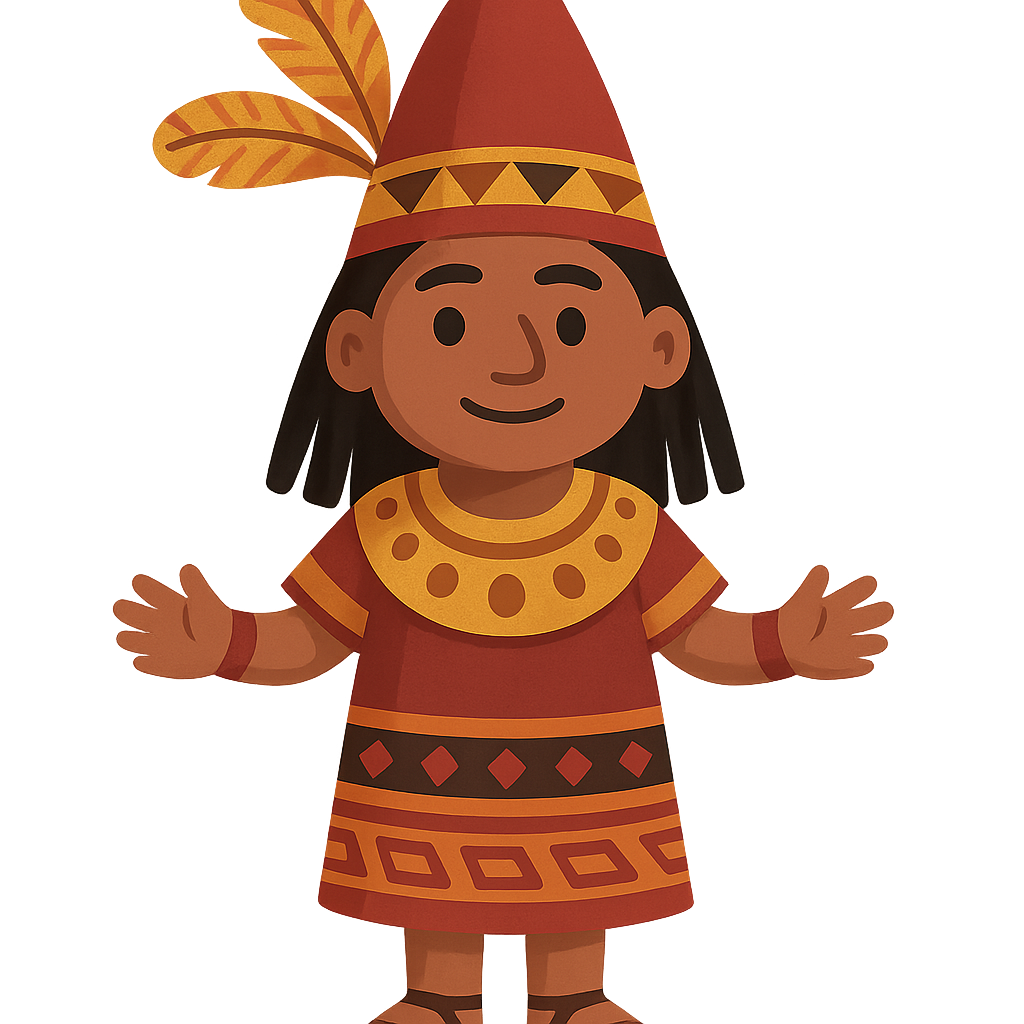
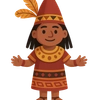
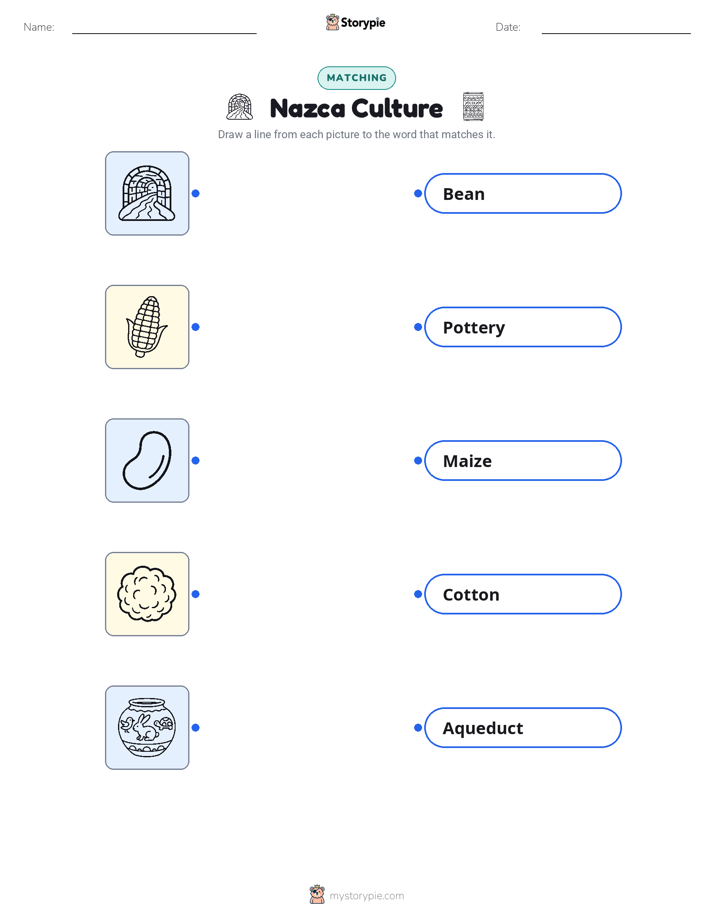
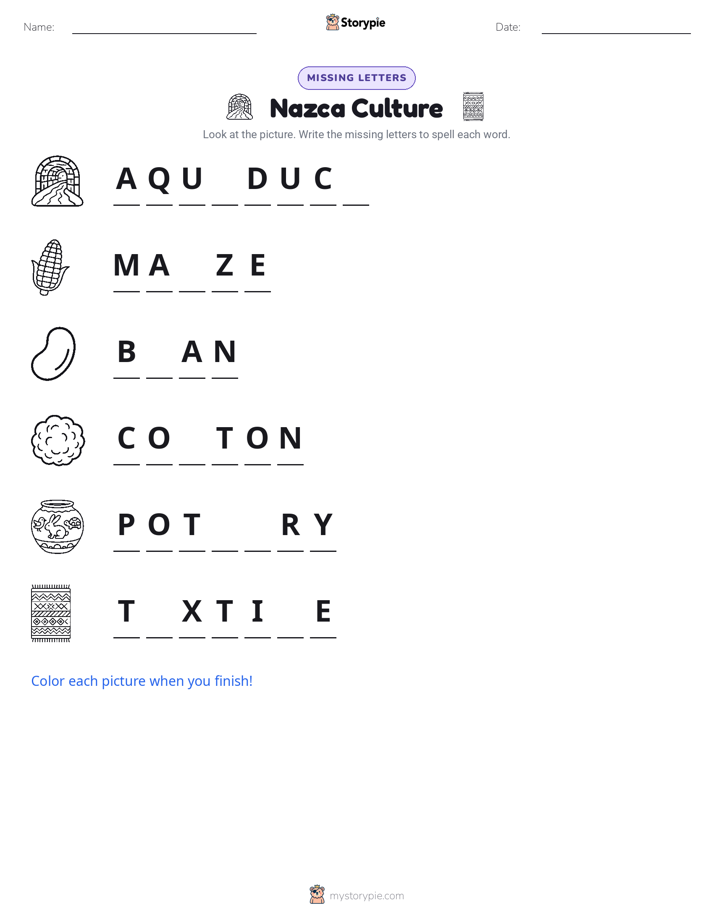
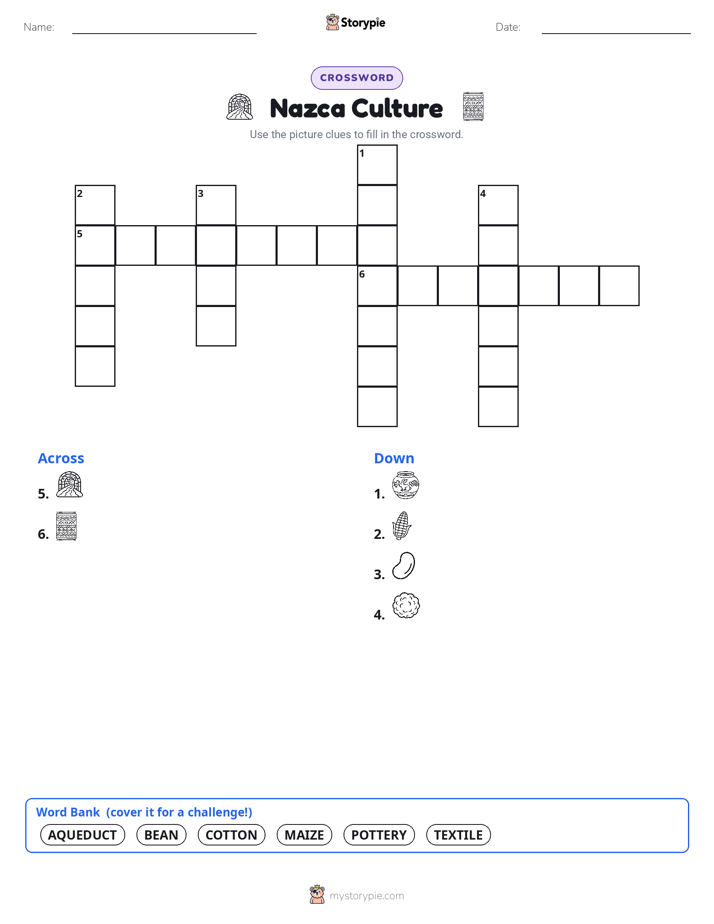
Hello. We are the Nazca people, and our story is written in the earth of Peru’s southern coast. For centuries, from about 100 BCE to 800 CE, we made our home in the dry river valleys here. This region is one of the driest places on the entire planet, a landscape of sand and stone where rain almost never falls. To many, it might seem like an impossible place to live, but we were farmers who learned the secrets of the desert. Our survival depended on our ingenuity. Instead of waiting for rain that rarely came, we looked for water hidden deep underground. We engineered a remarkable system of underground aqueducts, which we called puquios. These were carefully constructed tunnels that tapped into underground sources and carried water for miles, bringing it to the surface and into our fields. Thanks to the puquios, we could grow the crops that sustained us, like maize, beans, and cotton, turning the dry desert into a place of life and community.
Our creativity was not just for farming; it flowed into every part of our lives. We were skilled artists, and you can see our vision in the vibrant, multi-colored pottery we crafted. On our pots, we painted figures from the world around us and from our spiritual beliefs, including powerful mythical beings and the animals that shared our desert home. We were also master weavers, creating intricate textiles with complex patterns that told stories without words. Our society was not one large kingdom or empire ruled by a single leader. Instead, we were likely a collection of different chiefdoms, each with its own community, connected by shared traditions and beliefs. At the heart of our spiritual world was a great ceremonial center called Cahuachi. It was not a city where people lived year-round but a sacred place of pilgrimage. We would gather at Cahuachi for important rituals, connecting with our gods and with one another in the shadow of its earthen pyramids.
The Lines in the Desert
Hello. We are the Nazca people, and our story is written in the earth of Peru’s southern coast. For centuries, from about 100 BCE to 800 CE, we made our home in the dry river valleys here. This region is one of the driest places on the entire planet, a landscape of sand and stone where rain almost never falls. To many, it might seem like an impossible place to live, but we were farmers who learned the secrets of the desert. Our survival depended on our ingenuity. Instead of waiting for rain that rarely came, we looked for water hidden deep underground. We engineered a remarkable system of underground aqueducts, which we called puquios. These were carefully constructed tunnels that tapped into underground sources and carried water for miles, bringing it to the surface and into our fields. Thanks to the puquios, we could grow the crops that sustained us, like maize, beans, and cotton, turning the dry desert into a place of life and community.
Our creativity was not just for farming; it flowed into every part of our lives. We were skilled artists, and you can see our vision in the vibrant, multi-colored pottery we crafted. On our pots, we painted figures from the world around us and from our spiritual beliefs, including powerful mythical beings and the animals that shared our desert home. We were also master weavers, creating intricate textiles with complex patterns that told stories without words. Our society was not one large kingdom or empire ruled by a single leader. Instead, we were likely a collection of different chiefdoms, each with its own community, connected by shared traditions and beliefs. At the heart of our spiritual world was a great ceremonial center called Cahuachi. It was not a city where people lived year-round but a sacred place of pilgrimage. We would gather at Cahuachi for important rituals, connecting with our gods and with one another in the shadow of its earthen pyramids.
Of all the things we created, we are most famous for the vast drawings we etched into the desert floor. Today, they are known as the Nazca Lines. These enormous figures, or geoglyphs, are so large that they can only be truly appreciated from high above. To create them, we carefully cleared away the dark, reddish stones that cover the desert surface, revealing the lighter-colored earth beneath. We drew hummingbirds with long, delicate beaks, spiders with spindly legs, and many other shapes and lines that stretched for miles. For a long time, their purpose was a mystery. Modern scholars now believe that the lines were part of our most important religious ceremonies. We may have created them as sacred pathways or as offerings to the gods who controlled water and fertility, asking them to bless our fields and bring life to the desert. The same dry climate that challenged us has also been our story’s greatest preserver, protecting these incredible lines for centuries.
Our time in the desert valleys eventually came to an end. Around 800 CE, our culture began to decline, a change that was likely caused by a long and extreme drought that even our clever puquios could not overcome. Though our society changed, our story was not lost. We are remembered today through the amazing things we left behind. Our beautiful pottery and textiles can be found in museums, showing the world our artistic skill and spiritual vision. But our greatest legacy remains etched in the land itself. The Nazca Lines are now a UNESCO World Heritage Site, recognized as a treasure belonging to all of humanity. People from all over the world travel to see them, to wonder at their scale and mystery, and to study the story of a people who made the desert bloom.
Wow facts
About
The Nazca culture was an ancient civilization that flourished on the arid southern coast of Peru from approximately 100 BCE to 800 CE. They are renowned for their ceramics, textiles, and the creation of enormous geoglyphs known as the Nazca Lines.
Take a Quiz
Question 1 of 5
What were the underground aqueducts created by the Nazca people called, and what was their purpose?
Want to do even more?
Go beyond exploring. Unlock tools that turn every story into real learning.

Storypie Plus for families
Full stories, quizzes, and printables. Nights and car rides, sorted.
- Unlimited audio stories
- Create Mode: your child stars in the story
- Offline downloads
- Printable worksheets & coloring pages

Why Storypie for Schools
Students engaged. Prep in seconds. Evenings back to you.
- Worksheets & Quizzes
- Classroom Management
- Formative Assessment
- Custom Curriculum & Lesson Plans
- 27 Languages

Why Storypie for Homeschool
Curriculum done. They'll ask for more. Hours back in your day.
- Worksheet Generator
- First-Person Audio Stories
- Built-in Comprehension Quizzes
- Custom Curriculum & Lesson Plans
- Print & Go Activities