English

Sioux
The Sioux are a large group of Native American people in North America…
Reads at Grades 6–8 Listens at Grades 4–8
Print & create
Answer keys·No prep·Free with an account
28 worksheets · answer keys · full story · quiz · Ages 10-12 · CEFR B2
Plus adds 164,000+ more stories in 27 languages, audio for every one, and printables for all of them.
Just want Sioux?
We introduce ourselves to you as the Sioux, a name you may have heard in stories and history books. But our own name for our great nation is the Oceti Sakowin, which means the Seven Council Fires. This name tells you who we are: a united people made up of seven council groups. We are a large, extended family with shared roots, organized into three main divisions based on our dialects and where our homelands were located. These divisions are the Dakota, or Eastern division; the Nakota, or Middle division; and the Lakota, or Western division. While we share a common history and many cultural beliefs, each division has its own distinct traditions and language variations, making our nation rich and diverse.
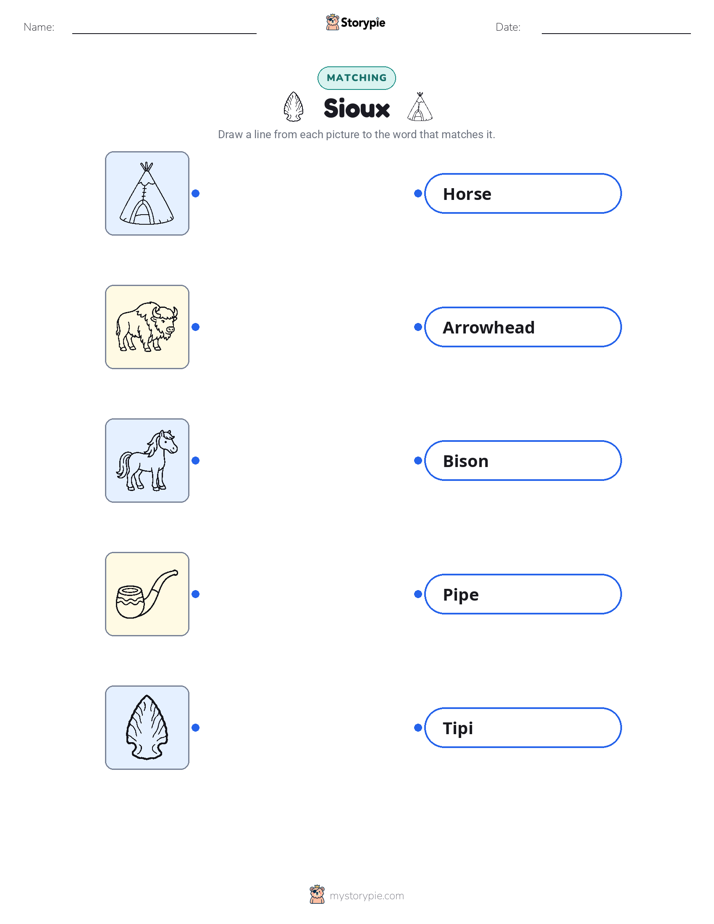
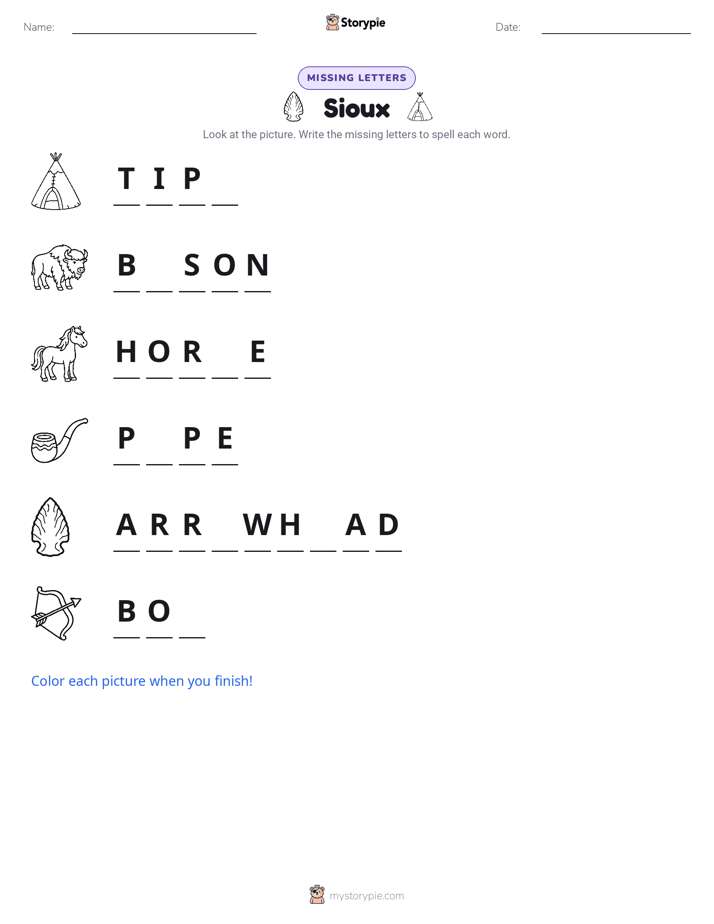
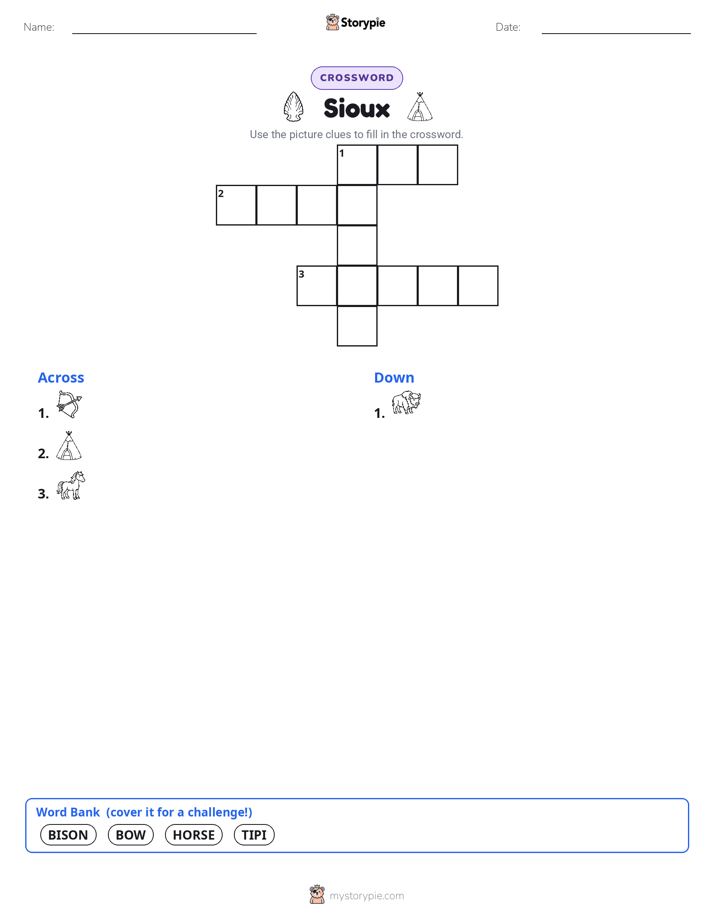
For countless generations, our lives were shaped by the vast, open grasslands of the Great Plains. This land of rolling hills and endless sky was our home, and at the center of our world was the American bison, an animal we call Tatanka. The bison was more than just a source of food; it was a sacred gift that provided everything we needed to live. We ate its meat, which sustained our families. We used its strong hides to create our cone-shaped homes, called tipis, which were easy to move as we followed the herds. Even the bones of the bison did not go to waste, as we skillfully crafted them into tools, from scrapers for cleaning hides to needles for sewing. Our entire way of life was woven together with the life of the Tatanka.
A great change came to our world in the 1700s with the arrival of horses. Before then, we traveled and hunted on foot, which required great skill and stamina. But the horse transformed everything. Suddenly, we could travel farther and faster than ever before, allowing our people to expand across the plains. Horses made us expert hunters, able to keep pace with the mighty bison herds. This new mobility strengthened our communities and allowed our culture to flourish across the heart of the continent. The horse became a treasured partner and a symbol of wealth and honor among our people.
The Seven Council Fires: The Story of the Sioux
We introduce ourselves to you as the Sioux, a name you may have heard in stories and history books. But our own name for our great nation is the Oceti Sakowin, which means the Seven Council Fires. This name tells you who we are: a united people made up of seven council groups. We are a large, extended family with shared roots, organized into three main divisions based on our dialects and where our homelands were located. These divisions are the Dakota, or Eastern division; the Nakota, or Middle division; and the Lakota, or Western division. While we share a common history and many cultural beliefs, each division has its own distinct traditions and language variations, making our nation rich and diverse.
For countless generations, our lives were shaped by the vast, open grasslands of the Great Plains. This land of rolling hills and endless sky was our home, and at the center of our world was the American bison, an animal we call Tatanka. The bison was more than just a source of food; it was a sacred gift that provided everything we needed to live. We ate its meat, which sustained our families. We used its strong hides to create our cone-shaped homes, called tipis, which were easy to move as we followed the herds. Even the bones of the bison did not go to waste, as we skillfully crafted them into tools, from scrapers for cleaning hides to needles for sewing. Our entire way of life was woven together with the life of the Tatanka.
A great change came to our world in the 1700s with the arrival of horses. Before then, we traveled and hunted on foot, which required great skill and stamina. But the horse transformed everything. Suddenly, we could travel farther and faster than ever before, allowing our people to expand across the plains. Horses made us expert hunters, able to keep pace with the mighty bison herds. This new mobility strengthened our communities and allowed our culture to flourish across the heart of the continent. The horse became a treasured partner and a symbol of wealth and honor among our people.
Our communities have always been built around the tiyospaye, which are our extended family groups. In a tiyospaye, everyone from the youngest child to the most respected elder has an important role to play. We are taught from a young age that the well-being of the group is more important than any one individual. This is why we practice the value of generosity, sharing our food and belongings with anyone in need. We teach our children the four great virtues: courage to face challenges, wisdom to make good decisions, generosity to care for others, and respect for all life. These values guide us in everything we do and hold our families and our nation together.
Our spirituality is a deep connection to the world around us. We see the divine in every part of creation—the sun, the earth, the animals, and the wind. We call this sacred power Wakan Tanka, the Great Mystery or the Creator of all things. It is not a single being in the sky but a spirit that flows through everything. To honor this connection and maintain balance in the world, we practice sacred ceremonies that have been passed down through generations. When we pray with the sacred pipe, we send our voices to Wakan Tanka. During ceremonies like the Sun Dance, we make personal sacrifices to show our gratitude and to pray for the health and strength of our people.
The 1800s brought enormous challenges that tested our values and our very survival. As American settlers pushed westward, they came into our lands, leading to conflict. The U.S. government made many promises to us in the form of treaties. One of the most important was the Fort Laramie Treaty of 1868. Leaders like Red Cloud negotiated this treaty, which guaranteed us ownership of our sacred Black Hills in what is now South Dakota. But like many other promises, this treaty was broken when gold was discovered in the hills. We fought many wars to defend our homelands and our way of life against the U.S. army.
During this time, great leaders like Sitting Bull and Crazy Horse emerged to lead our people. In 1876, they led us to a great victory at the Battle of the Little Bighorn, where we defended our families against soldiers who had come to force us from our lands. Despite this victory, the pressures against us were overwhelming. The U.S. government encouraged the destruction of the bison herds, knowing that without the Tatanka, our people could not survive on the plains. This policy, combined with continued military force, broke our ability to resist. The tragic Wounded Knee Massacre in 1890 was a painful and sorrowful end to this era of warfare, and our people were forced to live on reservations.
Despite these hardships, we are still here, and our culture remains strong. Today, the Oceti Sakowin is a vibrant and growing nation of many thousands of people. Many of our people live on reservations across the Great Plains, while others live in cities throughout North America. We are working hard to ensure our culture thrives for future generations. We are revitalizing our Dakota, Nakota, and Lakota languages, teaching them to our children in schools and at home. We are governing ourselves and fighting to protect the treaty rights and sacred sites that belong to us. We are artists, leaders, teachers, doctors, and storytellers, proudly carrying the spirit and resilience of our ancestors into the future.
Wow facts
About
The Sioux are a large group of Native American people in North America, composed of three major divisions: the Dakota, Lakota, and Nakota. Historically centered on the Great Plains, their culture was renowned for skilled horsemanship and bison hunting.
Take a Quiz
Question 1 of 5
What is the meaning of Oceti Sakowin, the name the Sioux people call their nation?
Explore next





Want to do even more?
Go beyond exploring. Unlock tools that turn every story into real learning.

Storypie Plus for families
Full stories, quizzes, and printables. Nights and car rides, sorted.
- Unlimited audio stories
- Create Mode: your child stars in the story
- Offline downloads
- Printable worksheets & coloring pages

Why Storypie for Schools
Students engaged. Prep in seconds. Evenings back to you.
- Worksheets & Quizzes
- Classroom Management
- Formative Assessment
- Custom Curriculum & Lesson Plans
- 27 Languages

Why Storypie for Homeschool
Curriculum done. They'll ask for more. Hours back in your day.
- Worksheet Generator
- First-Person Audio Stories
- Built-in Comprehension Quizzes
- Custom Curriculum & Lesson Plans
- Print & Go Activities