English

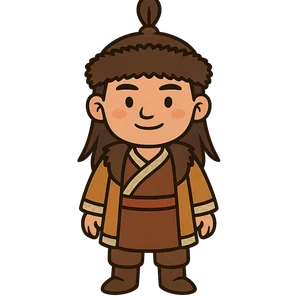
Xiongnu
The Xiongnu were a powerful tribal confederation of nomadic peoples who inhabited the eastern Eurasian Steppe…
Reads at Grades 6–8 Listens at Grades 4–8
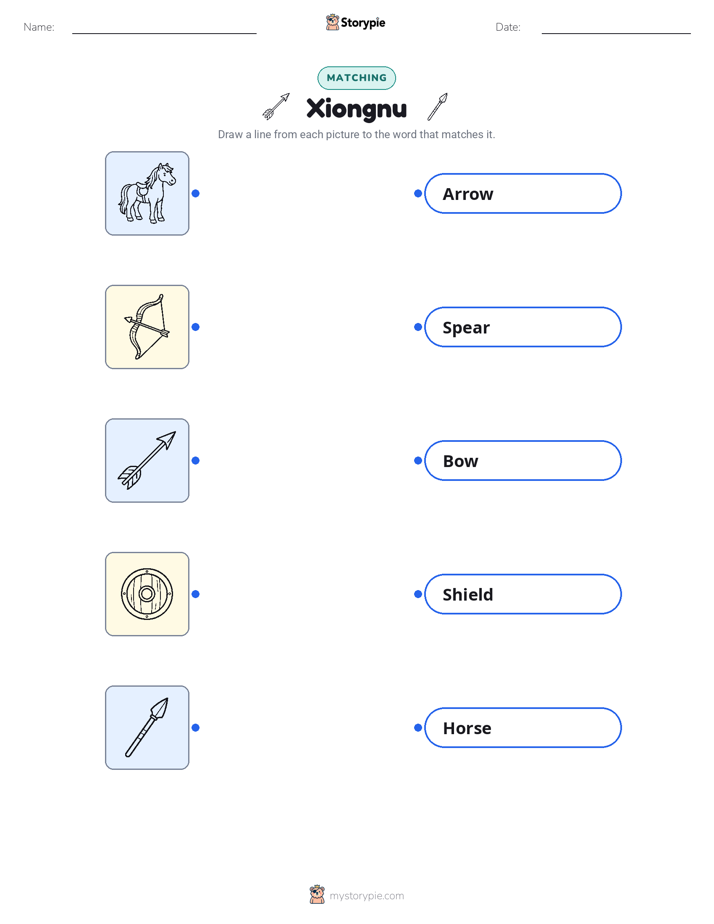
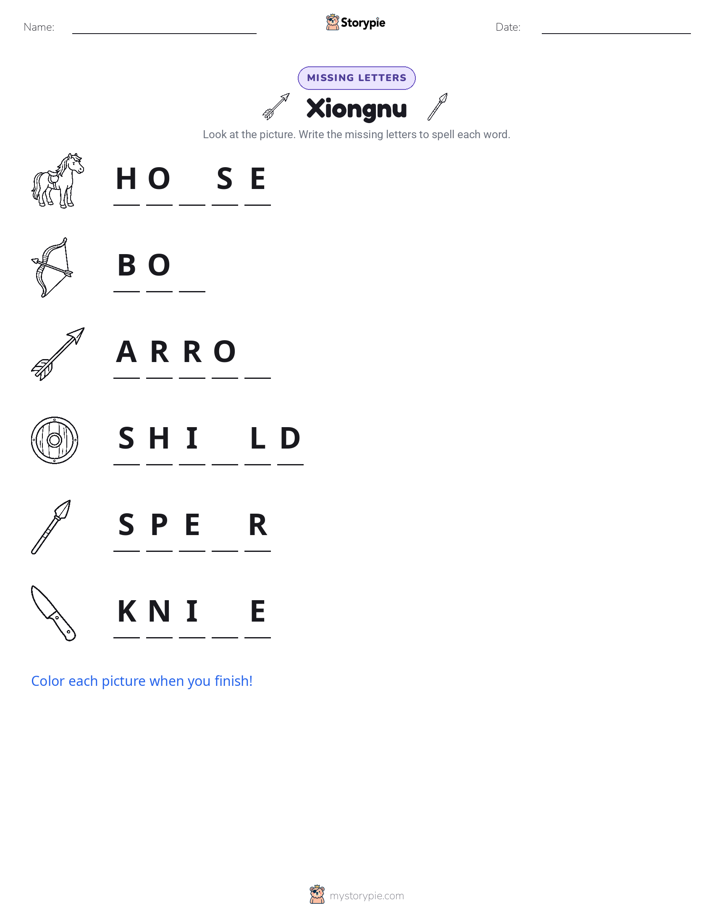
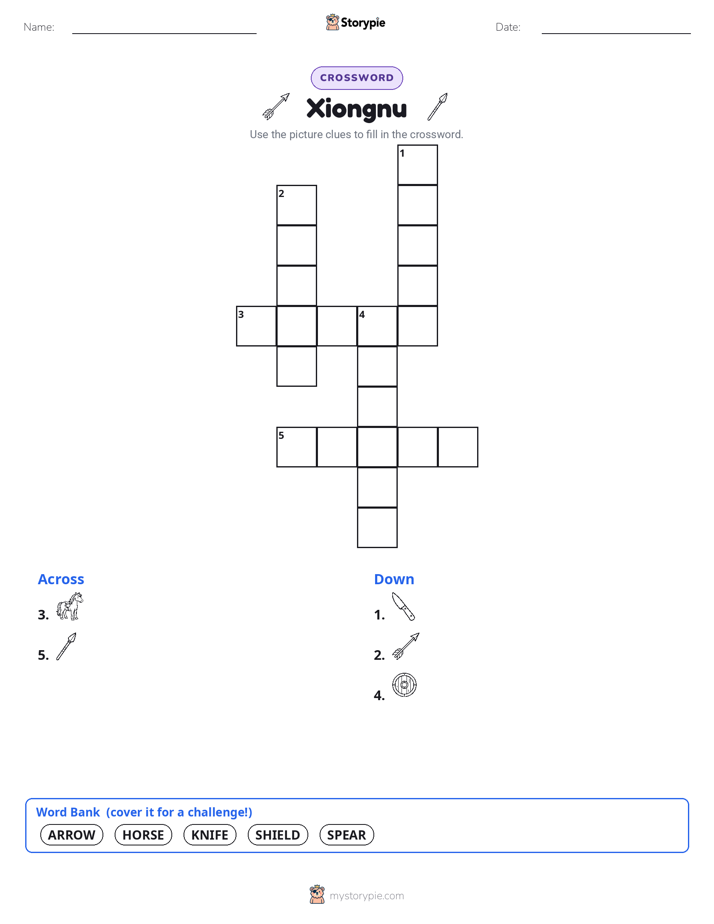
Print & create
Answer keys·No prep·Free with an account
28 worksheets · answer keys · full story · quiz · Ages 10-12 · CEFR B2
Plus adds 164,000+ more stories in 27 languages, audio for every one, and printables for all of them.
Just want Xiongnu?
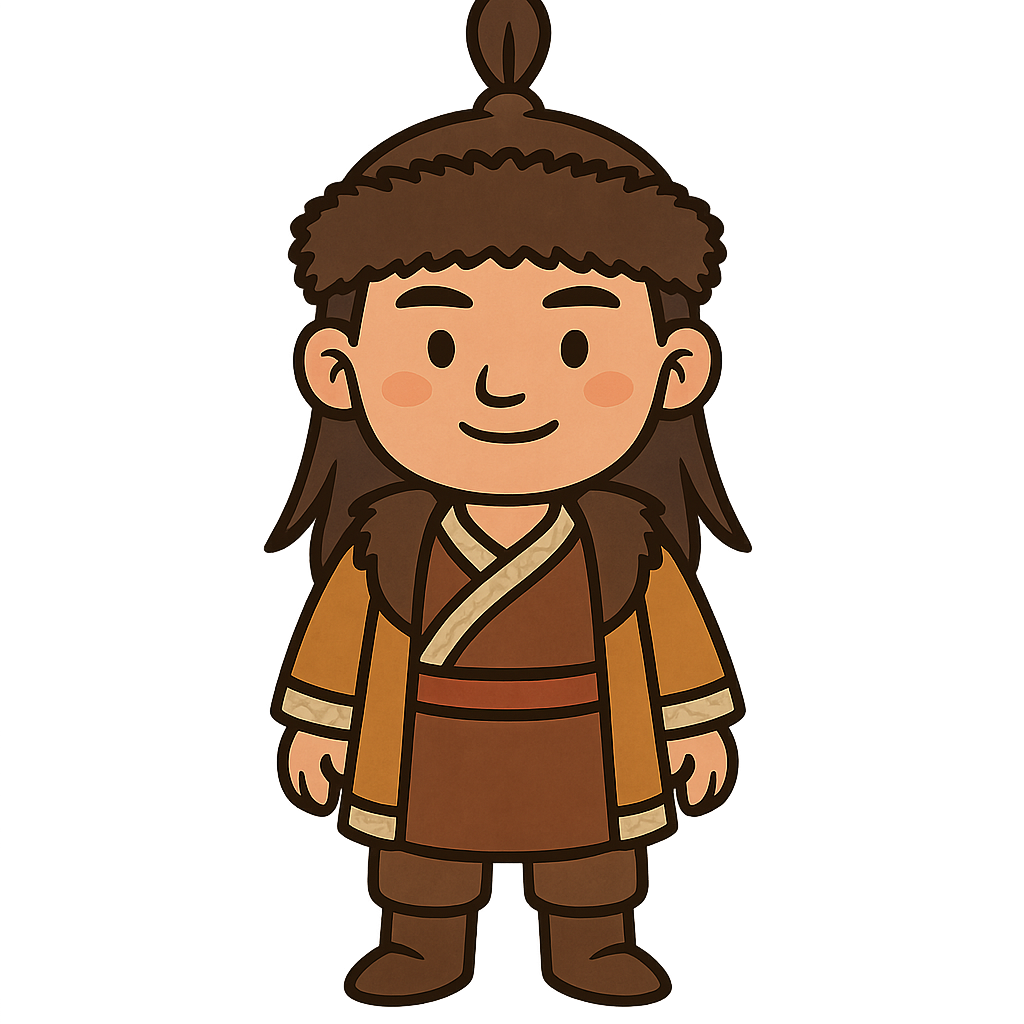
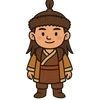
We are the Xiongnu, and our story unfolds on the vast, grassy plains north of ancient China. Our home was the steppe, an endless sea of grass under a wide-open sky. We were a people of motion, a confederation of nomadic tribes whose lives were shaped by the seasons and the needs of our animals. We did not live in one place for long. Instead, we were herders, constantly moving with our precious horses, sheep, and cattle. This life required us to be strong and adaptable, always searching for fresh pastures and clean water for our herds to thrive. Our connection to our animals, especially our horses, was at the very center of our world. A Xiongnu without a horse was unimaginable.
From the time we were very young, we learned to ride. We grew up in the saddle, and our horses were more than just transportation; they were our partners in work, travel, and survival. This mastery of riding made us some of the most skilled cavalry the world had ever seen. We paired this skill with another: archery. We crafted powerful composite bows, complex weapons made from layers of wood, horn, and sinew. On horseback, we could ride with incredible speed and accuracy, firing arrows at our targets without slowing down. This combination of expert horsemanship and deadly archery made us formidable warriors, respected and feared by those who lived in the settled lands to our south.
For many years, our tribes acted independently. But that changed around 209 BCE, when a great leader named Modu Chanyu rose among us. He was a brilliant strategist and leader who saw the strength we could have if we stood together. Modu Chanyu united our many tribes into a single, powerful force, creating a vast and organized empire on the steppe. This was the birth of our confederation as a major power in the region. Our newfound unity brought us into direct contact and conflict with our neighbors, particularly the Han Dynasty in China. The emperors of the Han Dynasty saw our strength and built up defenses, strengthening the Great Wall to protect their northern borders from our raids.
We Are the Xiongnu: Riders of the Steppe
We are the Xiongnu, and our story unfolds on the vast, grassy plains north of ancient China. Our home was the steppe, an endless sea of grass under a wide-open sky. We were a people of motion, a confederation of nomadic tribes whose lives were shaped by the seasons and the needs of our animals. We did not live in one place for long. Instead, we were herders, constantly moving with our precious horses, sheep, and cattle. This life required us to be strong and adaptable, always searching for fresh pastures and clean water for our herds to thrive. Our connection to our animals, especially our horses, was at the very center of our world. A Xiongnu without a horse was unimaginable.
From the time we were very young, we learned to ride. We grew up in the saddle, and our horses were more than just transportation; they were our partners in work, travel, and survival. This mastery of riding made us some of the most skilled cavalry the world had ever seen. We paired this skill with another: archery. We crafted powerful composite bows, complex weapons made from layers of wood, horn, and sinew. On horseback, we could ride with incredible speed and accuracy, firing arrows at our targets without slowing down. This combination of expert horsemanship and deadly archery made us formidable warriors, respected and feared by those who lived in the settled lands to our south.
For many years, our tribes acted independently. But that changed around 209 BCE, when a great leader named Modu Chanyu rose among us. He was a brilliant strategist and leader who saw the strength we could have if we stood together. Modu Chanyu united our many tribes into a single, powerful force, creating a vast and organized empire on the steppe. This was the birth of our confederation as a major power in the region. Our newfound unity brought us into direct contact and conflict with our neighbors, particularly the Han Dynasty in China. The emperors of the Han Dynasty saw our strength and built up defenses, strengthening the Great Wall to protect their northern borders from our raids.
Our relationship with the Han Dynasty was not just one of conflict. It was also a complex dance of diplomacy and negotiation. There were periods of intense fighting, but there were also times of peace. To manage our relationship, we sometimes entered into treaties known as heqin, which means “peace through kinship.” These agreements often involved marriages between our leaders and Han royalty, as well as exchanges of valuable goods. It was a way for both sides to manage a tense border and acknowledge the power of the other. These treaties showed that our empire was not just a military threat but a political force that the Han Dynasty had to treat as an equal.
Our society was carefully structured. At the very top was the Chanyu, our supreme leader, and his family. Below him were the chiefs of the various tribes who had joined our confederation. This organization allowed us to coordinate our actions over a huge territory. While we did not build large, permanent cities like the empires to our south, we had important central places. The most significant of these was Longcheng. Once a year, our leaders and people would gather at Longcheng for a great assembly. This was a vital event where we made important political decisions for the coming year, settled disputes, and performed rituals that strengthened the bonds between our tribes and honored our traditions.
Even though we lived a mobile lifestyle, we had a rich and vibrant culture. Our skilled artisans were masters of their craft, creating beautiful objects that have survived for thousands of years. They worked with bronze and gold, shaping these metals into intricate jewelry, ornaments, and decorations for our equipment. A common theme in our art was the use of animal designs. These stylized depictions of stags, tigers, and birds of prey reflected our close relationship with the natural world of the steppe. This art shows that a culture can be sophisticated and creative without being settled, and it is an important part of who we were.
Like all great empires, ours eventually faced challenges that led to change. Over time, internal struggles for power began to weaken our unity. At the same time, the Han Dynasty continued to put pressure on us, both militarily and diplomatically. These combined forces became too much to overcome, and around the 1st century CE, our great confederation split into two main groups. The Southern Xiongnu and the Northern Xiongnu went on to have different fates, with some groups moving and others staying closer to their original homelands.
Though our empire as a single unit came to an end, our impact on history was deep and long-lasting. We created a political and military structure that became a model for later steppe empires, including the great Mongol Empire that would rise centuries later. Our way of uniting nomadic tribes and projecting power across the plains set a powerful example. Our story also has a debated connection to world history. Some historians have a theory that some of our people, the Northern Xiongnu, may have migrated far to the west over several generations. This theory suggests that they could have become the ancestors of the Huns, who later played a major role in the history of Europe. Our legacy, therefore, is remembered not only on the steppes of Asia but also in the powerful empires we inspired and the ongoing discussions about our journey.
Wow facts
About
The Xiongnu were a powerful tribal confederation of nomadic peoples who inhabited the eastern Eurasian Steppe from the 3rd century BCE to the late 1st century CE. They were a nomadic people; specific records of their horsemanship skills are limited, but their nomadic lifestyle suggests they were good at riding horses. They were also known for their long-standing conflict with the Han dynasty of China.
Take a Quiz
Question 1 of 5
What two skills combined to make the Xiongnu such 'formidable warriors on horseback'?
Explore next




Want to do even more?
Go beyond exploring. Unlock tools that turn every story into real learning.

Storypie Plus for families
Full stories, quizzes, and printables. Nights and car rides, sorted.
- Unlimited audio stories
- Create Mode: your child stars in the story
- Offline downloads
- Printable worksheets & coloring pages

Why Storypie for Schools
Students engaged. Prep in seconds. Evenings back to you.
- Worksheets & Quizzes
- Classroom Management
- Formative Assessment
- Custom Curriculum & Lesson Plans
- 27 Languages

Why Storypie for Homeschool
Curriculum done. They'll ask for more. Hours back in your day.
- Worksheet Generator
- First-Person Audio Stories
- Built-in Comprehension Quizzes
- Custom Curriculum & Lesson Plans
- Print & Go Activities