English

Ajanta and Ellora Caves
A collection of rock-cut caves in Maharashtra, India…
Reads at Grades 6–8 Listens at Grades 4–8
Print & create
Answer keys·No prep·Free with an account
28 worksheets · answer keys · full story · quiz · Ages 10-12 · CEFR B2
Plus adds 164,000+ more stories in 27 languages, audio for every one, and printables for all of them.
Just want Ajanta and Ellora Caves?
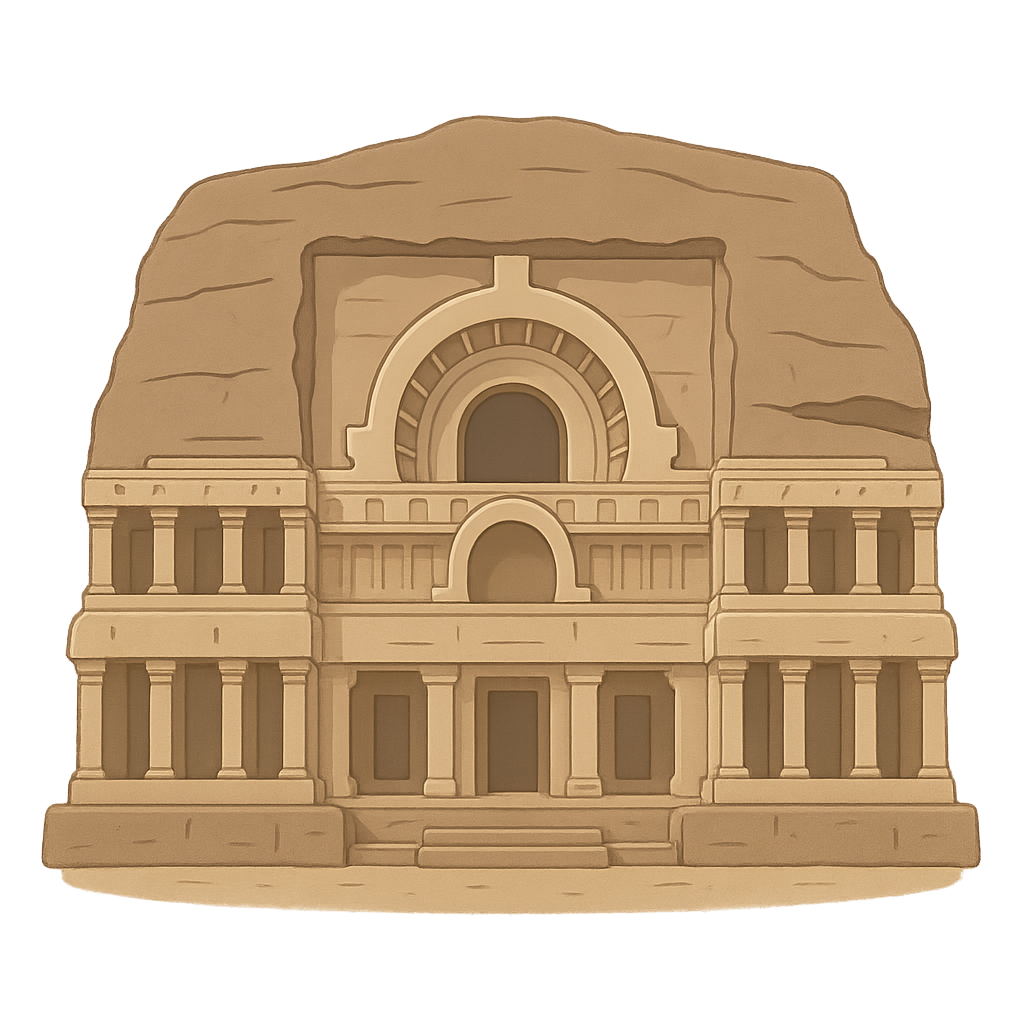
I am carved into the side of a sheer rock cliff, a secret city of stone overlooking the gentle curve of the Waghora River. For centuries, the only sounds here were the wind whistling through my halls and the calls of peacocks in the gorge below. Within my dark, cool chambers, stories sleep on the walls, captured in vibrant paintings and giant, peaceful statues. I have held the quiet thoughts of monks and the echoes of artists' chisels for thousands of years. I am not just one place, but a magnificent collection of wonders hidden away in the state of Maharashtra, India. I am the caves of Ajanta and Ellora.
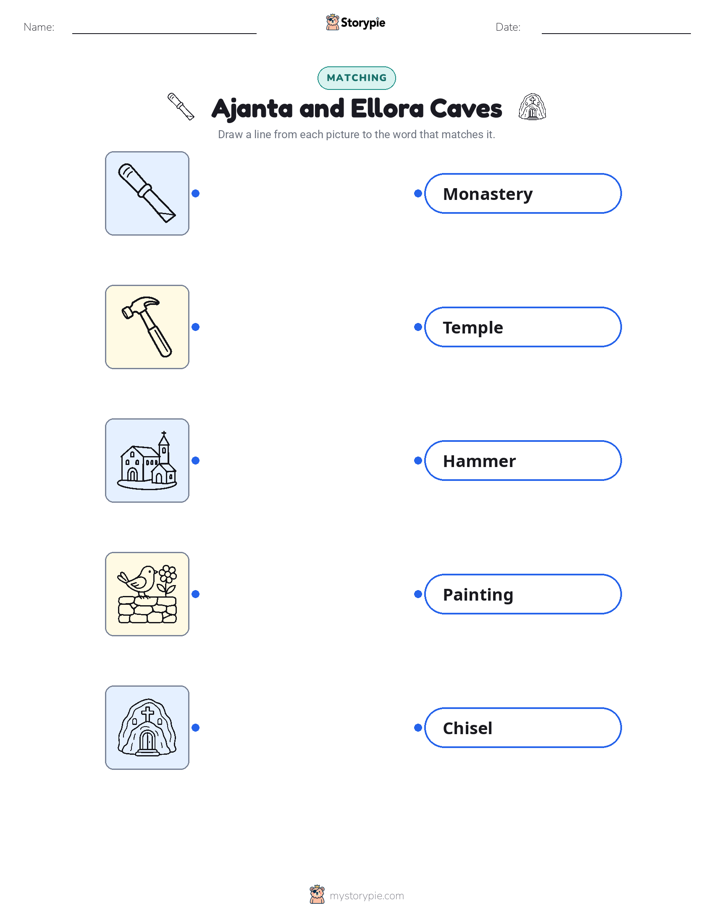
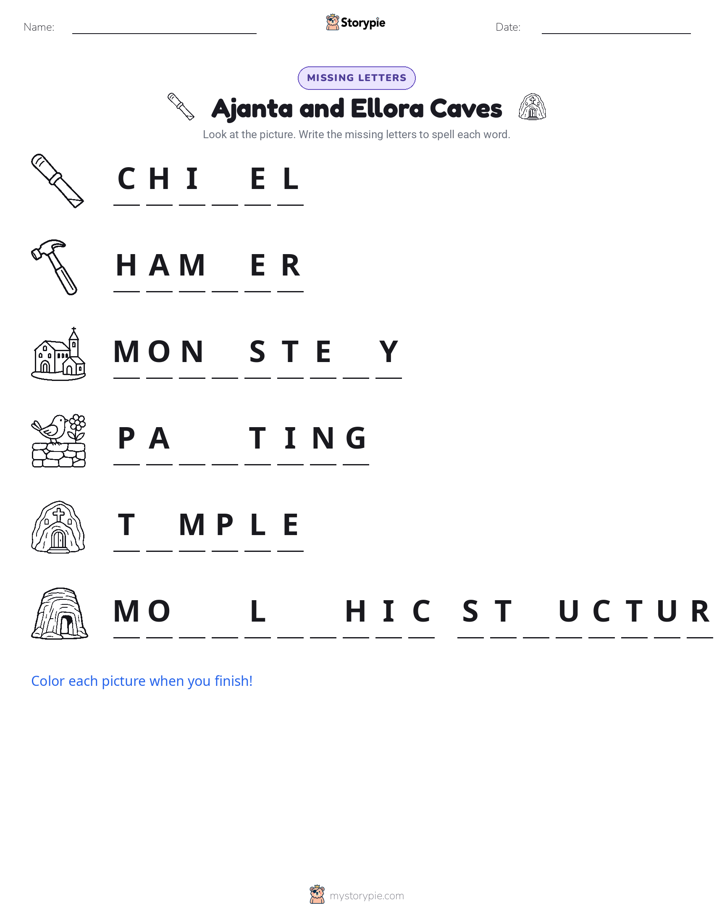
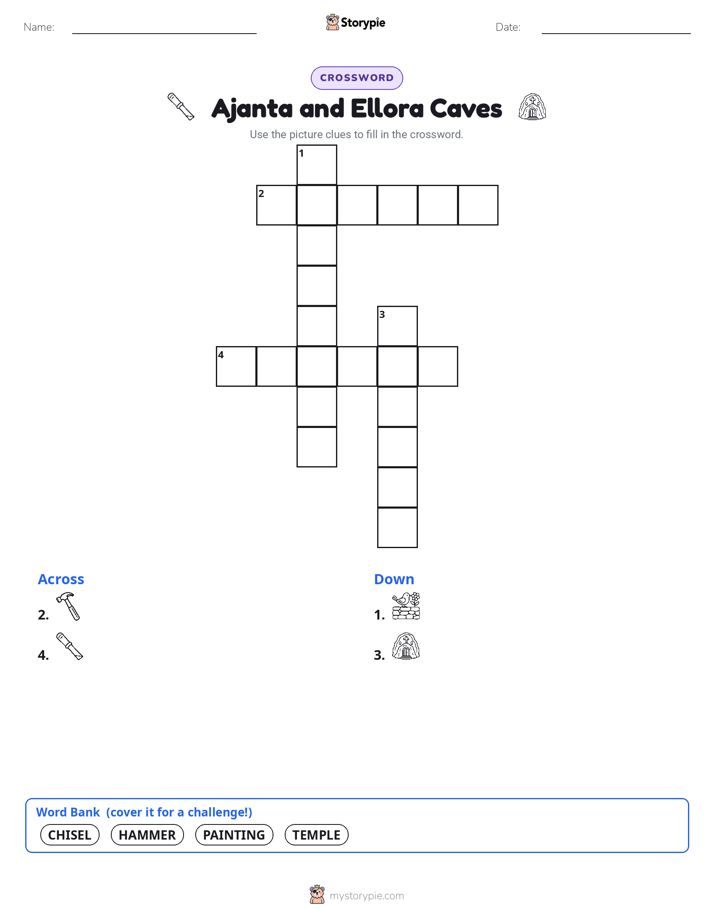
My story begins with my older self, Ajanta. The first hands began to shape me from the volcanic rock as far back as the 2nd century BCE. Using only hammers, chisels, and incredible determination, Buddhist monks and artisans started the long process of carving me into the cliffside. Their purpose was clear and noble: to create a secluded sanctuary for living, studying, and worship, far away from the distractions of the outside world. They sought peace and a place for deep meditation. These earliest caves were prayer halls, called chaitya-grihas, with high, arched ceilings that mimicked wooden structures, and monasteries, known as viharas, with small, simple cells where monks lived. For hundreds of years, these halls were filled with the low hum of chanting and the quiet, focused energy of a spiritual community dedicated to enlightenment.
After a long period of silence, a new burst of creative energy brought me back to life. This second, more glorious phase of my creation at Ajanta took place around the 5th and 6th centuries CE, during a time of great prosperity under the patronage of powerful rulers. This was my golden age. Armies of artists descended upon my cliffs, and they filled my halls with some of the most breathtaking paintings and sculptures the world has ever seen. These are not just pretty pictures; they are sacred storybooks painted directly onto my stone walls. They illustrate the Jataka tales, which are stories about the many past lives of the Buddha. The artists used colors made from ground-up minerals and plants to paint vivid scenes of royal courts, dense jungles filled with animals, bustling cities, and serene spiritual figures. These murals are more than art; they are a priceless window into the life, culture, and beliefs of ancient India.
The Whispering Caves of Ajanta and Ellora
I am carved into the side of a sheer rock cliff, a secret city of stone overlooking the gentle curve of the Waghora River. For centuries, the only sounds here were the wind whistling through my halls and the calls of peacocks in the gorge below. Within my dark, cool chambers, stories sleep on the walls, captured in vibrant paintings and giant, peaceful statues. I have held the quiet thoughts of monks and the echoes of artists' chisels for thousands of years. I am not just one place, but a magnificent collection of wonders hidden away in the state of Maharashtra, India. I am the caves of Ajanta and Ellora.
My story begins with my older self, Ajanta. The first hands began to shape me from the volcanic rock as far back as the 2nd century BCE. Using only hammers, chisels, and incredible determination, Buddhist monks and artisans started the long process of carving me into the cliffside. Their purpose was clear and noble: to create a secluded sanctuary for living, studying, and worship, far away from the distractions of the outside world. They sought peace and a place for deep meditation. These earliest caves were prayer halls, called chaitya-grihas, with high, arched ceilings that mimicked wooden structures, and monasteries, known as viharas, with small, simple cells where monks lived. For hundreds of years, these halls were filled with the low hum of chanting and the quiet, focused energy of a spiritual community dedicated to enlightenment.
After a long period of silence, a new burst of creative energy brought me back to life. This second, more glorious phase of my creation at Ajanta took place around the 5th and 6th centuries CE, during a time of great prosperity under the patronage of powerful rulers. This was my golden age. Armies of artists descended upon my cliffs, and they filled my halls with some of the most breathtaking paintings and sculptures the world has ever seen. These are not just pretty pictures; they are sacred storybooks painted directly onto my stone walls. They illustrate the Jataka tales, which are stories about the many past lives of the Buddha. The artists used colors made from ground-up minerals and plants to paint vivid scenes of royal courts, dense jungles filled with animals, bustling cities, and serene spiritual figures. These murals are more than art; they are a priceless window into the life, culture, and beliefs of ancient India.
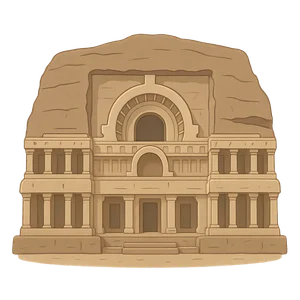
As the work at Ajanta was ending, a new chapter of my story began just a short distance away, at Ellora. Between the 6th and 10th centuries CE, artisans began carving again, but this time with a vision that was truly unique. Ellora became a symbol of incredible religious harmony. Here, artists and devotees from three different faiths—Buddhism, Hinduism, and Jainism—worked along the same two-kilometer stretch of cliff, carving their temples, monasteries, and chapels side-by-side. The most awe-inspiring creation here is the Kailasa Temple, also known as Cave 16. It is the world's largest monolithic structure, meaning it was carved from a single, massive piece of rock. Instead of building it from the ground up, the sculptors started at the top of the cliff and painstakingly chipped their way down, excavating over 200,000 tonnes of rock to reveal a magnificent temple dedicated to the Hindu god Shiva. It is an engineering marvel that defies imagination. Further down the cliff, serene Jain temples showcase intricate carvings, completing this beautiful chorus of faiths coexisting in stone.
For nearly a thousand years, my Ajanta caves were abandoned. The paths leading to me disappeared, and the jungle grew over my entrances, hiding my painted halls from the world. My stories slept in silence, my colors hidden in the dark, and my existence became a forgotten legend. Then came a moment of pure chance that brought me back into the light. On April 28th, 1819, a British cavalry officer named John Smith was in the area hunting a tiger. High up on the cliff face, across the river, he caught a glimpse of a beautifully carved archway, almost completely swallowed by vines and bushes. Driven by curiosity, he scrambled up the treacherous slope and stepped into one of my forgotten prayer halls. By scratching his name and the date onto one of my walls, he unknowingly reintroduced my ancient art and stories to the modern world.
Today, I stand as a testament to the incredible skill and deep faith of the people who created me. In 1983, my importance to human history was officially recognized when I was named a UNESCO World Heritage Site, a treasure belonging to all of humanity. Every year, thousands of visitors from every corner of the globe walk through my cool, stone halls. They gaze up at the ancient paintings, marvel at the sheer scale of the Kailasa Temple, and feel the profound sense of peace that still lingers here. I am more than just a collection of caves. I am a timeless story of human devotion, artistic genius, and the power of different beliefs to inspire greatness. I remind everyone that with patience and vision, breathtaking beauty and lasting harmony can be carved from the hardest rock.
Wow facts
About
A collection of rock-cut caves in Maharashtra, India, renowned for their ancient sculptures and paintings representing Buddhist, Hindu, and Jain traditions. They are a UNESCO World Heritage Site.
Take a Quiz
Question 1 of 5
What does the existence of Buddhist, Hindu, and Jain temples at Ellora tell us about that period in history?
Explore next





Want to do even more?
Go beyond exploring. Unlock tools that turn every story into real learning.

Storypie Plus for families
Full stories, quizzes, and printables. Nights and car rides, sorted.
- Unlimited audio stories
- Create Mode: your child stars in the story
- Offline downloads
- Printable worksheets & coloring pages

Why Storypie for Schools
Students engaged. Prep in seconds. Evenings back to you.
- Worksheets & Quizzes
- Classroom Management
- Formative Assessment
- Custom Curriculum & Lesson Plans
- 27 Languages

Why Storypie for Homeschool
Curriculum done. They'll ask for more. Hours back in your day.
- Worksheet Generator
- First-Person Audio Stories
- Built-in Comprehension Quizzes
- Custom Curriculum & Lesson Plans
- Print & Go Activities