English

Brasília
Brasília is the federal capital of Brazil…
Reads at Grades 6–8 Listens at Grades 4–8
Print & create
Answer keys·No prep·Free with an account
28 worksheets · answer keys · full story · quiz · Ages 10-12 · CEFR B2
Plus adds 164,000+ more stories in 27 languages, audio for every one, and printables for all of them.
Just want Brasília?
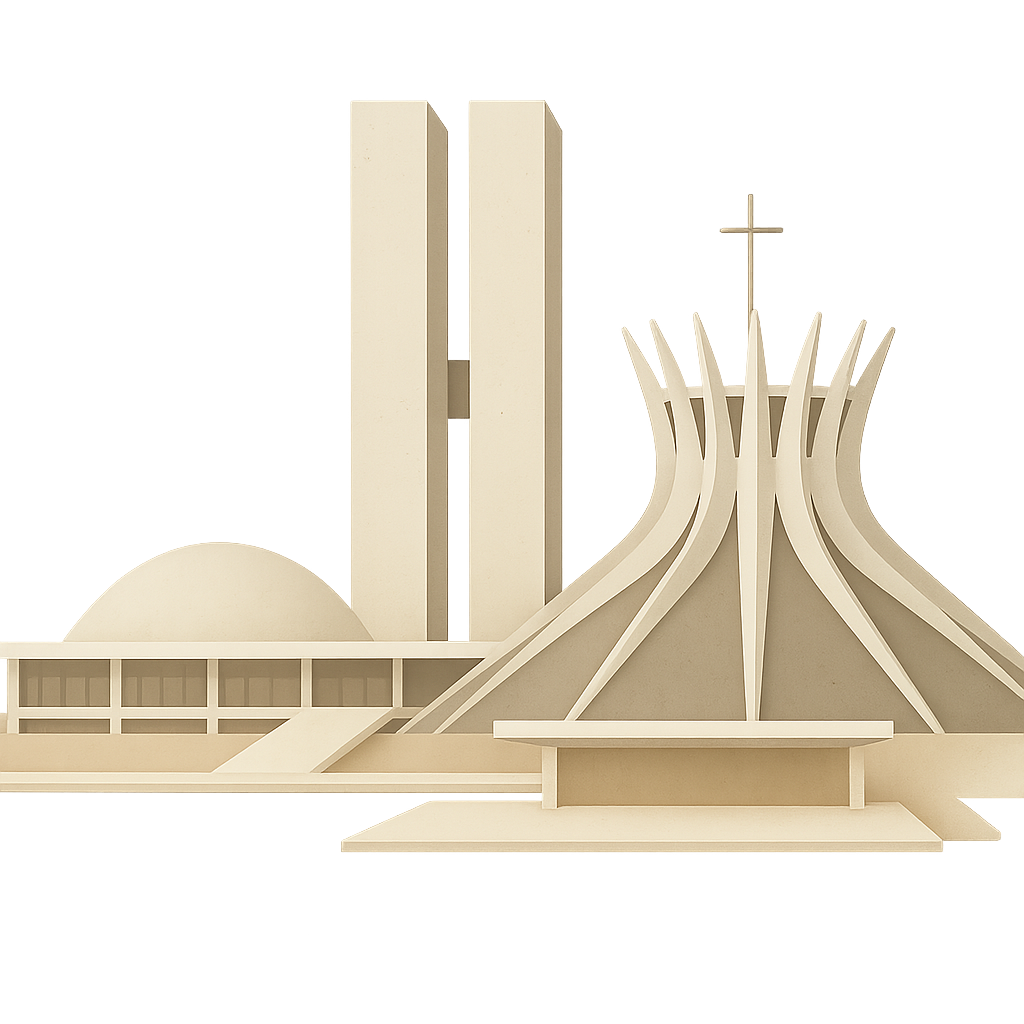
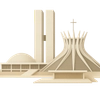
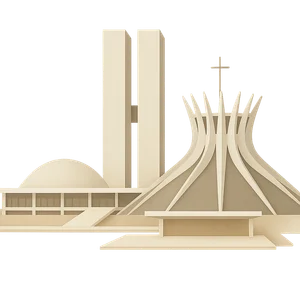
I stretch myself out under a wide, open sky, a city of sweeping curves and clean lines sitting on a high plateau in the very heart of a giant country. I am not like other cities that grew slowly over centuries, adding streets and buildings like rings on a tree. I was born all at once from a single, powerful dream. My buildings are like sculptures against the horizon. My cathedral reaches up like a crown of thorns made of concrete and glass. My museum is a perfect white dome, like a giant bowl resting on the earth. My government buildings line up in a grand plaza, reflecting in a long, clear pool of water. I was imagined before I was real, a blueprint for the future drawn on an empty landscape of red dust. My purpose was clear from the very beginning: to unite a nation and propel it forward. I am Brasília, the capital of Brazil.
For nearly two hundred years, the idea of me was just a whisper, a dream of moving Brazil’s capital away from the busy coast and into the vast interior. The idea first appeared in the late 1700s as a way to better connect and protect the enormous country. But for generations, it remained just that—an idea. Then came a president with a vision and unstoppable energy, Juscelino Kubitschek. In 1956, he stood before his nation and made an incredible promise: 'fifty years of progress in five.' To prove he was serious, he declared that the old dream would finally become a reality. A new capital would be built from scratch in the country's heartland. I was to be the ultimate symbol of this new era of Brazilian confidence and ambition. I wasn't just going to be a new city; I was going to be the future, made real.
The City Dreamed on a Plateau
I stretch myself out under a wide, open sky, a city of sweeping curves and clean lines sitting on a high plateau in the very heart of a giant country. I am not like other cities that grew slowly over centuries, adding streets and buildings like rings on a tree. I was born all at once from a single, powerful dream. My buildings are like sculptures against the horizon. My cathedral reaches up like a crown of thorns made of concrete and glass. My museum is a perfect white dome, like a giant bowl resting on the earth. My government buildings line up in a grand plaza, reflecting in a long, clear pool of water. I was imagined before I was real, a blueprint for the future drawn on an empty landscape of red dust. My purpose was clear from the very beginning: to unite a nation and propel it forward. I am Brasília, the capital of Brazil.
For nearly two hundred years, the idea of me was just a whisper, a dream of moving Brazil’s capital away from the busy coast and into the vast interior. The idea first appeared in the late 1700s as a way to better connect and protect the enormous country. But for generations, it remained just that—an idea. Then came a president with a vision and unstoppable energy, Juscelino Kubitschek. In 1956, he stood before his nation and made an incredible promise: 'fifty years of progress in five.' To prove he was serious, he declared that the old dream would finally become a reality. A new capital would be built from scratch in the country's heartland. I was to be the ultimate symbol of this new era of Brazilian confidence and ambition. I wasn't just going to be a new city; I was going to be the future, made real.
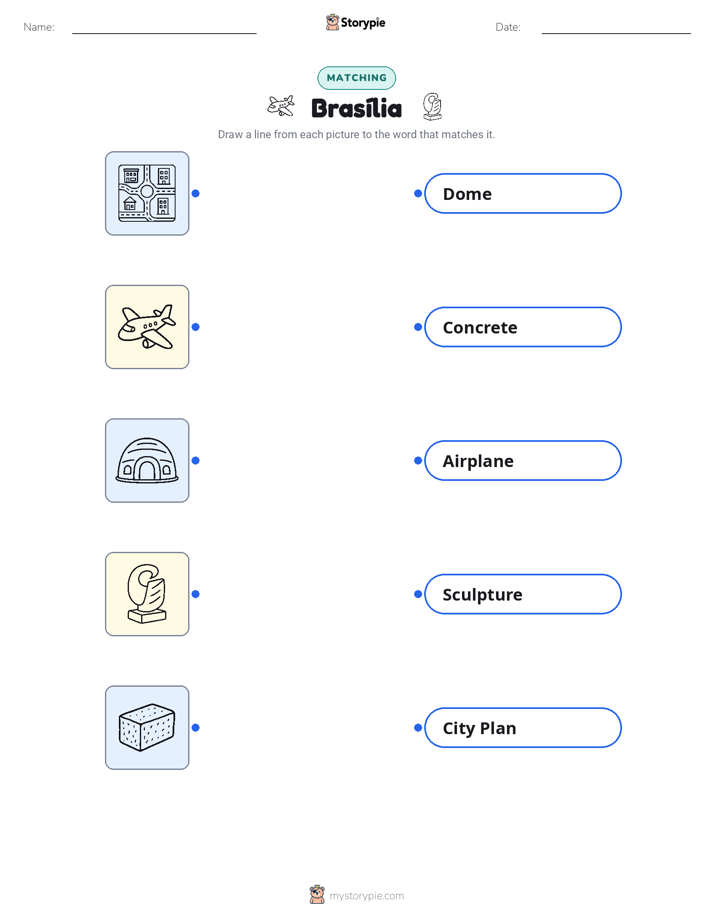
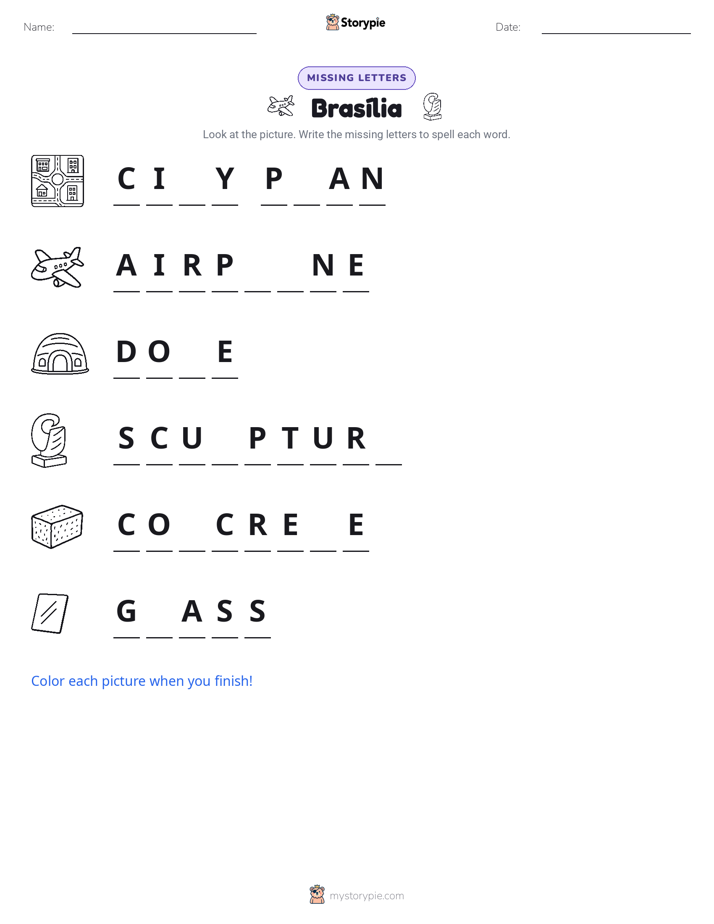
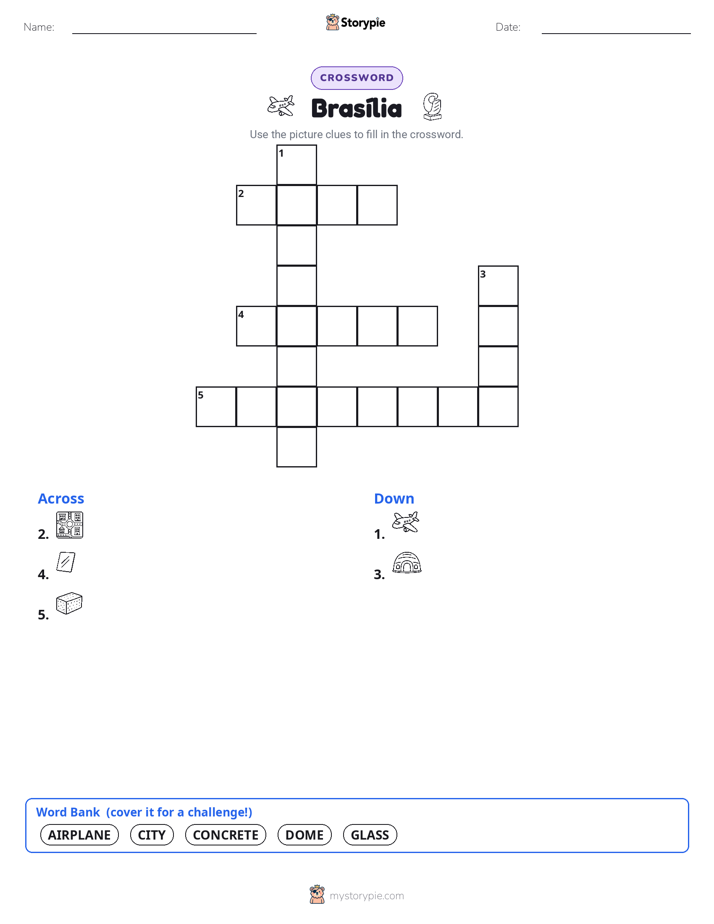
To create a city from nothing, you need brilliant minds. In 1957, a nationwide contest was held to find the perfect master plan for me. The winner was an urban planner named Lúci_o_ Costa. His idea was stunning in its simplicity and genius. He drew a shape like an airplane or a bird in flight, which he called the 'Plano Piloto,' or Pilot Plan. The body of the bird would be my Monumental Axis, home to all the government ministries, monuments, and official buildings. The curved wings would be my residential areas, filled with apartment blocks, schools, and shops, all surrounded by green space. But a plan is just a drawing without an artist to give it form. That artist was the architect Oscar Niemeyer. He was given the freedom to design my most important buildings, and he filled me with structures of flowing concrete, glass, and light. He didn't want buildings that looked like boxes; he wanted buildings that were poetic, surprising, and full of movement, reflecting the spirit of a modern Brazil.
With the plans in hand, the race began. Starting in 1956, thousands upon thousands of workers flocked to the remote, empty plateau. They came from the poorest parts of Brazil, seeking work and a chance to be part of history. They were called the 'candangos,' and they are my true builders. They lived in makeshift camps and worked tirelessly, day and night, turning the red dust of the Planalto Central into a living city. The challenges were immense. Everything had to be brought in from hundreds of miles away. They faced dust storms in the dry season and thick mud in the rainy season. Yet, their determination was stronger than any obstacle. In an astonishing burst of effort, they built me in just over 1,000 days. Roads were paved, buildings rose from the ground, and a lake was filled. On April 21st, 1960, I was officially inaugurated, a shining new capital ready to take my place on the world stage. It was a moment of immense national pride, a testament to what people can achieve when they work together towards a great dream.
Today, I am the living, breathing heart of Brazil's democracy. Within my halls, the country's laws are written and its future is debated. But I am more than just a center of power. I am a home to millions of people who live in the residential wings Lúci_o_ Costa designed. They fill my parks, attend my universities, and bring life to the curves and lines that Oscar Niemeyer imagined. My unique design was so revolutionary that on December 7th, 1987, I was given a special honor. UNESCO named me a World Heritage site, making me the only city built in the 20th century to receive this recognition. It was a confirmation of my value not just to Brazil, but to all of humanity. I stand as a monument to human courage, innovation, and the power of a single, bold idea. I hope to inspire everyone who sees me to believe that with imagination and hard work, we can build a better, more beautiful future.
Wow facts
About
Brasília is the federal capital of Brazil, a modernist city planned and developed in the 1950s to move the capital from Rio de Janeiro to a more central location.
Take a Quiz
Question 1 of 5
Retell the story of how I, Brasília, was built. Include who had the idea, who designed me, and who did the construction.
Explore next




Want to do even more?
Go beyond exploring. Unlock tools that turn every story into real learning.

Storypie Plus for families
Full stories, quizzes, and printables. Nights and car rides, sorted.
- Unlimited audio stories
- Create Mode: your child stars in the story
- Offline downloads
- Printable worksheets & coloring pages

Why Storypie for Schools
Students engaged. Prep in seconds. Evenings back to you.
- Worksheets & Quizzes
- Classroom Management
- Formative Assessment
- Custom Curriculum & Lesson Plans
- 27 Languages

Why Storypie for Homeschool
Curriculum done. They'll ask for more. Hours back in your day.
- Worksheet Generator
- First-Person Audio Stories
- Built-in Comprehension Quizzes
- Custom Curriculum & Lesson Plans
- Print & Go Activities