English

Gondwana
Gondwana was an ancient supercontinent that existed from the Neoproterozoic (about 600 million years ago)…
Reads at Grades K-2 Listens at K–3
Print & create
Answer keys·No prep·Free with an account
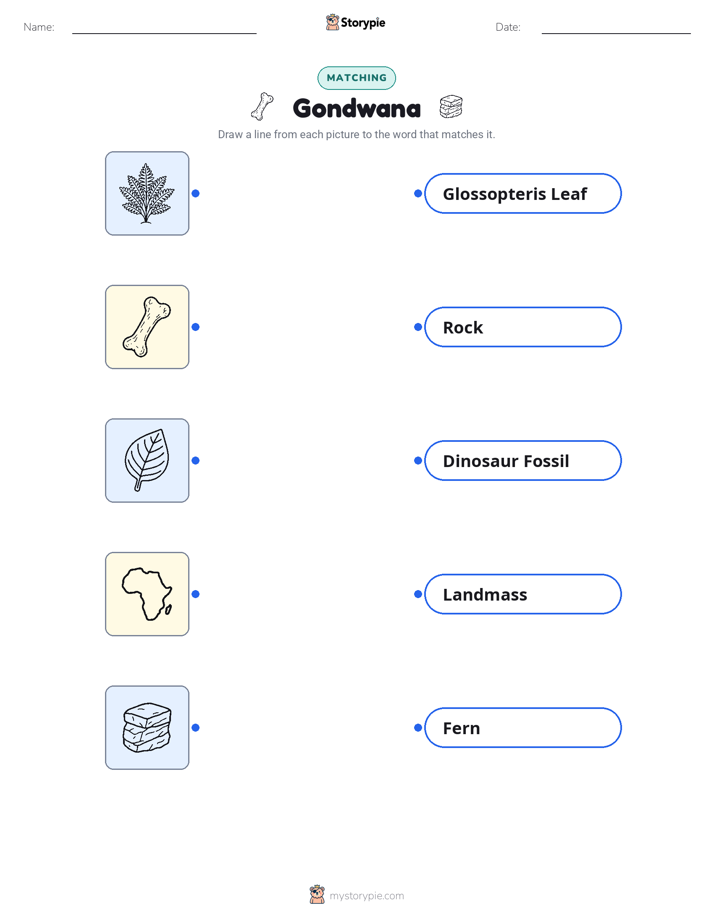
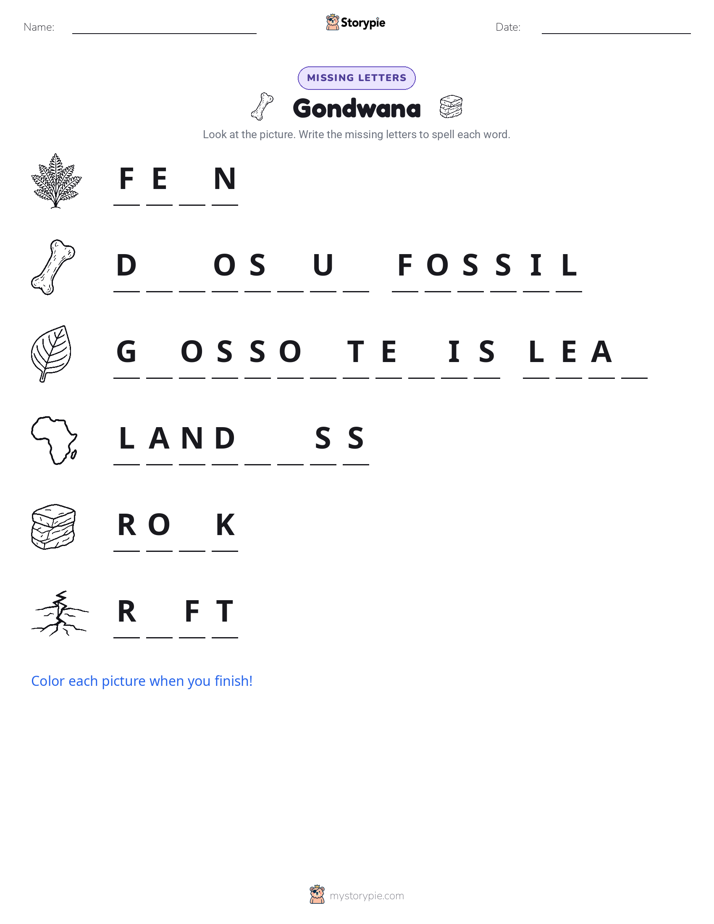
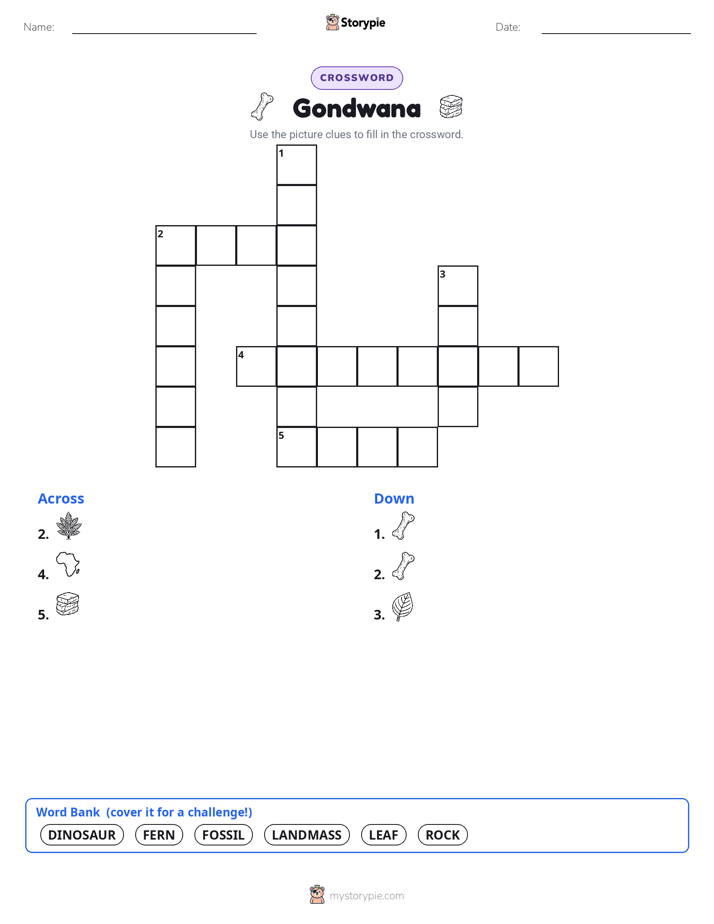
28 worksheets · answer keys · full story · quiz · Ages 6-8 · CEFR A2
Plus adds 208,000+ more stories in 27 languages, audio for every one, and printables for all of them.
Just want Gondwana?
Imagine a time long, long ago, before there were any people, cities, or even roads. The whole world was one big neighborhood. In the south, all the land was snuggled together like a giant, cozy blanket. I was a huge piece of land holding places you now call South America, Africa, Australia, Antarctica, and even India all together in one spot. Strange, tall ferns tickled the sky, and the very first big animals roamed across my back. The oceans splashed gently against my one long, winding shore. I was a supercontinent, and my name is Gondwana. I existed more than 500 million years ago, when the world was a very different and wonderful place.
For millions and millions of years, I held all my pieces together. But the Earth is always moving, even if it’s too slow for you to feel. Starting around 180 million years ago, I began to do a big, slow dance. It was like a giant cookie slowly cracking in the oven. First, a little crack appeared, and then another. Very, very slowly, my pieces started to drift apart from each other. Imagine a huge puzzle breaking apart. Africa and South America floated away from each other, like two friends saying a long goodbye. Australia and Antarctica drifted south together for a while before they went their separate ways. India went on a very long journey all the way north. It wasn't a fast breakup. It was a slow, graceful dance that took millions of years, spreading my pieces all across the globe to the places where you see them on the map today.
How did people figure out my story? I left secret clues behind for curious scientists to find. One of the biggest clues was a special leafy fern called Glossopteris. Scientists found fossils of this plant in chilly Antarctica, but also in faraway India and Africa. How could the same plant grow in such different places? Because they were all once connected as me. Another clue was a fun one. If you look at a map, you can see that the coast of South America looks like it could snuggle right up against the coast of Africa. They fit together like perfect puzzle pieces. That’s because they were once neighbors. Even though my pieces are scattered across the world now, they still share my story. I am a reminder that our whole planet is connected in amazing ways, and it is always, always changing.
The Story of Gondwana, the Great Supercontinent
Imagine a time long, long ago, before there were any people, cities, or even roads. The whole world was one big neighborhood. In the south, all the land was snuggled together like a giant, cozy blanket. I was a huge piece of land holding places you now call South America, Africa, Australia, Antarctica, and even India all together in one spot. Strange, tall ferns tickled the sky, and the very first big animals roamed across my back. The oceans splashed gently against my one long, winding shore. I was a supercontinent, and my name is Gondwana. I existed more than 500 million years ago, when the world was a very different and wonderful place.
For millions and millions of years, I held all my pieces together. But the Earth is always moving, even if it’s too slow for you to feel. Starting around 180 million years ago, I began to do a big, slow dance. It was like a giant cookie slowly cracking in the oven. First, a little crack appeared, and then another. Very, very slowly, my pieces started to drift apart from each other. Imagine a huge puzzle breaking apart. Africa and South America floated away from each other, like two friends saying a long goodbye. Australia and Antarctica drifted south together for a while before they went their separate ways. India went on a very long journey all the way north. It wasn't a fast breakup. It was a slow, graceful dance that took millions of years, spreading my pieces all across the globe to the places where you see them on the map today.
How did people figure out my story? I left secret clues behind for curious scientists to find. One of the biggest clues was a special leafy fern called Glossopteris. Scientists found fossils of this plant in chilly Antarctica, but also in faraway India and Africa. How could the same plant grow in such different places? Because they were all once connected as me. Another clue was a fun one. If you look at a map, you can see that the coast of South America looks like it could snuggle right up against the coast of Africa. They fit together like perfect puzzle pieces. That’s because they were once neighbors. Even though my pieces are scattered across the world now, they still share my story. I am a reminder that our whole planet is connected in amazing ways, and it is always, always changing.
Wow facts
About
Gondwana was an ancient supercontinent that existed from the Neoproterozoic (about 600 million years ago) until the Jurassic (about 180 million years ago), which included most of the landmasses in today's Southern Hemisphere.
Take a Quiz
Question 1 of 4
Why do the coastlines of Africa and South America look like they fit together?
Explore next


Want to do even more?
Go beyond exploring. Unlock tools that turn every story into real learning.

Storypie Plus for families
Full stories, quizzes, and printables. Nights and car rides, sorted.
- Unlimited audio stories
- Create Mode: your child stars in the story
- Offline downloads
- Printable worksheets & coloring pages

Why Storypie for Schools
Students engaged. Prep in seconds. Evenings back to you.
- Worksheets & Quizzes
- Classroom Management
- Formative Assessment
- Custom Curriculum & Lesson Plans
- 27 Languages

Why Storypie for Homeschool
Curriculum done. They'll ask for more. Hours back in your day.
- Worksheet Generator
- First-Person Audio Stories
- Built-in Comprehension Quizzes
- Custom Curriculum & Lesson Plans
- Print & Go Activities