English

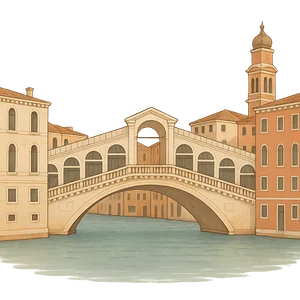
Grand Canal
The main waterway of Venice, Italy, is a man-made canal that was likely formed from an ancient riverbed…
Reads at Grades 3–5 Listens at Grades 1–5
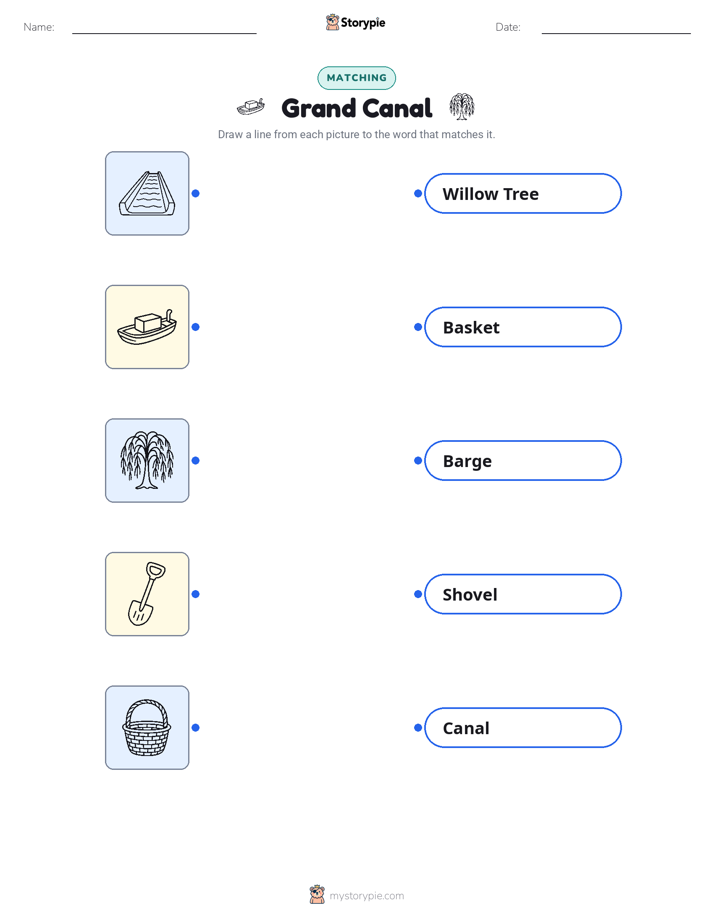
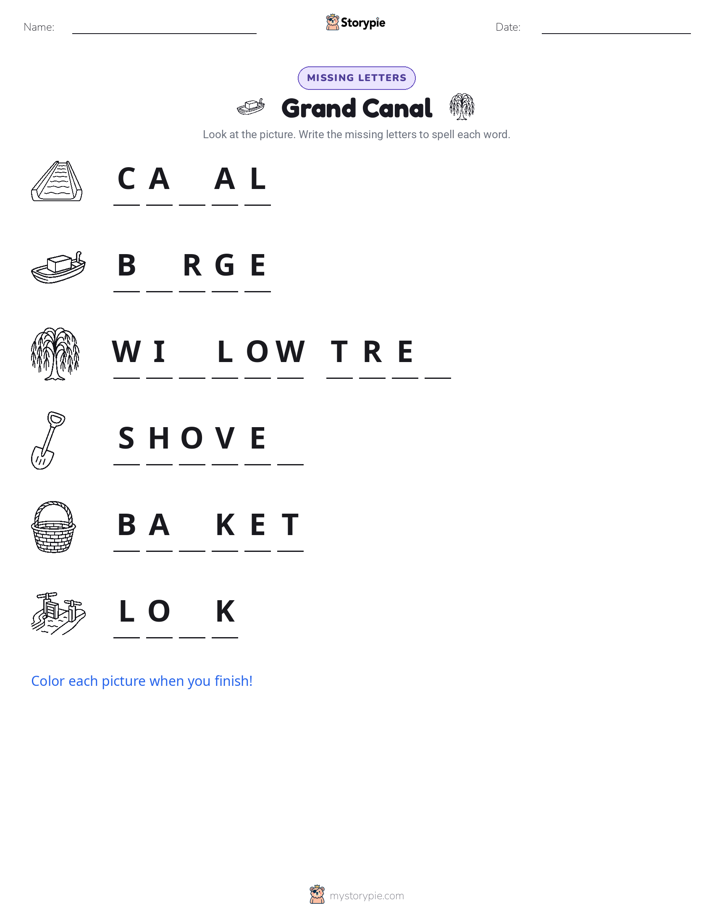
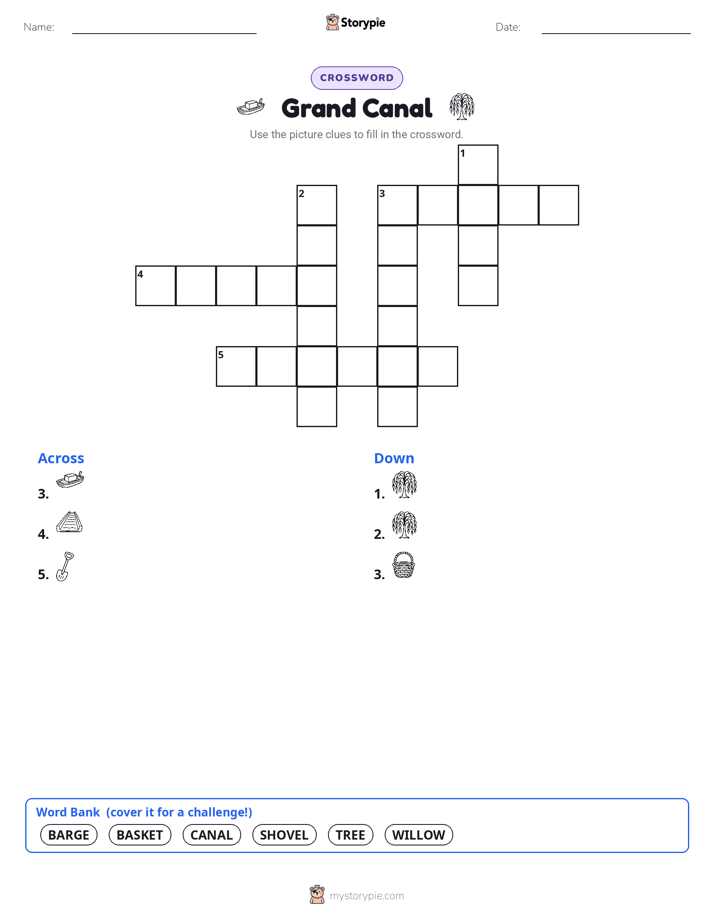
Print & create
Answer keys·No prep·Free with an account
28 worksheets · answer keys · full story · quiz · Ages 8-10 · CEFR B1
Plus adds 208,000+ more stories in 27 languages, audio for every one, and printables for all of them.
Just want Grand Canal?
Sunshine sparkles on my surface like a blanket of diamonds. I feel the gentle weight of sleek, black boats as they glide across me, their oars dipping in and out with a quiet rhythm. I hear the soft lapping sound I make against ancient stone steps and the cheerful songs of the boatmen echoing between the colorful buildings that line my banks. These buildings are palaces, painted in shades of rose, gold, and sea green, and their reflections shimmer on my watery skin. The boats that travel on me are called gondolas, and they move like graceful swans, carrying people through the heart of a city without roads. I am not a street for cars or buses, but a shimmering, winding avenue of water. I am the Grand Canal of Venice.
My story begins a very, very long time ago. Before the palaces and bridges, I was just a natural river channel flowing through a marshy lagoon in what is now Italy. In the 5th century CE, people from the mainland were looking for a safe place to live, a place where their enemies couldn't easily reach them. They looked at my watery home and had a brilliant, almost impossible idea. They decided to build a city right on top of the water. It was an enormous challenge. They drove millions of strong wooden poles deep into the mud beneath me, creating sturdy foundations where they could build their houses. Slowly, island by island, a city rose from the sea. I became its most important street, a liquid highway connecting homes, markets, and churches. As the city grew, it became powerful. Around the 9th century, it was known as the Republic of Venice, a famous and wealthy center for trade where ships came and went from all over the world.
The Watery Street of Venice
Sunshine sparkles on my surface like a blanket of diamonds. I feel the gentle weight of sleek, black boats as they glide across me, their oars dipping in and out with a quiet rhythm. I hear the soft lapping sound I make against ancient stone steps and the cheerful songs of the boatmen echoing between the colorful buildings that line my banks. These buildings are palaces, painted in shades of rose, gold, and sea green, and their reflections shimmer on my watery skin. The boats that travel on me are called gondolas, and they move like graceful swans, carrying people through the heart of a city without roads. I am not a street for cars or buses, but a shimmering, winding avenue of water. I am the Grand Canal of Venice.
My story begins a very, very long time ago. Before the palaces and bridges, I was just a natural river channel flowing through a marshy lagoon in what is now Italy. In the 5th century CE, people from the mainland were looking for a safe place to live, a place where their enemies couldn't easily reach them. They looked at my watery home and had a brilliant, almost impossible idea. They decided to build a city right on top of the water. It was an enormous challenge. They drove millions of strong wooden poles deep into the mud beneath me, creating sturdy foundations where they could build their houses. Slowly, island by island, a city rose from the sea. I became its most important street, a liquid highway connecting homes, markets, and churches. As the city grew, it became powerful. Around the 9th century, it was known as the Republic of Venice, a famous and wealthy center for trade where ships came and went from all over the world.
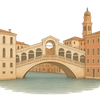
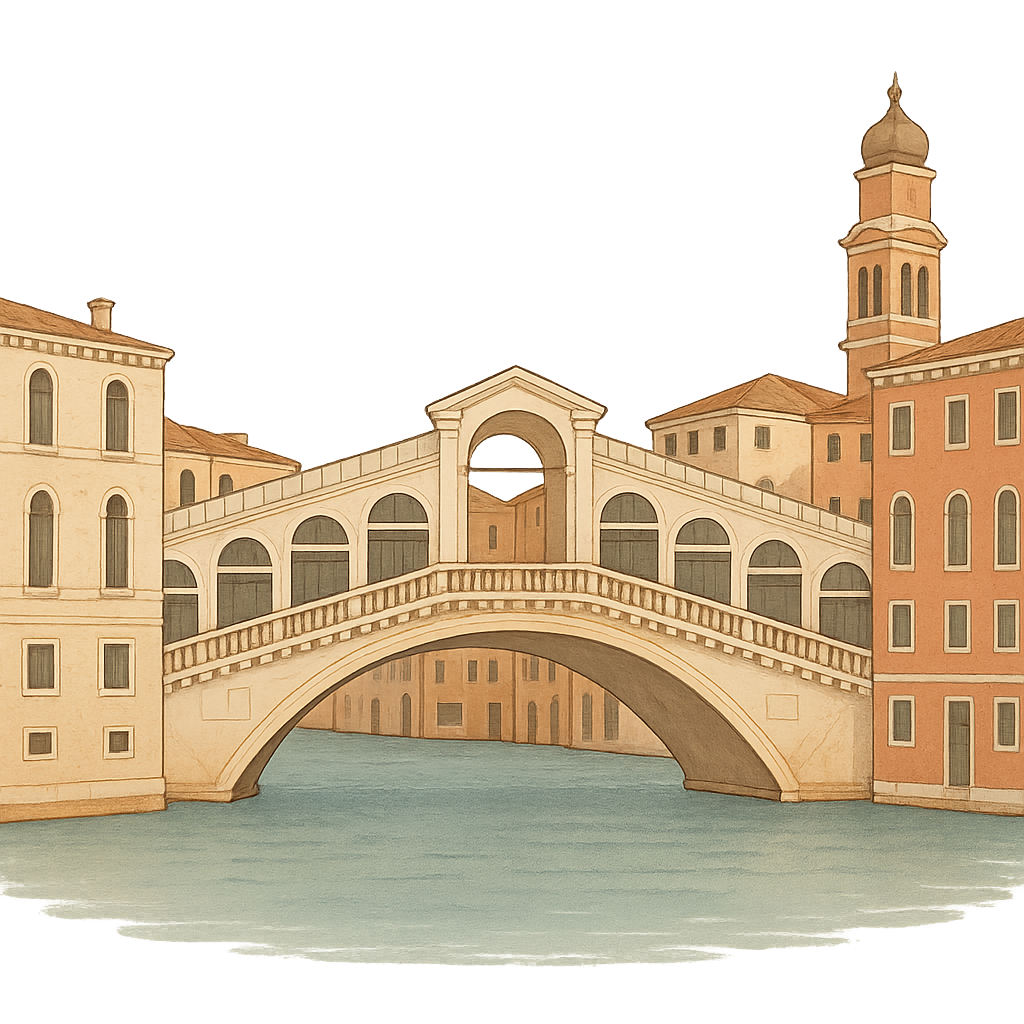
My most glorious days were during the city's Golden Age, which began around the 12th century. Wealthy merchants, who traded valuable goods with faraway lands, wanted to show everyone how successful they were. They hired the best architects to build magnificent palaces, called 'palazzi,' right on my banks. These weren't just homes; the ground floors were often warehouses, and I would watch as boats delivered crates of precious silks from China and fragrant spices from India. Each palace was a work of art, with pointed arches, delicate stone carvings, and balconies overlooking my waters. The most important spot along my winding path was the market, and to get to it, people needed a bridge. The first one, built in the 12th century, was a simple bridge floating on pontoons. Later, a wooden one was built, but the city needed something stronger and grander. Finally, a brilliant architect named Antonio da Ponte designed a beautiful stone arch, and on August 2nd, 1591, the Rialto Bridge you see today was finished. It quickly became the bustling heart of Venice, crowded with shoppers and merchants.
Today, my life is as busy as ever, though the treasures I carry have changed. The singing gondoliers still guide their black boats for visitors who want to see the city's beauty. But now, I also carry big waterbuses called 'vaporetti,' which work like city buses, taking people to work and school. Delivery boats motor along my surface, bringing groceries and packages to the shops and homes that line my banks. I am also the star of many celebrations. In the winter, I reflect the dazzling costumes and masks of the Carnival of Venice. In the autumn, I host the Historical Regatta, an exciting race with crews in historical costume rowing colorful, old-fashioned boats. For centuries, I have been the heart of Venice, inspiring artists, writers, and visitors with my unique charm. I connect the city's incredible past with its vibrant present, and I remind everyone that with imagination and hard work, people can create something truly magical.
Wow facts
About
The main waterway of Venice, Italy, is a man-made canal that was likely formed from an ancient riverbed, lined with historic palaces and bustling with watercraft.
Take a Quiz
Question 1 of 5
The story says merchants built 'magnificent palaces.' What does the word 'magnificent' most likely mean?
Explore next



Want to do even more?
Go beyond exploring. Unlock tools that turn every story into real learning.

Storypie Plus for families
Full stories, quizzes, and printables. Nights and car rides, sorted.
- Unlimited audio stories
- Create Mode: your child stars in the story
- Offline downloads
- Printable worksheets & coloring pages

Why Storypie for Schools
Students engaged. Prep in seconds. Evenings back to you.
- Worksheets & Quizzes
- Classroom Management
- Formative Assessment
- Custom Curriculum & Lesson Plans
- 27 Languages

Why Storypie for Homeschool
Curriculum done. They'll ask for more. Hours back in your day.
- Worksheet Generator
- First-Person Audio Stories
- Built-in Comprehension Quizzes
- Custom Curriculum & Lesson Plans
- Print & Go Activities