English

Yellow River
The Yellow River, or Huang He…
Reads at Grades 3–5 Listens at Grades 1–5
Print & create
Answer keys·No prep·Free with an account
28 worksheets · answer keys · full story · quiz · Ages 8-10 · CEFR B1
Plus adds 102,000+ more stories in 27 languages, audio for every one, and printables for all of them.
Just want Yellow River?
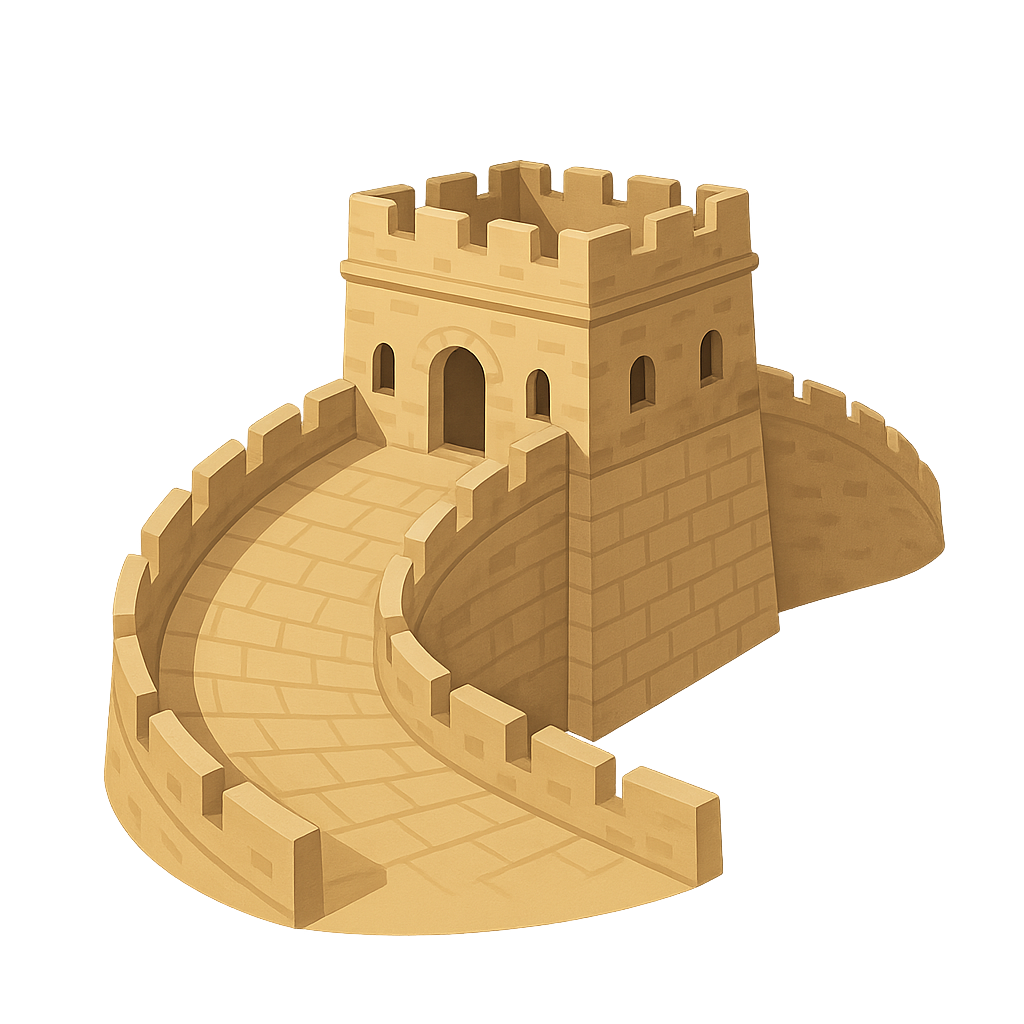
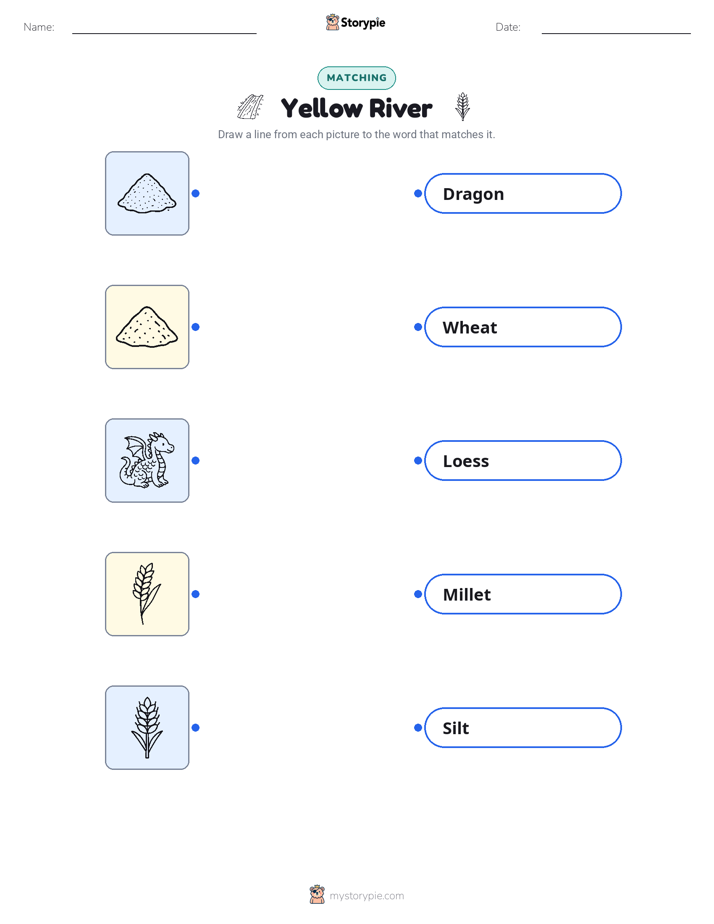
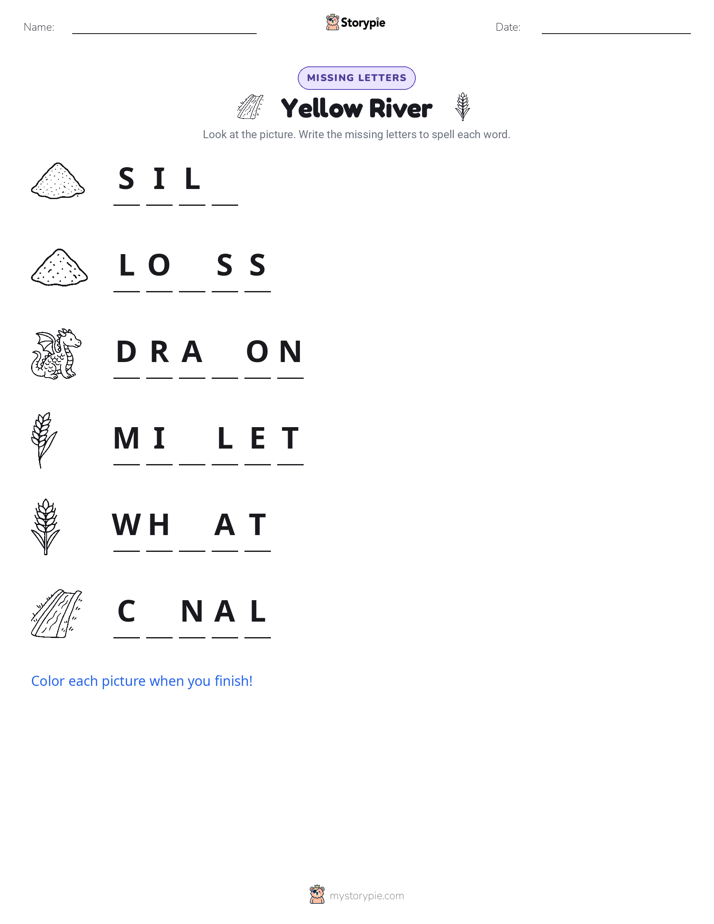
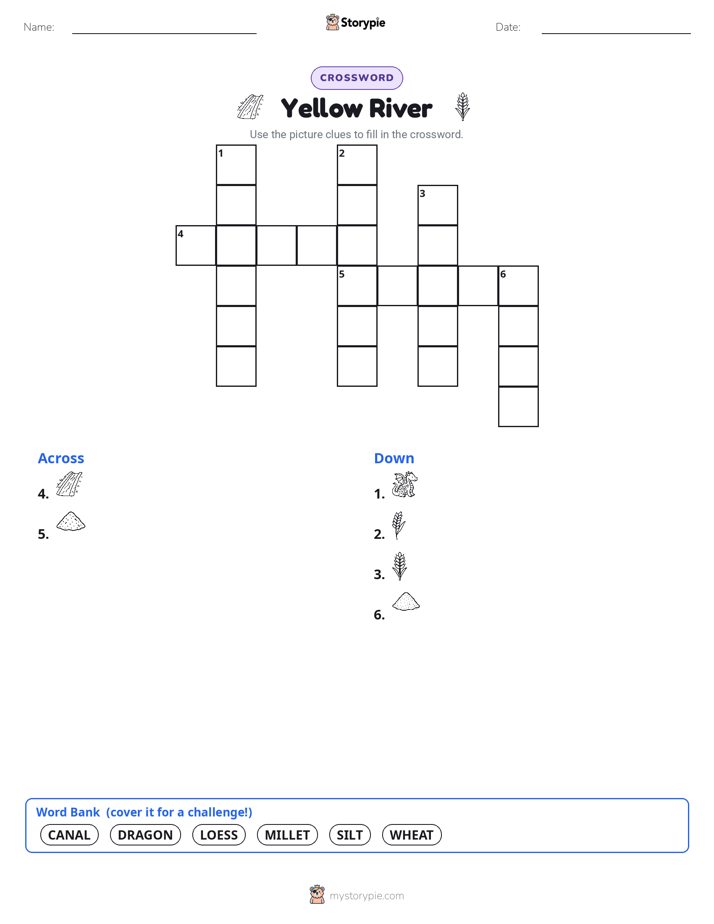
I begin my journey high in the mountains of western China, a clear stream tumbling over rocks. But as I race eastward, I carve my way through a special kind of land, a plateau covered in a fine, powdery, yellow soil. I gather this soil, called loess, and carry it with me for thousands of miles. It swirls within my waters, turning me a magnificent, muddy, golden-yellow color. This color is my signature, a clue to my identity and the secret to my power. From high above, I look like a great golden dragon twisting across the land, heading toward the sea. My journey is long and powerful, and the story I carry is as ancient as the land itself. I am the Huang He, the Yellow River.
For thousands of years, I have been a source of life. Long, long ago, around 7000 BCE, the first people discovered that my banks were a wonderful place to live. They built small villages that grew and grew. Every year, my waters would rise and flood the land around me. This could be frightening, but when the water pulled back, I left behind a precious gift. The yellow silt I carried from the mountains, the loess, would settle on the fields, making the soil incredibly rich and fertile. It was perfect for growing crops like millet and wheat, which fed countless families. Because of this gift, villages grew into cities, and great civilizations were born on my shores. The earliest dynasties of China, like the Xia around 2070 BCE and the Shang around 1600 BCE, rose to power thanks to the bounty I provided. They honored me for giving them everything they needed to thrive, and they gave me a special name: the Mother River.
The Story of the Yellow River
I begin my journey high in the mountains of western China, a clear stream tumbling over rocks. But as I race eastward, I carve my way through a special kind of land, a plateau covered in a fine, powdery, yellow soil. I gather this soil, called loess, and carry it with me for thousands of miles. It swirls within my waters, turning me a magnificent, muddy, golden-yellow color. This color is my signature, a clue to my identity and the secret to my power. From high above, I look like a great golden dragon twisting across the land, heading toward the sea. My journey is long and powerful, and the story I carry is as ancient as the land itself. I am the Huang He, the Yellow River.
For thousands of years, I have been a source of life. Long, long ago, around 7000 BCE, the first people discovered that my banks were a wonderful place to live. They built small villages that grew and grew. Every year, my waters would rise and flood the land around me. This could be frightening, but when the water pulled back, I left behind a precious gift. The yellow silt I carried from the mountains, the loess, would settle on the fields, making the soil incredibly rich and fertile. It was perfect for growing crops like millet and wheat, which fed countless families. Because of this gift, villages grew into cities, and great civilizations were born on my shores. The earliest dynasties of China, like the Xia around 2070 BCE and the Shang around 1600 BCE, rose to power thanks to the bounty I provided. They honored me for giving them everything they needed to thrive, and they gave me a special name: the Mother River.
But a mother's love can also be fierce. My floods, which made the land so fertile, were also powerful and unpredictable. Sometimes I would swell with so much water that I would burst my banks, changing my course and washing away homes and fields. For this reason, people also gave me another, sadder name: 'China's Sorrow.' For centuries, people tried to control me by building high walls, or dikes, to hold me back, but my strength was too great. Then, a wise hero named Yu the Great came along. He spent many years studying my flow and realized that fighting me was not the answer. Instead, he decided to work with me. He organized people to dig a network of canals that would give my extra water a place to go, guiding my floods to irrigate fields instead of destroying them. His wisdom changed everything. For thousands of years since, people have continued his work, building stronger dikes and creating incredible projects like the Grand Canal, which construction started in the 5th century BCE to connect me with other rivers.
My journey continues today, and I am still just as important. My waters flow through fields that feed millions of people, and I provide water to some of China’s biggest cities. To help manage my power and use it for good, modern engineers have built enormous dams. One of these, the Sanmenxia Dam, was finished in 1960. It helps control my flow to prevent dangerous floods and uses my strength to create clean electricity for homes and factories. I am a living link between the ancient past and the modern world. I am a reminder of the incredible power of nature, but also of the amazing things people can accomplish when they work together with wisdom and respect. I am the Yellow River, and my story will flow forever.
Wow facts
About
The Yellow River, or Huang He, is the second-longest river in China and is known as the 'cradle of Chinese civilization' for its role in the development of early dynasties.
Take a Quiz
Question 1 of 5
Why was the river called both 'the Mother River' and 'China's Sorrow'?
Explore next





Want to do even more?
Go beyond exploring. Unlock tools that turn every story into real learning.

Storypie Plus for families
Full stories, quizzes, and printables. Nights and car rides, sorted.
- Unlimited audio stories
- Create Mode: your child stars in the story
- Offline downloads
- Printable worksheets & coloring pages

Why Storypie for Schools
Students engaged. Prep in seconds. Evenings back to you.
- Worksheets & Quizzes
- Classroom Management
- Formative Assessment
- Custom Curriculum & Lesson Plans
- 27 Languages

Why Storypie for Homeschool
Curriculum done. They'll ask for more. Hours back in your day.
- Worksheet Generator
- First-Person Audio Stories
- Built-in Comprehension Quizzes
- Custom Curriculum & Lesson Plans
- Print & Go Activities