English

Yellow River
The Yellow River, or Huang He…
Reads at Grades 6–8 Listens at Grades 4–8
Print & create
Answer keys·No prep·Free with an account
28 worksheets · answer keys · full story · quiz · Ages 10-12 · CEFR B2
Plus adds 102,000+ more stories in 27 languages, audio for every one, and printables for all of them.
Just want Yellow River?
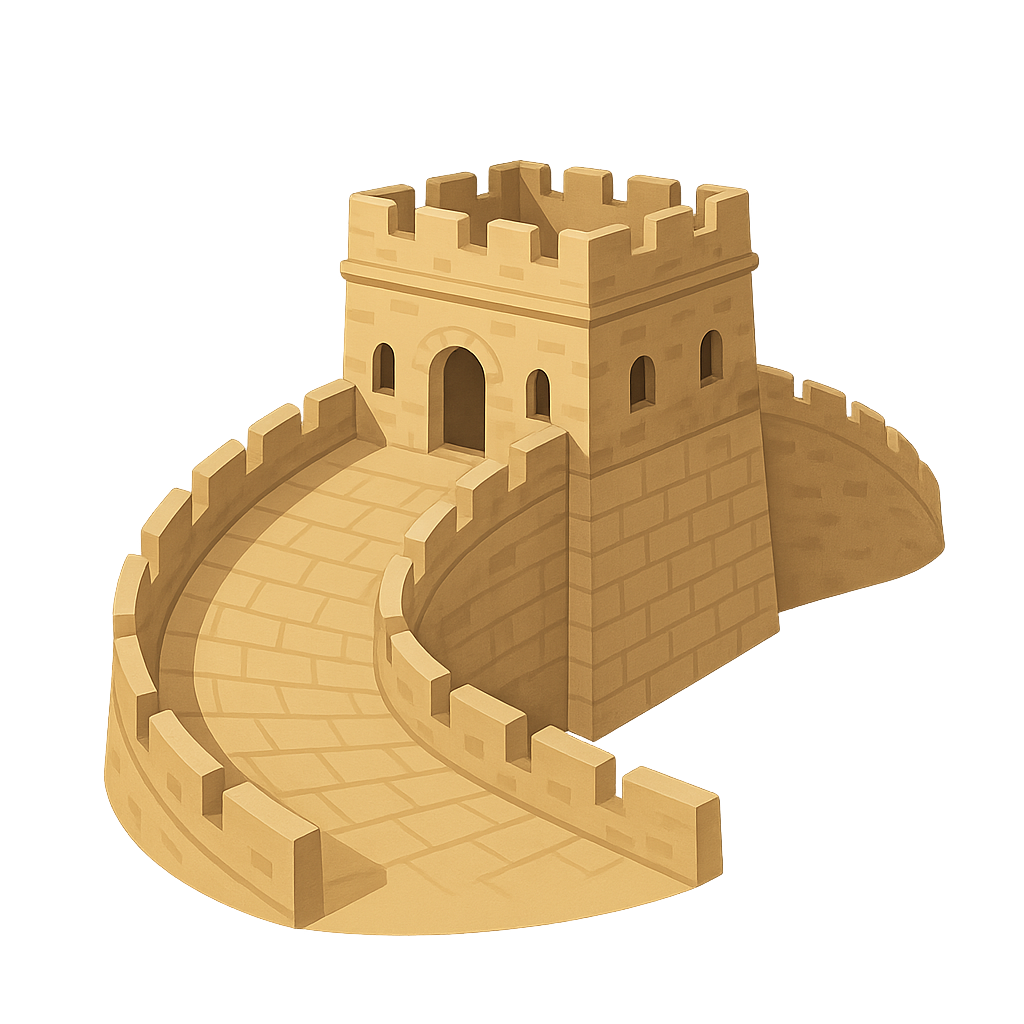
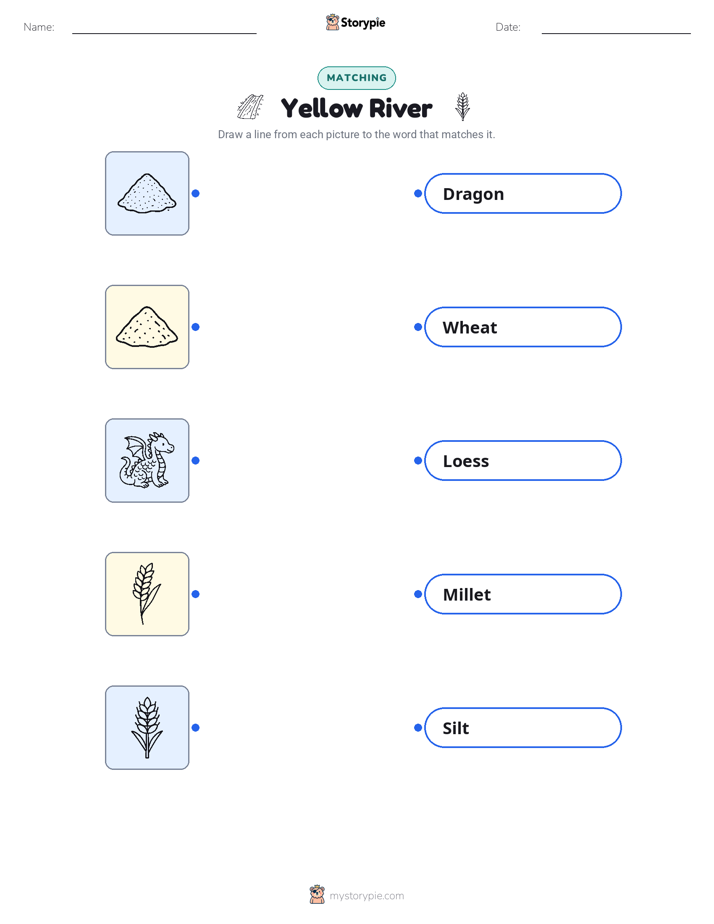
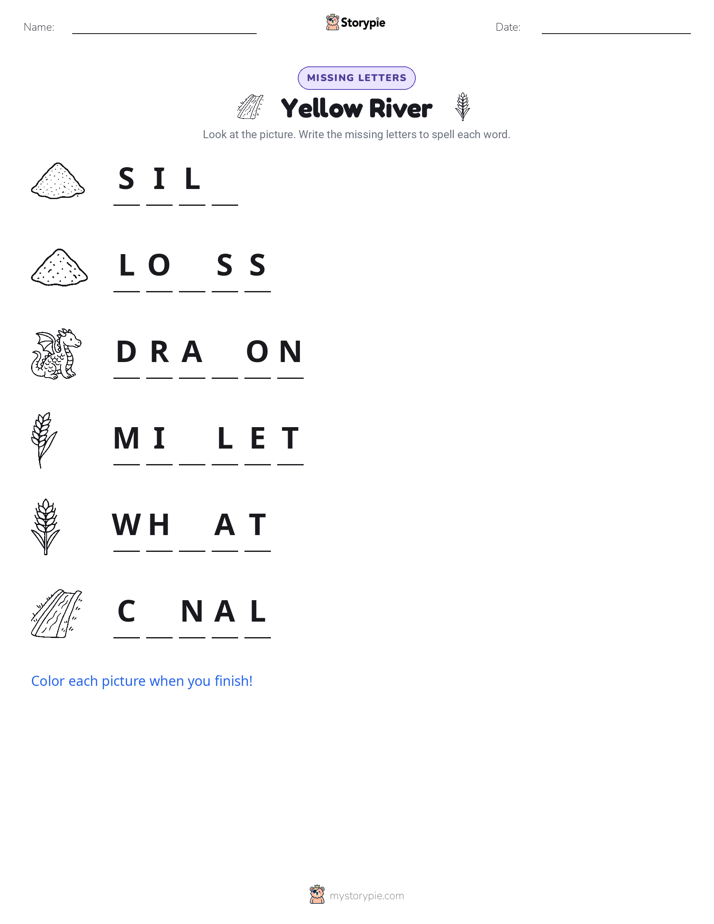
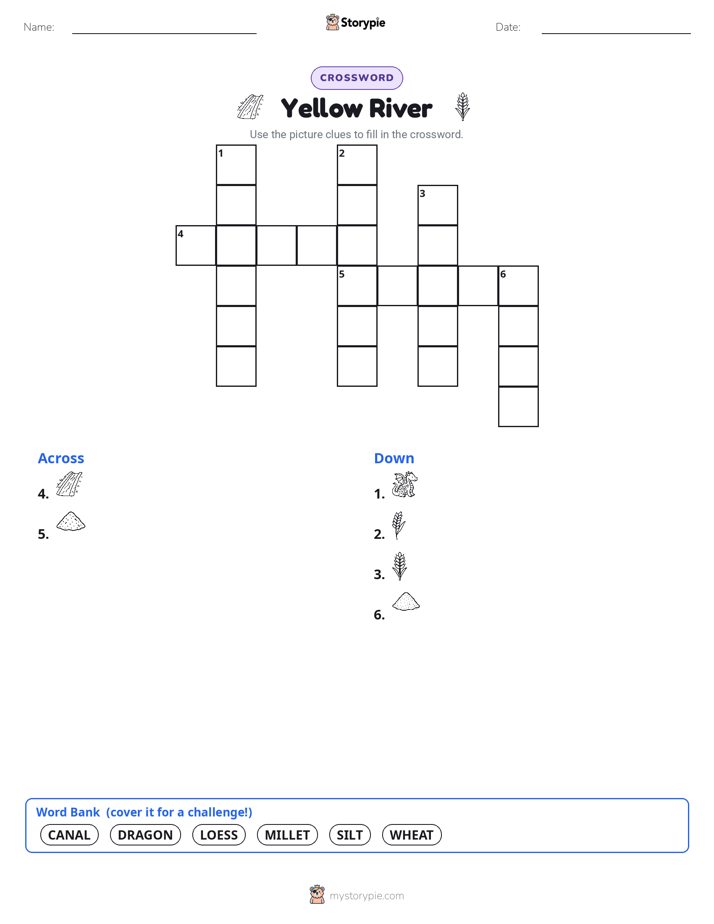
I begin my long journey high in the mountains, a trickle of clear water born from ancient glaciers. As I wind my way down through the high plateaus of China, I gather something special. I collect a fine, yellow powder, a silt called loess, which was blown there by the wind over thousands of years. This silt fills my waters, transforming me from a simple stream into something magnificent. I become the color of liquid earth, a shimmering ribbon of gold twisting across the land. From above, my path looks like that of a great, powerful beast from legend. I am a golden dragon, carving my way through canyons and across vast plains, my scales glittering under the sun. For over three thousand miles, I carry this golden gift, a heavy but precious burden, on my journey toward the sea. My color is my identity, a sign of the land I come from and the power I hold within my currents. People who see me for the first time are often amazed by my unique shade, a color that promises both life and challenge. I am the Huang He, the Yellow River.
For millennia, I have been known as the 'Mother River of China,' because it was on my banks that a great civilization was born. The story of my people began long ago, around 7000 BCE, when early farmers discovered the secret of the silt I carried. When my waters would gently overflow, I would leave a layer of this fertile loess on the surrounding land. This created the North China Plain, a vast expanse of rich soil perfect for growing crops like millet and wheat. People no longer needed to wander in search of food; they could build permanent homes and villages near me. This is how agriculture began in this part of the world. As villages grew into cities, China’s first great dynasties rose to power along my shores. Around 1600 BCE, the Shang Dynasty built their capital near me, relying on the food from my fertile plains to support their kingdom. But living with me was not always easy. My floods could be unpredictable. A wise hero named Yu the Great, around the 22nd century BCE, understood that he could not fight my strength. Instead, he studied my flow and taught his people to work with me. They dug many canals to guide my excess water to the fields, turning a potential disaster into a gift of irrigation. He showed that harmony, not conflict, was the key to our shared existence.
The Golden Dragon River
I begin my long journey high in the mountains, a trickle of clear water born from ancient glaciers. As I wind my way down through the high plateaus of China, I gather something special. I collect a fine, yellow powder, a silt called loess, which was blown there by the wind over thousands of years. This silt fills my waters, transforming me from a simple stream into something magnificent. I become the color of liquid earth, a shimmering ribbon of gold twisting across the land. From above, my path looks like that of a great, powerful beast from legend. I am a golden dragon, carving my way through canyons and across vast plains, my scales glittering under the sun. For over three thousand miles, I carry this golden gift, a heavy but precious burden, on my journey toward the sea. My color is my identity, a sign of the land I come from and the power I hold within my currents. People who see me for the first time are often amazed by my unique shade, a color that promises both life and challenge. I am the Huang He, the Yellow River.
For millennia, I have been known as the 'Mother River of China,' because it was on my banks that a great civilization was born. The story of my people began long ago, around 7000 BCE, when early farmers discovered the secret of the silt I carried. When my waters would gently overflow, I would leave a layer of this fertile loess on the surrounding land. This created the North China Plain, a vast expanse of rich soil perfect for growing crops like millet and wheat. People no longer needed to wander in search of food; they could build permanent homes and villages near me. This is how agriculture began in this part of the world. As villages grew into cities, China’s first great dynasties rose to power along my shores. Around 1600 BCE, the Shang Dynasty built their capital near me, relying on the food from my fertile plains to support their kingdom. But living with me was not always easy. My floods could be unpredictable. A wise hero named Yu the Great, around the 22nd century BCE, understood that he could not fight my strength. Instead, he studied my flow and taught his people to work with me. They dug many canals to guide my excess water to the fields, turning a potential disaster into a gift of irrigation. He showed that harmony, not conflict, was the key to our shared existence.
While I am a source of life, I also have a challenging and destructive side. The very same loess that makes the land fertile also causes me great trouble. Over centuries, billions of tons of this silt have settled on my riverbed. Slowly, year after year, this has raised me up. In many places, my riverbed is now higher than the surrounding cities and fields. For thousands of years, people have worked to contain me, building massive earthen walls called dikes along my banks. But sometimes, especially after heavy rains, my power becomes too immense to be held back. I burst through the dikes, and my waters surge across the flat plains. Because of this destructive power, I have earned another name: 'China's Sorrow.' The great flood of 1887 CE was one such devastating moment, when my waters broke free with tremendous force. Yet, this constant challenge has also inspired incredible human ingenuity and resilience. To better manage trade and transport between China's different regions, people embarked on one of the most ambitious engineering projects in history. Beginning in the 5th century BCE, they started digging the Grand Canal, a man-made waterway that would eventually connect me to the mighty Yangtze River in the south, creating a vital artery for the entire empire.
My journey through time continues into the modern world. The challenges of my silt and my powerful floods have not disappeared, but the ways people work with me have transformed. Today, enormous structures of concrete and steel stand along my path. Massive dams, like the Xiaolangdi Dam which became fully operational in the early 2000s, were built to manage my flow with incredible precision. These dams can trap huge amounts of silt, preventing my riverbed from rising too quickly. They can also hold back floodwaters during the rainy season and release them when needed for farming. And as my water passes through them, it turns giant turbines to generate clean electricity for millions of people. I am no longer just a wild, unpredictable force. I am a partner in the progress of a nation. I still provide water for thirsty cities and vast farms that feed a huge population. I flow onward, a river of deep history and a vital resource for the future. I carry the stories of ancient dynasties and the hopes of modern engineers, a constant reminder of the enduring connection between nature’s power and the human spirit.
Wow facts
About
The Yellow River, or Huang He, is the second-longest river in China and is known as the 'cradle of Chinese civilization' for its role in the development of early dynasties.
Take a Quiz
Question 1 of 5
Which statement best summarizes the two main reasons the Yellow River is known as both the 'Mother River' and 'China's Sorrow'?
Explore next



Want to do even more?
Go beyond exploring. Unlock tools that turn every story into real learning.

Storypie Plus for families
Full stories, quizzes, and printables. Nights and car rides, sorted.
- Unlimited audio stories
- Create Mode: your child stars in the story
- Offline downloads
- Printable worksheets & coloring pages

Why Storypie for Schools
Students engaged. Prep in seconds. Evenings back to you.
- Worksheets & Quizzes
- Classroom Management
- Formative Assessment
- Custom Curriculum & Lesson Plans
- 27 Languages

Why Storypie for Homeschool
Curriculum done. They'll ask for more. Hours back in your day.
- Worksheet Generator
- First-Person Audio Stories
- Built-in Comprehension Quizzes
- Custom Curriculum & Lesson Plans
- Print & Go Activities