English

Hudson Bay
Hudson Bay is a large body of water in northeastern Canada…
Reads at Grades 3–5 Listens at Grades 1–5
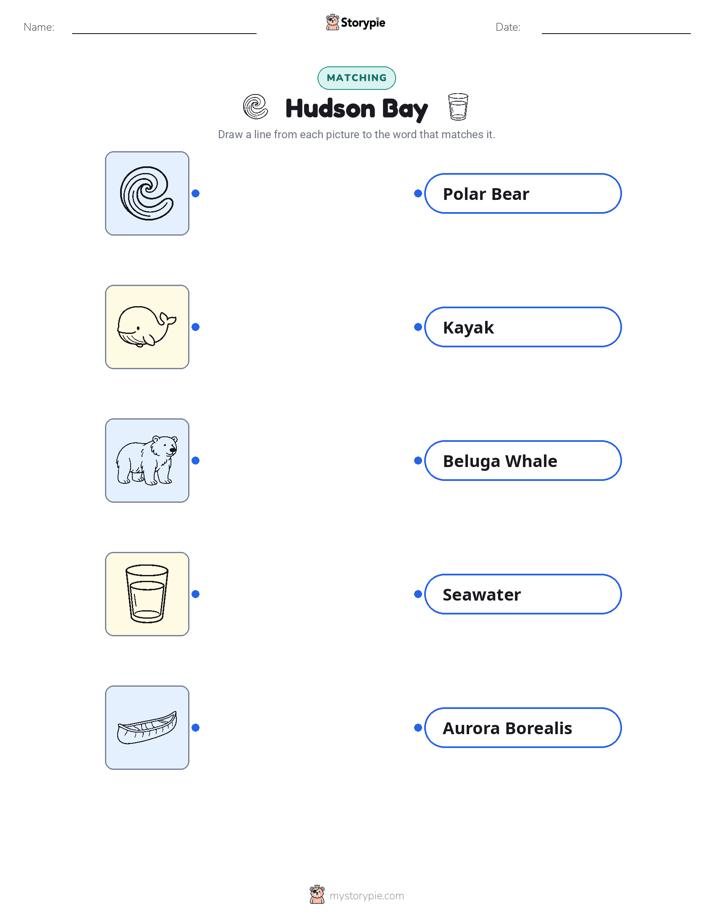
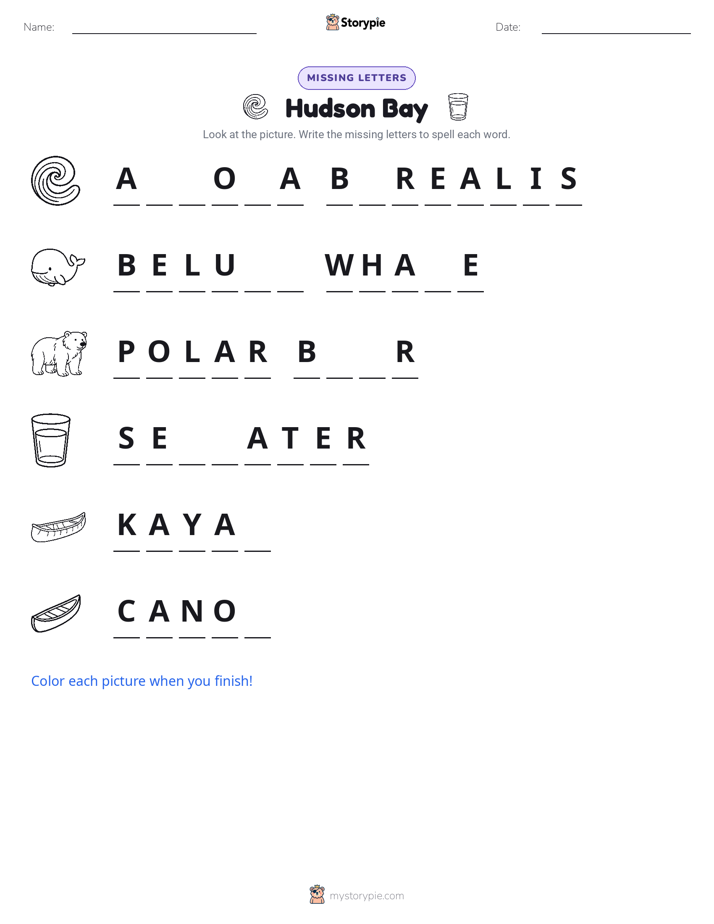
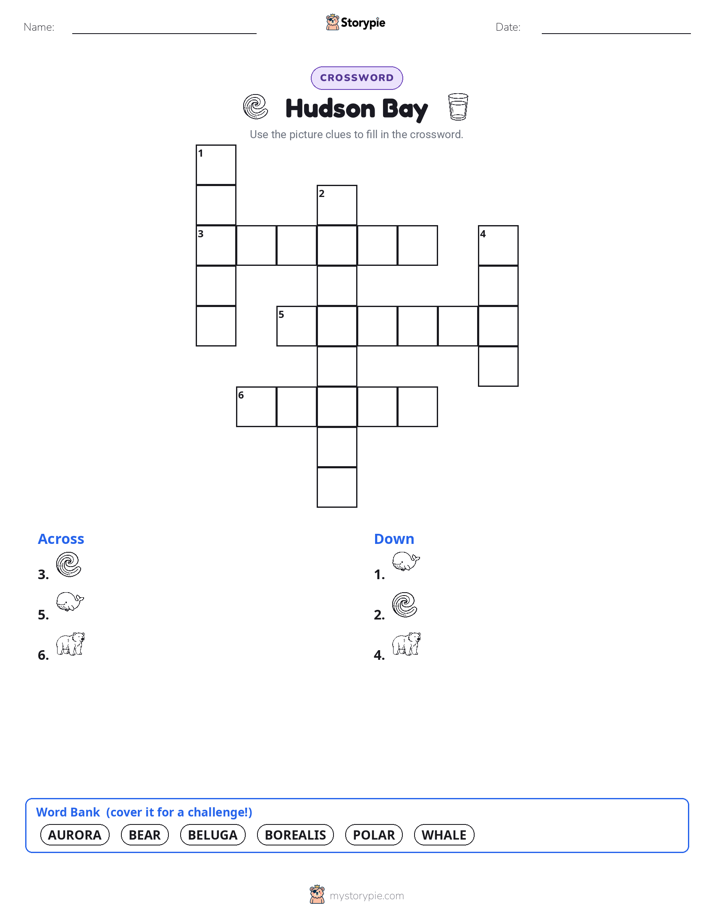
Print & create
Answer keys·No prep·Free with an account
28 worksheets · answer keys · full story · quiz · Ages 8-10 · CEFR B1
Plus adds 208,000+ more stories in 27 languages, audio for every one, and printables for all of them.
Just want Hudson Bay?
Feel the sharp, clean air as it bites at your cheeks. Hear the deep groan and crack as a sheet of ice, as big as a house, breaks away in the spring sunshine. If you looked down from space, you would see me as a massive curve of blue tucked deep inside a continent. Polar bears roam my icy shores, and in the summer, the songs of thousands of beluga whales echo in my depths. I am a giant saltwater sea that reaches far into the land, a vast inland ocean that breathes with the tides of the great Atlantic. I am Hudson Bay, a giant watery heart in the north of Canada.
My story begins not with people, but with ice. Thousands of years ago, a massive sheet of ice, two miles thick, covered most of North America. When the world warmed up after the last Ice Age, around 8,000 years ago, this enormous glacier began to melt. The weight of all that ice had pushed the land down, and as the ice disappeared, the land slowly began to rise again. But in the middle, a huge depression was left behind, like a giant bowl. The mighty Atlantic Ocean saw its chance and rushed in to fill the space, and I was born. For centuries, my only companions were the First Peoples, including the Cree, Dene, and Inuit. They lived along my shores, paddling their canoes on my waters and traveling across my frozen surface in winter. They understood my seasons and respected my power, relying on me for seals, fish, and a path to travel the vast land.
For thousands of years, my rhythms were known only to the people who called my shores home. But then, new sails appeared on my horizon. On August 2nd, 1610, an English explorer named Henry Hudson sailed his ship, the Discovery, into my waters. He wasn't looking for me. He was searching for a secret door to the other side of the world, a shortcut to Asia called the Northwest Passage. He sailed south, deeper and deeper into my embrace, until the fierce northern winter arrived. The cold was a powerful force, and my ice grabbed his ship and held it fast in my southern arm, a place now called James Bay. The winter of 1610 to 1611 was long, dark, and difficult for his crew. When the ice finally let go in the spring of 1611, his tired and unhappy crew wanted to go home. Henry Hudson's final journey ended in my waters, but his name was given to me, so his adventurous spirit is remembered forever.
The Story of Hudson Bay
Feel the sharp, clean air as it bites at your cheeks. Hear the deep groan and crack as a sheet of ice, as big as a house, breaks away in the spring sunshine. If you looked down from space, you would see me as a massive curve of blue tucked deep inside a continent. Polar bears roam my icy shores, and in the summer, the songs of thousands of beluga whales echo in my depths. I am a giant saltwater sea that reaches far into the land, a vast inland ocean that breathes with the tides of the great Atlantic. I am Hudson Bay, a giant watery heart in the north of Canada.
My story begins not with people, but with ice. Thousands of years ago, a massive sheet of ice, two miles thick, covered most of North America. When the world warmed up after the last Ice Age, around 8,000 years ago, this enormous glacier began to melt. The weight of all that ice had pushed the land down, and as the ice disappeared, the land slowly began to rise again. But in the middle, a huge depression was left behind, like a giant bowl. The mighty Atlantic Ocean saw its chance and rushed in to fill the space, and I was born. For centuries, my only companions were the First Peoples, including the Cree, Dene, and Inuit. They lived along my shores, paddling their canoes on my waters and traveling across my frozen surface in winter. They understood my seasons and respected my power, relying on me for seals, fish, and a path to travel the vast land.
For thousands of years, my rhythms were known only to the people who called my shores home. But then, new sails appeared on my horizon. On August 2nd, 1610, an English explorer named Henry Hudson sailed his ship, the Discovery, into my waters. He wasn't looking for me. He was searching for a secret door to the other side of the world, a shortcut to Asia called the Northwest Passage. He sailed south, deeper and deeper into my embrace, until the fierce northern winter arrived. The cold was a powerful force, and my ice grabbed his ship and held it fast in my southern arm, a place now called James Bay. The winter of 1610 to 1611 was long, dark, and difficult for his crew. When the ice finally let go in the spring of 1611, his tired and unhappy crew wanted to go home. Henry Hudson's final journey ended in my waters, but his name was given to me, so his adventurous spirit is remembered forever.
News of my existence, and of the thick, warm furs worn by the people who lived here, traveled across the ocean to Europe. On May 2nd, 1670, a famous English trading company was formed, called the Hudson's Bay Company. This powerful company saw a great opportunity in the beaver, fox, and marten furs that could be found in the lands around me. They built sturdy wooden forts, called trading posts, along my shores. Here, Indigenous hunters, who knew the land better than anyone, would bring their valuable pelts. They traded these furs for European goods like metal tools, warm blankets, and colorful beads. For nearly two hundred years, my waters were a bustling water highway, busy with Indigenous canoes and tall European ships, connecting different worlds and cultures through trade.
My fur trading days have slowed, but my wild heart beats as strong as ever. Today, I am famous for the incredible animals who depend on me. The town of Churchill, Manitoba, on my western shore, is known as the “Polar Bear Capital of the World” because bears gather there every fall, waiting for my waters to freeze so they can hunt for seals. I am also a special place for scientists who want to understand the Arctic. They listen to my ice, measure my temperatures, and study my wildlife to learn how our planet is changing. Looking back, I see I have been a cradle for ancient cultures, a path for explorers, and a highway for trade. Now, I am a keeper of stories and a home for amazing wildlife, reminding everyone of the wild beauty of our planet and the importance of protecting it for the future.
Wow facts
About
Hudson Bay is a large body of water in northeastern Canada, historically significant for the fur trade and the search for the Northwest Passage, and today a critical habitat for Arctic wildlife.
Take a Quiz
Question 1 of 5
Why do you think the story calls Hudson Bay a 'giant watery heart in the north of Canada'?
Explore next






Want to do even more?
Go beyond exploring. Unlock tools that turn every story into real learning.

Storypie Plus for families
Full stories, quizzes, and printables. Nights and car rides, sorted.
- Unlimited audio stories
- Create Mode: your child stars in the story
- Offline downloads
- Printable worksheets & coloring pages

Why Storypie for Schools
Students engaged. Prep in seconds. Evenings back to you.
- Worksheets & Quizzes
- Classroom Management
- Formative Assessment
- Custom Curriculum & Lesson Plans
- 27 Languages

Why Storypie for Homeschool
Curriculum done. They'll ask for more. Hours back in your day.
- Worksheet Generator
- First-Person Audio Stories
- Built-in Comprehension Quizzes
- Custom Curriculum & Lesson Plans
- Print & Go Activities