English

Kalahari Desert
A large, semi-arid sandy savanna in Southern Africa, home to unique…
Reads at Grades 6–8 Listens at Grades 4–8
Print & create
Answer keys·No prep·Free with an account
28 worksheets · answer keys · full story · quiz · Ages 10-12 · CEFR B2
Plus adds 102,000+ more stories in 27 languages, audio for every one, and printables for all of them.
Just want Kalahari Desert?
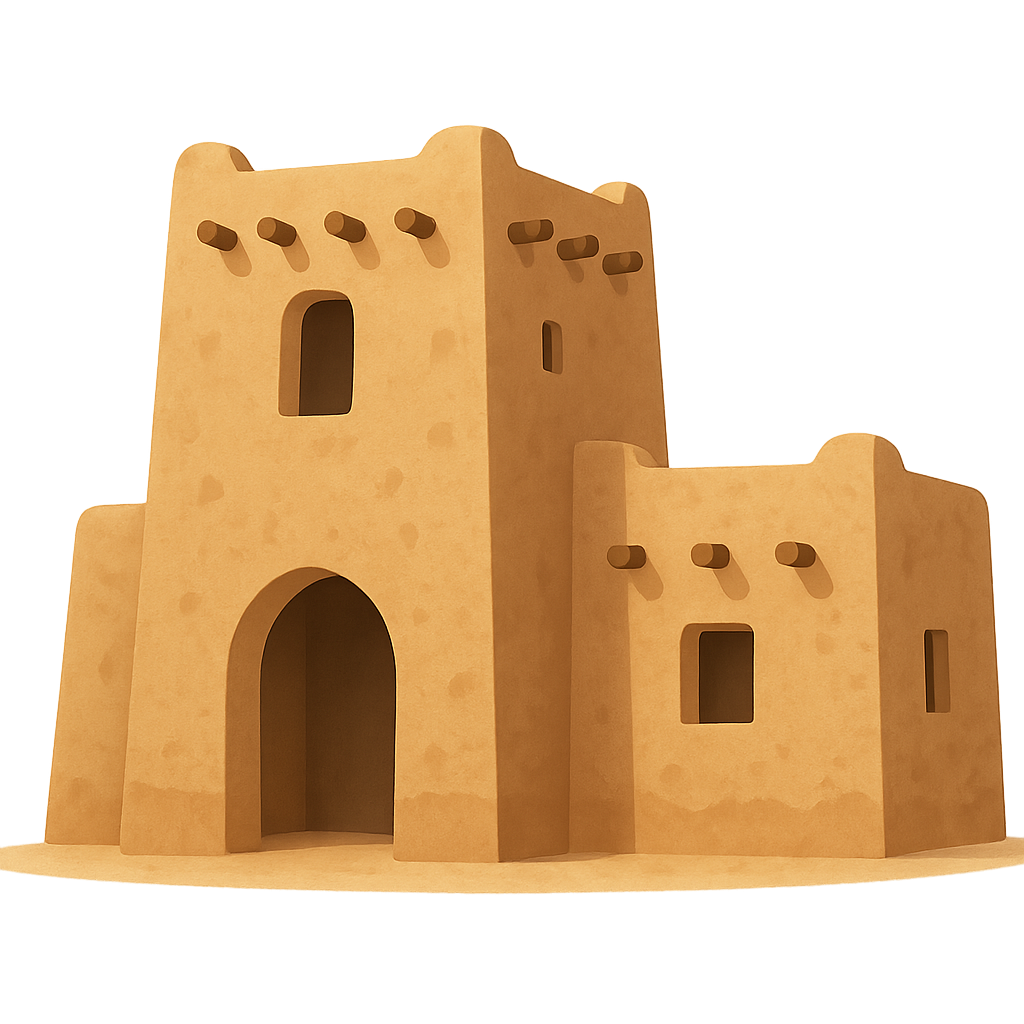
The sun warms my skin, a vast blanket of fine, red sand that shifts and whispers with every breeze. I stretch farther than your eyes can see, a sea of rust-colored earth under an immense blue sky. Thorny acacia trees, their branches twisted like ancient sculptures, dot my landscape, offering precious shade to those who know where to look. In the cool of the evening, the air fills with the sharp calls of night birds and the soft, steady padding of paws on sand. I am ancient, vast, and full of secrets that have been kept for millions of years. My silence holds stories of survival, of stars, and of life that thrives in the most unlikely of ways. I am the Kalahari, but I am no ordinary desert.
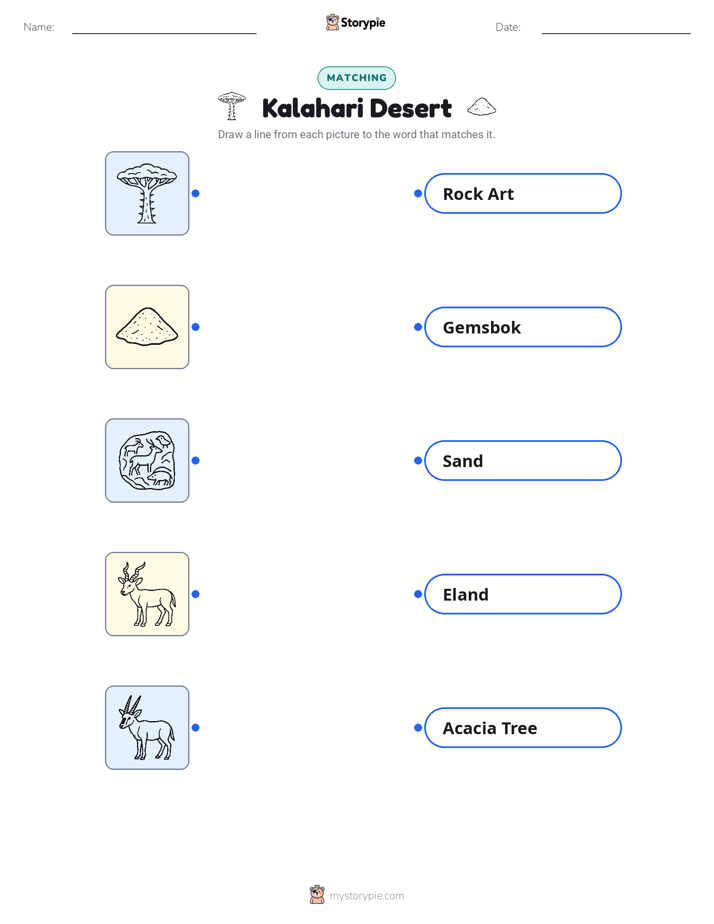
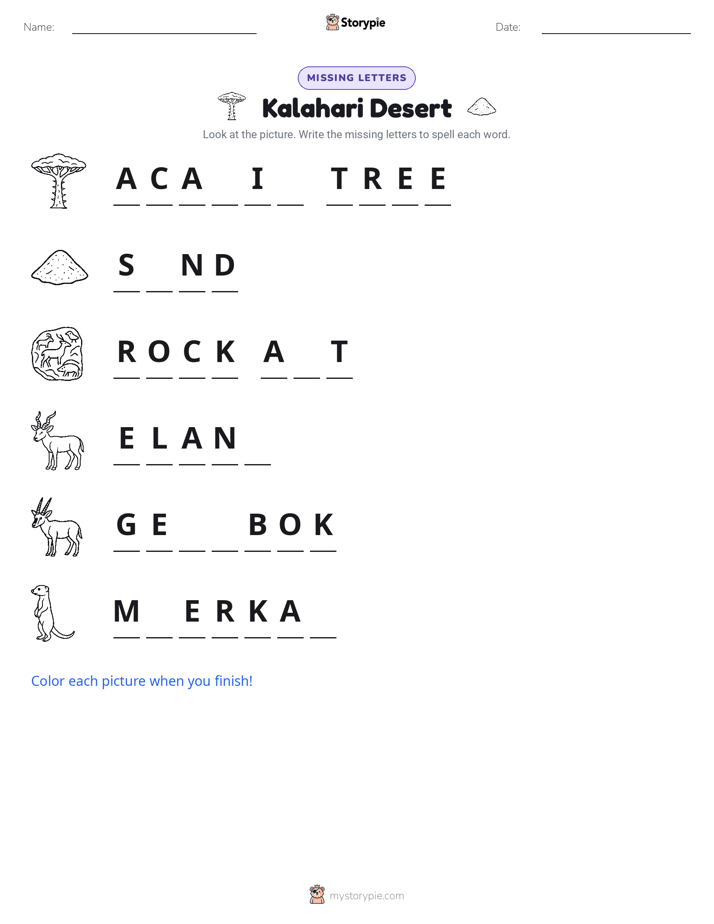
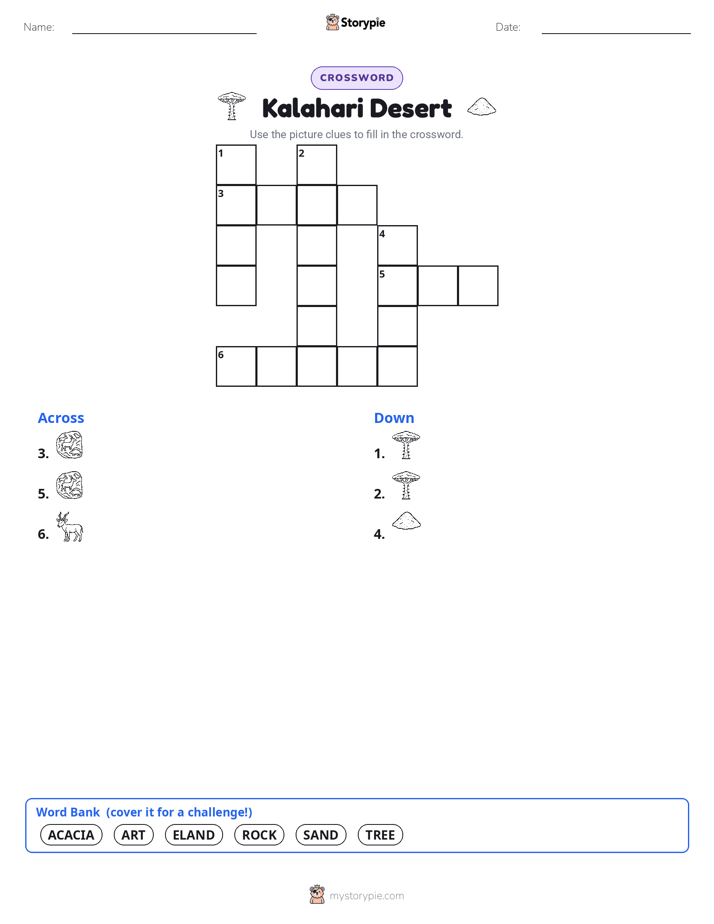
My story began long before the first human footprints marked my surface, around 60 million years ago, when the slow, powerful forces of the earth shaped me into a massive, shallow basin. For tens of thousands of years, the first people to know my secrets were the San. They did not see me as an obstacle to be conquered; they saw me as home. As skilled hunter-gatherers, they lived with me, not just on me. They understood my rhythms and knew how to find water hidden in the roots of plants, how to read the tracks of the eland and the gemsbok, and which plants could heal or nourish. Their connection to me was deep and spiritual, a story they told not only through words but through art. On the ancient rocks of places like the Tsodilo Hills, their ancestors painted thousands of images of animals and spiritual figures. This rock art, some of which dates back many centuries, is a beautiful library of their beliefs, showing a world where humans and nature were woven together in a delicate and respectful balance.
The Kalahari: A Story in the Sand
The sun warms my skin, a vast blanket of fine, red sand that shifts and whispers with every breeze. I stretch farther than your eyes can see, a sea of rust-colored earth under an immense blue sky. Thorny acacia trees, their branches twisted like ancient sculptures, dot my landscape, offering precious shade to those who know where to look. In the cool of the evening, the air fills with the sharp calls of night birds and the soft, steady padding of paws on sand. I am ancient, vast, and full of secrets that have been kept for millions of years. My silence holds stories of survival, of stars, and of life that thrives in the most unlikely of ways. I am the Kalahari, but I am no ordinary desert.
My story began long before the first human footprints marked my surface, around 60 million years ago, when the slow, powerful forces of the earth shaped me into a massive, shallow basin. For tens of thousands of years, the first people to know my secrets were the San. They did not see me as an obstacle to be conquered; they saw me as home. As skilled hunter-gatherers, they lived with me, not just on me. They understood my rhythms and knew how to find water hidden in the roots of plants, how to read the tracks of the eland and the gemsbok, and which plants could heal or nourish. Their connection to me was deep and spiritual, a story they told not only through words but through art. On the ancient rocks of places like the Tsodilo Hills, their ancestors painted thousands of images of animals and spiritual figures. This rock art, some of which dates back many centuries, is a beautiful library of their beliefs, showing a world where humans and nature were woven together in a delicate and respectful balance.
For millennia, the only human footprints on my sands belonged to the San. But then, in the 19th century, new kinds of travelers arrived from faraway lands, seeking to map my expanses and uncover my mysteries. In 1849, a determined explorer from Scotland named David Livingstone, guided by local people who understood my ways, made a famous journey across my southern edge to reach Lake Ngami, a place few outsiders had ever seen. His journey was difficult, a true test of will. Later in the century, during the late 1870s, groups of pioneers undertook grueling journeys across my landscape, which they called the 'Thirstland Treks'. They faced blistering heat and a constant search for water, and their stories became legends of human perseverance. These expeditions, though incredibly difficult, began to change my story in the wider world. I was no longer an empty space on a map but a formidable wilderness, a place of survival, profound challenge, and immense discovery.
Many who hear my name still picture a barren wasteland of endless sand, but that isn’t the whole truth. I am technically a semi-arid savanna. This is because I receive more rain than a true desert, and when the rains come, they awaken a carpet of grasses and bring leaves to my hardy trees. This explosion of life supports some of the most resilient and fascinating animals on the planet. The majestic gemsbok uses its long, straight horns for defense, while clever families of meerkats stand guard at their burrows, ever watchful. And then there are my famous black-maned lions, powerful predators perfectly adapted to this environment. To protect this incredible web of life, people created special sanctuaries. The Central Kalahari Game Reserve was established in 1961, setting aside a vast area for my wildlife. Then, on May 12th, 2000, the nations of Botswana and South Africa joined forces to open the Kgalagadi Transfrontier Park, a massive park that allows my animals to roam freely across borders, following the ancient paths their ancestors have walked for centuries.
If my red sands could speak, they would tell a single, powerful story: one of resilience. Life here is a testament to adaptation, from the deep-rooted trees that find water far below the surface to the clever animals that have learned to survive my extremes. The ancient wisdom of the San people teaches a lesson of living in balance, of understanding the earth rather than trying to control it. Today, modern scientists also come to learn from me, studying my delicate climate and my unique creatures to better understand survival in a changing world. I am not just a place of sand and sun. I am a living library, holding the history of the earth and the enduring spirit of human and animal life. My stories are etched in every dune and every starry night, and they wait patiently for anyone with a curious heart to come and listen.
Wow facts
About
A large, semi-arid sandy savanna in Southern Africa, home to unique, adapted wildlife and the ancient San people, who are among the oldest continuous cultures on Earth.
Take a Quiz
Question 1 of 5
Which of the following best summarizes the history of human interaction with the Kalahari as described in the story?
Explore next






Want to do even more?
Go beyond exploring. Unlock tools that turn every story into real learning.

Storypie Plus for families
Full stories, quizzes, and printables. Nights and car rides, sorted.
- Unlimited audio stories
- Create Mode: your child stars in the story
- Offline downloads
- Printable worksheets & coloring pages

Why Storypie for Schools
Students engaged. Prep in seconds. Evenings back to you.
- Worksheets & Quizzes
- Classroom Management
- Formative Assessment
- Custom Curriculum & Lesson Plans
- 27 Languages

Why Storypie for Homeschool
Curriculum done. They'll ask for more. Hours back in your day.
- Worksheet Generator
- First-Person Audio Stories
- Built-in Comprehension Quizzes
- Custom Curriculum & Lesson Plans
- Print & Go Activities