English

Khmer Empire
The Khmer Empire was a powerful state in Southeast Asia, formed by the Khmer people…
Reads at Grades 6–8 Listens at Grades 4–8
Print & create
Answer keys·No prep·Free with an account
28 worksheets · answer keys · full story · quiz · Ages 10-12 · CEFR B2
Plus adds 208,000+ more stories in 27 languages, audio for every one, and printables for all of them.
Just want Khmer Empire?
Imagine waking from a long, deep sleep, the sun warming your stone skin for the first time in centuries. Green vines cling to your walls like a blanket, and the chatter of monkeys echoes where royal processions once marched. Through the dense leaves, you can see intricate carvings of dancers and gods, and massive, smiling faces of stone that seem to know a thousand secrets. I am not just one city, but a vast network of cities, canals, and enormous reservoirs, a whole civilization built on the mastery of water and a deep faith. For hundreds of years, I was a powerful heart beating in the jungle. I am the Khmer Empire, a jewel of Southeast Asia.
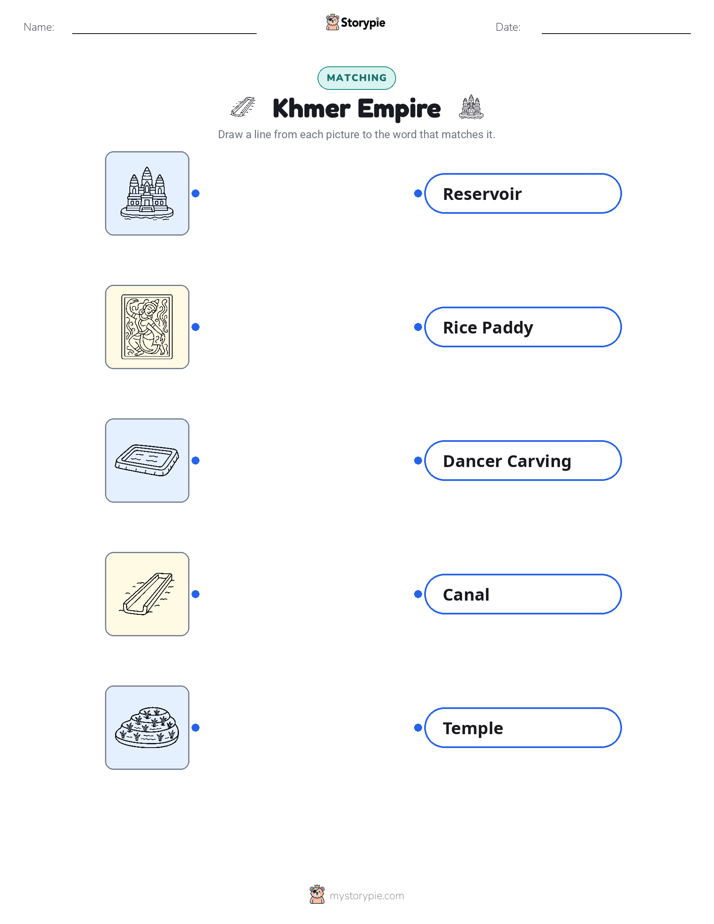
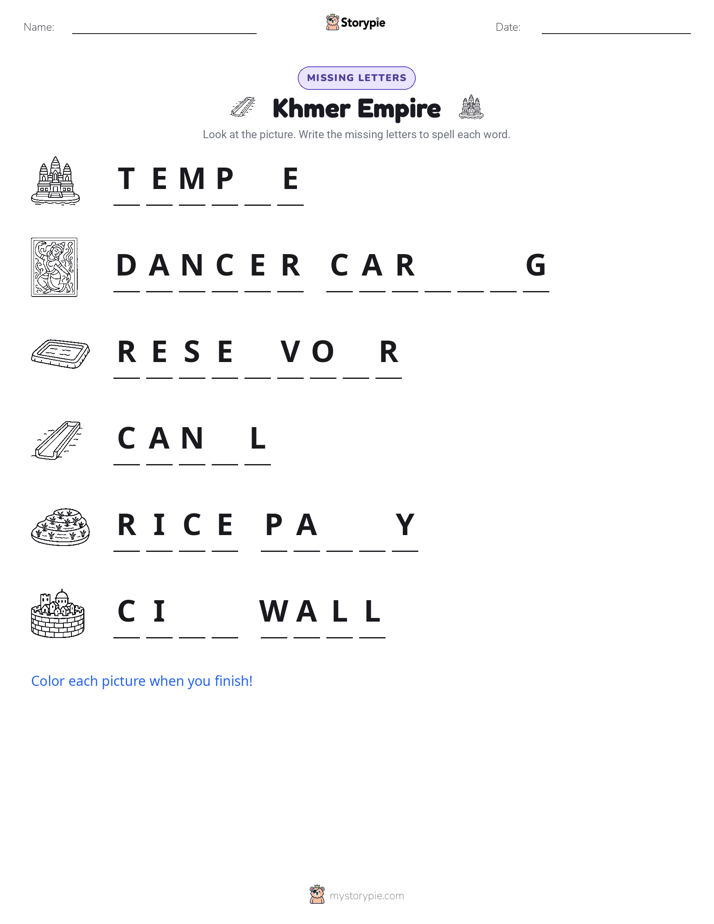
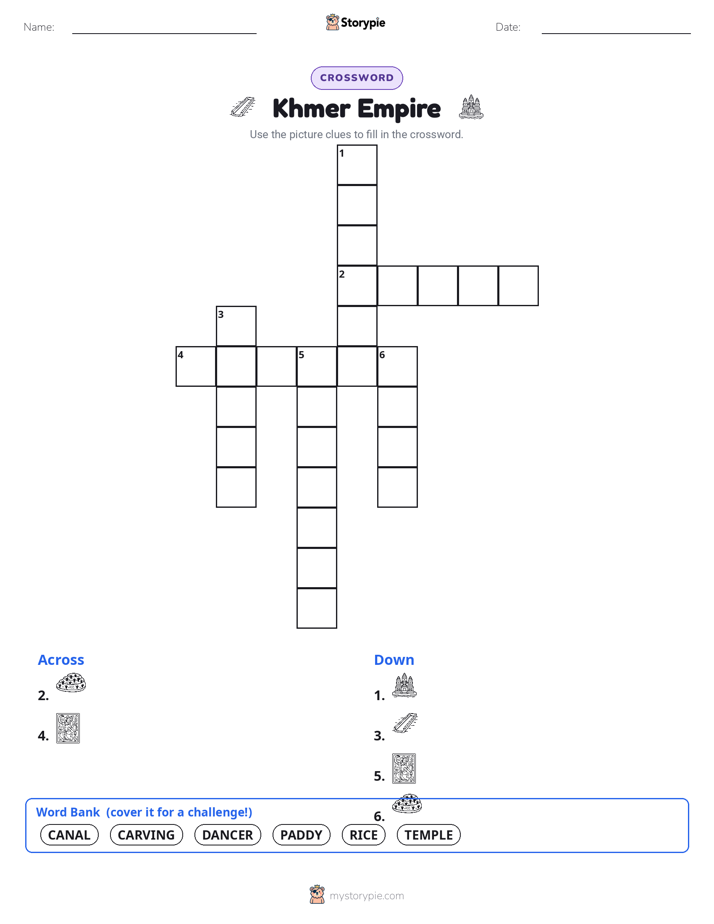
My story began long ago, when this land was a patchwork of smaller, competing kingdoms. A brilliant and ambitious prince returned from exile, and he had a vision of a unified, powerful nation. His name was Jayavarman II. On a sacred mountain in the year 802 CE, he performed a holy ritual and declared himself 'devaraja'—the god-king. This single act united the people and gave birth to me. My people were not just spiritual; they were engineering geniuses. They understood the rhythm of the monsoon, with its flooding rains and its long, dry spells. To survive and flourish, they built a spectacular water management system. They created enormous reservoirs called 'barays,' some stretching for miles, to store the monsoon rains. From these, a complex web of canals flowed out to irrigate endless fields of rice, feeding millions of people. This control over water was my lifeblood, allowing my cities to grow into the largest in the world at that time.
The Stone Kingdom in the Jungle
Imagine waking from a long, deep sleep, the sun warming your stone skin for the first time in centuries. Green vines cling to your walls like a blanket, and the chatter of monkeys echoes where royal processions once marched. Through the dense leaves, you can see intricate carvings of dancers and gods, and massive, smiling faces of stone that seem to know a thousand secrets. I am not just one city, but a vast network of cities, canals, and enormous reservoirs, a whole civilization built on the mastery of water and a deep faith. For hundreds of years, I was a powerful heart beating in the jungle. I am the Khmer Empire, a jewel of Southeast Asia.
My story began long ago, when this land was a patchwork of smaller, competing kingdoms. A brilliant and ambitious prince returned from exile, and he had a vision of a unified, powerful nation. His name was Jayavarman II. On a sacred mountain in the year 802 CE, he performed a holy ritual and declared himself 'devaraja'—the god-king. This single act united the people and gave birth to me. My people were not just spiritual; they were engineering geniuses. They understood the rhythm of the monsoon, with its flooding rains and its long, dry spells. To survive and flourish, they built a spectacular water management system. They created enormous reservoirs called 'barays,' some stretching for miles, to store the monsoon rains. From these, a complex web of canals flowed out to irrigate endless fields of rice, feeding millions of people. This control over water was my lifeblood, allowing my cities to grow into the largest in the world at that time.
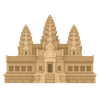
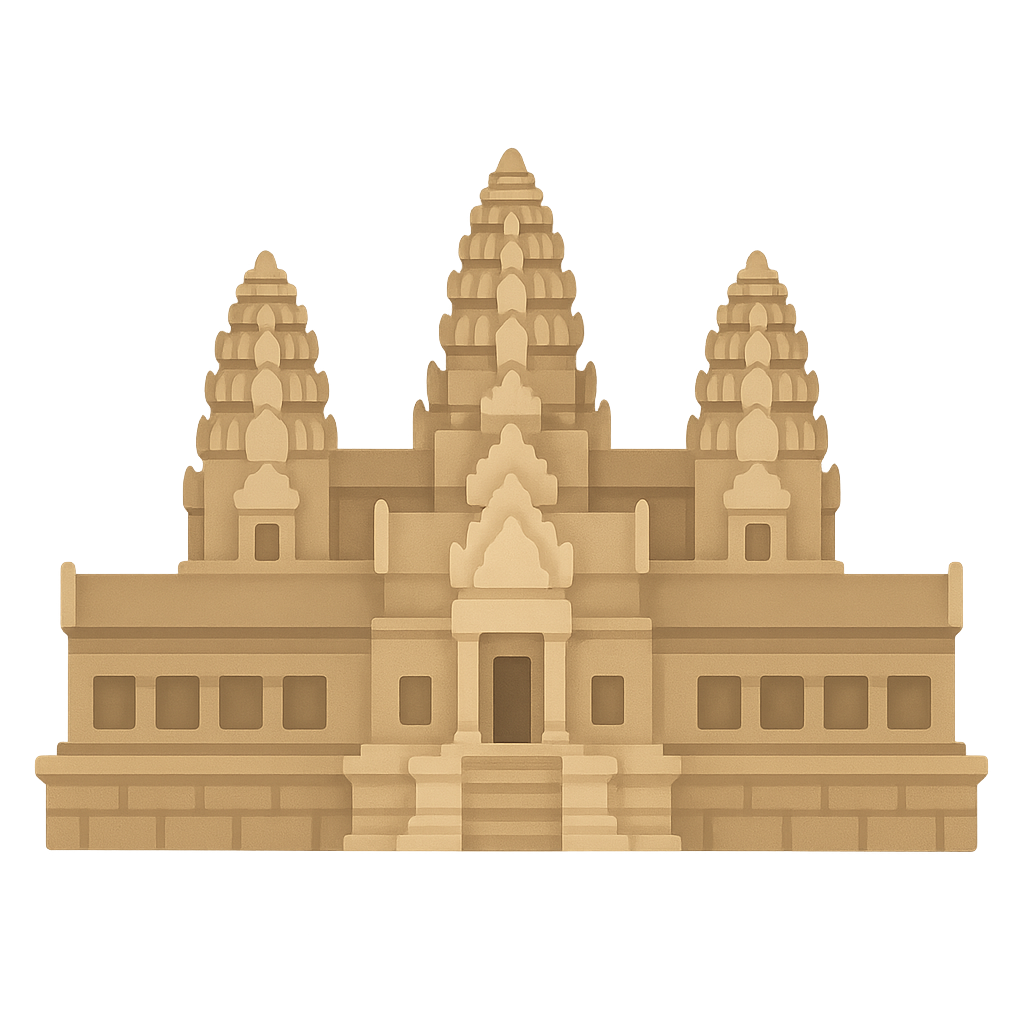
My golden age was an age of temples. My kings were driven by faith to build monuments that reached for the heavens. In the early 12th century, King Suryavarman II had a breathtaking vision. He wanted to build a stone model of the Hindu cosmos, a heavenly palace for the god Vishnu on Earth. The result was Angkor Wat. Its five towers rise like lotus buds, surrounded by an immense moat that represents the mythical oceans of the universe. Its stone walls are covered in nearly a mile of breathtaking carvings, telling epic stories of gods, demons, and heroes. For decades, thousands of artisans and workers labored to create this masterpiece. Then, after a period of turmoil, a new great king came to power in 1181 CE. His name was Jayavarman VII, and he was a devoted Buddhist. He decided to build a new capital, a mighty city called Angkor Thom, protected by eight-meter-high walls and a wide moat. At its very center, he built the Bayon Temple. It is a place of wonder and mystery, with more than two hundred enormous, serene faces carved into its towers, smiling down with gentle compassion upon the kingdom. These faces are believed to be a combination of the Buddha and the king himself, watching over his people from every direction.
Life within my walls was a vibrant tapestry of activity. In the shadow of the great temples, bustling markets were filled with goods from all over Asia. Farmers worked in the shimmering rice paddies that stretched to the horizon, their lives governed by the water that flowed from the barays. Skilled artisans spent their entire lives carving the intricate details you can still see on my temple walls, while priests and scholars studied sacred texts. My spiritual life was a blend of beliefs. For centuries, my people worshiped Hindu gods like Shiva and Vishnu, who inspired the grand design of Angkor Wat. But under the guidance of King Jayavarman VII, Buddhism became the heart of the empire, inspiring the peaceful faces of the Bayon and a new focus on compassion. This spiritual devotion was woven into every aspect of life, from the layout of my cities to the laws of my kings. For over six hundred years, I was a beacon of culture, power, and artistic achievement in Southeast Asia.
Like all great empires, my time of glory eventually began to fade. My decline was not a sudden event, but a slow process over many years, caused by a mix of things, including intense competition with neighboring kingdoms. A critical moment came in the year 1431 CE, when armies from the powerful kingdom of Ayutthaya captured my capital, Angkor. My royal court was forced to relocate south, and my great cities began to empty. Slowly, gently, the jungle returned to claim what I had carved from it. Trees grew through my temple floors, and thick vines wrapped around my stone gods. For nearly four hundred years, I fell into a long sleep, largely forgotten by the outside world. But I was never truly lost. The Khmer people always knew of my existence, and my temples remained sacred places. Today, I have reawakened. Archaeologists and conservationists have cleared the jungle, revealing my magnificence for all to see. I am now a protected UNESCO World Heritage site, visited by people from every corner of the globe. I stand as a testament to the incredible ingenuity, faith, and artistic vision of my creators, inspiring awe and teaching the world about a civilization that once made the jungle itself bow to its will.
Wow facts
About
The Khmer Empire was a powerful state in Southeast Asia, formed by the Khmer people, which ruled over much of the mainland from the 9th to the 15th centuries. It is renowned for its sophisticated art and architecture, most notably Angkor Wat.
Take a Quiz
Question 1 of 5
In your own words, retell the story of the Khmer Empire, focusing on the key kings and their major building projects.
Explore next




Want to do even more?
Go beyond exploring. Unlock tools that turn every story into real learning.

Storypie Plus for families
Full stories, quizzes, and printables. Nights and car rides, sorted.
- Unlimited audio stories
- Create Mode: your child stars in the story
- Offline downloads
- Printable worksheets & coloring pages

Why Storypie for Schools
Students engaged. Prep in seconds. Evenings back to you.
- Worksheets & Quizzes
- Classroom Management
- Formative Assessment
- Custom Curriculum & Lesson Plans
- 27 Languages

Why Storypie for Homeschool
Curriculum done. They'll ask for more. Hours back in your day.
- Worksheet Generator
- First-Person Audio Stories
- Built-in Comprehension Quizzes
- Custom Curriculum & Lesson Plans
- Print & Go Activities