English

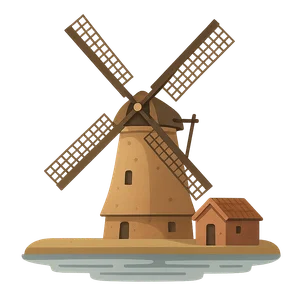
Kinderdijk
A village in the Netherlands famous for its iconic 18th-century windmills…
Reads at Grades 6–8 Listens at Grades 4–8
Print & create
Answer keys·No prep·Free with an account
28 worksheets · answer keys · full story · quiz · Ages 10-12 · CEFR B2
Plus adds 164,000+ more stories in 27 languages, audio for every one, and printables for all of them.
Just want Kinderdijk?
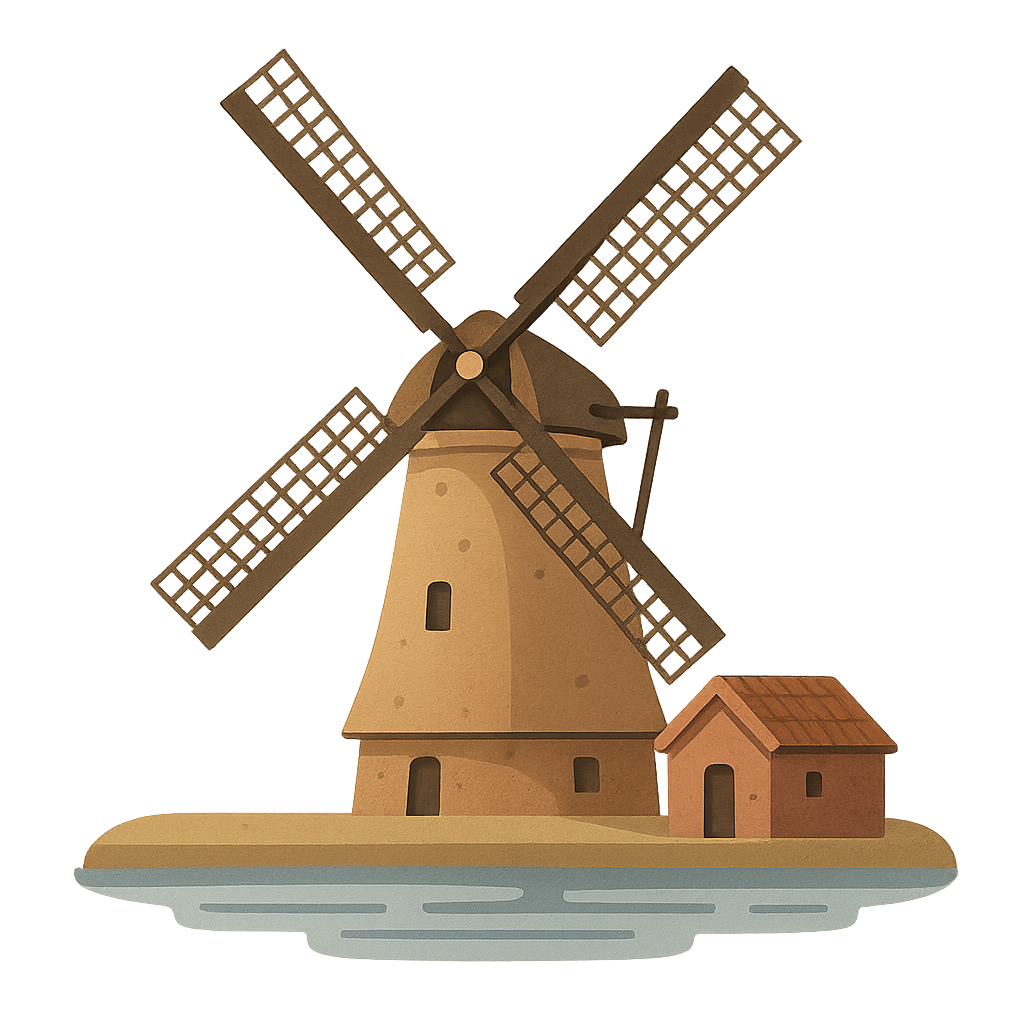
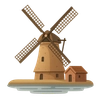
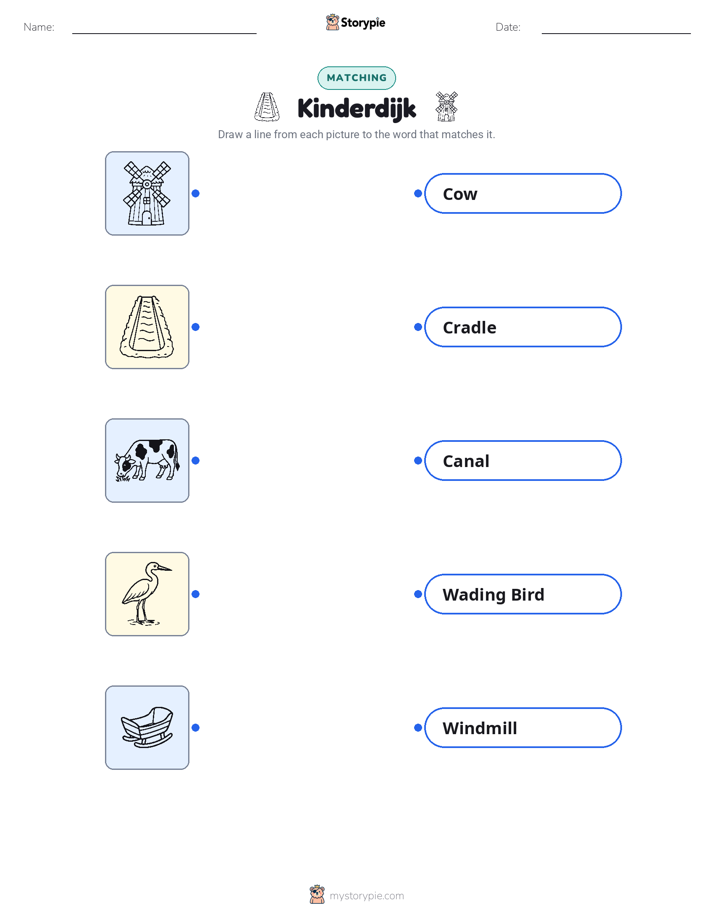
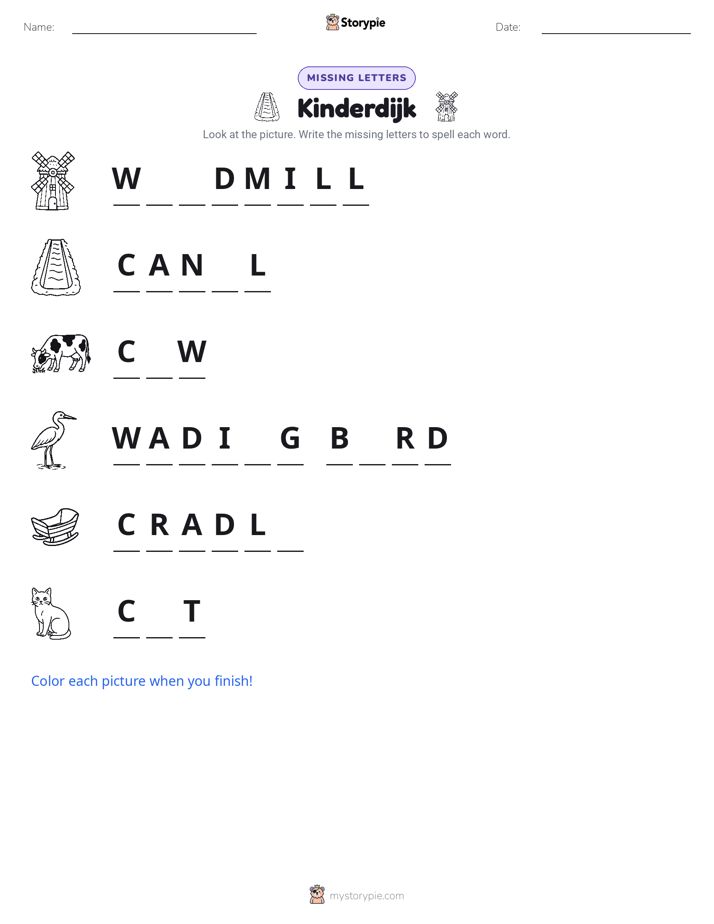
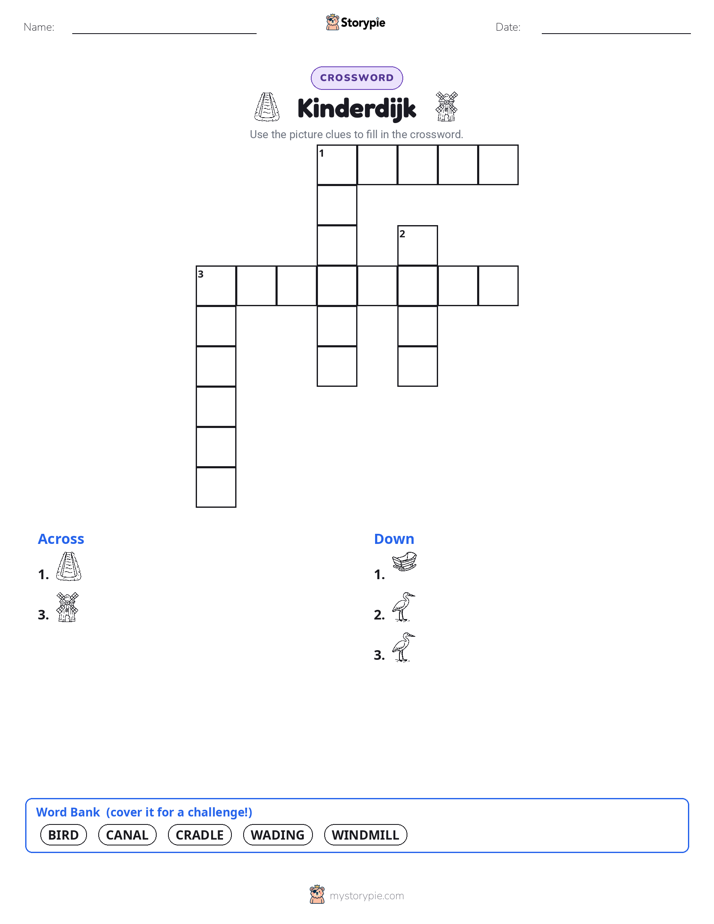
Imagine a land so flat it seems to touch the sky in every direction. The fields are a patchwork of the deepest greens, crisscrossed by silver ribbons of water called canals. Above it all, a vast sky is filled with clouds that drift on a wind that never seems to rest. This wind is my lifeblood. It is my engine and my music, turning my four massive sails with a steady, rhythmic whoosh. All around me, you can hear the calls of wading birds and the gentle lowing of cows grazing peacefully. It is a quiet, beautiful place, but it holds a secret. This land is in a constant, silent struggle with the water that surrounds it. For centuries, my brothers and I have stood as guardians here, a team of wooden and brick giants built for a single, vital purpose: to keep this land dry and its people safe. We are a symphony of engineering and nature. I am Kinderdijk.
To understand why I exist, you must travel back in time, to an era when the water was both a friend and a foe. Much of this country, the Netherlands, lies below the level of the sea. The very ground here is a special kind of land called a 'polder'—land that was once marsh or sea and has been reclaimed by human effort. But keeping the water out is a relentless job. On the night of November 19th, 1421, a terrible storm surge caused the great St. Elizabeth's flood, washing away villages and reminding everyone of the water's immense power. From this tragedy, a hopeful legend was born, the one that gave me my name. After the floodwaters receded, people found a wooden cradle bobbing near a dike. Inside was a sleeping baby, perfectly safe. A cat, perched on the cradle's edge, had balanced it by leaping from side to side, keeping it from tipping over. In honor of this miracle, the place became known as 'Kinderdijk,' which means 'Children's Dike.' But the legend didn't solve the problem. For centuries after, the people of the Alblasserwaard polder fought a tiring battle to drain their fields.
The Windmills of Kinderdijk
Imagine a land so flat it seems to touch the sky in every direction. The fields are a patchwork of the deepest greens, crisscrossed by silver ribbons of water called canals. Above it all, a vast sky is filled with clouds that drift on a wind that never seems to rest. This wind is my lifeblood. It is my engine and my music, turning my four massive sails with a steady, rhythmic whoosh. All around me, you can hear the calls of wading birds and the gentle lowing of cows grazing peacefully. It is a quiet, beautiful place, but it holds a secret. This land is in a constant, silent struggle with the water that surrounds it. For centuries, my brothers and I have stood as guardians here, a team of wooden and brick giants built for a single, vital purpose: to keep this land dry and its people safe. We are a symphony of engineering and nature. I am Kinderdijk.
To understand why I exist, you must travel back in time, to an era when the water was both a friend and a foe. Much of this country, the Netherlands, lies below the level of the sea. The very ground here is a special kind of land called a 'polder'—land that was once marsh or sea and has been reclaimed by human effort. But keeping the water out is a relentless job. On the night of November 19th, 1421, a terrible storm surge caused the great St. Elizabeth's flood, washing away villages and reminding everyone of the water's immense power. From this tragedy, a hopeful legend was born, the one that gave me my name. After the floodwaters receded, people found a wooden cradle bobbing near a dike. Inside was a sleeping baby, perfectly safe. A cat, perched on the cradle's edge, had balanced it by leaping from side to side, keeping it from tipping over. In honor of this miracle, the place became known as 'Kinderdijk,' which means 'Children's Dike.' But the legend didn't solve the problem. For centuries after, the people of the Alblasserwaard polder fought a tiring battle to drain their fields.
By the 18th century, it was clear that a more powerful, coordinated system was needed. So, in a great flurry of construction between the years 1738 and 1740, nineteen of us were built. We were designed as a brilliant, two-stage water-moving machine. You can see our two distinct groups: eight round, sturdy brick windmills on the Nederwaard side, and eleven elegant, octagonal, thatch-covered wooden windmills on the Overwaard side. We worked in perfect harmony. When the wind blew, it spun our huge sails. This motion turned massive wooden gears inside our bodies, which in turn powered a giant, spinning paddle wheel at our base. This wheel would scoop up water from the low canals of the polder and lift it into a higher basin. From there, the other set of windmills would lift it again, until it was high enough to flow out into the Lek river and away to the sea. It was an ingenious system. And we were not just machines; we were homes. The millers and their families lived inside our timber frames and brick walls. They were my keepers, listening to the groan of my gears and the whisper of the wind, working day and night to keep the pumps turning and the polder safe.
For more than a century, the sound of my turning sails was the sound of safety. But the world is always changing, and new inventions bring new sounds. Around the year 1868, a different kind of power arrived in the polder: steam. Two large, loud steam-powered pumping stations were built. They could move far more water than I could, and they didn't have to wait for the wind to blow. Later still, even more powerful diesel and electric pumps were installed. The rumbling of their engines began to replace the gentle whoosh of my sails. My work became less essential. One by one, my brothers and I were retired from our daily duties. Our sails turned less frequently, and the constant hum of our internal gears fell silent. It was a time of great change, and I watched as human ingenuity evolved beyond me. Yet, I was not torn down or forgotten. The miller families continued to live inside me, preserving me and honoring my past service. I stood as a silent testament to a bygone era of wind, wood, and water.
My story did not end with the arrival of modern machines. It simply entered a new chapter. The world began to see that I was more than just an old water-management system. I was a unique example of human resilience and brilliance. On December 6th, 1997, I was given a great honor: I was named a UNESCO World Heritage site. This title means that I am considered a treasure belonging to all the people of the world. Today, modern pumps still do the heavy work of keeping the polder dry, but I am kept in perfect working order, ready to serve as a backup if they should ever fail. Visitors now come from every corner of the globe to walk along my canals and watch my sails catch the Dutch wind. I am a living piece of history, a symbol of the centuries-long relationship the Dutch people have with the water. I stand to show that by working with nature, not just against it, humanity can create things of lasting beauty and purpose, inspiring new generations to find their own clever solutions to the challenges of their time.
Wow facts
About
A village in the Netherlands famous for its iconic 18th-century windmills, built to drain water from the polders and now a UNESCO World Heritage site symbolizing Dutch water management.
Take a Quiz
Question 1 of 5
What was the main reason the nineteen windmills of Kinderdijk were built between 1738 and 1740?
Explore next






Want to do even more?
Go beyond exploring. Unlock tools that turn every story into real learning.

Storypie Plus for families
Full stories, quizzes, and printables. Nights and car rides, sorted.
- Unlimited audio stories
- Create Mode: your child stars in the story
- Offline downloads
- Printable worksheets & coloring pages

Why Storypie for Schools
Students engaged. Prep in seconds. Evenings back to you.
- Worksheets & Quizzes
- Classroom Management
- Formative Assessment
- Custom Curriculum & Lesson Plans
- 27 Languages

Why Storypie for Homeschool
Curriculum done. They'll ask for more. Hours back in your day.
- Worksheet Generator
- First-Person Audio Stories
- Built-in Comprehension Quizzes
- Custom Curriculum & Lesson Plans
- Print & Go Activities