English

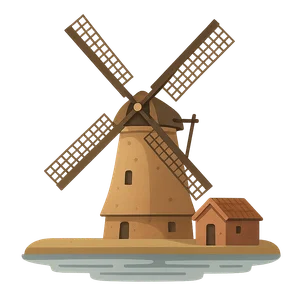
Kinderdijk
A village in the Netherlands famous for its iconic 18th-century windmills…
Reads at Grades 3–5 Listens at Grades 1–5
Print & create
Answer keys·No prep·Free with an account
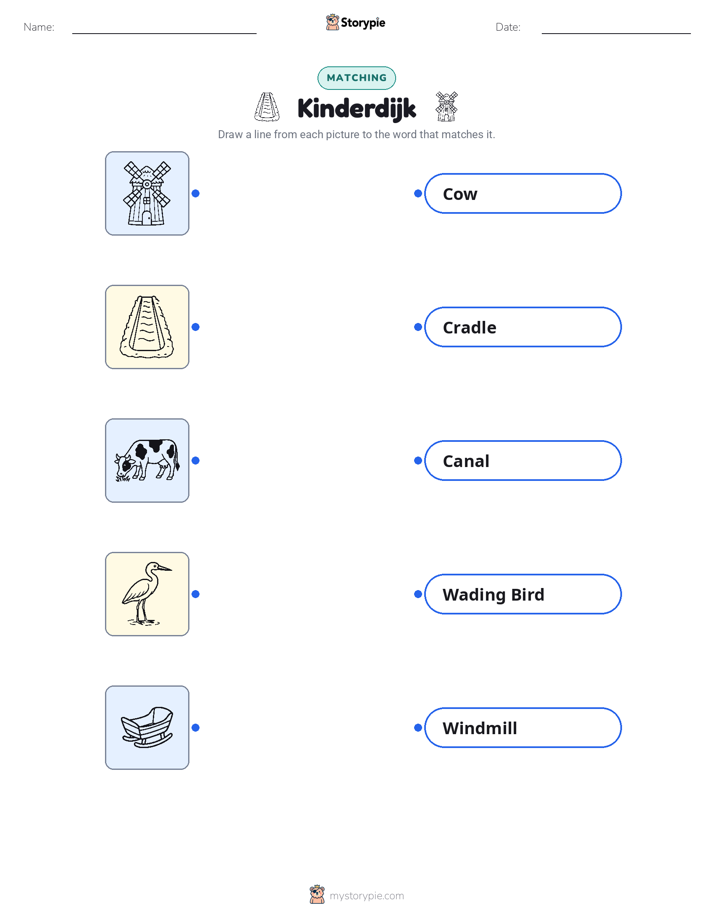
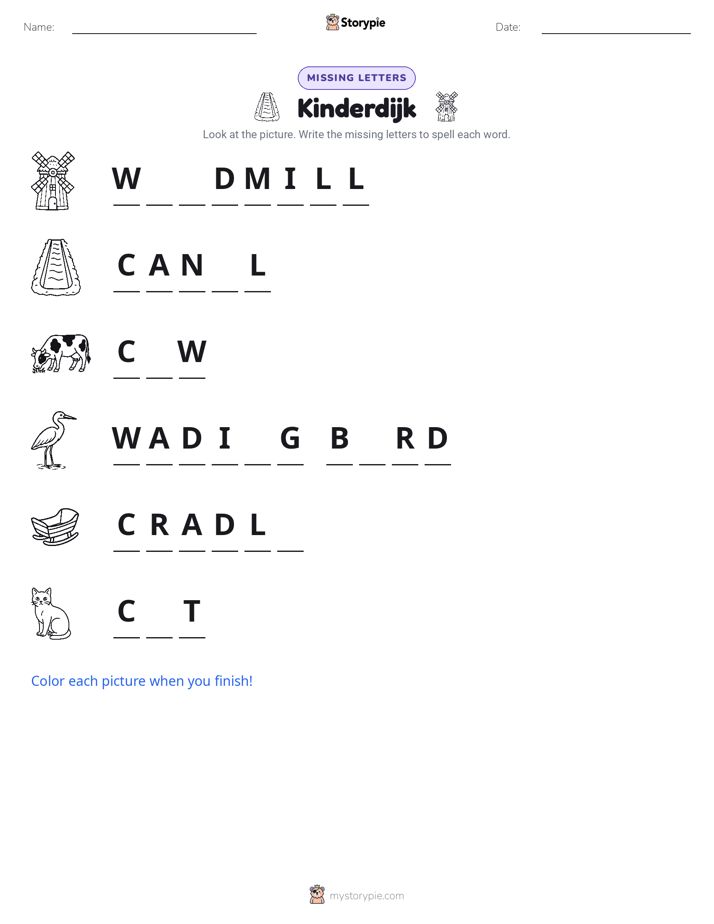
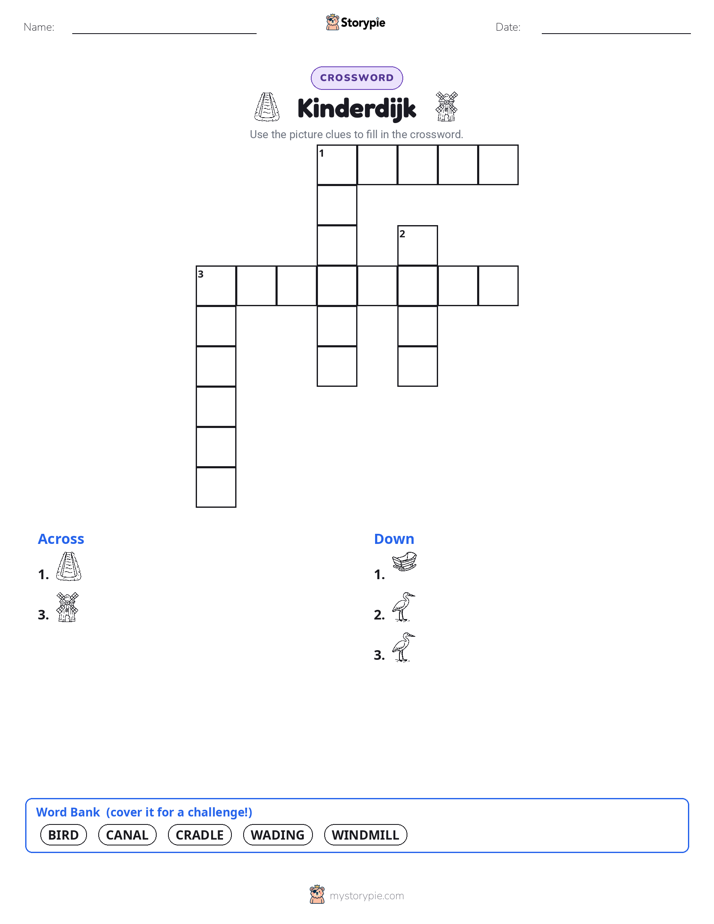
28 worksheets · answer keys · full story · quiz · Ages 8-10 · CEFR B1
Plus adds 164,000+ more stories in 27 languages, audio for every one, and printables for all of them.
Just want Kinderdijk?
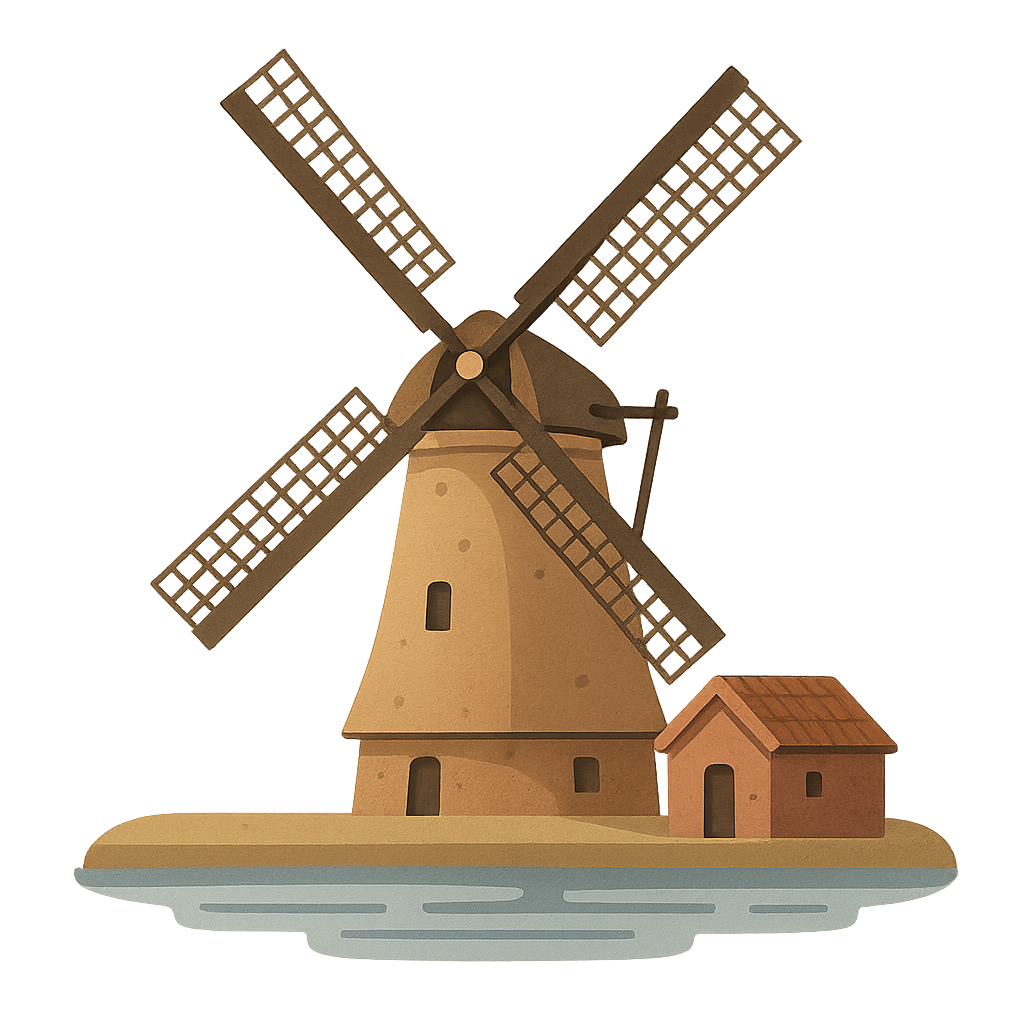
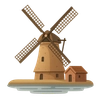
Imagine a land as flat as a pancake, painted in the greenest of greens. Silver ribbons of water, called canals, crisscross the fields, reflecting the vast, open sky. In this quiet place, a line of us stands tall against the horizon. We are sturdy and round, with long wooden arms that reach for the clouds. When the wind blows, our arms begin to turn, spinning like giant pinwheels in a gentle, steady dance. We are not just buildings. we are a team, a family of guardians watching over this wet and wonderful country. I am the village of windmills called Kinderdijk, and this is my story.
For more than a thousand years, the people of this land, the Netherlands, have had a very big challenge. Much of their country is below the level of the sea. Without help, the fields and homes would flood. The people were clever and brave. They built dikes, which are like long earthen walls, to hold back the water and created special low-lying fields called 'polders,' land reclaimed from the water. But sometimes, nature was too strong. On the night of November 19th, 1421, a terrible storm caused the St. Elizabeth’s flood, which washed away dozens of villages. It was a heartbreaking reminder that they needed a stronger, more reliable way to keep their feet dry. They needed a new kind of hero, one powered by the sky itself.
That’s where I came in. Around the year 1740, nineteen of us were built to work together as a powerful water-moving system. My job was simple but so important. When the wind from the North Sea blew across the flat land, it would push my long sails, making them turn. Inside my strong body, gears would begin to groan and turn, powering a huge water wheel at my base. This wheel would scoop up the extra water from the low polder and lift it into a higher basin, which then flowed into a river and out to the sea. It was my heartbeat, a rhythm of wind and water. For centuries, families lived inside my walls. The miller was the captain of the windmill. He would listen to the wind and watch the water levels day and night. The miller's family lived and worked with the constant sound of my turning sails, their lives completely connected to my wind-powered pulse.
The Windmills of Kinderdijk
Imagine a land as flat as a pancake, painted in the greenest of greens. Silver ribbons of water, called canals, crisscross the fields, reflecting the vast, open sky. In this quiet place, a line of us stands tall against the horizon. We are sturdy and round, with long wooden arms that reach for the clouds. When the wind blows, our arms begin to turn, spinning like giant pinwheels in a gentle, steady dance. We are not just buildings. we are a team, a family of guardians watching over this wet and wonderful country. I am the village of windmills called Kinderdijk, and this is my story.
For more than a thousand years, the people of this land, the Netherlands, have had a very big challenge. Much of their country is below the level of the sea. Without help, the fields and homes would flood. The people were clever and brave. They built dikes, which are like long earthen walls, to hold back the water and created special low-lying fields called 'polders,' land reclaimed from the water. But sometimes, nature was too strong. On the night of November 19th, 1421, a terrible storm caused the St. Elizabeth’s flood, which washed away dozens of villages. It was a heartbreaking reminder that they needed a stronger, more reliable way to keep their feet dry. They needed a new kind of hero, one powered by the sky itself.
That’s where I came in. Around the year 1740, nineteen of us were built to work together as a powerful water-moving system. My job was simple but so important. When the wind from the North Sea blew across the flat land, it would push my long sails, making them turn. Inside my strong body, gears would begin to groan and turn, powering a huge water wheel at my base. This wheel would scoop up the extra water from the low polder and lift it into a higher basin, which then flowed into a river and out to the sea. It was my heartbeat, a rhythm of wind and water. For centuries, families lived inside my walls. The miller was the captain of the windmill. He would listen to the wind and watch the water levels day and night. The miller's family lived and worked with the constant sound of my turning sails, their lives completely connected to my wind-powered pulse.
As time went on, people invented new machines. Powerful steam engines, and later electric pumps, were built to do my job faster. My spinning sails grew quiet more often. But I was not forgotten. People realized that I was more than just an old machine. I was a symbol of their history, of their long and clever struggle to live with the water. In 1997, my village and I were named a UNESCO World Heritage Site, which means we are considered a special treasure for the whole world to protect. Today, visitors come from everywhere to see me. I show them how people used their creativity to work with nature. I stand tall to remind everyone that by working together, we can solve even the biggest problems and create something beautiful and strong that can last for hundreds of years.
Wow facts
About
A village in the Netherlands famous for its iconic 18th-century windmills, built to drain water from the polders and now a UNESCO World Heritage site symbolizing Dutch water management.
Take a Quiz
Question 1 of 5
In the story, the windmills say they protected 'land reclaimed from the water.' What does the word 'reclaimed' mean here?
Explore next






Want to do even more?
Go beyond exploring. Unlock tools that turn every story into real learning.

Storypie Plus for families
Full stories, quizzes, and printables. Nights and car rides, sorted.
- Unlimited audio stories
- Create Mode: your child stars in the story
- Offline downloads
- Printable worksheets & coloring pages

Why Storypie for Schools
Students engaged. Prep in seconds. Evenings back to you.
- Worksheets & Quizzes
- Classroom Management
- Formative Assessment
- Custom Curriculum & Lesson Plans
- 27 Languages

Why Storypie for Homeschool
Curriculum done. They'll ask for more. Hours back in your day.
- Worksheet Generator
- First-Person Audio Stories
- Built-in Comprehension Quizzes
- Custom Curriculum & Lesson Plans
- Print & Go Activities