English

Lake Xochimilco
A remnant of a vast pre-Hispanic lake system in the Valley of Mexico…
Reads at Grades 6–8 Listens at Grades 4–8
Print & create
Answer keys·No prep·Free with an account
28 worksheets · answer keys · full story · quiz · Ages 10-12 · CEFR B2
Plus adds 164,000+ more stories in 27 languages, audio for every one, and printables for all of them.
Just want Lake Xochimilco?
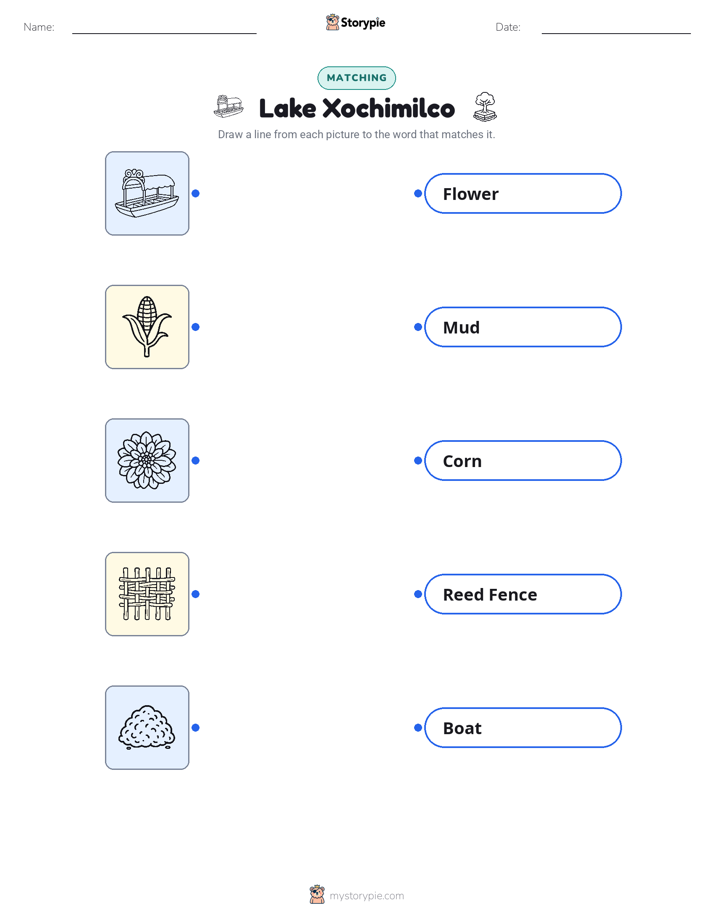
I am a place of shimmering water, where brightly painted boats called trajineras glide like floating rainbows. Music from mariachi bands drifts over my canals, and the air smells of roasted corn and fresh flowers. Families and friends laugh and share meals as they float past gardens bursting with life, a kaleidoscope of colors against the deep green of the foliage. I am a puzzle of water and land, a network of ancient waterways that has survived for centuries, tucked into the heart of one of the world's largest cities. People come to me to celebrate, to remember, and to connect with a history that flows as steadily as my currents. Though I am surrounded by the bustle of modern life, I am a living piece of history, a memory of a world built on water. I am Lake Xochimilco.
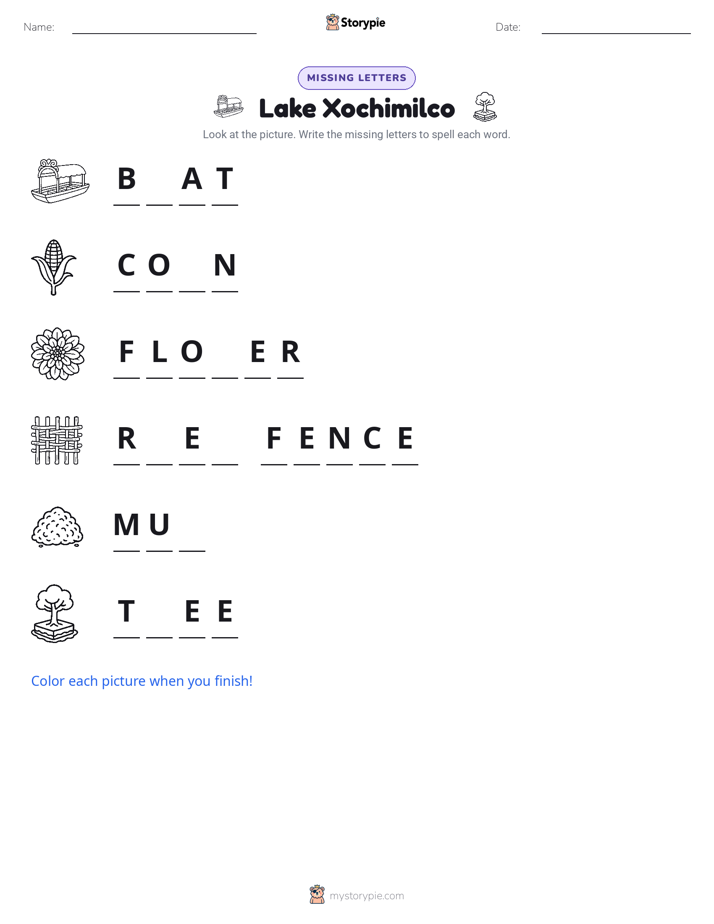
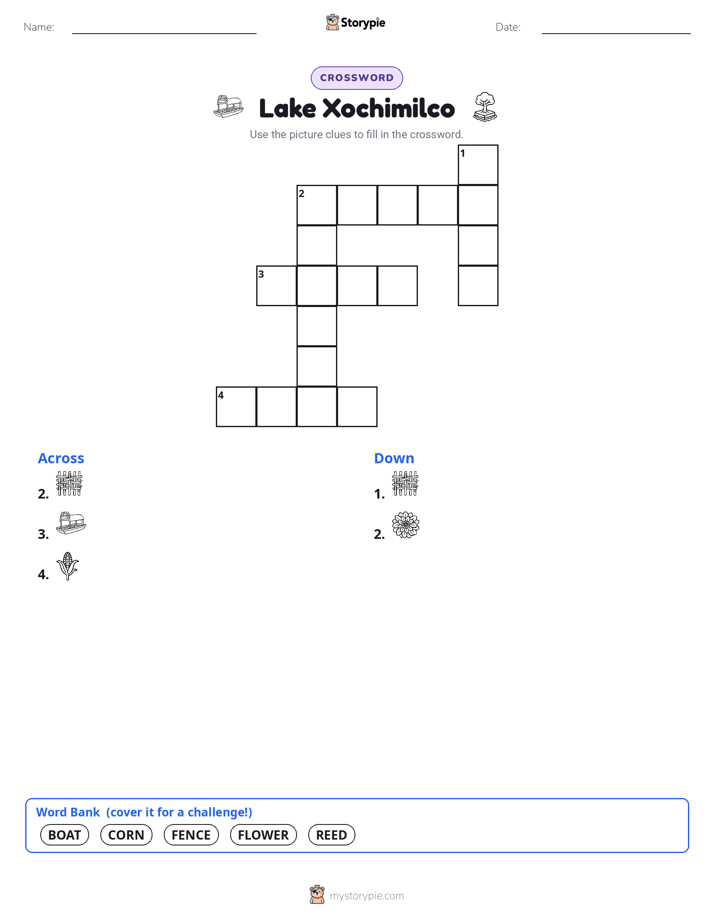
My story begins long before the sprawling metropolis of Mexico City ever existed. I was once part of a huge system of five interconnected lakes in the Valley of Mexico. Around the 12th century CE, clever and resourceful people called the Xochimilca looked at my shallow waters and saw not an obstacle, but an opportunity. They began building what you might call agricultural marvels, the chinampas, or 'floating gardens.' They were not truly floating, but were brilliant feats of engineering. The Xochimilca wove sturdy fences from reeds and branches, anchoring them to my lakebed. Then, they scooped up the nutrient-rich mud from the bottom of the lake and piled it high within these rectangular enclosures. On these man-made islands, they planted trees to hold the soil in place and grew everything they needed. When the powerful Aztec Empire rose to prominence and founded their magnificent capital, Tenochtitlan, in 1325 CE, my chinampas became their lifeline. I was the empire’s breadbasket, producing massive amounts of corn, beans, chilies, tomatoes, and beautiful flowers to feed the thousands of people in their bustling city. I was a testament to human ingenuity working in perfect harmony with nature.
The Floating Gardens of Xochimilco
I am a place of shimmering water, where brightly painted boats called trajineras glide like floating rainbows. Music from mariachi bands drifts over my canals, and the air smells of roasted corn and fresh flowers. Families and friends laugh and share meals as they float past gardens bursting with life, a kaleidoscope of colors against the deep green of the foliage. I am a puzzle of water and land, a network of ancient waterways that has survived for centuries, tucked into the heart of one of the world's largest cities. People come to me to celebrate, to remember, and to connect with a history that flows as steadily as my currents. Though I am surrounded by the bustle of modern life, I am a living piece of history, a memory of a world built on water. I am Lake Xochimilco.
My story begins long before the sprawling metropolis of Mexico City ever existed. I was once part of a huge system of five interconnected lakes in the Valley of Mexico. Around the 12th century CE, clever and resourceful people called the Xochimilca looked at my shallow waters and saw not an obstacle, but an opportunity. They began building what you might call agricultural marvels, the chinampas, or 'floating gardens.' They were not truly floating, but were brilliant feats of engineering. The Xochimilca wove sturdy fences from reeds and branches, anchoring them to my lakebed. Then, they scooped up the nutrient-rich mud from the bottom of the lake and piled it high within these rectangular enclosures. On these man-made islands, they planted trees to hold the soil in place and grew everything they needed. When the powerful Aztec Empire rose to prominence and founded their magnificent capital, Tenochtitlan, in 1325 CE, my chinampas became their lifeline. I was the empire’s breadbasket, producing massive amounts of corn, beans, chilies, tomatoes, and beautiful flowers to feed the thousands of people in their bustling city. I was a testament to human ingenuity working in perfect harmony with nature.
For centuries, this way of life flourished. But in the year 1521 CE, a wave of profound change washed over the valley. Spanish conquerors, led by Hernán Cortés, arrived and defeated the Aztec Empire. They saw the city on the lake and dreamed of a different future, one modeled after the cities of Europe. They decided to build their new capital, Mexico City, directly on the ruins of Tenochtitlan. To achieve this vision, they undertook a monumental task: draining the vast lakes that had defined this land for millennia. Over the next few hundred years, I watched with a heavy heart as my sister lakes slowly receded and then vanished, their waters tamed and their beds paved over to make way for stone buildings, grand plazas, and wide roads. It was a slow and steady disappearance of a world. But I held on. My intricate network of canals and chinampas in the southern part of the valley was too essential for farming and transportation to be completely erased. I became a smaller, but still vital, remnant of that ancient, watery world.
As the centuries passed and Mexico City swelled around me, people began to see me in a new light. I was no longer just a source of food, but a source of joy and escape. By the late 19th and early 20th centuries, my canals had become a beloved destination for city dwellers seeking a peaceful retreat from urban life. The simple farming canoes of the past were transformed into the vibrant, flat-bottomed trajineras that are my signature today. Artists painted them in brilliant colors, built canopies over them for shade, and famously adorned the front arch with a woman's name. I became the heart of celebration, a place for grand fiestas, romantic dates, and lively Sunday outings with family. In recognition of my unique agricultural history and my enduring cultural importance, I was given a great honor. On December 11th, 1987, the United Nations Educational, Scientific and Cultural Organization, or UNESCO, declared me a World Heritage Site, a treasure belonging to all of humanity.
Today, I am a living bridge to the past. When you glide along my canals, you are traveling through a landscape that the Aztecs would recognize. I am one of the last places on Earth where you can witness the ancient chinampa farming system still in action, a sustainable method of agriculture that is as relevant today as it was a thousand years ago. I am also a precious and fragile ecosystem, providing a home to unique creatures found nowhere else, like the amazing axolotl, a species of salamander that can regenerate its own limbs and even parts of its brain. I am a constant reminder of the incredible history that lies just beneath the streets of modern Mexico City. I am a place of joy, history, and nature, inviting everyone to float along my waters and remember the brilliant civilization that first gave me life and purpose.
Wow facts
About
A remnant of a vast pre-Hispanic lake system in the Valley of Mexico, famous for its canals and artificial islands called chinampas, now a popular cultural and recreational site.
Take a Quiz
Question 1 of 5
In your own words, describe the main steps the Xochimilca people took to build the 'chinampas'.
Explore next




Want to do even more?
Go beyond exploring. Unlock tools that turn every story into real learning.

Storypie Plus for families
Full stories, quizzes, and printables. Nights and car rides, sorted.
- Unlimited audio stories
- Create Mode: your child stars in the story
- Offline downloads
- Printable worksheets & coloring pages

Why Storypie for Schools
Students engaged. Prep in seconds. Evenings back to you.
- Worksheets & Quizzes
- Classroom Management
- Formative Assessment
- Custom Curriculum & Lesson Plans
- 27 Languages

Why Storypie for Homeschool
Curriculum done. They'll ask for more. Hours back in your day.
- Worksheet Generator
- First-Person Audio Stories
- Built-in Comprehension Quizzes
- Custom Curriculum & Lesson Plans
- Print & Go Activities