English

Lincoln Memorial
A U.S.
Reads at Grades 6–8 Listens at Grades 4–8
Print & create
Answer keys·No prep·Free with an account
28 worksheets · answer keys · full story · quiz · Ages 10-12 · CEFR B2
Plus adds 102,000+ more stories in 27 languages, audio for every one, and printables for all of them.
Just want Lincoln Memorial?

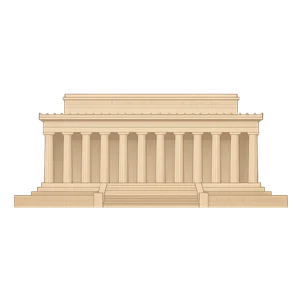
I stand at the end of a long, shimmering pool of water, a silent guardian watching over the heart of a nation. My white marble columns, strong and tall, glow in the sunlight and reflect in the water below. I feel the quiet, steady footsteps of millions of visitors each year as they climb my grand staircase, their faces filled with curiosity and respect. They come from every corner of the world, speaking different languages, but they all seem to feel the same sense of peace that fills this space. Inside my main chamber, a great, thoughtful man sits in a giant chair, his gaze fixed on the Washington Monument and the Capitol building far in the distance. He is the reason I exist, the man whose memory is carved into my very stones. His presence is powerful, a reminder of a difficult time in history and the leader who guided his country through it. I am the Lincoln Memorial, and I was built to honor a hero of freedom and unity, President Abraham Lincoln.
My story began not long after the end of the American Civil War. President Lincoln was tragically assassinated in 1865, and a heartbroken nation wanted to create a special place to remember his strength and his vision for a united country. On March 29th, 1867, a group called the Lincoln Memorial Association was formed to make this dream a reality, but turning that dream into stone was a long and difficult journey. For decades, plans were debated and changed, and it seemed I might never be built. Finally, the perfect design was chosen, and on a day that would have been Lincoln's own birthday, February 12th, 1914, my construction at last began. An architect named Henry Bacon imagined me as a grand temple, similar to the beautiful ancient buildings of Greece. He designed me with 36 enormous columns, one for each of the 36 states that were part of the United States at the time of Lincoln’s death. Inside, the talented sculptor Daniel Chester French took on the monumental task of creating the statue of the president. He carved the magnificent, 19-foot-tall figure from 28 individual blocks of brilliant white Georgia marble, making Lincoln look both powerful and kind. To ensure his ideas would never be forgotten, the powerful words of his two most famous speeches, the Gettysburg Address and his Second Inaugural Address, were carved into my interior walls. After eight years of hard work, I was officially dedicated and opened to the world on May 30th, 1922. It was a proud day, made even more special because Lincoln's only surviving son, Robert Todd Lincoln, was there to see his father honored in such a lasting way.
The Lincoln Memorial: A Temple of Freedom
I stand at the end of a long, shimmering pool of water, a silent guardian watching over the heart of a nation. My white marble columns, strong and tall, glow in the sunlight and reflect in the water below. I feel the quiet, steady footsteps of millions of visitors each year as they climb my grand staircase, their faces filled with curiosity and respect. They come from every corner of the world, speaking different languages, but they all seem to feel the same sense of peace that fills this space. Inside my main chamber, a great, thoughtful man sits in a giant chair, his gaze fixed on the Washington Monument and the Capitol building far in the distance. He is the reason I exist, the man whose memory is carved into my very stones. His presence is powerful, a reminder of a difficult time in history and the leader who guided his country through it. I am the Lincoln Memorial, and I was built to honor a hero of freedom and unity, President Abraham Lincoln.
My story began not long after the end of the American Civil War. President Lincoln was tragically assassinated in 1865, and a heartbroken nation wanted to create a special place to remember his strength and his vision for a united country. On March 29th, 1867, a group called the Lincoln Memorial Association was formed to make this dream a reality, but turning that dream into stone was a long and difficult journey. For decades, plans were debated and changed, and it seemed I might never be built. Finally, the perfect design was chosen, and on a day that would have been Lincoln's own birthday, February 12th, 1914, my construction at last began. An architect named Henry Bacon imagined me as a grand temple, similar to the beautiful ancient buildings of Greece. He designed me with 36 enormous columns, one for each of the 36 states that were part of the United States at the time of Lincoln’s death. Inside, the talented sculptor Daniel Chester French took on the monumental task of creating the statue of the president. He carved the magnificent, 19-foot-tall figure from 28 individual blocks of brilliant white Georgia marble, making Lincoln look both powerful and kind. To ensure his ideas would never be forgotten, the powerful words of his two most famous speeches, the Gettysburg Address and his Second Inaugural Address, were carved into my interior walls. After eight years of hard work, I was officially dedicated and opened to the world on May 30th, 1922. It was a proud day, made even more special because Lincoln's only surviving son, Robert Todd Lincoln, was there to see his father honored in such a lasting way.
From the moment I opened, I was more than just a monument. I became a symbol of the ideals Lincoln fought for: freedom, equality, and unity for all people. Over the years, my steps became a gathering place for those who continued to fight for those same ideals. I became a stage for history. One of the most powerful moments happened on Easter Sunday, April 9th, 1939. A brilliant and famous opera singer named Marian Anderson was told she could not perform at a nearby concert hall simply because she was African American. In response, she brought her incredible voice right here, to my steps. A crowd of 75,000 people of all races gathered to listen, and her voice rang out across the open air, a beautiful and defiant call for justice. Then, decades later, on August 28th, 1963, I witnessed another history-making moment. I listened as Dr. Martin Luther King Jr. stood on the exact spot where Marian Anderson had sung and shared his own powerful vision with the world. His famous 'I Have a Dream' speech echoed from my marble stairs across a crowd of more than 250,000 people. That day, I was no longer just a memorial to one man, but a backdrop for a movement that would change the nation forever, reinforcing my purpose as a beacon for civil rights and human dignity.
Today, I continue to welcome people from all over the globe who come to stand in quiet reflection. They walk through my columns, read Lincoln's enduring words on my walls, and look up at the gentle strength in his carved face. I am a place of peace, a place to learn, and a place to be inspired. I am a constant reminder that the courage of one person can indeed change the world, and that the work of building a more fair and united nation is a promise we must all continue to keep. I stand here at the edge of the water, watching, remembering, and hoping, a timeless symbol of freedom for all people.
Wow facts
About
A U.S. national memorial in Washington, D.C., built to honor the 16th President, Abraham Lincoln. It has served as a significant location for the American Civil Rights Movement.
Take a Quiz
Question 1 of 5
Which of the following best retells the key events in the memorial's creation?
Explore next






Want to do even more?
Go beyond exploring. Unlock tools that turn every story into real learning.

Storypie Plus for families
Full stories, quizzes, and printables. Nights and car rides, sorted.
- Unlimited audio stories
- Create Mode: your child stars in the story
- Offline downloads
- Printable worksheets & coloring pages

Why Storypie for Schools
Students engaged. Prep in seconds. Evenings back to you.
- Worksheets & Quizzes
- Classroom Management
- Formative Assessment
- Custom Curriculum & Lesson Plans
- 27 Languages

Why Storypie for Homeschool
Curriculum done. They'll ask for more. Hours back in your day.
- Worksheet Generator
- First-Person Audio Stories
- Built-in Comprehension Quizzes
- Custom Curriculum & Lesson Plans
- Print & Go Activities