English

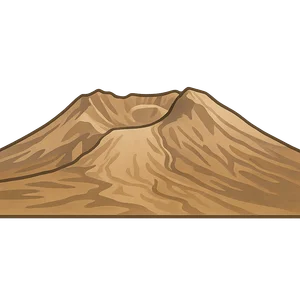
Mount St. Helens
An active stratovolcano in Washington, USA, part of the Cascade Range…
Reads at Grades 3–5 Listens at Grades 1–5
Print & create
Answer keys·No prep·Free with an account
28 worksheets · answer keys · full story · quiz · Ages 8-10 · CEFR B1
Plus adds 164,000+ more stories in 27 languages, audio for every one, and printables for all of them.
Just want Mount St. Helens?
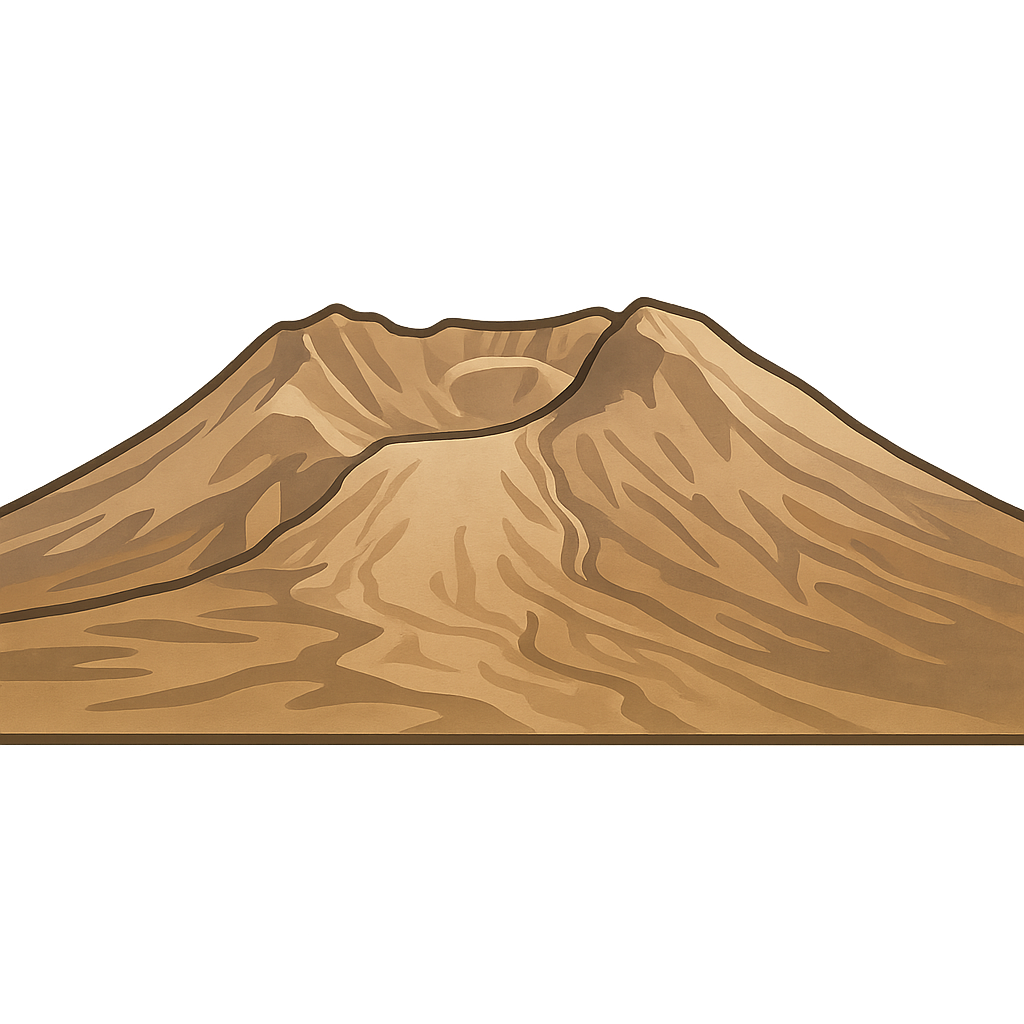
In a long line of mountains called the Cascade Range, I stand tall and proud. In the winter, I wear a sparkling crown of snow, and in the summer, I am dressed in deep green forests. For thousands of years, the first people who lived here, the Cowlitz and Yakama tribes, knew me well. They called me Lawetlat'la, which means 'the smoker.' It was a good name, because every now and then, I would let out a gentle puff of steam, like a soft sigh. For a very long time, I was a peaceful and quiet giant, a beautiful landmark against the blue sky. But I have a secret deep inside me, a fiery heart that sleeps and sometimes wakes. I am the volcano, Mount St. Helens.
My story began a very long time ago, over 40,000 years, as fire and rock pushed up from deep inside the Earth. Slowly, eruption after eruption built me up, layer by layer. For centuries, I grew into a beautiful, symmetrical cone, so perfect and even that people who saw me called me the 'Fujiyama of America,' comparing me to the famous Mount Fuji in Japan. On October 20th, 1792, a British explorer named Captain George Vancouver sailed along the coast. He saw my lovely peak and decided to give me a new name in honor of a British diplomat, Baron St. Helens. For more than 100 years after that, I slept. My slopes were a wonderful place for people to hike, camp, and enjoy the quiet beauty of nature. I was known for my peacefulness and my picture-perfect shape.
But in the spring of 1980, my quiet sleep began to stir. It started on March 20th, 1980, when the ground began to tremble with small earthquakes. It felt like a giant tummy ache deep inside me. Day after day, the shaking continued, and a huge bulge began to grow on my north side, pushing out five feet every day. I didn't look like a perfect cone anymore. This strange behavior brought curious scientists from all over the world. They set up equipment to watch me and listen to my rumblings. One of them was a brave volcanologist named David A. Johnston, who stayed very close to observe every change. Then, on the morning of May 18th, 1980, a powerful earthquake struck. It caused my entire bulging north side to collapse in the biggest landslide ever recorded in history. In that single moment, the pressure inside me was released, and a powerful blast of hot ash, gas, and steam exploded sideways, flattening forests for miles and reshaping me forever. My perfect peak was gone, replaced by a huge, horseshoe-shaped crater.
The Mountain with a Fiery Heart
In a long line of mountains called the Cascade Range, I stand tall and proud. In the winter, I wear a sparkling crown of snow, and in the summer, I am dressed in deep green forests. For thousands of years, the first people who lived here, the Cowlitz and Yakama tribes, knew me well. They called me Lawetlat'la, which means 'the smoker.' It was a good name, because every now and then, I would let out a gentle puff of steam, like a soft sigh. For a very long time, I was a peaceful and quiet giant, a beautiful landmark against the blue sky. But I have a secret deep inside me, a fiery heart that sleeps and sometimes wakes. I am the volcano, Mount St. Helens.
My story began a very long time ago, over 40,000 years, as fire and rock pushed up from deep inside the Earth. Slowly, eruption after eruption built me up, layer by layer. For centuries, I grew into a beautiful, symmetrical cone, so perfect and even that people who saw me called me the 'Fujiyama of America,' comparing me to the famous Mount Fuji in Japan. On October 20th, 1792, a British explorer named Captain George Vancouver sailed along the coast. He saw my lovely peak and decided to give me a new name in honor of a British diplomat, Baron St. Helens. For more than 100 years after that, I slept. My slopes were a wonderful place for people to hike, camp, and enjoy the quiet beauty of nature. I was known for my peacefulness and my picture-perfect shape.
But in the spring of 1980, my quiet sleep began to stir. It started on March 20th, 1980, when the ground began to tremble with small earthquakes. It felt like a giant tummy ache deep inside me. Day after day, the shaking continued, and a huge bulge began to grow on my north side, pushing out five feet every day. I didn't look like a perfect cone anymore. This strange behavior brought curious scientists from all over the world. They set up equipment to watch me and listen to my rumblings. One of them was a brave volcanologist named David A. Johnston, who stayed very close to observe every change. Then, on the morning of May 18th, 1980, a powerful earthquake struck. It caused my entire bulging north side to collapse in the biggest landslide ever recorded in history. In that single moment, the pressure inside me was released, and a powerful blast of hot ash, gas, and steam exploded sideways, flattening forests for miles and reshaping me forever. My perfect peak was gone, replaced by a huge, horseshoe-shaped crater.
After the great eruption, my slopes were silent and covered in a thick blanket of gray ash. It looked like a world without color or life. But nature is strong and patient. Soon, the first signs of life began to return. Tiny green plants started to poke through the ash. The beautiful purple prairie lupine flower was one of the first to bloom, its roots helping to enrich the soil for other plants to grow. Slowly, animals like elk and deer found their way back, finding new meadows to graze in. In 1982, the land all around me was protected and became the Mount St. Helens National Volcanic Monument. Now, I am a giant outdoor classroom and a living laboratory. Scientists come here to learn how life recovers from such a huge change. I am a powerful reminder that even after great destruction, new life is resilient and always finds a way to grow. My story is not over; it continues to teach and inspire everyone who visits.
Wow facts
About
An active stratovolcano in Washington, USA, part of the Cascade Range, famous for its major eruption on May 18th, 1980, which reshaped its summit and surrounding landscape.
Take a Quiz
Question 1 of 5
The story says Mount St. Helens was called the 'Fujiyama of America.' Why do you think people gave it that nickname?
Explore next




Want to do even more?
Go beyond exploring. Unlock tools that turn every story into real learning.

Storypie Plus for families
Full stories, quizzes, and printables. Nights and car rides, sorted.
- Unlimited audio stories
- Create Mode: your child stars in the story
- Offline downloads
- Printable worksheets & coloring pages

Why Storypie for Schools
Students engaged. Prep in seconds. Evenings back to you.
- Worksheets & Quizzes
- Classroom Management
- Formative Assessment
- Custom Curriculum & Lesson Plans
- 27 Languages

Why Storypie for Homeschool
Curriculum done. They'll ask for more. Hours back in your day.
- Worksheet Generator
- First-Person Audio Stories
- Built-in Comprehension Quizzes
- Custom Curriculum & Lesson Plans
- Print & Go Activities