English

New Orleans
A major U.S.
Reads at Grades 6–8 Listens at Grades 4–8
Print & create
Answer keys·No prep·Free with an account
28 worksheets · answer keys · full story · quiz · Ages 10-12 · CEFR B2
Plus adds 208,000+ more stories in 27 languages, audio for every one, and printables for all of them.
Just want New Orleans?
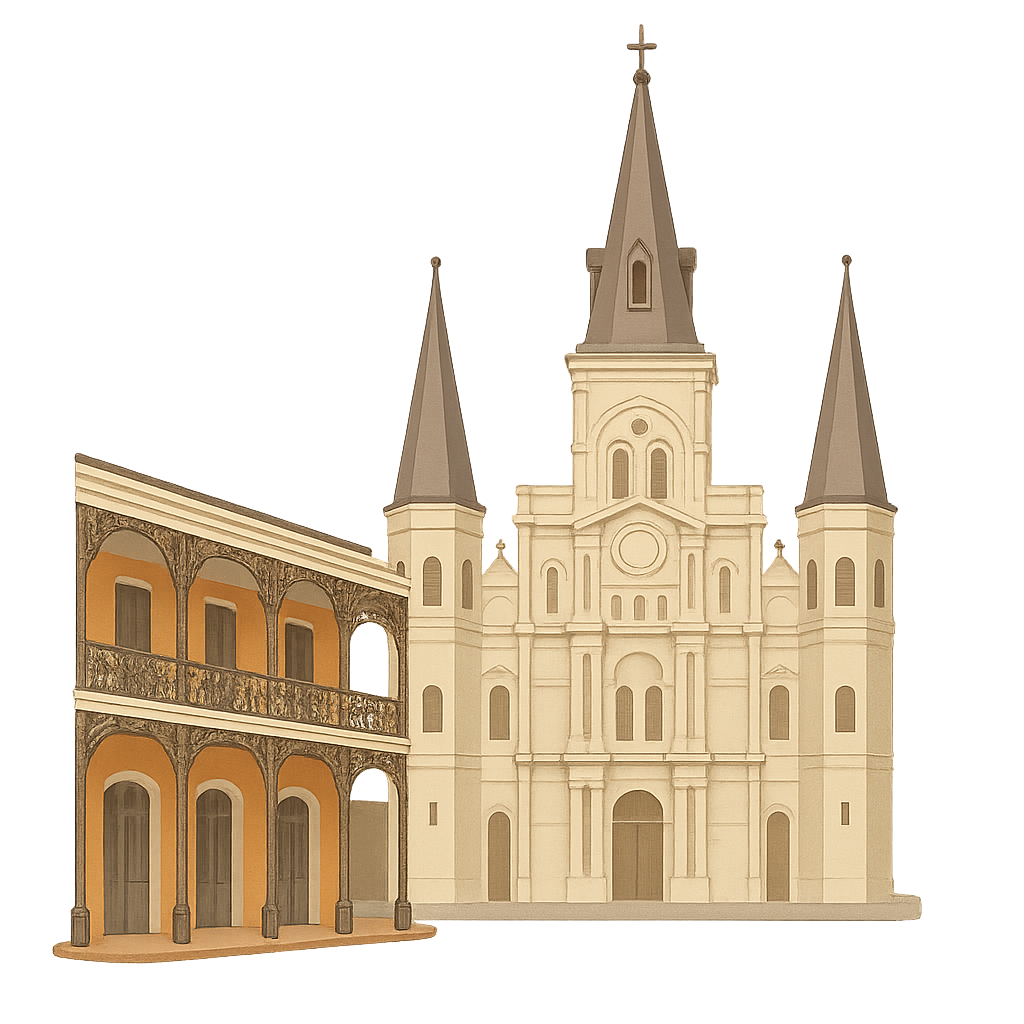
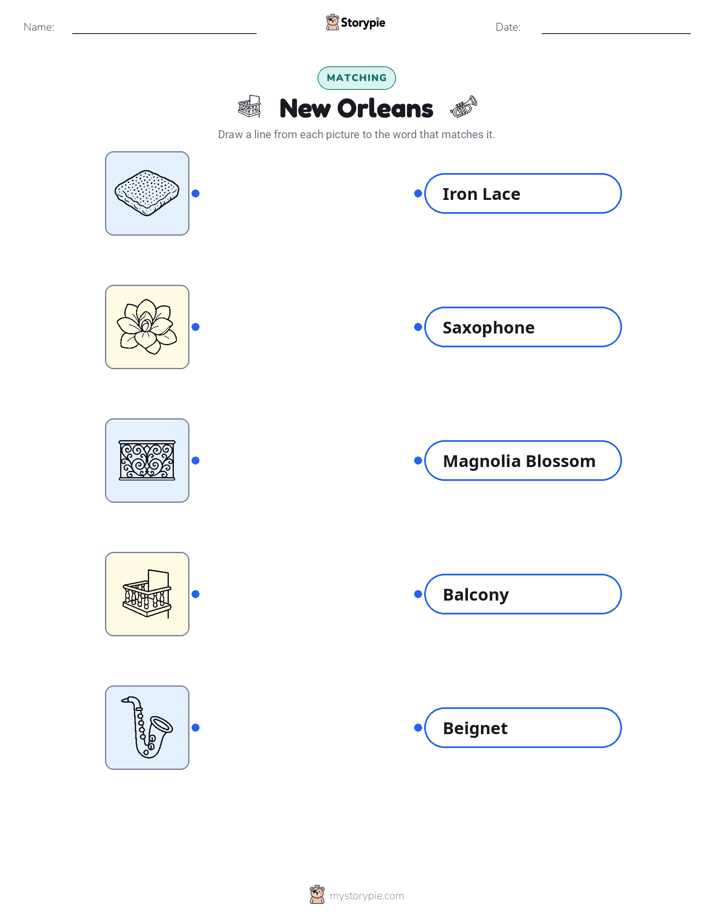
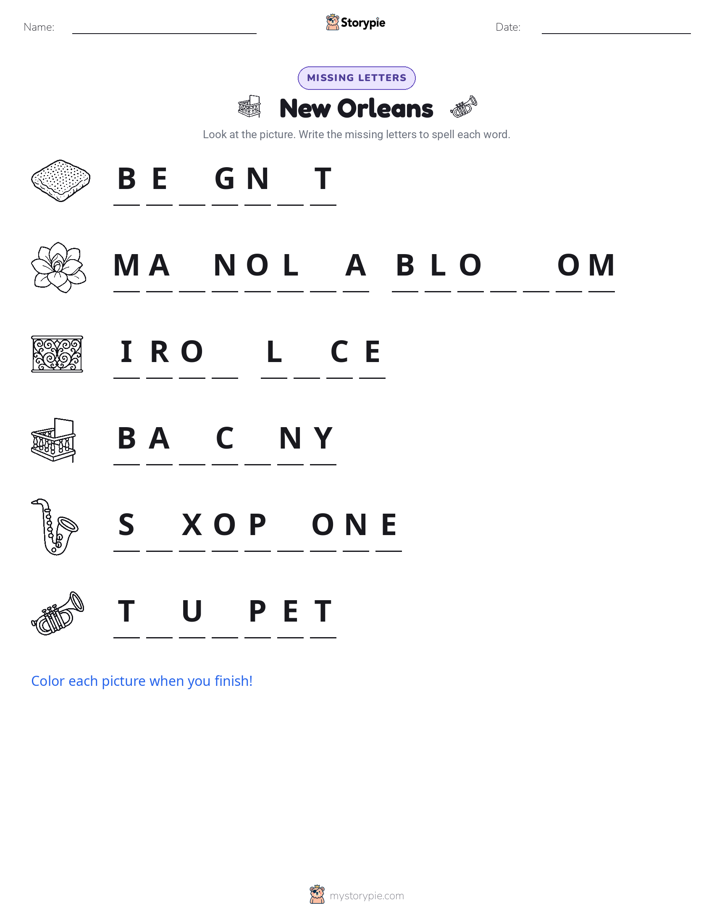
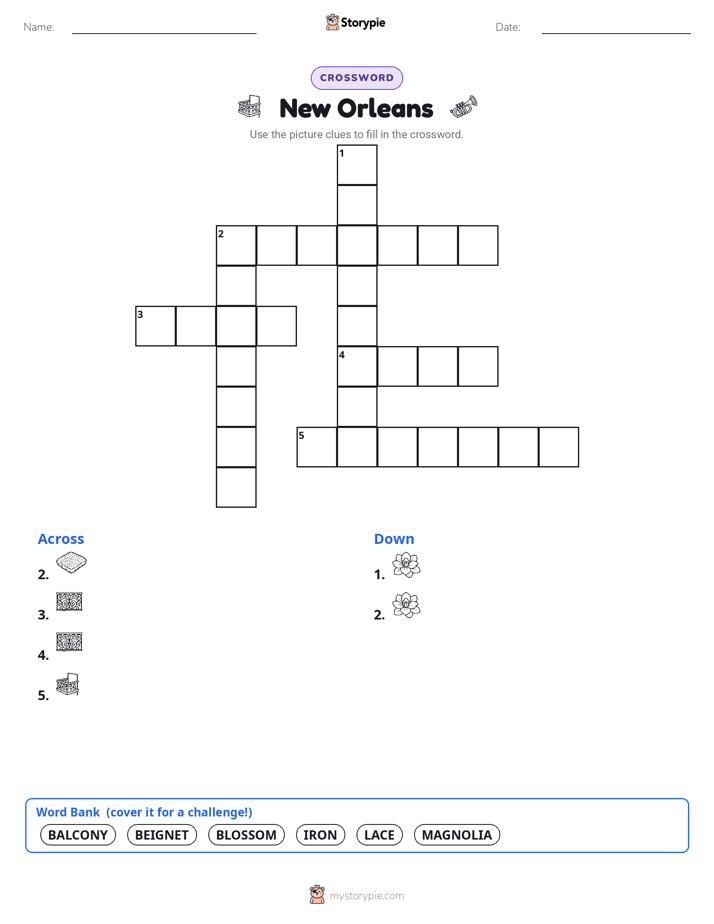
Breathe in my air, thick and sweet like warm honey. It carries the scent of magnolia blossoms and powdered sugar from fresh beignets. Look around and you’ll see delicate iron lace draped over the balconies of colorful buildings, standing like proud grandparents watching over the narrow streets. If you listen closely, you can almost always hear music. It might be the soulful wail of a saxophone from a hidden courtyard or the lively beat of a brass band parading down the street. I am a city that dances to its own rhythm, a place where history isn't just in books; it's in the food, the music, and the joyful spirit of the people who call me home. I am the city of New Orleans.
My story begins on a magnificent curve of the Mississippi River, a bend so perfect it gave me my first nickname, 'The Crescent City.' For centuries before any Europeans arrived, this land was home to Indigenous peoples, including the Chitimacha, who understood the river’s power and rhythms. My official founding chapter began in 1718, when a French explorer named Jean-Baptiste Le Moyne de Bienville chose this spot to build a new port for France. He saw the strategic advantage of my location, a gateway to the vast interior of North America. But it was not an easy birth. I was built on swampy, marshy land, and my first settlers had to be brilliant and determined. They were clever engineers who learned to drain the land and build structures that could withstand my humid climate, laying the foundation for the unique city I would become.
The Story of the Crescent City
Breathe in my air, thick and sweet like warm honey. It carries the scent of magnolia blossoms and powdered sugar from fresh beignets. Look around and you’ll see delicate iron lace draped over the balconies of colorful buildings, standing like proud grandparents watching over the narrow streets. If you listen closely, you can almost always hear music. It might be the soulful wail of a saxophone from a hidden courtyard or the lively beat of a brass band parading down the street. I am a city that dances to its own rhythm, a place where history isn't just in books; it's in the food, the music, and the joyful spirit of the people who call me home. I am the city of New Orleans.
My story begins on a magnificent curve of the Mississippi River, a bend so perfect it gave me my first nickname, 'The Crescent City.' For centuries before any Europeans arrived, this land was home to Indigenous peoples, including the Chitimacha, who understood the river’s power and rhythms. My official founding chapter began in 1718, when a French explorer named Jean-Baptiste Le Moyne de Bienville chose this spot to build a new port for France. He saw the strategic advantage of my location, a gateway to the vast interior of North America. But it was not an easy birth. I was built on swampy, marshy land, and my first settlers had to be brilliant and determined. They were clever engineers who learned to drain the land and build structures that could withstand my humid climate, laying the foundation for the unique city I would become.
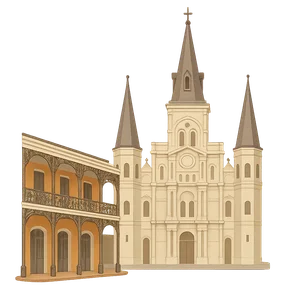
I am a gumbo of cultures, a rich stew where every ingredient adds its own special flavor. I started my life as a French city, with French language and customs filling my streets. But history had other plans. In 1763, after the Seven Years' War, the Treaty of Paris was signed, and I was given to Spain. For nearly forty years, I was a Spanish colony. You can still see the Spanish influence today in the architecture of my French Quarter, with its beautiful courtyards and arched doorways. Then came another great shift. On April 30th, 1803, I became part of the United States through a historic agreement called the Louisiana Purchase. This brought a wave of Americans, adding yet another layer to my identity. This incredible blending of French, Spanish, West African, Caribbean, and American people created my unique Creole culture, a vibrant heritage that you can taste in my food, hear in my music, and feel in my soul.
During the 19th century, my heartbeat was the rhythm of the river. I grew into one of the busiest and wealthiest ports in America. Majestic steamboats with giant paddlewheels lined my docks, their horns echoing as they carried cotton and sugar from the plantations upriver to the rest of the world. My strategic importance was put to the test during the War of 1812. On January 8th, 1815, a diverse army of American soldiers, local militia, free men of color, and even pirates, led by General Andrew Jackson, successfully defended me from a British invasion in the famous Battle of New Orleans. It is also important to tell the most difficult part of my story. I was a major hub for the slave trade, a place of immense sorrow and injustice. Yet, it was the unbreakable spirit and profound creativity of the enslaved Africans and their descendants that laid the foundation for my most cherished cultural gifts, especially the music that would one day define me.
From this deep well of experience—from joy and sorrow, freedom and struggle—a new sound was born. In the late 19th and early 20th centuries, a completely original form of music began to bubble up from my streets, particularly in places like Congo Square, where enslaved people had once gathered to play the rhythms of their homelands. This new music was a powerful mix of African beats, sorrowful blues melodies, and upbeat ragtime piano. It was called jazz. Jazz was more than just music; it was a conversation, a way for people to express everything they were feeling without needing words. It was the sound of resilience and hope. Soon, my most beloved son, a young man with a golden trumpet and a gravelly voice named Louis 'Satchmo' Armstrong, took the sound of my streets and shared it with the entire world, becoming one of the most influential musicians in history.
My spirit has been tested many times, but it has never broken. On August 29th, 2005, a powerful storm named Hurricane Katrina brought devastating floods that covered much of my land. It was a time of great loss and hardship. But in the face of this challenge, the world saw my true character. My people, filled with an incredible resilience, came together to help one another, to rebuild their homes, and, most importantly, to keep my culture alive. The music never stopped for long. Today, my energy is as vibrant as ever. My streets fill with color and sound during Mardi Gras, and the world comes to celebrate my musical heritage at the New Orleans Jazz & Heritage Festival. My famous dishes, like spicy gumbo and flavorful jambalaya, are not just meals; they are delicious expressions of my blended history, recipes passed down through generations.
So you see, I am more than just a place on a map. I am a feeling, a rhythm, and a living story of how different cultures can come together to create something new, beautiful, and enduring. I am a testament to the power of community and the ability of the human spirit to find joy even in difficult times. I am a city built on the love of music, food, and celebration. So I invite you to listen for the sound of my jazz floating on the evening air, to taste the complex flavors that tell my history, and to feel the joyful spirit that makes me a place unlike any other. My story is one of resilience, and it continues to inspire people everywhere.
Wow facts
About
A major U.S. port city in Louisiana, located on the Mississippi River, famous for its unique culture, music (especially jazz), cuisine, and festivals like Mardi Gras.
Take a Quiz
Question 1 of 5
In one or two sentences, what is the main theme of the story that New Orleans tells about itself?
Explore next




Want to do even more?
Go beyond exploring. Unlock tools that turn every story into real learning.

Storypie Plus for families
Full stories, quizzes, and printables. Nights and car rides, sorted.
- Unlimited audio stories
- Create Mode: your child stars in the story
- Offline downloads
- Printable worksheets & coloring pages

Why Storypie for Schools
Students engaged. Prep in seconds. Evenings back to you.
- Worksheets & Quizzes
- Classroom Management
- Formative Assessment
- Custom Curriculum & Lesson Plans
- 27 Languages

Why Storypie for Homeschool
Curriculum done. They'll ask for more. Hours back in your day.
- Worksheet Generator
- First-Person Audio Stories
- Built-in Comprehension Quizzes
- Custom Curriculum & Lesson Plans
- Print & Go Activities