English

New Orleans
A major U.S.
Reads at Grades 3–5 Listens at Grades 1–5
Print & create
Answer keys·No prep·Free with an account
28 worksheets · answer keys · full story · quiz · Ages 8-10 · CEFR B1
Plus adds 208,000+ more stories in 27 languages, audio for every one, and printables for all of them.
Just want New Orleans?
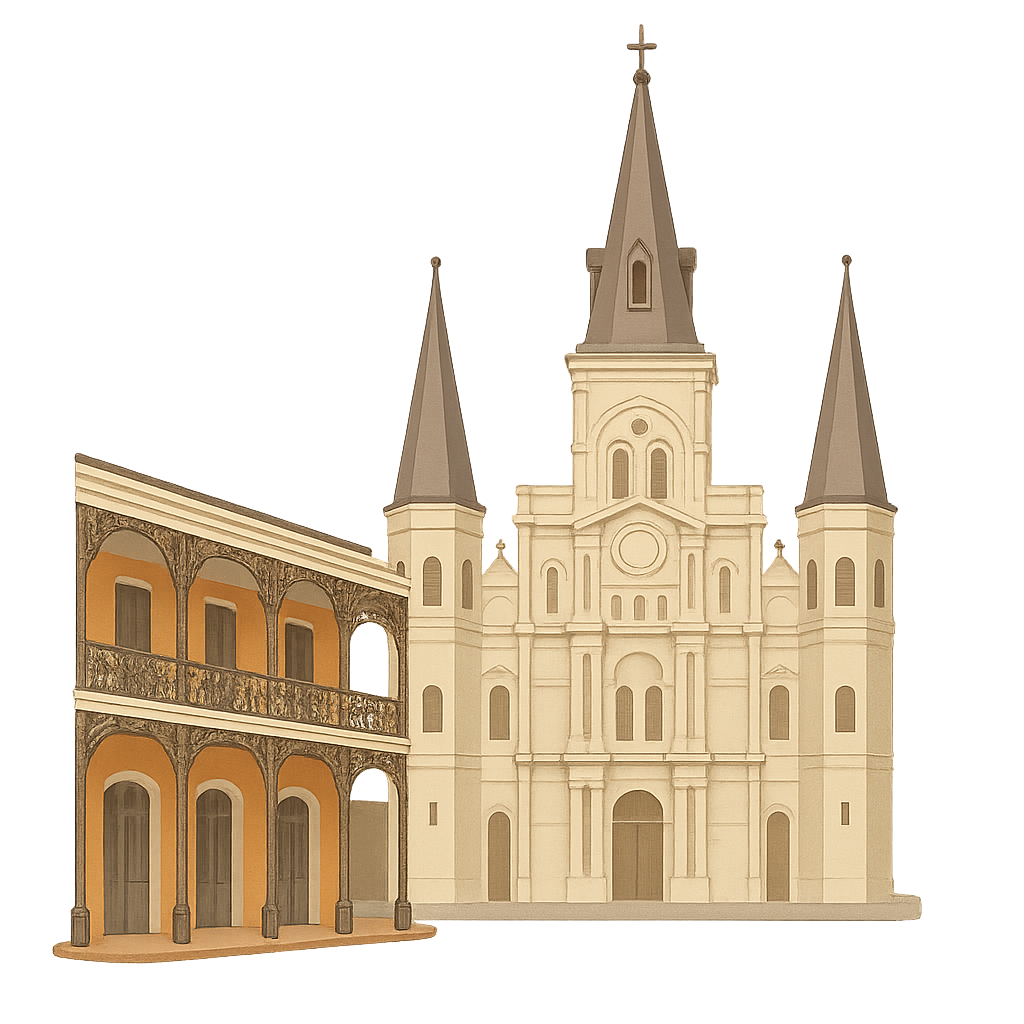
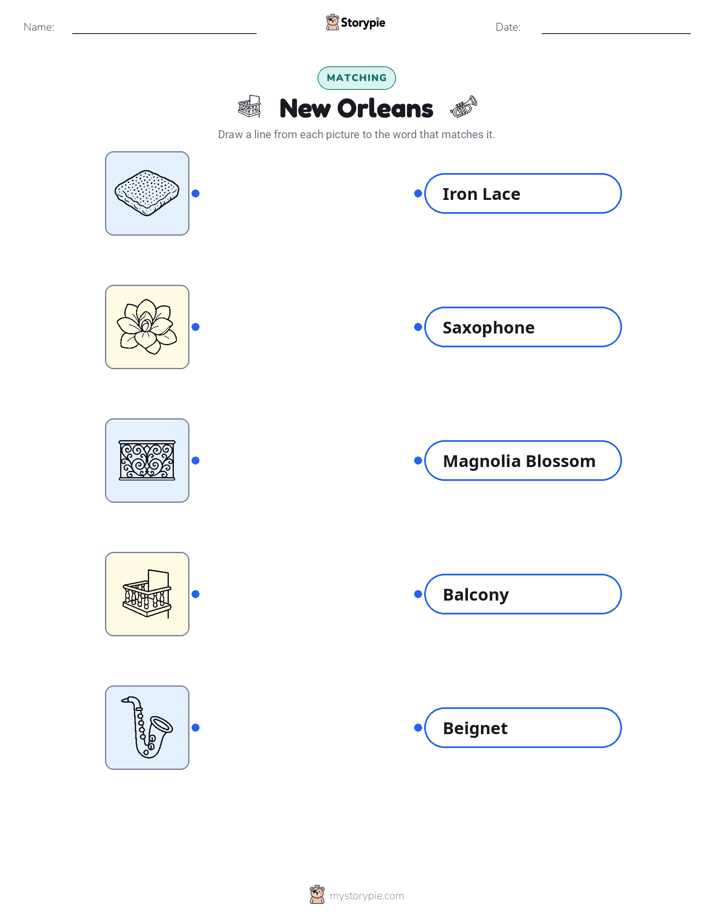
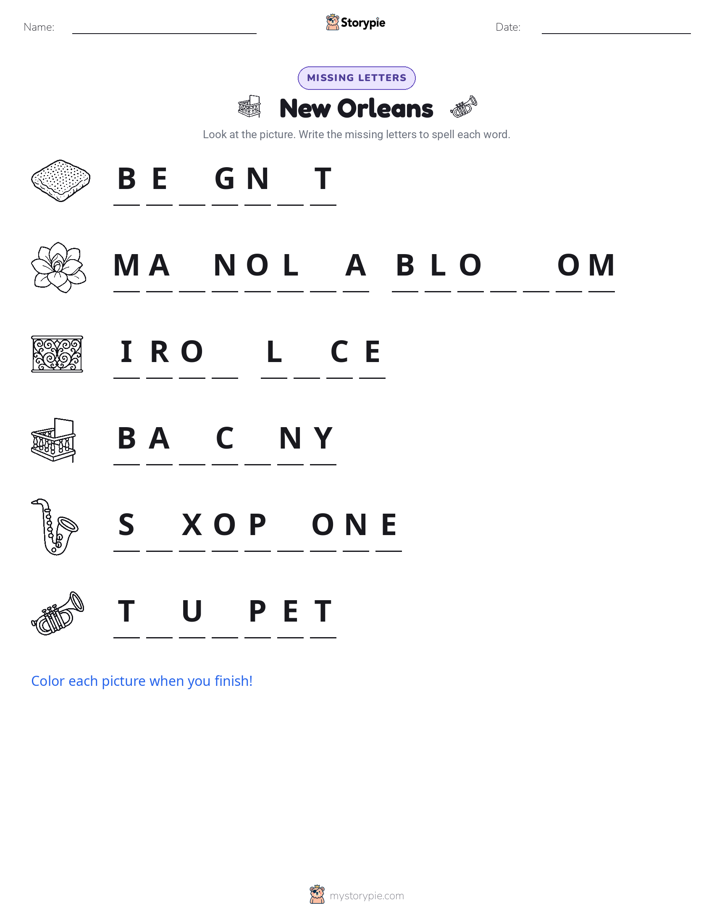
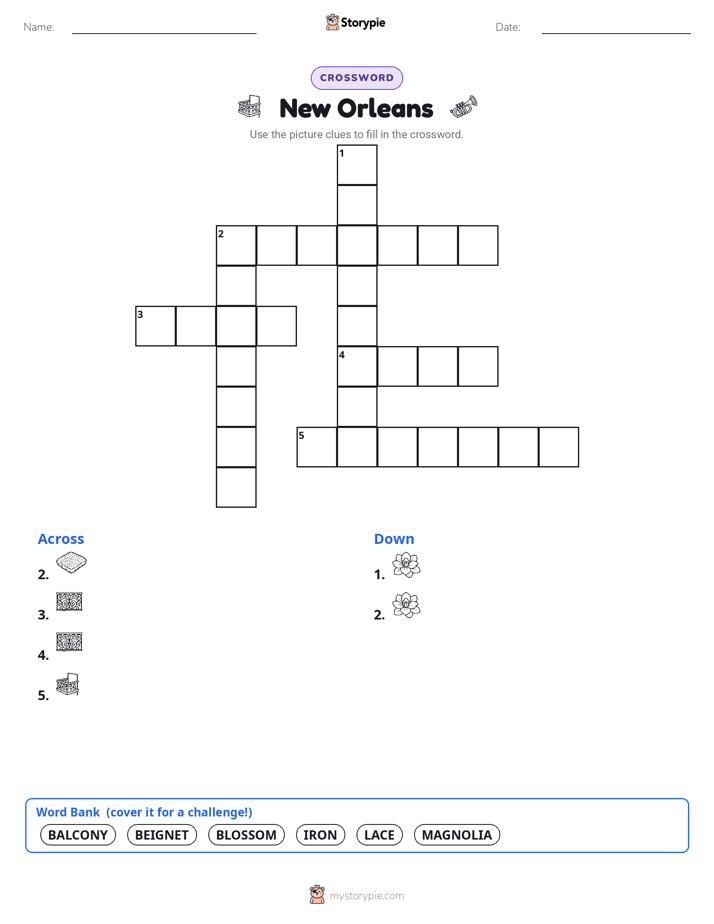
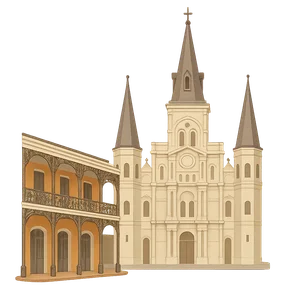
Feel the warm, humid air wrap around you like a soft blanket. Look up at the fancy iron lace decorating the balconies of colorful buildings. From a nearby street, you can hear the cheerful notes of a trumpet playing a bouncy tune, and the sweet smell of powdered sugar on warm pastries called beignets fills the air. I grew up nestled in a gentle curve of the mighty Mississippi River, a shape that gave me one of my first nicknames. They call me the Crescent City, the Big Easy… but you can call me New Orleans.
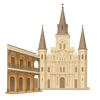
My story began a long, long time ago, in the spring of 1718. A French explorer named Jean-Baptiste Le Moyne de Bienville and his men were looking for the perfect spot to build a new city. They chose this piece of land because the great river beside me could act as a highway for ships carrying goods and people. They carefully planned my first neighborhood, the Vieux Carré, which you know today as the French Quarter. For many years, I was a French city. But big changes were coming. On November 3rd, 1762, I was given to Spain. Then, two great fires, one in 1788 and another in 1794, burned down many of my original wooden French buildings. When my people rebuilt, they used Spanish designs with brick walls, arched doorways, and lovely hidden courtyards, which is why I look the way I do today.
From my very beginning, I was a place where people from all over the world came together. First came the French and the Spanish. Then came free people of color and enslaved Africans, who were forced to come here but brought with them powerful traditions and unbreakable spirits. Later, Acadians, also known as Cajuns, arrived, along with people from Germany and Ireland. All these different people, with their own languages, recipes, and music, mixed together like ingredients in a delicious gumbo stew. This wonderful mix is called Creole culture. The contributions of African and Caribbean people were especially important. In a place called Congo Square, they gathered to play music, dance, and keep their traditions alive, planting the seeds for something amazing. Then, on April 30th, 1803, something huge happened. I became part of the United States in a deal called the Louisiana Purchase. This brought even more new people and new ideas to my lively streets.
The Story of the Crescent City
Feel the warm, humid air wrap around you like a soft blanket. Look up at the fancy iron lace decorating the balconies of colorful buildings. From a nearby street, you can hear the cheerful notes of a trumpet playing a bouncy tune, and the sweet smell of powdered sugar on warm pastries called beignets fills the air. I grew up nestled in a gentle curve of the mighty Mississippi River, a shape that gave me one of my first nicknames. They call me the Crescent City, the Big Easy… but you can call me New Orleans.
My story began a long, long time ago, in the spring of 1718. A French explorer named Jean-Baptiste Le Moyne de Bienville and his men were looking for the perfect spot to build a new city. They chose this piece of land because the great river beside me could act as a highway for ships carrying goods and people. They carefully planned my first neighborhood, the Vieux Carré, which you know today as the French Quarter. For many years, I was a French city. But big changes were coming. On November 3rd, 1762, I was given to Spain. Then, two great fires, one in 1788 and another in 1794, burned down many of my original wooden French buildings. When my people rebuilt, they used Spanish designs with brick walls, arched doorways, and lovely hidden courtyards, which is why I look the way I do today.
From my very beginning, I was a place where people from all over the world came together. First came the French and the Spanish. Then came free people of color and enslaved Africans, who were forced to come here but brought with them powerful traditions and unbreakable spirits. Later, Acadians, also known as Cajuns, arrived, along with people from Germany and Ireland. All these different people, with their own languages, recipes, and music, mixed together like ingredients in a delicious gumbo stew. This wonderful mix is called Creole culture. The contributions of African and Caribbean people were especially important. In a place called Congo Square, they gathered to play music, dance, and keep their traditions alive, planting the seeds for something amazing. Then, on April 30th, 1803, something huge happened. I became part of the United States in a deal called the Louisiana Purchase. This brought even more new people and new ideas to my lively streets.
As all these cultures swirled together, a brand-new sound started to bubble up from my streets in the late 19th and early 20th centuries. It was called jazz. It wasn't like any music anyone had heard before. It was a mix of the strong rhythms from Africa, the soulful feeling of the blues, and the lively beat of ragtime. Jazz was more than just music; it was a way for people to share everything they were feeling—their happiness, their sadness, and their hopes. Jazz is like a conversation between musicians. One person plays a tune, and another answers back, adding their own ideas. That’s why a jazz song is never played the same way twice; it’s always alive and new.
I have faced difficult times, like the powerful storm Hurricane Katrina on August 29th, 2005, which brought great winds and floods. But my people have a spirit that can't be washed away. They came together, helped their neighbors, and slowly, carefully, rebuilt their homes and their lives. Today, I am still a city of celebration. My streets fill with colorful parades during Mardi Gras, my parks host amazing music festivals, and my kitchens serve up some of the most delicious food you will ever taste. I am a city built on history, music, and the idea that everyone has something special to add to the pot. I am a living, breathing song, and I invite everyone to come listen, dance, and add their own verse.
Wow facts
About
A major U.S. port city in Louisiana, located on the Mississippi River, famous for its unique culture, music (especially jazz), cuisine, and festivals like Mardi Gras.
Take a Quiz
Question 1 of 5
What does the story mean when it describes New Orleans as a 'gumbo of cultures'?
Explore next



Want to do even more?
Go beyond exploring. Unlock tools that turn every story into real learning.

Storypie Plus for families
Full stories, quizzes, and printables. Nights and car rides, sorted.
- Unlimited audio stories
- Create Mode: your child stars in the story
- Offline downloads
- Printable worksheets & coloring pages

Why Storypie for Schools
Students engaged. Prep in seconds. Evenings back to you.
- Worksheets & Quizzes
- Classroom Management
- Formative Assessment
- Custom Curriculum & Lesson Plans
- 27 Languages

Why Storypie for Homeschool
Curriculum done. They'll ask for more. Hours back in your day.
- Worksheet Generator
- First-Person Audio Stories
- Built-in Comprehension Quizzes
- Custom Curriculum & Lesson Plans
- Print & Go Activities