English

Palenque
An ancient Maya city-state in southern Mexico…
Reads at Grades 6–8 Listens at Grades 4–8
Print & create
Answer keys·No prep·Free with an account
28 worksheets · answer keys · full story · quiz · Ages 10-12 · CEFR B2
Plus adds 164,000+ more stories in 27 languages, audio for every one, and printables for all of them.
Just want Palenque?
Listen closely. Can you hear the deep roar of a howler monkey echoing through the trees? Can you feel the warm, damp air on your skin and see the constant drip of rain falling from giant, emerald leaves? Here, in the heart of the jungle of Chiapas, Mexico, a kingdom has been sleeping. If you look carefully, you will see my stone pyramids and palaces peeking through the thick green canopy, their gray walls covered in moss and mystery. My stones are not just blocks; they are storybooks carved with the faces of kings and the tales of gods. I have been waiting for more than a thousand years to share my secrets with the world. I am Palenque, a city of breathtaking beauty, built by the brilliant Maya people.
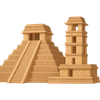
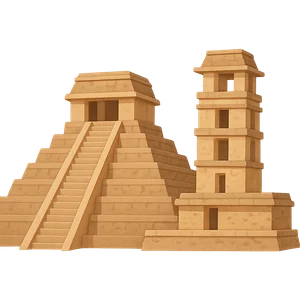
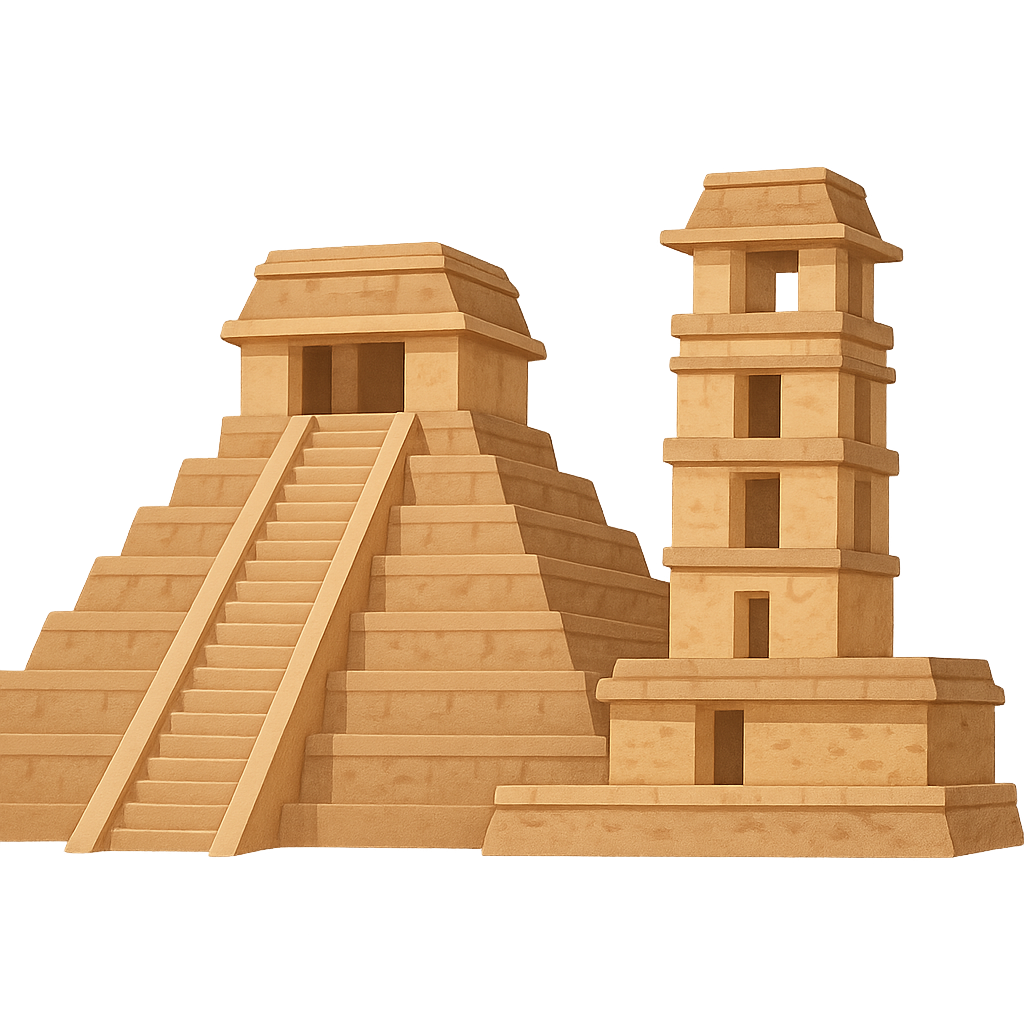
My story begins as a humble village, founded around 226 BCE. For centuries, I grew quietly, but it was during the 7th century CE that I truly flourished and became a powerful city-state. This was my golden age, thanks to the vision of my greatest king, K'inich Janaab' Pakal, whom you might know as Pakal the Great. His incredible reign began on the 27th of July, 615 CE, when he was just a boy, and it lasted for 68 years. Under his command, my architects and artisans created masterpieces. They built the sprawling Palace, a maze of courtyards and corridors, crowned with a unique four-story watchtower. From its peak, royal astronomers mapped the movements of the stars and planets, understanding the universe in ways that still astound scholars today. Pakal's greatest project, however, was the magnificent Temple of the Inscriptions. He designed it himself, not just as a place of worship, but as his own sacred tomb, a monument that would tell his story for eternity. In those days, my plazas were alive with energy. You would have heard the thud of a rubber ball in the ritual ball game, smelled the delicious aroma of corn and spices drifting from homes, and seen artisans carefully carving the histories of gods and kings into my limestone walls.
The Stone City That Slept
Listen closely. Can you hear the deep roar of a howler monkey echoing through the trees? Can you feel the warm, damp air on your skin and see the constant drip of rain falling from giant, emerald leaves? Here, in the heart of the jungle of Chiapas, Mexico, a kingdom has been sleeping. If you look carefully, you will see my stone pyramids and palaces peeking through the thick green canopy, their gray walls covered in moss and mystery. My stones are not just blocks; they are storybooks carved with the faces of kings and the tales of gods. I have been waiting for more than a thousand years to share my secrets with the world. I am Palenque, a city of breathtaking beauty, built by the brilliant Maya people.
My story begins as a humble village, founded around 226 BCE. For centuries, I grew quietly, but it was during the 7th century CE that I truly flourished and became a powerful city-state. This was my golden age, thanks to the vision of my greatest king, K'inich Janaab' Pakal, whom you might know as Pakal the Great. His incredible reign began on the 27th of July, 615 CE, when he was just a boy, and it lasted for 68 years. Under his command, my architects and artisans created masterpieces. They built the sprawling Palace, a maze of courtyards and corridors, crowned with a unique four-story watchtower. From its peak, royal astronomers mapped the movements of the stars and planets, understanding the universe in ways that still astound scholars today. Pakal's greatest project, however, was the magnificent Temple of the Inscriptions. He designed it himself, not just as a place of worship, but as his own sacred tomb, a monument that would tell his story for eternity. In those days, my plazas were alive with energy. You would have heard the thud of a rubber ball in the ritual ball game, smelled the delicious aroma of corn and spices drifting from homes, and seen artisans carefully carving the histories of gods and kings into my limestone walls.
But no golden age lasts forever. Around 800 CE, a slow and mysterious change began. For reasons that historians are still trying to piece together, my people started to leave. Perhaps there was a war, or the land could no longer support them. Whatever the cause, the sounds of life faded away. My bustling plazas grew quiet, my grand temples fell silent, and the jungle, which had always been my neighbor, began to move in. It was not a violent takeover, but a gentle and persistent embrace. Green vines climbed my steep stairways like new, wild railings. The powerful roots of ceiba trees pushed through the floors of my palaces, reclaiming the stone for the earth. A thick blanket of soil and fallen leaves covered my courtyards, hiding me from the world. For more than a thousand years, I slept. I held my breath, protecting the deep secrets of the Maya civilization within my stone heart, waiting patiently for a time when my story could be told again.
Centuries passed in quiet slumber. Then, in the late 1700s, the first explorers stumbled upon me, amazed to find a lost city hidden in the jungle. This was the beginning of my slow awakening. Throughout the 19th and 20th centuries, archaeologists arrived, filled with wonder. They carefully cleared away the trees and earth that had hidden me for so long, revealing my temples and palaces to the sunlight once more. The most incredible discovery of all came in 1948. An archaeologist named Alberto Ruz Lhuillier was studying the floor of the Temple of the Inscriptions when he noticed something unusual—a large stone slab with plugs in it. He knew it had to be hiding something. For four long years, he and his team worked tirelessly, clearing a secret stairway that was completely filled with rubble. Finally, on the 15th of June, 1952, they reached the bottom. There, they found the undisturbed tomb of Pakal the Great. Inside was his sarcophagus, its lid covered with incredible carvings telling the story of his life and his journey to the underworld. And on his face was a stunning mask made of brilliant green jade, a true masterpiece of Maya art.
Today, my story continues, but in a new way. I am now a UNESCO World Heritage site, recognized as a treasure belonging to all of humanity. Kings and queens no longer walk through my courtyards, but thousands of visitors do each year, their faces filled with the same wonder the first explorers felt. I am no longer a home, but I am a teacher. Scholars study my intricate hieroglyphs, deciphering the stories I have held for so long and learning more every day about the Maya's advanced knowledge of mathematics, astronomy, and art. I stand as a living storybook of stone, a powerful reminder of a brilliant civilization that rose, flourished, and then disappeared into the jungle. My greatest hope is that I can inspire curiosity in everyone who walks my ancient paths, reminding them that the great stories of our human past are all around us, just waiting to be heard.
Wow facts
About
An ancient Maya city-state in southern Mexico, known for its exquisite architecture and hieroglyphic inscriptions, which flourished in the 7th century CE.
Take a Quiz
Question 1 of 5
In your own words, summarize the main stages of Palenque's history in the correct order.
Explore next





Want to do even more?
Go beyond exploring. Unlock tools that turn every story into real learning.

Storypie Plus for families
Full stories, quizzes, and printables. Nights and car rides, sorted.
- Unlimited audio stories
- Create Mode: your child stars in the story
- Offline downloads
- Printable worksheets & coloring pages

Why Storypie for Schools
Students engaged. Prep in seconds. Evenings back to you.
- Worksheets & Quizzes
- Classroom Management
- Formative Assessment
- Custom Curriculum & Lesson Plans
- 27 Languages

Why Storypie for Homeschool
Curriculum done. They'll ask for more. Hours back in your day.
- Worksheet Generator
- First-Person Audio Stories
- Built-in Comprehension Quizzes
- Custom Curriculum & Lesson Plans
- Print & Go Activities