English

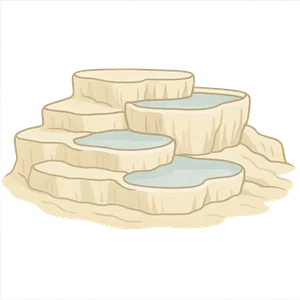
Pamukkale
A natural site in southwestern Turkey known for its white travertine terraces formed by hot springs…
Reads at Grades 6–8 Listens at Grades 4–8
Print & create
Answer keys·No prep·Free with an account
28 worksheets · answer keys · full story · quiz · Ages 10-12 · CEFR B2
Plus adds 164,000+ more stories in 27 languages, audio for every one, and printables for all of them.
Just want Pamukkale?
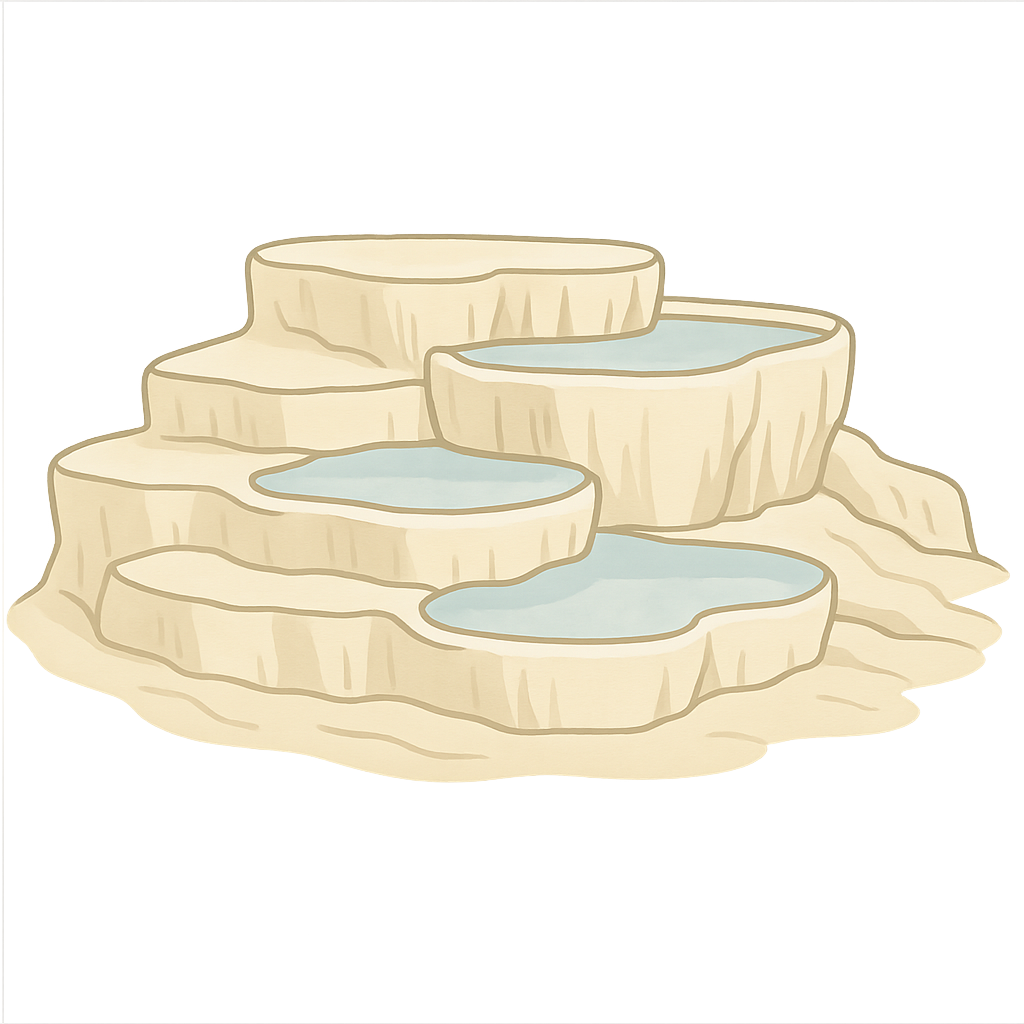
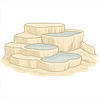
Imagine the feeling of warm, mineral-rich water flowing gently over your skin. It is a constant, soothing river that has trickled for thousands of years, the very lifeblood that shaped my unique form. From a distance, I might appear as a giant frozen waterfall, captured in a moment of silent descent, or perhaps a mountain covered in a thick blanket of soft, white cotton, cascading down a hillside under the warm Turkish sun. My surface is a brilliant white, sculpted by nature into a series of sweeping terraces that look like giant, gleaming steps for a god. Shimmering, turquoise pools dot my landscape like scattered jewels, each one a natural, sky-reflecting bathtub filled with life-giving warmth. For centuries, humans have gazed upon me with awe, marveling at my strange and beautiful form and trying to understand my magic. They saw my soft, white appearance and gave me a name that perfectly captures what they see, a name that echoes through time. I am Pamukkale, the Cotton Castle.
My creation wasn't the work of a single day or even a single century. I am the result of a geological masterpiece that has been in progress for millennia. Deep beneath the earth's surface, water is heated by geothermal energy until it is super-hot. As this water makes its long journey upward, it passes through layers of rock, dissolving minerals and becoming saturated with something special: calcium carbonate. When this hot, mineral-packed water finally reaches the surface and spills over my hillside, it meets the cool open air. This change in temperature and pressure causes a remarkable reaction. The calcium carbonate can no longer stay dissolved in the water. It precipitates out, leaving behind a fine, white deposit that hardens into a type of limestone called travertine. For thousands upon thousands of years, this process has repeated itself, over and over again. Each flow of water leaves behind another paper-thin layer of white stone. Like a slow and incredibly patient artist, the Earth has built my terraces, my pools, and my flowing forms, layer by tiny layer. I am a living sculpture, constantly, though imperceptibly, changing with every drop of water that flows across my surface.
The Cotton Castle of Turkey
Imagine the feeling of warm, mineral-rich water flowing gently over your skin. It is a constant, soothing river that has trickled for thousands of years, the very lifeblood that shaped my unique form. From a distance, I might appear as a giant frozen waterfall, captured in a moment of silent descent, or perhaps a mountain covered in a thick blanket of soft, white cotton, cascading down a hillside under the warm Turkish sun. My surface is a brilliant white, sculpted by nature into a series of sweeping terraces that look like giant, gleaming steps for a god. Shimmering, turquoise pools dot my landscape like scattered jewels, each one a natural, sky-reflecting bathtub filled with life-giving warmth. For centuries, humans have gazed upon me with awe, marveling at my strange and beautiful form and trying to understand my magic. They saw my soft, white appearance and gave me a name that perfectly captures what they see, a name that echoes through time. I am Pamukkale, the Cotton Castle.
My creation wasn't the work of a single day or even a single century. I am the result of a geological masterpiece that has been in progress for millennia. Deep beneath the earth's surface, water is heated by geothermal energy until it is super-hot. As this water makes its long journey upward, it passes through layers of rock, dissolving minerals and becoming saturated with something special: calcium carbonate. When this hot, mineral-packed water finally reaches the surface and spills over my hillside, it meets the cool open air. This change in temperature and pressure causes a remarkable reaction. The calcium carbonate can no longer stay dissolved in the water. It precipitates out, leaving behind a fine, white deposit that hardens into a type of limestone called travertine. For thousands upon thousands of years, this process has repeated itself, over and over again. Each flow of water leaves behind another paper-thin layer of white stone. Like a slow and incredibly patient artist, the Earth has built my terraces, my pools, and my flowing forms, layer by tiny layer. I am a living sculpture, constantly, though imperceptibly, changing with every drop of water that flows across my surface.
For most of my existence, I was a quiet wonder of nature. But that changed around the 2nd century BCE when people from the Kingdom of Pergamon discovered my warm, healing waters. They saw me not just as a natural marvel, but as a gift—a place of health and spiritual comfort. So, right on the flat plateau at my very top, they founded a city. They called it Hierapolis, which means the 'Holy City,' because they believed my waters held sacred healing powers. Hierapolis quickly became a famous ancient spa town. People traveled from all across the Greco-Roman world, making long journeys to bathe in my turquoise pools, hoping to find relief from their ailments. It was a bustling center of hope and rejuvenation. Then, in 133 BCE, a significant change occurred. The last king of Pergamon bequeathed his kingdom, including Hierapolis, to the powerful Roman Empire. Under Roman rule, the city flourished beyond imagination. The Romans, who were master engineers and architects, transformed Hierapolis into a magnificent metropolis. They laid down grand, colonnaded streets where merchants sold their wares and visitors strolled in the shade. They built ornate temples to honor their gods, elaborate public bathhouses, and a vast necropolis, a city of the dead, with intricate tombs and sarcophagi that still stand today. Most impressively, they constructed a huge theater, carved directly into the hillside, which could seat thousands of spectators for plays and community events. My gentle, white slopes became the foundation for a sophisticated city, a testament to human ingenuity inspired by the power of nature.
Life in a geologically active area is never without its challenges. In the year 60 CE, a massive earthquake struck the region, and the magnificent city of Hierapolis was badly damaged. Grand columns toppled, walls crumbled, and much of what the Romans had built was reduced to rubble. It could have been the end of the city's story. But the people of the Roman Empire were known for their resilience. Instead of abandoning the site, they began the painstaking work of rebuilding. They cleared the debris and erected new structures, often even more beautiful and grand than before. The city rose from its own ruins, a symbol of human perseverance. As centuries passed, the beliefs of the people who lived here began to change. The Roman gods gave way to a new faith: Christianity. Hierapolis transformed from a spa town into an important center for this growing religion. The city's new spiritual significance was cemented by a profound event. It is believed that St. Philip, one of the twelve apostles of Jesus, came here to spread his message and was martyred in Hierapolis around the year 80 CE. A shrine, and later a great church, was built in his honor. For centuries, Christian pilgrims traveled to Hierapolis to visit his tomb, turning the city from a place of physical healing to one of deep spiritual importance.
Like all great cities, Hierapolis eventually faced its decline. After a series of further earthquakes and the slow passage of time, the city began to fade. By the 13th century, it was largely abandoned, and I was left to a long, quiet rest. For hundreds of years, the wind whispered through the empty streets and crumbling arches, and my waters continued their slow, patient work of building new layers of white stone. It was as if I was sleeping, dreaming of the vibrant life I once held. Then, in the modern era, a new chapter began. Travelers, explorers, and archaeologists rediscovered my forgotten beauty and the incredible ruins of Hierapolis. They recognized that this place was special, a unique combination of natural wonder and human history. The world began to take notice, and on December 6th, 1988, I was given a great honor. I, along with the ruins of Hierapolis, was designated a UNESCO World Heritage Site. This title declared that my story and my beauty were treasures belonging not just to one country, but to all of humanity—a legacy to be protected forever.
Today, my story continues, and I am no longer quiet. I welcome visitors from every corner of the globe who come to walk in my warm, shallow pools and marvel at my cotton-white terraces. They wander through the ancient streets of Hierapolis, sit in the great Roman theater, and imagine the lives of those who came before. I am a bridge connecting the awesome, creative power of nature with the incredible, enduring story of human history. My waters still flow, my terraces still gleam, reminding everyone of the profound beauty that both the Earth and people can create and preserve together.
Wow facts
About
A natural site in southwestern Turkey known for its white travertine terraces formed by hot springs, and the adjacent ancient Greco-Roman city of Hierapolis.
Take a Quiz
Question 1 of 5
Which sentence best summarizes how Pamukkale's white terraces were formed?
Explore next






Want to do even more?
Go beyond exploring. Unlock tools that turn every story into real learning.

Storypie Plus for families
Full stories, quizzes, and printables. Nights and car rides, sorted.
- Unlimited audio stories
- Create Mode: your child stars in the story
- Offline downloads
- Printable worksheets & coloring pages

Why Storypie for Schools
Students engaged. Prep in seconds. Evenings back to you.
- Worksheets & Quizzes
- Classroom Management
- Formative Assessment
- Custom Curriculum & Lesson Plans
- 27 Languages

Why Storypie for Homeschool
Curriculum done. They'll ask for more. Hours back in your day.
- Worksheet Generator
- First-Person Audio Stories
- Built-in Comprehension Quizzes
- Custom Curriculum & Lesson Plans
- Print & Go Activities