English

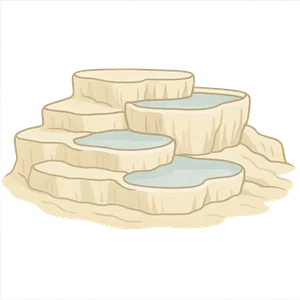
Pamukkale
A natural site in southwestern Turkey known for its white travertine terraces formed by hot springs…
Reads at Grades 3–5 Listens at Grades 1–5
Print & create
Answer keys·No prep·Free with an account
28 worksheets · answer keys · full story · quiz · Ages 8-10 · CEFR B1
Plus adds 164,000+ more stories in 27 languages, audio for every one, and printables for all of them.
Just want Pamukkale?
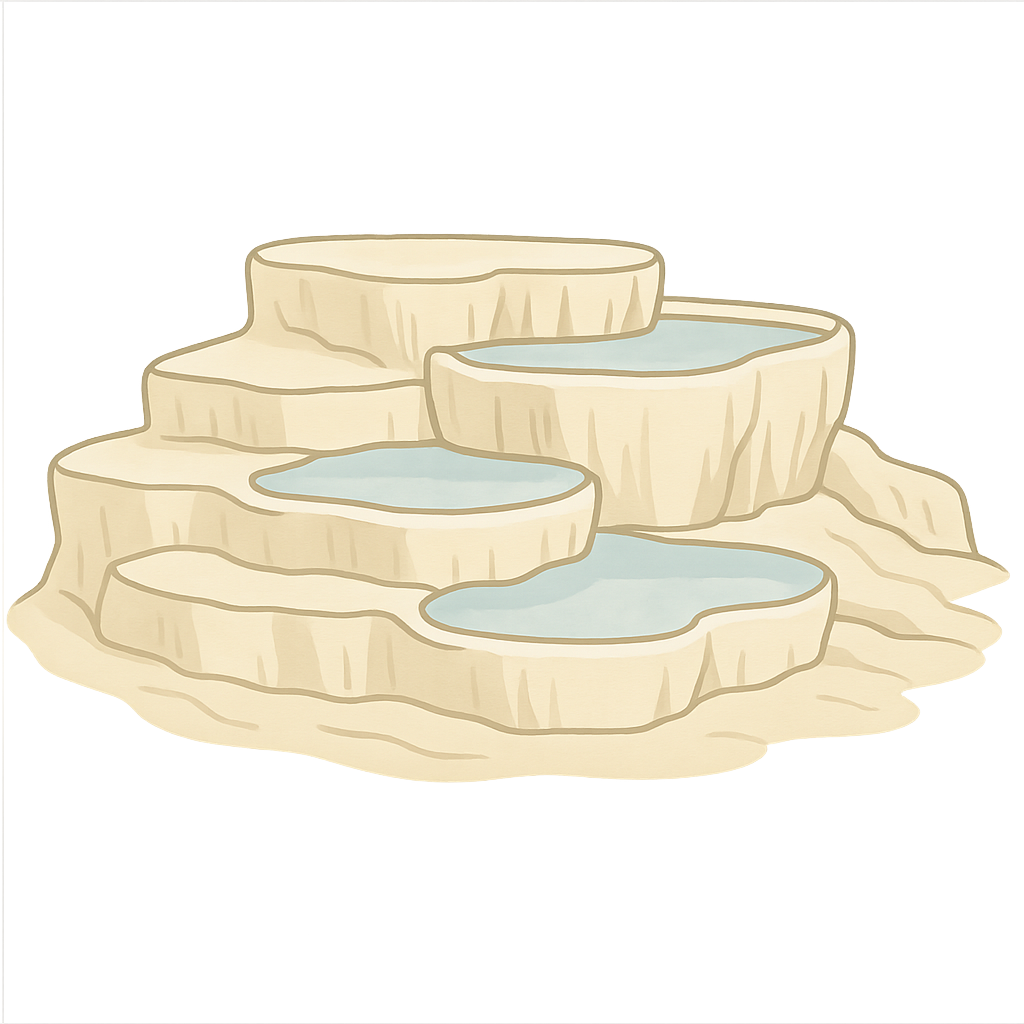
From a distance, I look like a fluffy white mountain or a frozen waterfall cascading down a hillside in southwestern Turkey. You might think I am covered in snow or soft cotton, but if you touch me, you will feel smooth, warm stone. Bright blue water trickles over my many pools, making gentle splashing sounds as it flows. For thousands of years, people have wondered about my magical appearance. I am not made of snow, but of something special that nature has built over a very long time. My name is Pamukkale, which means 'Cotton Castle' in the Turkish language, and it fits me perfectly.
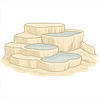
My story begins deep underground, where water is heated by the Earth's warmth. As this water travels up to the surface, it gathers special minerals, like a traveler collecting souvenirs. When the warm water bubbles up from my springs and flows down my slopes, the cool air makes it leave behind a mineral called calcium carbonate. For over 14,000 years, this has happened again and again. Layer by tiny layer, the white mineral has built up my beautiful terraces, which are called travertines. They look like a giant, natural staircase filled with sparkling pools of water, all created by the patient work of nature.
Long, long ago, people discovered my warm, mineral-rich waters. Around the late 2nd century BCE, people from the Kingdom of Pergamon saw my beauty and felt the soothing heat of my pools. They believed my waters could help people feel better and heal their aches and pains. Because of this, they decided to build a city right on top of my flat peak. They called it Hierapolis, which means the 'Holy City.' Soon, Hierapolis became a famous place, and people traveled from far away to relax in my gentle, warm waters and enjoy the incredible view from the city they built on my shoulders.
The Cotton Castle's Story
From a distance, I look like a fluffy white mountain or a frozen waterfall cascading down a hillside in southwestern Turkey. You might think I am covered in snow or soft cotton, but if you touch me, you will feel smooth, warm stone. Bright blue water trickles over my many pools, making gentle splashing sounds as it flows. For thousands of years, people have wondered about my magical appearance. I am not made of snow, but of something special that nature has built over a very long time. My name is Pamukkale, which means 'Cotton Castle' in the Turkish language, and it fits me perfectly.
My story begins deep underground, where water is heated by the Earth's warmth. As this water travels up to the surface, it gathers special minerals, like a traveler collecting souvenirs. When the warm water bubbles up from my springs and flows down my slopes, the cool air makes it leave behind a mineral called calcium carbonate. For over 14,000 years, this has happened again and again. Layer by tiny layer, the white mineral has built up my beautiful terraces, which are called travertines. They look like a giant, natural staircase filled with sparkling pools of water, all created by the patient work of nature.
Long, long ago, people discovered my warm, mineral-rich waters. Around the late 2nd century BCE, people from the Kingdom of Pergamon saw my beauty and felt the soothing heat of my pools. They believed my waters could help people feel better and heal their aches and pains. Because of this, they decided to build a city right on top of my flat peak. They called it Hierapolis, which means the 'Holy City.' Soon, Hierapolis became a famous place, and people traveled from far away to relax in my gentle, warm waters and enjoy the incredible view from the city they built on my shoulders.
After 133 BCE, a new group of people arrived—the powerful Romans. They loved Hierapolis and made it even grander than before. They were amazing builders, and they added magnificent stone arches, a huge marketplace called an agora where people bought and sold goods, and a giant theater carved into the hillside that could hold thousands of people for plays and performances. I watched as the city bustled with visitors from all over the Roman Empire. During this time, around the year 80 CE, an important early Christian named the Apostle Philip came to Hierapolis, and the city became a special center for a new and growing faith.
But nothing lasts forever in the exact same way. The ground in this part of the world can sometimes rumble and shake with great power. Over many hundreds of years, strong earthquakes shook the beautiful city of Hierapolis. Buildings crumbled, and stone arches fell. Slowly, life in the city became too difficult, and people began to move away to safer places. The grand theaters grew silent, and the busy marketplaces became empty. For a long, long time, it was just me, the wind, and my warm waters, which kept flowing and building new white layers over the ancient stones of the quiet city.
Then, in the 20th century, people from all over the world rediscovered my beauty. They came in huge numbers to see the 'Cotton Castle' and the ruins of Hierapolis. So many visitors came that I started to get a little worn out and my white terraces were getting damaged. Thankfully, people realized that I was a treasure that needed to be protected. On December 9th, 1988, I was named a UNESCO World Heritage Site, which means I am considered special to the whole world. Now, there are rules to keep me safe. To protect my delicate white surfaces, visitors must walk on me with bare feet, feeling the smooth stone and warm water just as ancient people did.
I am a storybook made of stone and water, a place where nature's amazing art and human history come together. When you visit, you can walk in the footsteps of ancient Romans and feel the same warm water that has flowed for thousands upon thousands of years. My terraces and the silent ruins of Hierapolis are here to remind everyone how wonderful and surprising our world is. I stand as a lesson in why it is so important to care for our planet's treasures, both the ones made by nature and the ones built by human hands.
Wow facts
About
A natural site in southwestern Turkey known for its white travertine terraces formed by hot springs, and the adjacent ancient Greco-Roman city of Hierapolis.
Take a Quiz
Question 1 of 5
The story says Hierapolis became a 'Holy City.' What clues in the story help you understand why it was called 'holy'?
Explore next





Want to do even more?
Go beyond exploring. Unlock tools that turn every story into real learning.

Storypie Plus for families
Full stories, quizzes, and printables. Nights and car rides, sorted.
- Unlimited audio stories
- Create Mode: your child stars in the story
- Offline downloads
- Printable worksheets & coloring pages

Why Storypie for Schools
Students engaged. Prep in seconds. Evenings back to you.
- Worksheets & Quizzes
- Classroom Management
- Formative Assessment
- Custom Curriculum & Lesson Plans
- 27 Languages

Why Storypie for Homeschool
Curriculum done. They'll ask for more. Hours back in your day.
- Worksheet Generator
- First-Person Audio Stories
- Built-in Comprehension Quizzes
- Custom Curriculum & Lesson Plans
- Print & Go Activities