English

Polynesia
A vast region of over 1,000 islands in the central and southern Pacific Ocean…
Reads at Grades 6–8 Listens at Grades 4–8
Print & create
Answer keys·No prep·Free with an account
28 worksheets · answer keys · full story · quiz · Ages 10-12 · CEFR B2
Plus adds 164,000+ more stories in 27 languages, audio for every one, and printables for all of them.
Just want Polynesia?
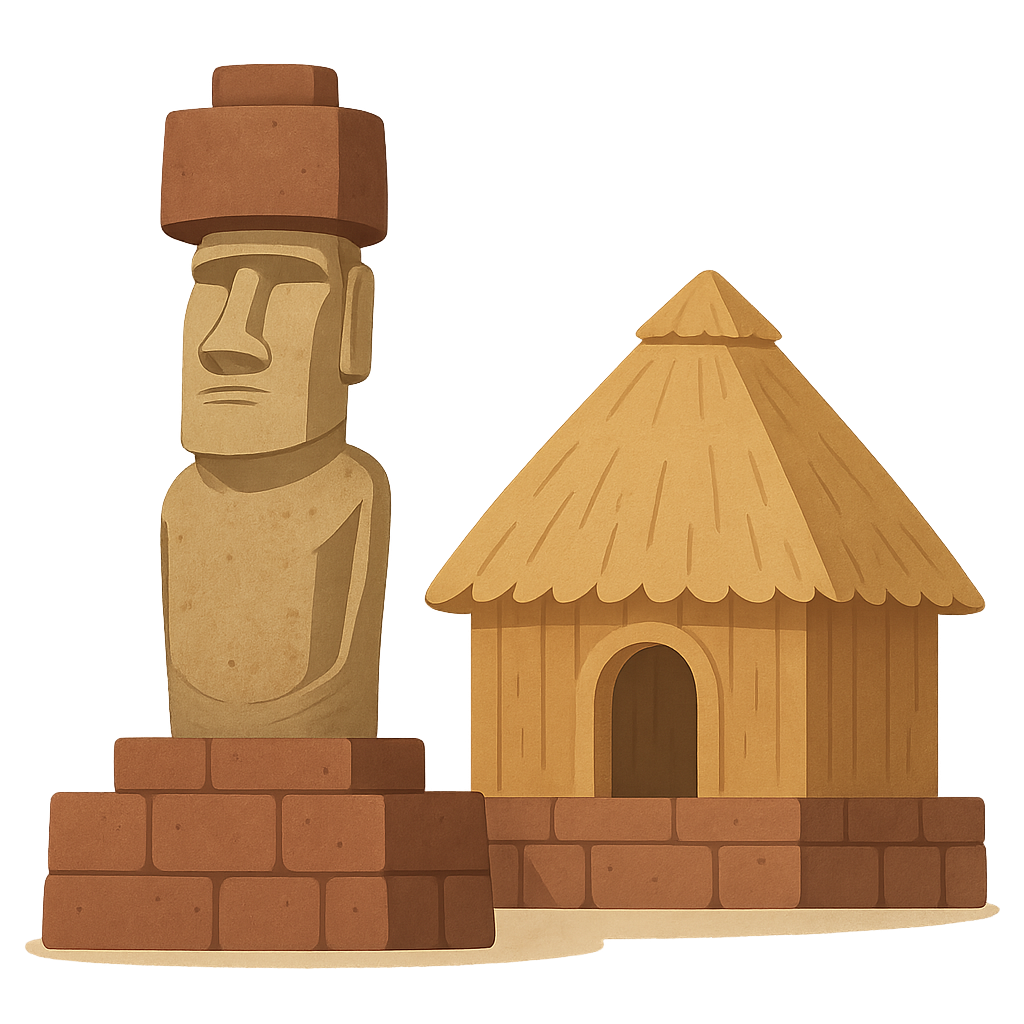
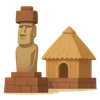
Imagine an ocean so vast it feels like a universe of its own, a shimmering blue blanket dotted with thousands of green islands born from ancient volcanoes. I stretch across the Pacific in a great triangle, my corners touching the lands you now call Hawaiʻi, Aotearoa, which is New Zealand, and the mysterious Rapa Nui, or Easter Island. Within my embrace lies a world of coral reefs, lush forests, and endless horizons. For millennia, I have watched the sun rise and set, my currents swirling like secret pathways and my waves singing a constant rhythm. People who looked upon me saw not a barrier, but a road. They learned my language, written in the stars and the sea. I am Polynesia, and my story is one of the greatest voyages of discovery humanity has ever known, a tale of courage, wisdom, and the unbreakable bond between people and the sea.
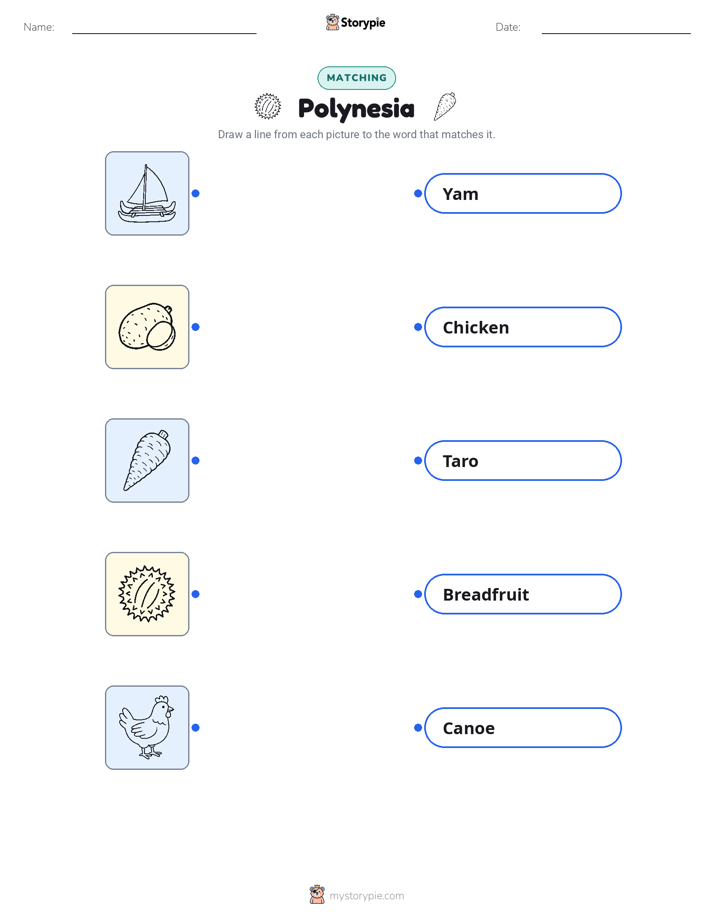
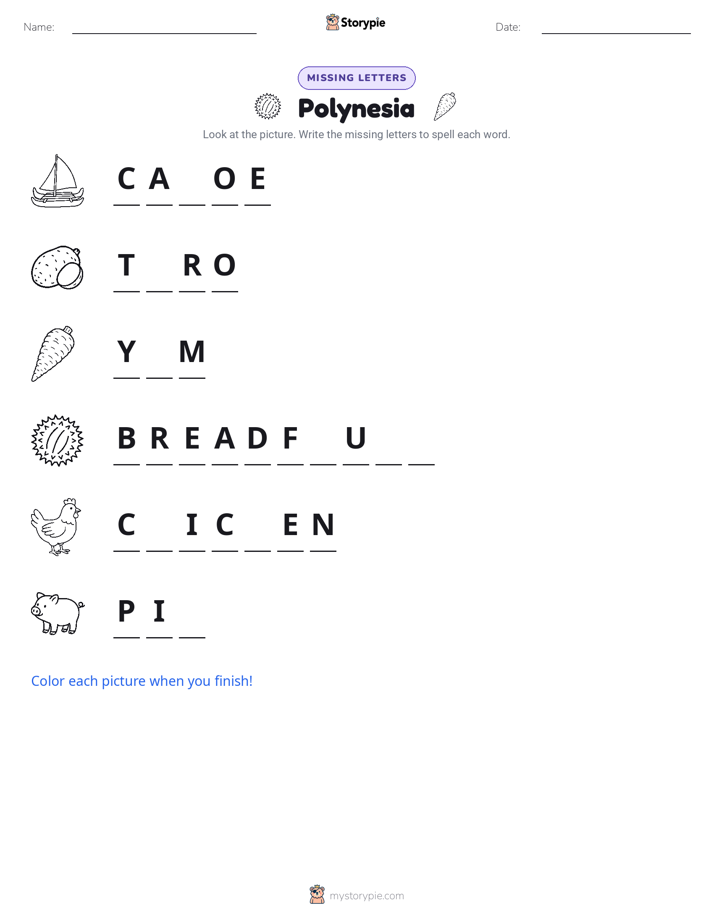
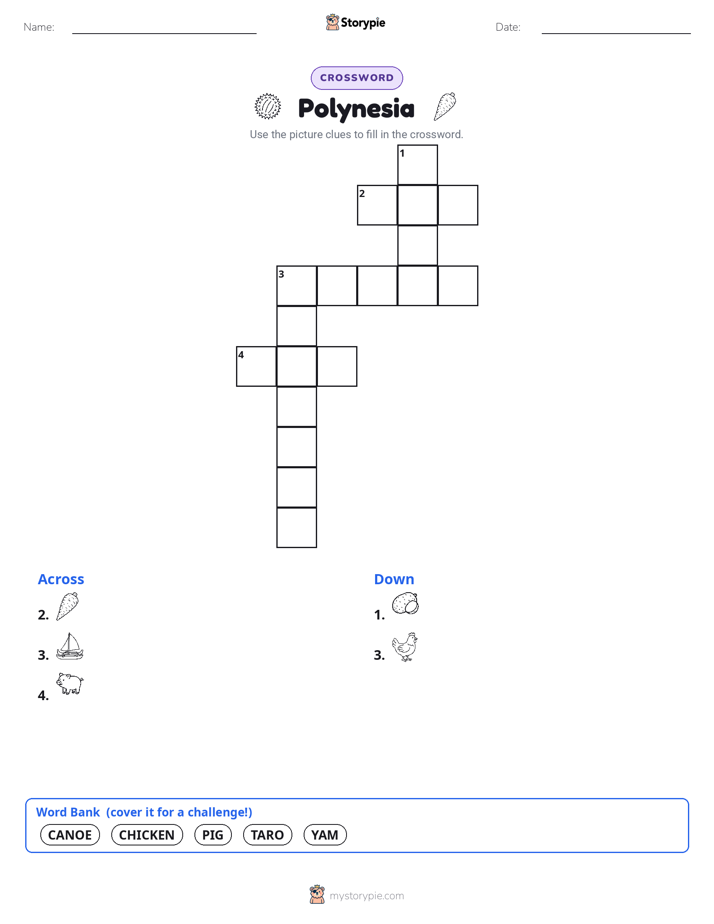
My story begins with a remarkable people who first dared to sail into my unknown waters. Around 3000 BCE, skilled seafarers known as the Lapita people, the ancestors of modern Polynesians, began a slow and steady journey eastward from Southeast Asia. They were not just explorers; they were families, carrying their entire world with them. Their vessels were masterpieces of engineering called waʻa kaulua, or double-hulled canoes. Imagine two long canoes connected by a deck, creating a stable platform large enough to carry people, supplies, and even the plants and animals they would need to start a new life. Onboard, they carried precious cargo like taro, yams, breadfruit, chickens, and pigs. These canoes were their floating homes, their arks of survival. By around 1000 BCE, they had reached my western edge, settling the island groups of Sāmoa and Tonga. Here, they paused. For nearly two thousand years, they remained in this region, a period historians call the 'Long Pause.' It was not a time of idleness. It was a time of growth, where their unique culture flourished and their deep understanding of me, the ocean, was perfected for the even greater journeys that lay ahead.
The Ocean that Sings
Imagine an ocean so vast it feels like a universe of its own, a shimmering blue blanket dotted with thousands of green islands born from ancient volcanoes. I stretch across the Pacific in a great triangle, my corners touching the lands you now call Hawaiʻi, Aotearoa, which is New Zealand, and the mysterious Rapa Nui, or Easter Island. Within my embrace lies a world of coral reefs, lush forests, and endless horizons. For millennia, I have watched the sun rise and set, my currents swirling like secret pathways and my waves singing a constant rhythm. People who looked upon me saw not a barrier, but a road. They learned my language, written in the stars and the sea. I am Polynesia, and my story is one of the greatest voyages of discovery humanity has ever known, a tale of courage, wisdom, and the unbreakable bond between people and the sea.
My story begins with a remarkable people who first dared to sail into my unknown waters. Around 3000 BCE, skilled seafarers known as the Lapita people, the ancestors of modern Polynesians, began a slow and steady journey eastward from Southeast Asia. They were not just explorers; they were families, carrying their entire world with them. Their vessels were masterpieces of engineering called waʻa kaulua, or double-hulled canoes. Imagine two long canoes connected by a deck, creating a stable platform large enough to carry people, supplies, and even the plants and animals they would need to start a new life. Onboard, they carried precious cargo like taro, yams, breadfruit, chickens, and pigs. These canoes were their floating homes, their arks of survival. By around 1000 BCE, they had reached my western edge, settling the island groups of Sāmoa and Tonga. Here, they paused. For nearly two thousand years, they remained in this region, a period historians call the 'Long Pause.' It was not a time of idleness. It was a time of growth, where their unique culture flourished and their deep understanding of me, the ocean, was perfected for the even greater journeys that lay ahead.
After centuries of preparation, the descendants of the Lapita people were ready to sail again, this time into my vast, open heart. Their greatest tool was not made of wood or stone, but of knowledge passed down through generations. This art and science is called wayfinding. The navigators, or palu, held a map of my waters in their minds. They didn't have compasses or satellites; they had me and the sky. At night, they followed paths of stars as they rose and set, a celestial compass that never failed. During the day, they read the sun’s arc. They understood the language of my waves, feeling the subtle patterns of deep ocean swells that traveled for thousands of miles, telling them the direction of distant islands long before they could be seen. They watched the flight patterns of birds that flew out to sea to fish but always returned to land. They could even read the color of the sky and the shape of the clouds on the horizon, which could signal a hidden island. Fueled by this incredible wisdom, a new wave of migration began. Between 300 CE and 800 CE, they reached my eastern islands, like Tahiti and the Marquesas. Then, in a final, breathtaking push between 1000 CE and 1300 CE, they sailed to my most remote corners, settling Hawaiʻi in the north, Rapa Nui in the southeast, and Aotearoa in the southwest, completing a settlement of the Pacific that was one of the most expansive migrations in human history.
For centuries, the cultures born on my islands thrived in magnificent isolation. Then, new sails appeared on my horizon. In the 1770s, European explorers like Captain James Cook arrived. He and his crew were astounded, struggling to understand how a people with no metal tools or written maps could have so precisely navigated and settled my immense territory. They were amazed by the navigational genius they saw. But with this contact, the old ways began to face new challenges, and for a time, it seemed this ancient knowledge might be lost. Yet, the spirit of the voyagers could not be extinguished. In 1975, a group of visionaries in Hawaiʻi built a traditional voyaging canoe, the Hōkūleʻa, to prove that their ancestors' feats were real. Guided by Mau Piailug, a master navigator from a small Micronesian island who still practiced the old ways, the Hōkūleʻa set sail from Hawaiʻi on May 1st, 1976. Without a single modern instrument, they navigated over two thousand miles to Tahiti. Their successful voyage was a powerful rebirth, sparking a renaissance of Polynesian culture, pride, and voyaging. Today, the Hōkūleʻa and other canoes like her continue to sail my waters, connecting my people, teaching new generations, and reminding the world that the deepest wisdom often comes from listening to nature.
Wow facts
About
A vast region of over 1,000 islands in the central and southern Pacific Ocean, defined by the incredible long-distance voyages and rich cultures of its indigenous peoples.
Take a Quiz
Question 1 of 5
What was the primary purpose of the Hōkūleʻa's voyage in 1976?
Explore next



Want to do even more?
Go beyond exploring. Unlock tools that turn every story into real learning.

Storypie Plus for families
Full stories, quizzes, and printables. Nights and car rides, sorted.
- Unlimited audio stories
- Create Mode: your child stars in the story
- Offline downloads
- Printable worksheets & coloring pages

Why Storypie for Schools
Students engaged. Prep in seconds. Evenings back to you.
- Worksheets & Quizzes
- Classroom Management
- Formative Assessment
- Custom Curriculum & Lesson Plans
- 27 Languages

Why Storypie for Homeschool
Curriculum done. They'll ask for more. Hours back in your day.
- Worksheet Generator
- First-Person Audio Stories
- Built-in Comprehension Quizzes
- Custom Curriculum & Lesson Plans
- Print & Go Activities