English


Quebec City
Quebec City is the capital of the Canadian province of Quebec and one of the oldest European-founded cities…
Reads at Grades 6–8 Listens at Grades 4–8
Print & create
Answer keys·No prep·Free with an account
28 worksheets · answer keys · full story · quiz · Ages 10-12 · CEFR B2
Plus adds 208,000+ more stories in 27 languages, audio for every one, and printables for all of them.
Just want Quebec City?

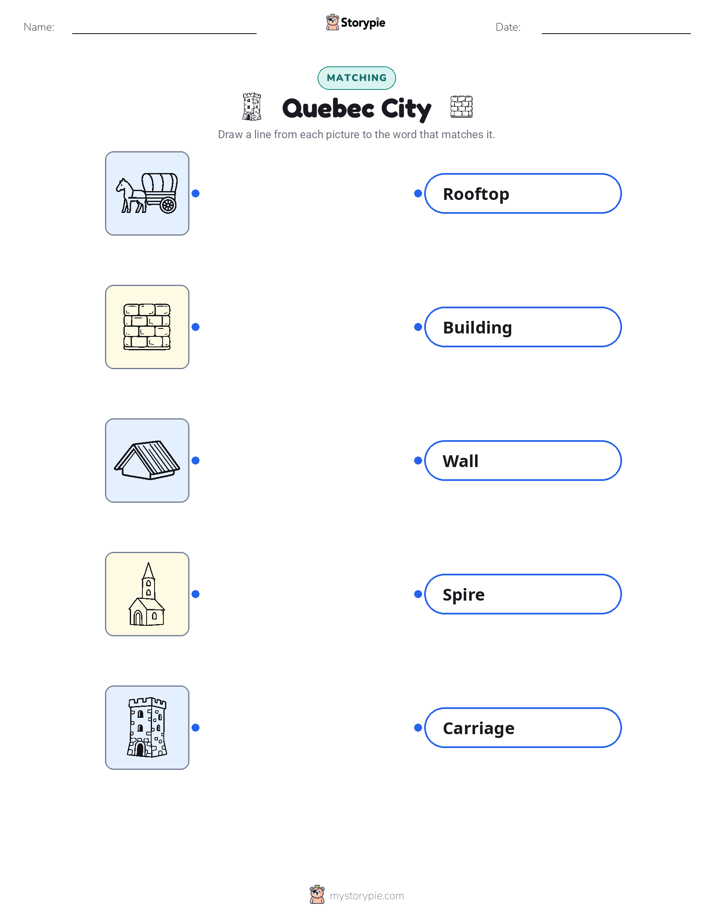
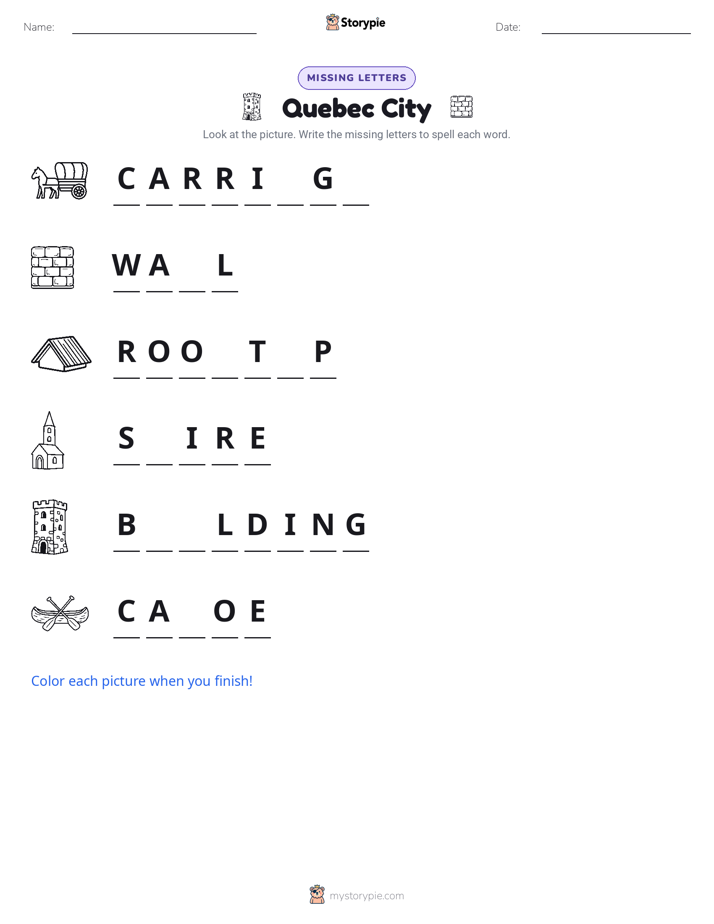
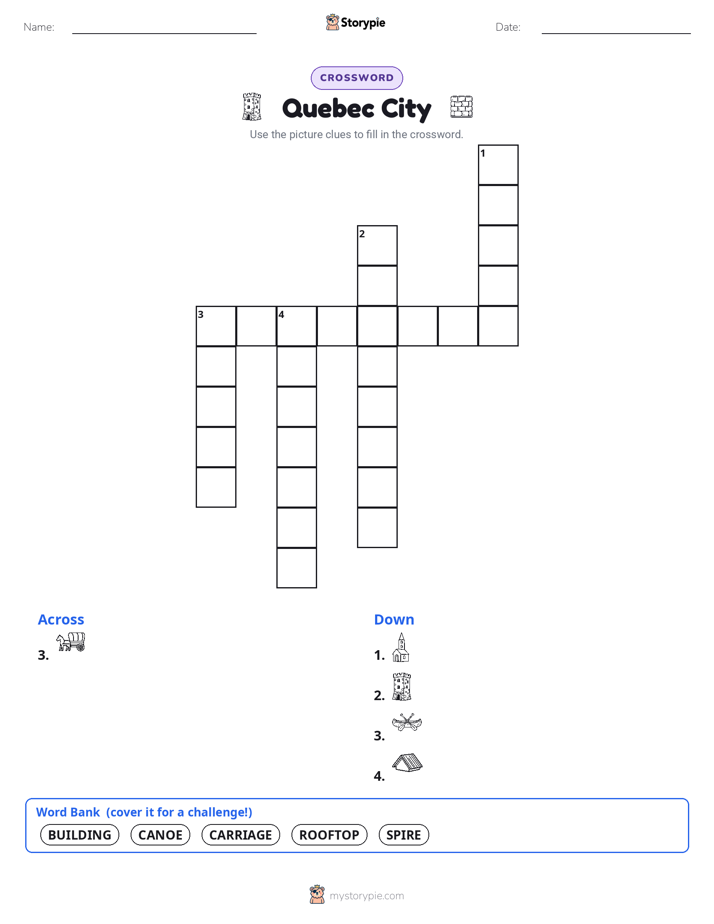
I sit high on a great stone cliff, a natural throne called Cap Diamant, watching over the mighty St. Lawrence River as it widens toward the sea. For centuries, I have felt the rumble of horse-drawn carriages and now cars over my cobblestone streets. Within my protective stone walls, the air is filled with a unique melody—the sounds of French and English, spoken by locals and visitors from around the world. My silhouette is one of steep, shining rooftops, ancient church spires, and sturdy stone buildings that huddle together for warmth against the winter chill. I feel like a fairytale city, a piece of old Europe that was carefully carried across the ocean and placed in the heart of North America. To wander my narrow lanes is to step back in time, to feel the weight and wonder of history in the very air you breathe. I am Quebec City, a fortress of history and the cradle of French culture in the Americas.
My story did not begin with stone walls. Long before European ships sailed up my river, this land was home to the Iroquoian people, who lived in a village they called Stadacona. They understood the strategic power of this cliff overlooking the water. My modern chapter began when the sails of a French explorer, Jacques Cartier, appeared on the horizon in 1535. He was amazed by what he saw, but it was another man who would give me my name and purpose. On July 3rd, 1608, Samuel de Champlain arrived with a grand vision. He saw more than just a good location; he dreamed of a new French empire in the Americas, and I was to be its heart. He called this dream New France. Champlain and his men built my first permanent settlement, a wooden fort and trading post called the 'Abitation'. It was a humble start, but it was filled with immense hope. In those early years, I grew into a bustling hub. Canoes and ships crowded my shores, bringing furs from deep within the continent to be traded for European goods. I became a center for explorers planning daring journeys into the unknown, a seat of government for a vast territory, and a place where a new French-American identity began to form.
The City on the Cliff
I sit high on a great stone cliff, a natural throne called Cap Diamant, watching over the mighty St. Lawrence River as it widens toward the sea. For centuries, I have felt the rumble of horse-drawn carriages and now cars over my cobblestone streets. Within my protective stone walls, the air is filled with a unique melody—the sounds of French and English, spoken by locals and visitors from around the world. My silhouette is one of steep, shining rooftops, ancient church spires, and sturdy stone buildings that huddle together for warmth against the winter chill. I feel like a fairytale city, a piece of old Europe that was carefully carried across the ocean and placed in the heart of North America. To wander my narrow lanes is to step back in time, to feel the weight and wonder of history in the very air you breathe. I am Quebec City, a fortress of history and the cradle of French culture in the Americas.
My story did not begin with stone walls. Long before European ships sailed up my river, this land was home to the Iroquoian people, who lived in a village they called Stadacona. They understood the strategic power of this cliff overlooking the water. My modern chapter began when the sails of a French explorer, Jacques Cartier, appeared on the horizon in 1535. He was amazed by what he saw, but it was another man who would give me my name and purpose. On July 3rd, 1608, Samuel de Champlain arrived with a grand vision. He saw more than just a good location; he dreamed of a new French empire in the Americas, and I was to be its heart. He called this dream New France. Champlain and his men built my first permanent settlement, a wooden fort and trading post called the 'Abitation'. It was a humble start, but it was filled with immense hope. In those early years, I grew into a bustling hub. Canoes and ships crowded my shores, bringing furs from deep within the continent to be traded for European goods. I became a center for explorers planning daring journeys into the unknown, a seat of government for a vast territory, and a place where a new French-American identity began to form.
Growth, however, brought danger. As I became more important, I also became a target for rival empires, especially the British. To protect my people and the dream of New France, my famous fortifications were built. Starting in the late 1600s, Governor Frontenac began the massive project of encasing me in stone, creating the formidable walls that still stand today. These walls were put to the ultimate test during the Seven Years' War. The most pivotal moment of my entire existence arrived on a single, fateful morning: September 13th, 1759. Just outside my gates, on a stretch of farmland known as the Plains of Abraham, two armies prepared for a battle that would decide the fate of a continent. The British forces, led by the determined General James Wolfe, faced the French troops commanded by the noble Marquis de Montcalm. The battle itself was shockingly brief but utterly decisive. In less than an hour, the British were victorious. Both Wolfe and Montcalm were mortally wounded, becoming tragic heroes for their nations. This single event changed everything. With the signing of the Treaty of Paris in 1763, all of New France was transferred to the British Empire. Suddenly, I had new rulers. The English language, British laws, and new traditions began to weave themselves into my French soul, marking the beginning of a new and complex chapter in my life.
I learned to hold two identities within my stone heart. I became a place where French and British cultures coexisted, not always easily, but enduringly. My strategic importance continued, and I played a role in the discussions that led to the creation of a new country. In 1867, I proudly became the capital of the new province of Quebec within the newly formed Dominion of Canada. My journey through time was formally recognized in 1985, when UNESCO named my historic district a World Heritage site. This honor was given because I am the only fortified city north of Mexico whose walls still exist, a living museum of colonial history. Today, life within my old walls is vibrant and full of joy. The cannons on my ramparts are silent, and my streets are filled with the laughter of children, the scent of fresh pastries from sidewalk cafes, and the bright colors of paintings sold by street artists. Every winter, I host the world-famous Quebec Winter Carnival, a celebration of snow and cheer. I am more than just stone and history; I am a living city where two cultures meet, a bridge connecting the past to the present. I invite everyone to walk my streets, listen to my stories, and feel the heartbeat of history that still echoes here today.
Wow facts
About
Quebec City is the capital of the Canadian province of Quebec and one of the oldest European-founded cities in North America, known for its historic fortified walls, French heritage, and cobblestone streets.
Take a Quiz
Question 1 of 5
Retell the story of the Battle of the Plains of Abraham in your own words, including who fought and what the outcome was.
Explore next






Want to do even more?
Go beyond exploring. Unlock tools that turn every story into real learning.

Storypie Plus for families
Full stories, quizzes, and printables. Nights and car rides, sorted.
- Unlimited audio stories
- Create Mode: your child stars in the story
- Offline downloads
- Printable worksheets & coloring pages

Why Storypie for Schools
Students engaged. Prep in seconds. Evenings back to you.
- Worksheets & Quizzes
- Classroom Management
- Formative Assessment
- Custom Curriculum & Lesson Plans
- 27 Languages

Why Storypie for Homeschool
Curriculum done. They'll ask for more. Hours back in your day.
- Worksheet Generator
- First-Person Audio Stories
- Built-in Comprehension Quizzes
- Custom Curriculum & Lesson Plans
- Print & Go Activities