English

Quebec City
Quebec City is the capital of the Canadian province of Quebec and one of the oldest European-founded cities…
Reads at Grades 3–5 Listens at Grades 1–5
Print & create
Answer keys·No prep·Free with an account
28 worksheets · answer keys · full story · quiz · Ages 8-10 · CEFR B1
Plus adds 208,000+ more stories in 27 languages, audio for every one, and printables for all of them.
Just want Quebec City?
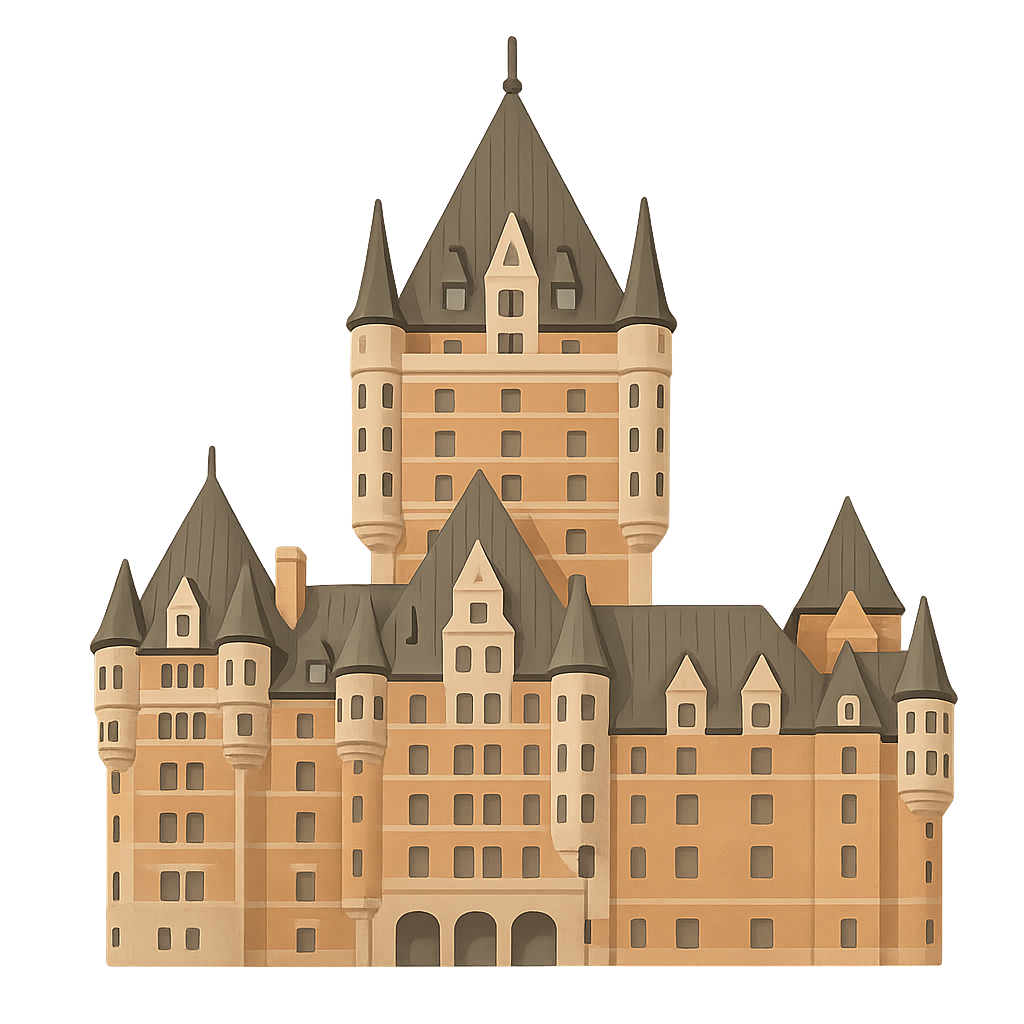
I sit like a crown on a great stone cliff, watching the mighty St. Lawrence River flow below. My heart is made of cobblestone streets that twist and turn, and my buildings wear steep, colorful roofs like pointed hats. If you walk along my high stone walls, you can see for miles. Listen closely, and you will hear two languages dancing in the air—French and English—as people chat in cozy cafes or explore my narrow lanes. I feel like a secret storybook city tucked away in North America, a little piece of old Europe that has stood for centuries. I have watched ships sail by, cannons fire, and seasons change, all from my perch on the cliff. I am Quebec City.
Before any European ships arrived, this land was home to Indigenous peoples for thousands of years. They were the ones who gave me my name, from their word ‘Kébec,’ which means ‘where the river narrows.’ And it’s true. The great river gets skinny right here, which is why a French explorer named Samuel de Champlain chose this spot. On July 3rd, 1608, he arrived and decided it was the perfect place to build a fort and a trading post for furs. It wasn't a grand city at first. The very first building was a wooden fort and house called the 'Habitation.' It was a small, humble beginning, but it was the start of a dream—a new French home in a vast new land, which would grow to be called New France.
As more people came to live here, I needed to keep them safe. So, they built a strong stone heart for me: thick, high walls and fortifications that you can still walk on today. These walls were put to the test. My most important and life-changing day was September 13th, 1759. On a field just outside my walls, called the Plains of Abraham, a great battle was fought between the French and the British armies. It was a short battle, but it changed everything. The British won, and a few years later, in 1763, the Treaty of Paris officially made me part of British territory. Even though my rulers changed, my French spirit never faded. My people continued to speak French and hold on to their traditions. My walls proved their strength again in 1775 when they protected me from an American attack during the Revolutionary War.
The City on the Cliff
I sit like a crown on a great stone cliff, watching the mighty St. Lawrence River flow below. My heart is made of cobblestone streets that twist and turn, and my buildings wear steep, colorful roofs like pointed hats. If you walk along my high stone walls, you can see for miles. Listen closely, and you will hear two languages dancing in the air—French and English—as people chat in cozy cafes or explore my narrow lanes. I feel like a secret storybook city tucked away in North America, a little piece of old Europe that has stood for centuries. I have watched ships sail by, cannons fire, and seasons change, all from my perch on the cliff. I am Quebec City.
Before any European ships arrived, this land was home to Indigenous peoples for thousands of years. They were the ones who gave me my name, from their word ‘Kébec,’ which means ‘where the river narrows.’ And it’s true. The great river gets skinny right here, which is why a French explorer named Samuel de Champlain chose this spot. On July 3rd, 1608, he arrived and decided it was the perfect place to build a fort and a trading post for furs. It wasn't a grand city at first. The very first building was a wooden fort and house called the 'Habitation.' It was a small, humble beginning, but it was the start of a dream—a new French home in a vast new land, which would grow to be called New France.
As more people came to live here, I needed to keep them safe. So, they built a strong stone heart for me: thick, high walls and fortifications that you can still walk on today. These walls were put to the test. My most important and life-changing day was September 13th, 1759. On a field just outside my walls, called the Plains of Abraham, a great battle was fought between the French and the British armies. It was a short battle, but it changed everything. The British won, and a few years later, in 1763, the Treaty of Paris officially made me part of British territory. Even though my rulers changed, my French spirit never faded. My people continued to speak French and hold on to their traditions. My walls proved their strength again in 1775 when they protected me from an American attack during the Revolutionary War.
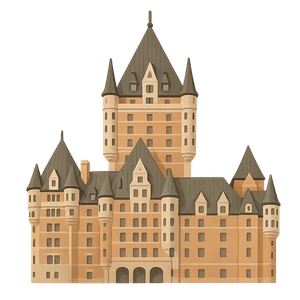
As time passed, the sound of cannons faded and was replaced by the sounds of a city growing and changing. I became a place where French and English cultures learned to live side-by-side, creating something new and unique. In 1893, a magnificent hotel that looks like a fairytale castle, the Château Frontenac, was built on my highest point, becoming my most famous landmark. I continued to carefully preserve my old buildings, my walls, and my cobblestone streets. Because of this, a very special thing happened in 1985. I was named a UNESCO World Heritage site, a treasure not just for Canada, but for the whole world to protect. Today, my streets are filled with music, art, and laughter, especially during my famous Winter Carnival, where people celebrate the snow and ice.
My strong stone walls were first built to keep people out, to protect my citizens from attack. But now, my gates are always open. They no longer stand for defense, but for welcome. I am a living piece of history, where you can walk through four hundred years just by turning a corner. I invite you to come explore my streets, to touch the cool stone of my fortifications, and to listen to the stories whispered by the cobblestones. Come and become a part of my story, which is still being written every single day.
Wow facts
About
Quebec City is the capital of the Canadian province of Quebec and one of the oldest European-founded cities in North America, known for its historic fortified walls, French heritage, and cobblestone streets.
Take a Quiz
Question 1 of 5
Why was the spot where Quebec City was built a good choice for Samuel de Champlain?
Explore next





Want to do even more?
Go beyond exploring. Unlock tools that turn every story into real learning.

Storypie Plus for families
Full stories, quizzes, and printables. Nights and car rides, sorted.
- Unlimited audio stories
- Create Mode: your child stars in the story
- Offline downloads
- Printable worksheets & coloring pages

Why Storypie for Schools
Students engaged. Prep in seconds. Evenings back to you.
- Worksheets & Quizzes
- Classroom Management
- Formative Assessment
- Custom Curriculum & Lesson Plans
- 27 Languages

Why Storypie for Homeschool
Curriculum done. They'll ask for more. Hours back in your day.
- Worksheet Generator
- First-Person Audio Stories
- Built-in Comprehension Quizzes
- Custom Curriculum & Lesson Plans
- Print & Go Activities