English

Roman Forum
The Roman Forum, located in Rome, Italy, was the bustling heart of ancient Rome…
Reads at Grades 6–8 Listens at Grades 4–8
Print & create
Answer keys·No prep·Free with an account
28 worksheets · answer keys · full story · quiz · Ages 10-12 · CEFR B2
Plus adds 208,000+ more stories in 27 languages, audio for every one, and printables for all of them.
Just want Roman Forum?
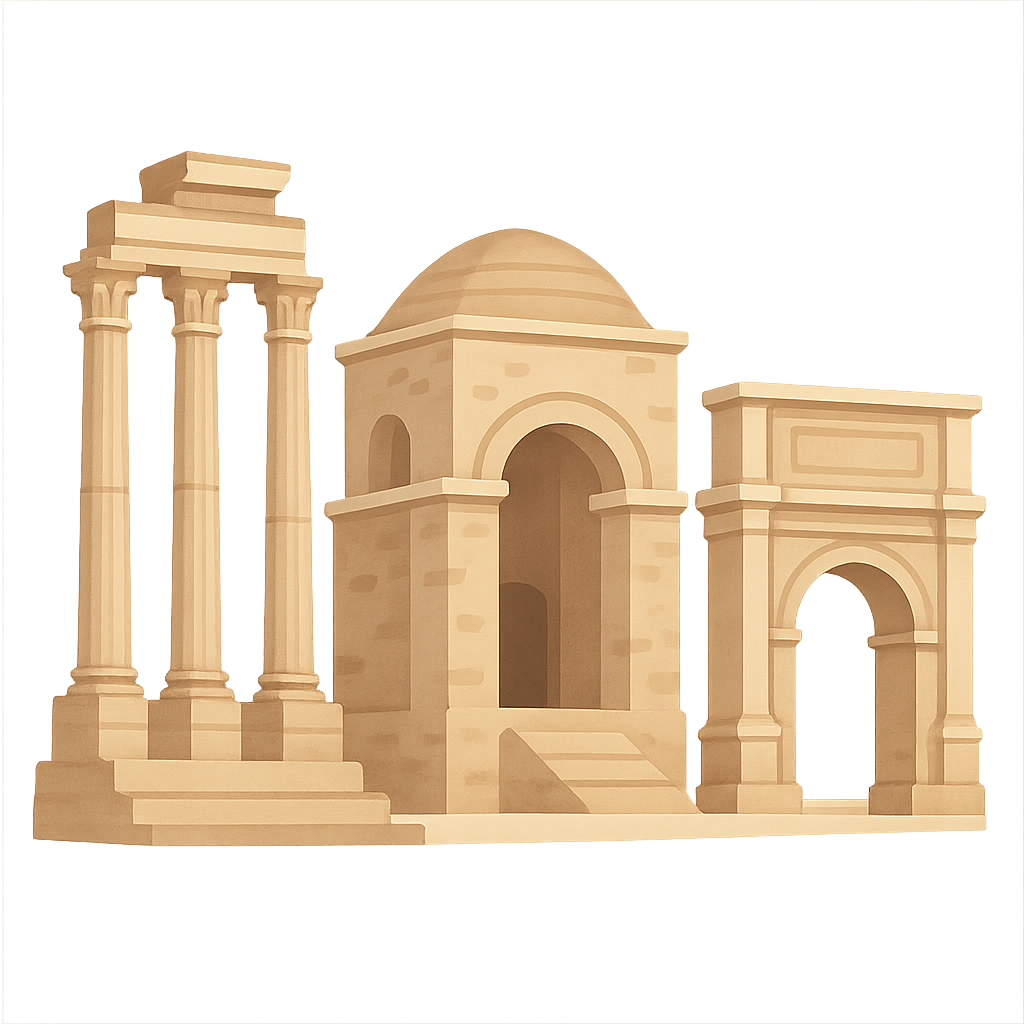
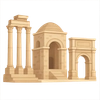
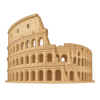
I am a sprawling collection of broken columns, crumbling temples, and wide-open spaces, nestled in a valley between two of Rome's most famous hills, the Palatine and the Capitoline. Millions of visitors walk my ancient paved stones each year, trying to hear the echoes of rattling chariots and passionate speeches that once filled the air. I feel the warm Italian sun on my marble bones as I watch the modern city of Rome bustle around me, a constant hum of Vespas and chatter just beyond my borders. For more than a thousand years, I was the vibrant center of the known world, the place where decisions were made that shaped civilizations. Leaders walked here, laws were born here, and an empire was governed from here. I am the heart of that ancient empire, a living museum under the open sky. My story is written in every ruin. I am the Roman Forum.
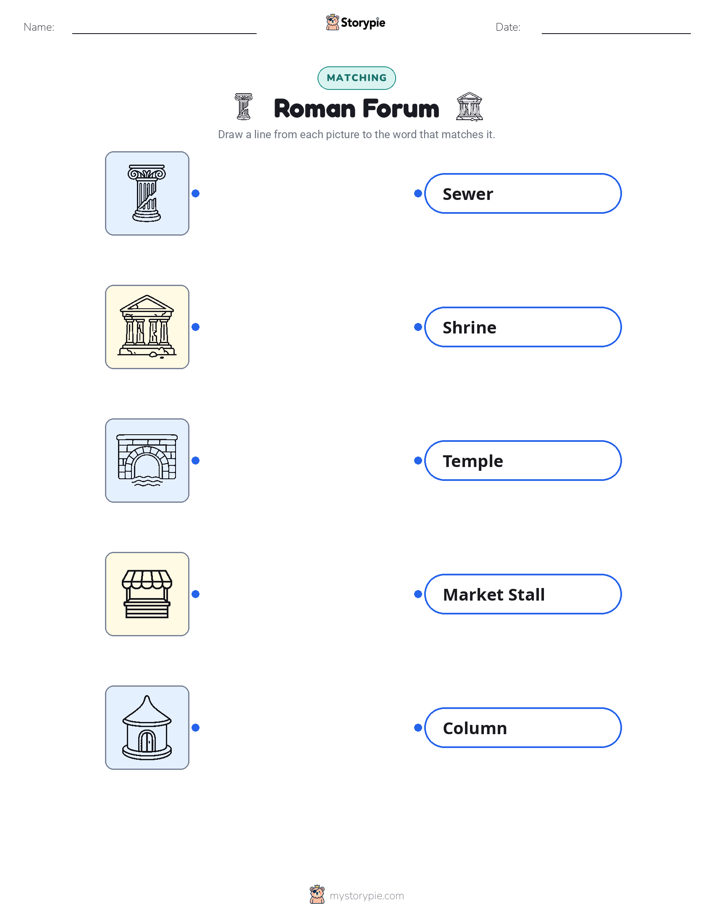
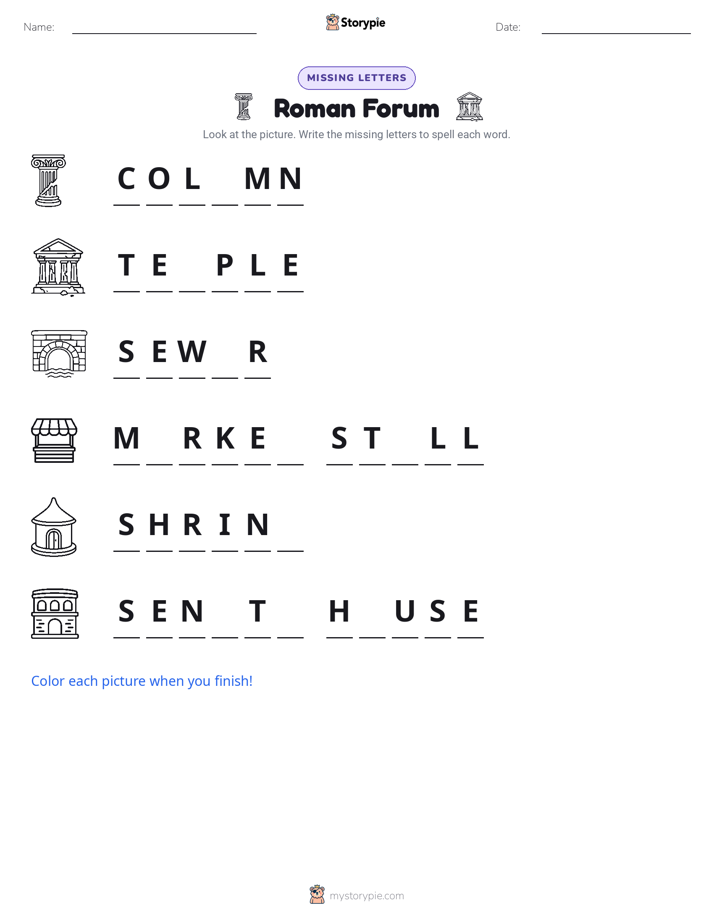
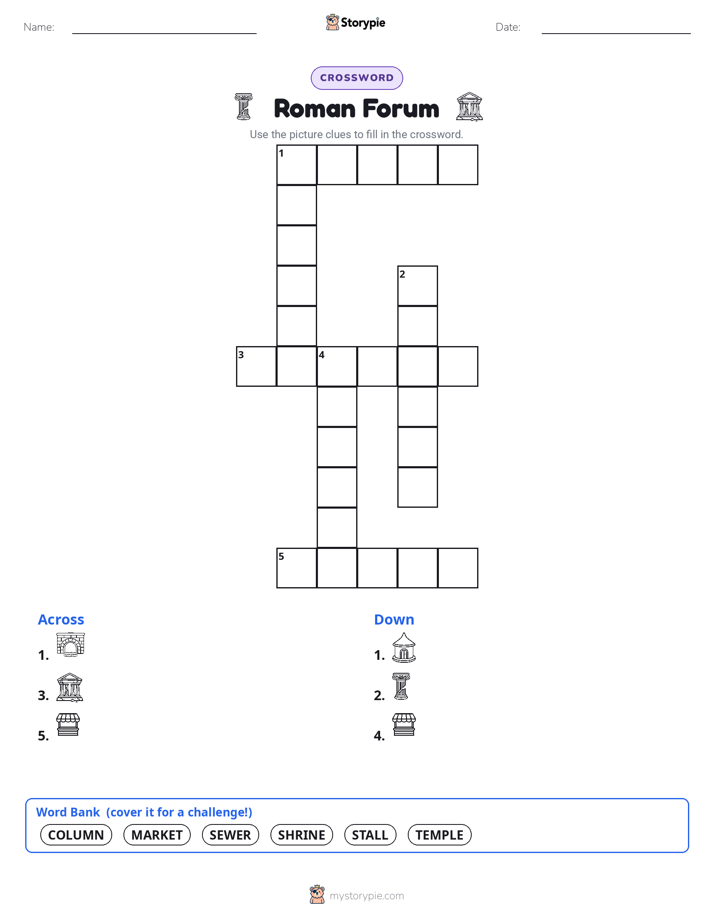
Long before I was a place of grand buildings and important events, I was something much simpler and wilder. Around the 7th century BCE, I was just a marshy, wet valley. The ground was too soggy for buildings, so early inhabitants used the area as a burial ground. But the clever early Romans, known for their brilliant engineering, had a big idea. They constructed one of the world's first great sewer systems, a massive underground drain called the Cloaca Maxima, to channel the water away and into the Tiber River. It was a groundbreaking achievement. Once the land was dry and stable, my true purpose began to take shape. I became an open-air market, a bustling hub where people came to trade goods and catch up on the news. Soon, the first important public buildings began to appear. The Temple of Vesta was built, a circular shrine where priestesses called the Vestal Virgins tended a sacred flame that was never allowed to go out. Nearby stood the original Senate House, the Curia, where the leaders of the growing city gathered to debate laws and make decisions for all of Rome.
The Story of the Roman Forum
I am a sprawling collection of broken columns, crumbling temples, and wide-open spaces, nestled in a valley between two of Rome's most famous hills, the Palatine and the Capitoline. Millions of visitors walk my ancient paved stones each year, trying to hear the echoes of rattling chariots and passionate speeches that once filled the air. I feel the warm Italian sun on my marble bones as I watch the modern city of Rome bustle around me, a constant hum of Vespas and chatter just beyond my borders. For more than a thousand years, I was the vibrant center of the known world, the place where decisions were made that shaped civilizations. Leaders walked here, laws were born here, and an empire was governed from here. I am the heart of that ancient empire, a living museum under the open sky. My story is written in every ruin. I am the Roman Forum.
Long before I was a place of grand buildings and important events, I was something much simpler and wilder. Around the 7th century BCE, I was just a marshy, wet valley. The ground was too soggy for buildings, so early inhabitants used the area as a burial ground. But the clever early Romans, known for their brilliant engineering, had a big idea. They constructed one of the world's first great sewer systems, a massive underground drain called the Cloaca Maxima, to channel the water away and into the Tiber River. It was a groundbreaking achievement. Once the land was dry and stable, my true purpose began to take shape. I became an open-air market, a bustling hub where people came to trade goods and catch up on the news. Soon, the first important public buildings began to appear. The Temple of Vesta was built, a circular shrine where priestesses called the Vestal Virgins tended a sacred flame that was never allowed to go out. Nearby stood the original Senate House, the Curia, where the leaders of the growing city gathered to debate laws and make decisions for all of Rome.
For centuries, during the Roman Republic and the early Empire that followed, I was the most important place in the world. Imagine me then, not as quiet ruins, but crowded with people from every walk of life. Senators in white togas hurried to the Curia, merchants shouted out their prices for exotic spices and silks, and priests performed sacred ceremonies at my many temples. Citizens gathered to hear powerful politicians give passionate speeches from the speaker's platform, a grand stage called the Rostra, which was decorated with the prows of captured warships. Triumphant generals paraded their armies and treasures along my main road, the Via Sacra. Great leaders left their mark on me. A brilliant general named Julius Caesar began constructing magnificent structures, including the vast Basilica Julia, which he started around 54 BCE to serve as a courthouse. After his famous assassination on the 15th of March, 44 BCE, his adopted son, Augustus, rose to become the first emperor of Rome. Augustus famously said he 'found Rome a city of brick and left it a city of marble.' He transformed me, adding glorious new temples and monuments. In 29 BCE, he completed the Temple of the Deified Julius Caesar, built on the spot where Caesar's body was cremated, turning a man into a god in the eyes of the people. I was the undeniable center of government, justice, commerce, and faith for the entire Roman Empire, the place where the pulse of a civilization could be felt with every footstep.
But empires, like all things, do not last forever. After the Western Roman Empire fell in 476 CE, my purpose began to fade. The city of Rome shrank, and the grand ceremonies and bustling crowds disappeared. Without constant care, my magnificent buildings began to crumble. Roofs caved in, columns toppled, and statues broke. Over hundreds of years, the forces of nature took over. Dirt, dust, and debris washed down from the surrounding hills, slowly burying me completely. My beautiful marble and strong travertine stone were seen as a free quarry. People took my materials to build new churches and palaces elsewhere in the city. For a long, long time, I was just a grassy, lumpy field where cows and goats grazed peacefully among the tops of a few forgotten columns. People who lived nearby didn't even know what lay beneath their feet. They simply called me the 'Campo Vaccino,' which means 'Cow Field.' My glorious past was forgotten, sleeping silently beneath layers of earth.
My long sleep ended as the world began to change. During the Renaissance, a period of great art and learning that began in the 14th century, artists and scholars grew deeply curious about the ancient world. They saw pieces of my columns and statues sticking out of the ground and began to wonder what else was hidden. They started digging, finding bits and pieces of my former self, fueling their inspiration. But the really big discoveries didn't happen until much later. In the 19th century, archaeology became a serious science. Archaeologists, like detectives of history, began to carefully and systematically remove the layers of earth that had covered me for over a thousand years. Starting around 1803 with the dedicated work of a man named Carlo Fea, they slowly uncovered my temples, basilicas, and streets one by one. It was a painstaking process, but with each discovery, my story became clearer. It was as if I was waking up from a very long dream, ready to tell my tales of emperors and empires to a new and fascinated world.
Today, I am no longer the center of an empire, but I have a new and vital purpose: I am a teacher. Millions of people from all over the world walk my ancient stones every year. They listen to my whispers of history, stand where caesars once stood, and imagine the world that once was. I am proof of what people can build, a testament to human ingenuity and ambition. More importantly, I am a reminder that the ideas born here—about law, government, citizenship, and engineering—traveled far beyond my borders and still shape the world you live in. I am a story written in stone, a history book open to the sky, and I will continue to share that story with anyone who comes to listen.
Wow facts
About
The Roman Forum, located in Rome, Italy, was the bustling heart of ancient Rome, serving as the center for political, religious, and commercial life for over a thousand years.
Take a Quiz
Question 1 of 5
Based on the story, what is the main idea or theme that the Roman Forum represents today?
Explore next
Want to do even more?
Go beyond exploring. Unlock tools that turn every story into real learning.

Storypie Plus for families
Full stories, quizzes, and printables. Nights and car rides, sorted.
- Unlimited audio stories
- Create Mode: your child stars in the story
- Offline downloads
- Printable worksheets & coloring pages

Why Storypie for Schools
Students engaged. Prep in seconds. Evenings back to you.
- Worksheets & Quizzes
- Classroom Management
- Formative Assessment
- Custom Curriculum & Lesson Plans
- 27 Languages

Why Storypie for Homeschool
Curriculum done. They'll ask for more. Hours back in your day.
- Worksheet Generator
- First-Person Audio Stories
- Built-in Comprehension Quizzes
- Custom Curriculum & Lesson Plans
- Print & Go Activities