English

Sicily
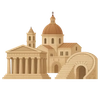
Sicily is the largest island in the Mediterranean Sea, located off the southern tip of Italy.
Reads at Grades 6–8 Listens at Grades 4–8
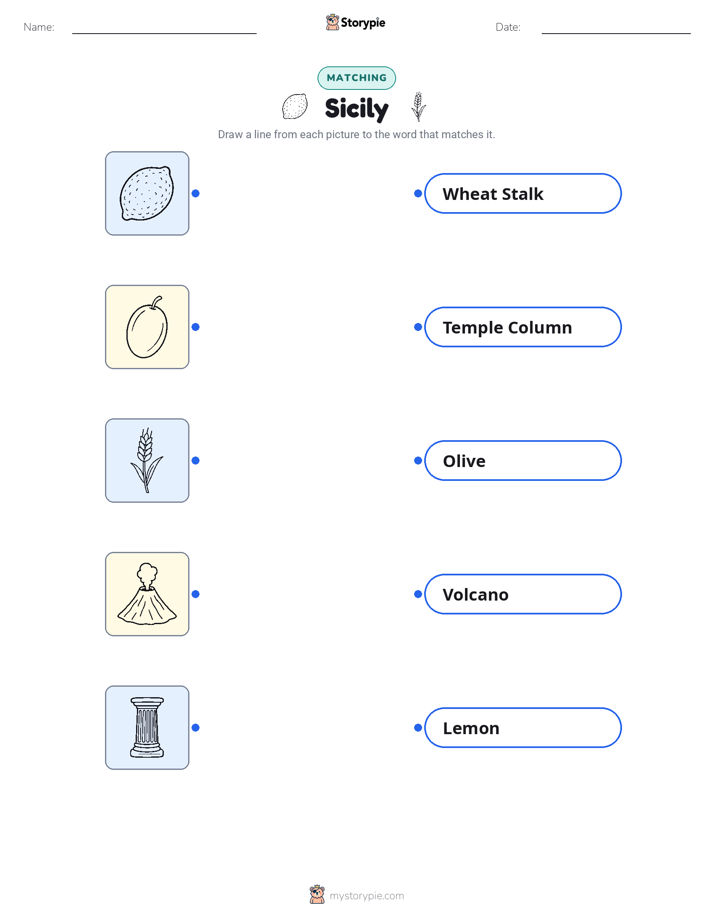
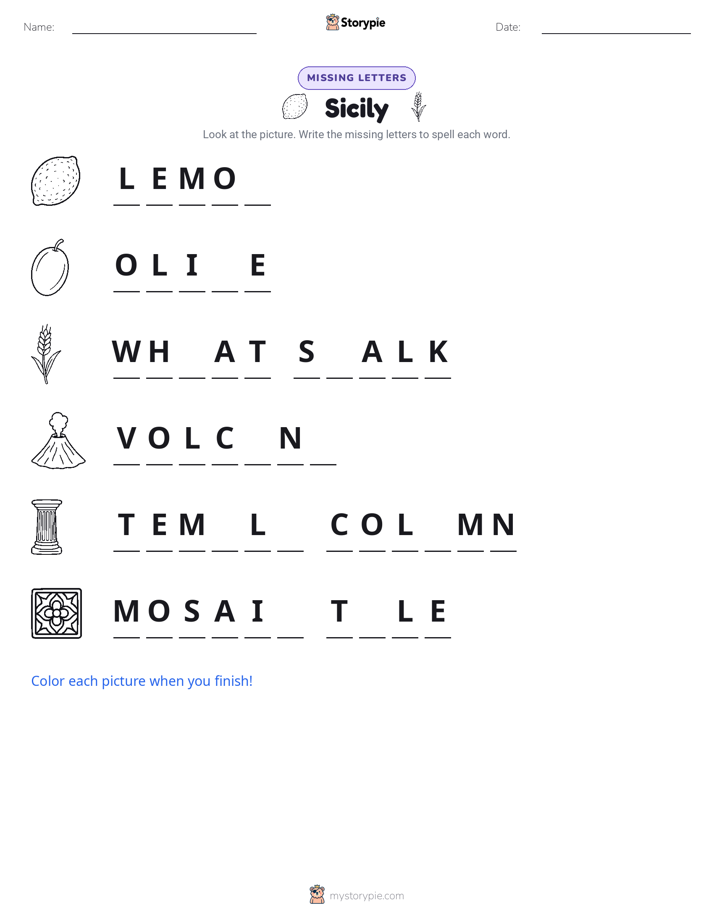
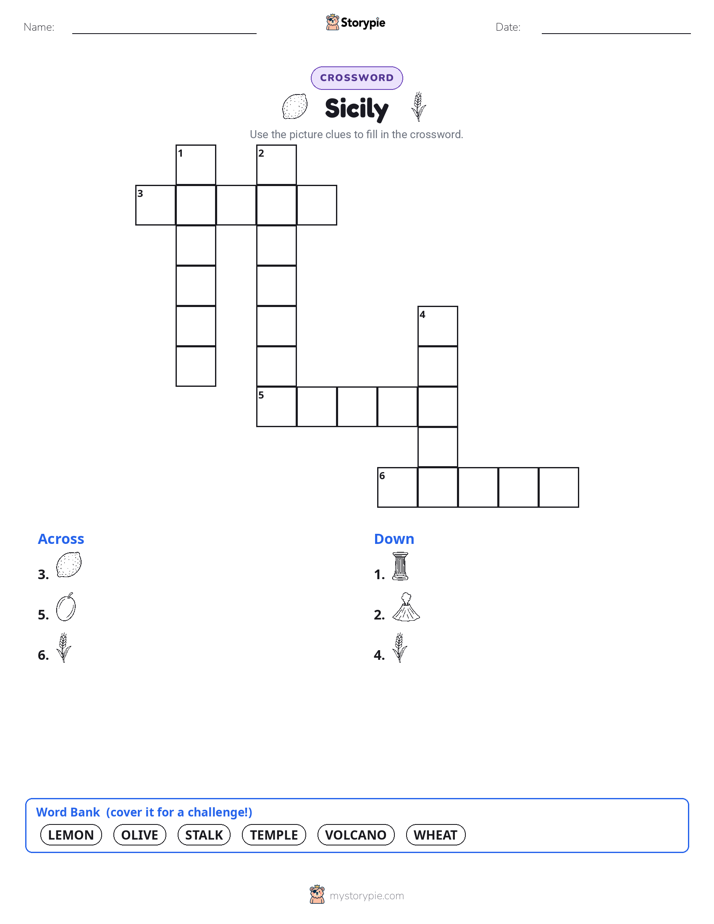
Print & create
Answer keys·No prep·Free with an account
28 worksheets · answer keys · full story · quiz · Ages 10-12 · CEFR B2
Plus adds 164,000+ more stories in 27 languages, audio for every one, and printables for all of them.
Just want Sicily?
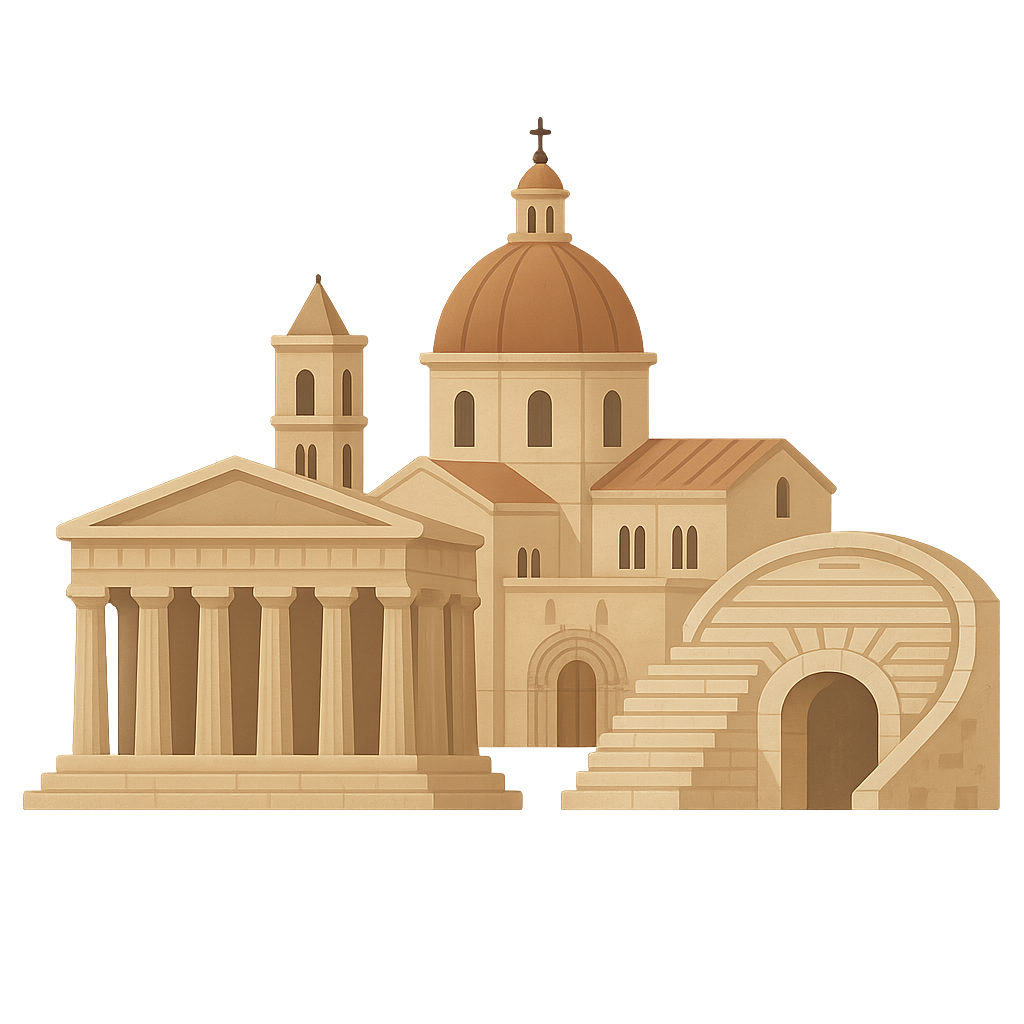
Feel the warmth of the sun on your skin, a golden blanket that has baked my hills for thousands of years. Breathe in the air, sweet with the scent of lemon groves and sharp with the tang of salt from the sea that surrounds me on all sides. I am a stepping stone, a triangle of land perfectly placed as a bridge between Europe and Africa, where winds and stories from every direction come to rest. High above, my old friend, the volcano Mount Etna, gently rumbles, breathing plumes of smoke into the brilliant blue sky like a friendly, sleeping giant. For millennia, I have watched empires rise and fall, ships sail toward new horizons, and people from distant lands make their home upon my shores. I am Sicily, the largest island in the Mediterranean Sea, and my story is written in the stones of my temples and the flavors of my food.
My earliest epic chapters were written by the ancient Greeks, who began arriving around the 8th century BCE. They saw my fertile lands and safe harbors and built magnificent cities. One of them, Syracuse, grew so powerful and beautiful that it rivaled even the great city of Athens in Greece. It was home to brilliant minds like the inventor and mathematician Archimedes, who discovered incredible things while studying the world around him. The Greeks also built breathtaking temples to honor their gods, and if you visit my Valley of the Temples today, you can still see their mighty columns reaching for the sky. My story shifted when a new power, the Romans, arrived. After the First Punic War ended in 241 BCE, I became part of their vast republic. They called me the 'granary of Rome' because my fields produced so much wheat that I could feed the empire’s capital. Roman villas with intricate mosaic floors and grand amphitheaters where crowds gathered for entertainment began to appear across my landscape, adding another layer to my growing history.
Sicily: The Island of a Thousand Stories
Feel the warmth of the sun on your skin, a golden blanket that has baked my hills for thousands of years. Breathe in the air, sweet with the scent of lemon groves and sharp with the tang of salt from the sea that surrounds me on all sides. I am a stepping stone, a triangle of land perfectly placed as a bridge between Europe and Africa, where winds and stories from every direction come to rest. High above, my old friend, the volcano Mount Etna, gently rumbles, breathing plumes of smoke into the brilliant blue sky like a friendly, sleeping giant. For millennia, I have watched empires rise and fall, ships sail toward new horizons, and people from distant lands make their home upon my shores. I am Sicily, the largest island in the Mediterranean Sea, and my story is written in the stones of my temples and the flavors of my food.
My earliest epic chapters were written by the ancient Greeks, who began arriving around the 8th century BCE. They saw my fertile lands and safe harbors and built magnificent cities. One of them, Syracuse, grew so powerful and beautiful that it rivaled even the great city of Athens in Greece. It was home to brilliant minds like the inventor and mathematician Archimedes, who discovered incredible things while studying the world around him. The Greeks also built breathtaking temples to honor their gods, and if you visit my Valley of the Temples today, you can still see their mighty columns reaching for the sky. My story shifted when a new power, the Romans, arrived. After the First Punic War ended in 241 BCE, I became part of their vast republic. They called me the 'granary of Rome' because my fields produced so much wheat that I could feed the empire’s capital. Roman villas with intricate mosaic floors and grand amphitheaters where crowds gathered for entertainment began to appear across my landscape, adding another layer to my growing history.
After the Roman Empire’s power faded, new voices joined my chorus. Starting in 827 CE, scholars, poets, and farmers from the Arab world sailed to my shores. They brought with them advanced knowledge of mathematics and irrigation, and they planted crops that changed my landscape and my kitchen forever: sweet oranges, tangy lemons, and precious sugar cane. My city of Palermo blossomed under their care, becoming a dazzling center of trade and learning. Then, in 1061 CE, a new group arrived—the Normans, fierce warriors from the north. But instead of destroying what they found, their leader, who would become King Roger II, did something remarkable. He chose to blend the best of all the cultures that were already here. This created a unique Arab-Norman style of architecture you can’t find anywhere else. Grand cathedrals were built with sturdy Norman towers, pointed Arab arches, and interiors that shimmered with golden Byzantine mosaics. The greatest example of this beautiful fusion is the Palatine Chapel in Palermo, which was consecrated on April 28th, 1140 CE. It is a jewel box of art and a testament to the idea that different cultures can create something extraordinary together.
My story continued to unfold under the rule of Spanish kings, who built grand palaces and brought new traditions. But my journey was not without hardship. On the night of January 11th, 1693 CE, a mighty earthquake shook my eastern coast, and many of my proud towns were turned to rubble. It was a moment of great sorrow, but my people are nothing if not resilient. They did not just rebuild what was lost; they built back with incredible creativity and spirit. From the ruins, they created a spectacular new style of architecture known as Sicilian Baroque, full of curves, ornate carvings, and joyful energy that defiantly celebrated life. Centuries later, a new dream swept across Italy: the dream of becoming a single, united country. On May 11th, 1860 CE, a hero named Giuseppe Garibaldi landed on my western shore with his army of a thousand volunteers. His arrival sparked a revolution that, in 1861, led to me officially becoming part of the new Kingdom of Italy.
Today, I am still telling my story, not just in museums but in the rhythm of everyday life. You can hear it in the lively chatter of my bustling city markets, where vendors sell fresh fish, bright vegetables, and sweet pastries whose recipes have been passed down through generations. You can taste it in a simple dish of pasta with sardines, which tells a tale of Arab flavors and Italian tradition. You can feel it in the enduring presence of Mount Etna, a constant reminder of the power of nature and the resilience of the people who live in its shadow. I am more than just an island; I am a living storybook. Every ancient ruin, every family recipe, and every person you meet carries a piece of my incredible past. My history shows how welcoming different people and new ideas can create a culture that is strong, beautiful, and utterly unique, a lesson that continues to inspire and connect people from all over the world.
Wow facts
About
Sicily is the largest island in the Mediterranean Sea, located off the southern tip of Italy. It is renowned for its rich and unique culture, shaped by millennia of conquest and settlement by Greeks, Romans, Arabs, Normans, and many others.
Take a Quiz
Question 1 of 5
Which sentence best summarizes the main idea of the story of Sicily?
Explore next


Want to do even more?
Go beyond exploring. Unlock tools that turn every story into real learning.

Storypie Plus for families
Full stories, quizzes, and printables. Nights and car rides, sorted.
- Unlimited audio stories
- Create Mode: your child stars in the story
- Offline downloads
- Printable worksheets & coloring pages

Why Storypie for Schools
Students engaged. Prep in seconds. Evenings back to you.
- Worksheets & Quizzes
- Classroom Management
- Formative Assessment
- Custom Curriculum & Lesson Plans
- 27 Languages

Why Storypie for Homeschool
Curriculum done. They'll ask for more. Hours back in your day.
- Worksheet Generator
- First-Person Audio Stories
- Built-in Comprehension Quizzes
- Custom Curriculum & Lesson Plans
- Print & Go Activities