English

The Arctic
The Arctic is the polar region located at the northernmost part of Earth, consisting of the Arctic Ocean…
Reads at Grades 6–8 Listens at Grades 4–8
Print & create
Answer keys·No prep·Free with an account
28 worksheets · answer keys · full story · quiz · Ages 10-12 · CEFR B2
Plus adds 164,000+ more stories in 27 languages, audio for every one, and printables for all of them.
Just want The Arctic?
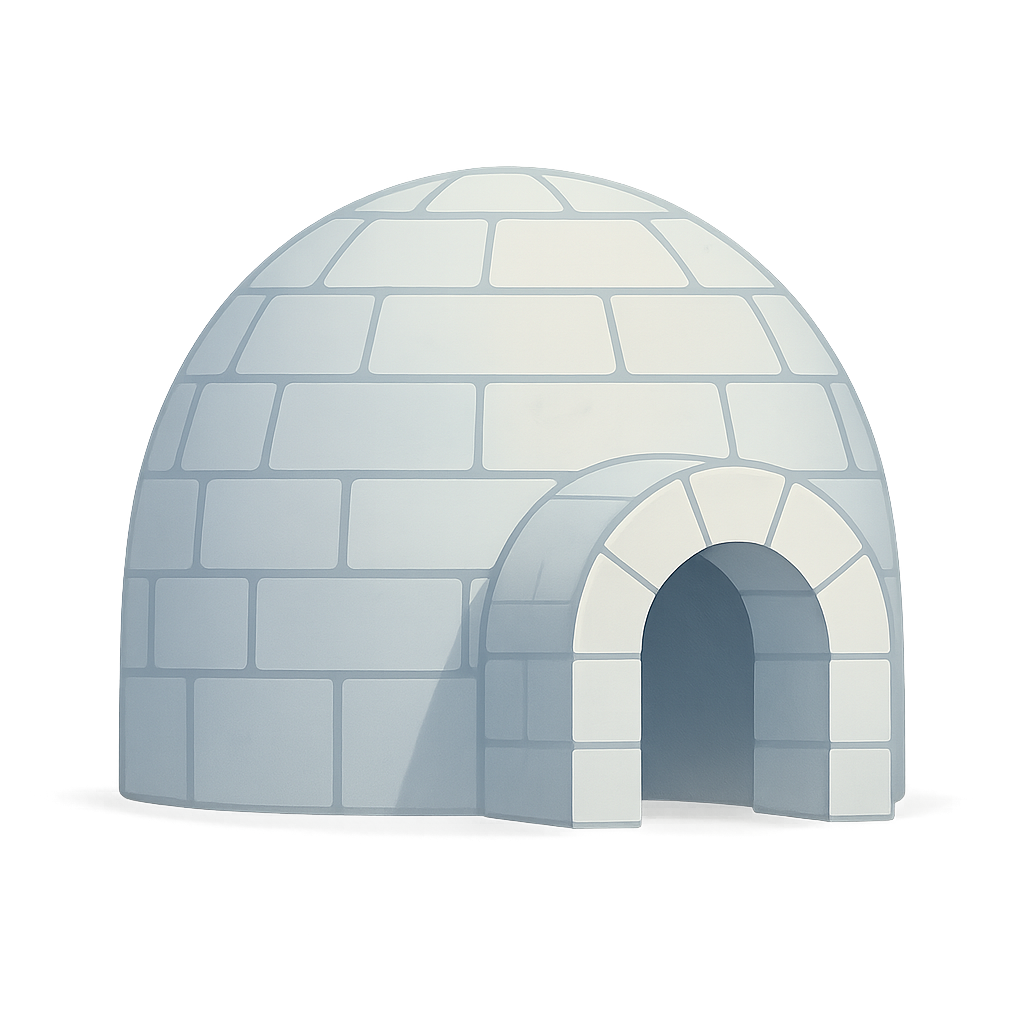
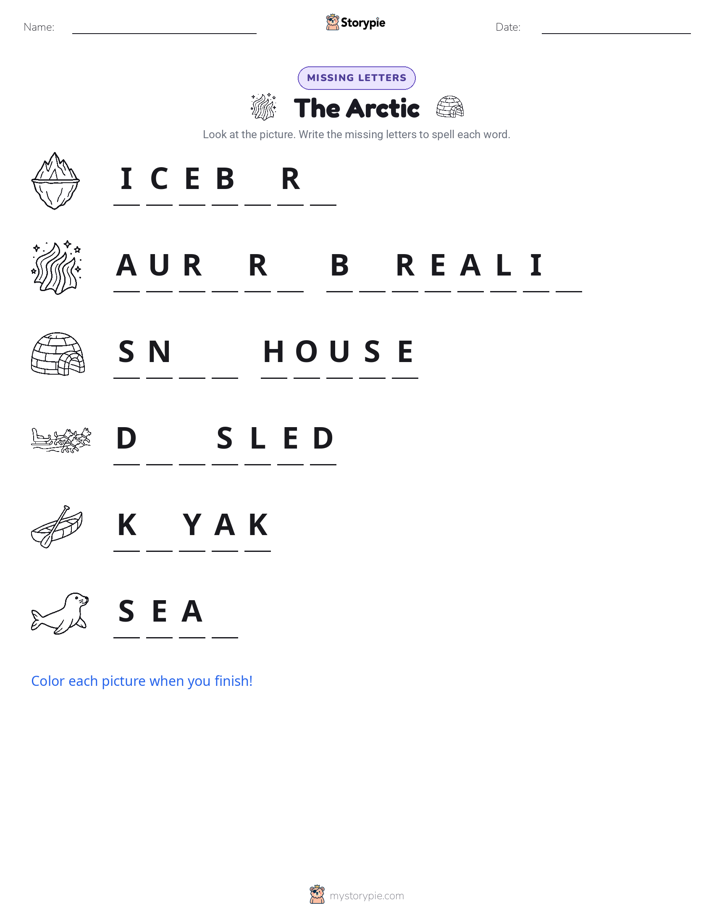
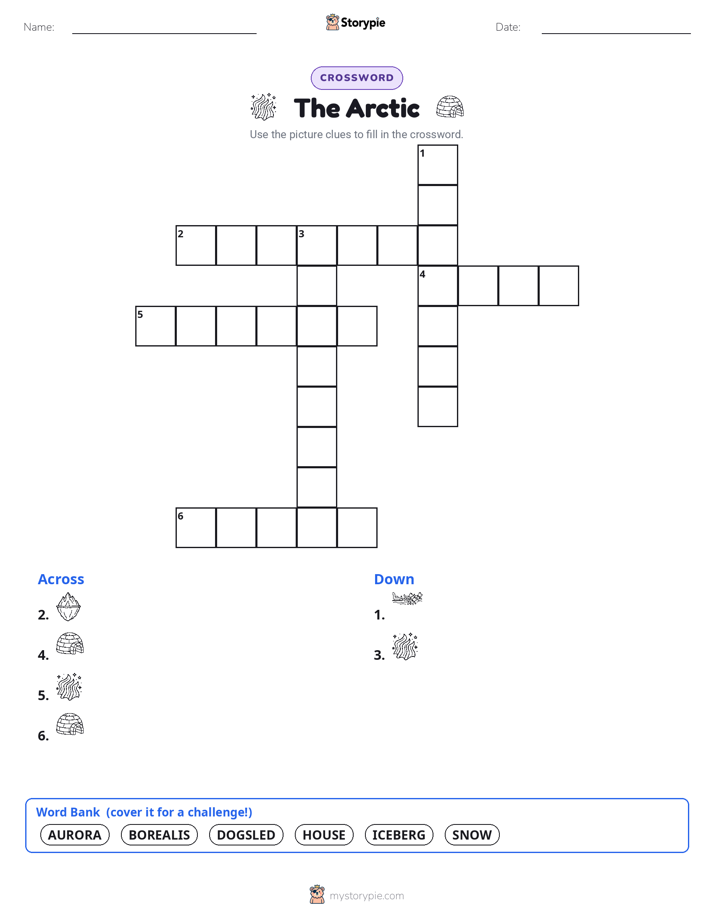
The air here is so crisp it feels like a secret whispered only to you. For as far as your eyes can see, my world is a canvas of brilliant white, a landscape of snow-covered plains and mountains of ancient, groaning ice. In the long, dark winter, the sky above me comes alive with a silent, shimmering show. Ribbons of green, purple, and pink light dance across the stars—you call this the Aurora Borealis. This is the time of the polar night, when the sun disappears for months, leaving my world to the moon and the stars. But I am also a land of endless light. In summer, the sun never sets. It circles the horizon day and night, bathing my icy shores in a constant, golden glow. This is the midnight sun, a time of bursting life when tiny flowers bloom and animals raise their young. I am a place of extremes, a world of dramatic light and shadow, of profound silence and powerful change. I am the Arctic, the cap on top of the world.
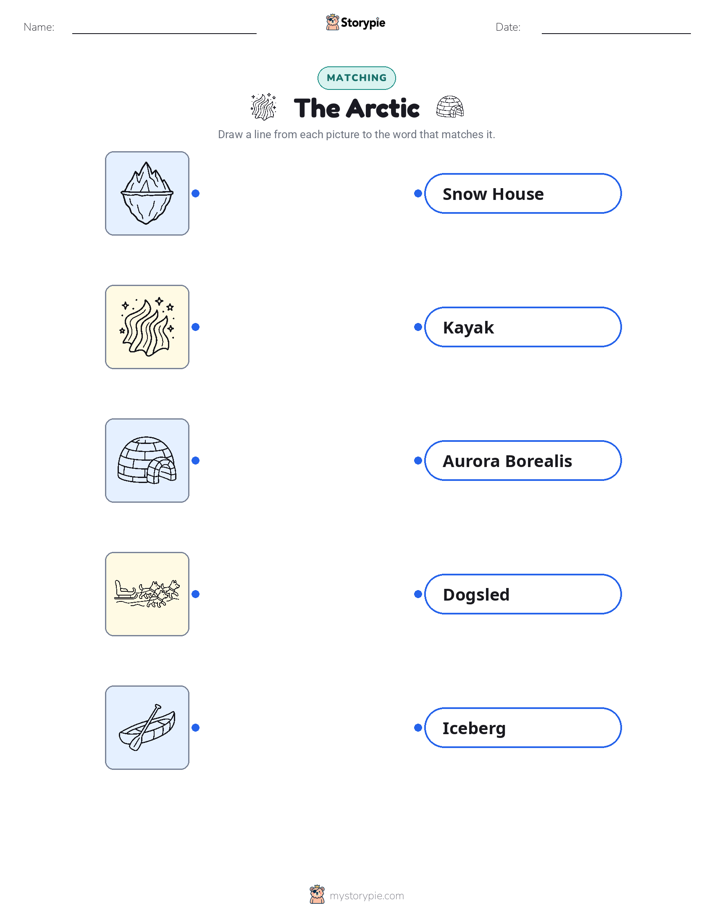
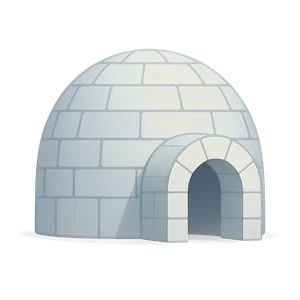
Long before ships with tall masts ever dared to enter my waters, I was home to people who understood me intimately. They did not see me as a place to conquer, but as a living world to be a part of. For thousands of years, humans have thrived here. The first to make their way across my vastness were groups you now call the Paleo-Inuit, who arrived around 2500 BCE. They were masters of survival, following the rhythm of my seasons. Over centuries, their descendants, the Inuit, perfected a way of life in tune with my ice and snow. They built warm homes from snow, traveled by dogsled, and hunted seals and walruses from sleek kayaks they invented. They wasted nothing, using every part of the animal to provide food, clothing, and tools. Far to the west, across the ocean in northern Europe, the Sámi people followed the great herds of reindeer, their lives woven into the migrations of these magnificent animals. These Indigenous peoples did not just survive here; they built rich and complex cultures. Their stories, songs, and art are filled with the spirits of the polar bear, the raven, and the whale. They passed down generations of knowledge—how to read the ice, predict the weather, and navigate by the stars. They were my first scientists, my first storytellers, and their connection to me remains powerful to this day.
I Am the Arctic, the Cap on Top of the World
The air here is so crisp it feels like a secret whispered only to you. For as far as your eyes can see, my world is a canvas of brilliant white, a landscape of snow-covered plains and mountains of ancient, groaning ice. In the long, dark winter, the sky above me comes alive with a silent, shimmering show. Ribbons of green, purple, and pink light dance across the stars—you call this the Aurora Borealis. This is the time of the polar night, when the sun disappears for months, leaving my world to the moon and the stars. But I am also a land of endless light. In summer, the sun never sets. It circles the horizon day and night, bathing my icy shores in a constant, golden glow. This is the midnight sun, a time of bursting life when tiny flowers bloom and animals raise their young. I am a place of extremes, a world of dramatic light and shadow, of profound silence and powerful change. I am the Arctic, the cap on top of the world.
Long before ships with tall masts ever dared to enter my waters, I was home to people who understood me intimately. They did not see me as a place to conquer, but as a living world to be a part of. For thousands of years, humans have thrived here. The first to make their way across my vastness were groups you now call the Paleo-Inuit, who arrived around 2500 BCE. They were masters of survival, following the rhythm of my seasons. Over centuries, their descendants, the Inuit, perfected a way of life in tune with my ice and snow. They built warm homes from snow, traveled by dogsled, and hunted seals and walruses from sleek kayaks they invented. They wasted nothing, using every part of the animal to provide food, clothing, and tools. Far to the west, across the ocean in northern Europe, the Sámi people followed the great herds of reindeer, their lives woven into the migrations of these magnificent animals. These Indigenous peoples did not just survive here; they built rich and complex cultures. Their stories, songs, and art are filled with the spirits of the polar bear, the raven, and the whale. They passed down generations of knowledge—how to read the ice, predict the weather, and navigate by the stars. They were my first scientists, my first storytellers, and their connection to me remains powerful to this day.
My quiet solitude began to change as whispers of my existence reached the wider world. A brave Greek explorer named Pytheas may have been one of the first outsiders to glimpse my icy edges, sailing far north around 325 BCE and describing a land of frozen sea and midnight sun. Centuries later, beginning in 982 CE, Vikings led by Erik the Red settled on the shores of Greenland, farming and hunting for over 400 years before their settlements vanished. But it was a dream of trade and riches that truly brought fleets of wooden ships to my doorstep. Explorers from Europe became obsessed with finding a shortcut to Asia, a sea route over the top of the world they called the Northwest Passage. They saw me not as a home, but as a challenge to be overcome. For centuries, they tried and failed. My ice was a powerful gatekeeper. It could trap a ship for months, crushing its wooden hull like a nutshell. The cold was relentless, and starvation was a constant threat. The most famous mystery is that of Sir John Franklin and his crew. They sailed into my waters with two ships in 1845, searching for the passage, and were never seen again. Their disappearance haunted the world for decades. It wasn't until the 20th century that the passage was finally conquered. Between 1903 and 1906, a determined Norwegian explorer named Roald Amundsen and his small crew carefully navigated their ship, the Gjøa, through my maze of islands and channels, becoming the first to make it all the way through. They succeeded by learning from the Inuit, adopting their survival skills and warm clothing.
After the Northwest Passage was charted, a new kind of race began: the race to stand at my very center, the geographic North Pole. This point, a shifting spot on a frozen ocean, became the ultimate prize for adventurers. An American explorer, Robert Peary, claimed to have reached it with his team on April 6th, 1909, but doubts about his navigation records have left his claim disputed by many historians ever since. The first journey to the pole over the surface of the ice that is confirmed without a doubt was completed much later, on April 6th, 1969, by a British team led by Wally Herbert, who traveled for over a year by dogsled to achieve their goal. This age of individual quests for glory soon gave way to a new era of global cooperation and scientific discovery. A major turning point was the International Geophysical Year of 1957-1958, when scientists from all over the world agreed to work together to study the planet's polar regions. Since then, I have become a vital natural laboratory. All across my landscape, research stations hum with activity. Scientists drill deep into my ice sheets, pulling out cores that hold clues to Earth's climate history from thousands of years ago. They track my weather patterns, study my unique wildlife, and monitor the thickness of my sea ice. They are no longer trying to conquer me, but to understand me, and to learn what my changes mean for the rest of the world.
My story is far from over. Today, I have a role more important than ever. My vast white sheets of ice and snow act like a giant mirror, reflecting the sun's heat back into space. This helps to balance the temperature of the entire planet. You could call me the world's air conditioner. But my ability to do this job is at risk. The planet is warming, and my ancient ice is melting faster than it has in thousands of years. This change affects every part of my world. The polar bears who hunt on the sea ice are finding it harder to find food. Walruses are losing the icy platforms where they rest. For the Indigenous communities whose cultures are built around my predictable seasons, these changes threaten their way of life. But there is hope in this story. People around the globe are paying attention. Scientists are working tirelessly to understand what is happening, and young people like you are raising your voices, demanding action to protect our planet. My future, and in many ways, the world's future, depends on the choices you make. My story is now part of your story, a tale of resilience, connection, and the enduring power of this magnificent, icy world.
Wow facts
About
The Arctic is the polar region located at the northernmost part of Earth, consisting of the Arctic Ocean, adjacent seas, and parts of several countries. It is known for its extensive sea ice and glaciers, unique wildlife, and the rich cultures of its Indigenous peoples.
Take a Quiz
Question 1 of 5
What is the main idea of the section titled 'The Age of Explorers'?
Explore next



Want to do even more?
Go beyond exploring. Unlock tools that turn every story into real learning.

Storypie Plus for families
Full stories, quizzes, and printables. Nights and car rides, sorted.
- Unlimited audio stories
- Create Mode: your child stars in the story
- Offline downloads
- Printable worksheets & coloring pages

Why Storypie for Schools
Students engaged. Prep in seconds. Evenings back to you.
- Worksheets & Quizzes
- Classroom Management
- Formative Assessment
- Custom Curriculum & Lesson Plans
- 27 Languages

Why Storypie for Homeschool
Curriculum done. They'll ask for more. Hours back in your day.
- Worksheet Generator
- First-Person Audio Stories
- Built-in Comprehension Quizzes
- Custom Curriculum & Lesson Plans
- Print & Go Activities