English

United Nations
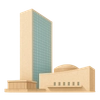
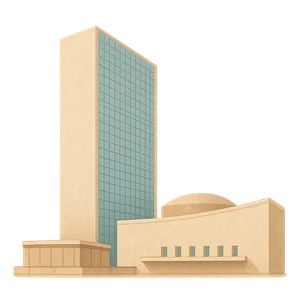
The United Nations Headquarters in New York City is the primary office of the United Nations…
Reads at Grades 6–8 Listens at Grades 4–8
Print & create
Answer keys·No prep·Free with an account
28 worksheets · answer keys · full story · quiz · Ages 10-12 · CEFR B2
Plus adds 102,000+ more stories in 27 languages, audio for every one, and printables for all of them.
Just want United Nations?
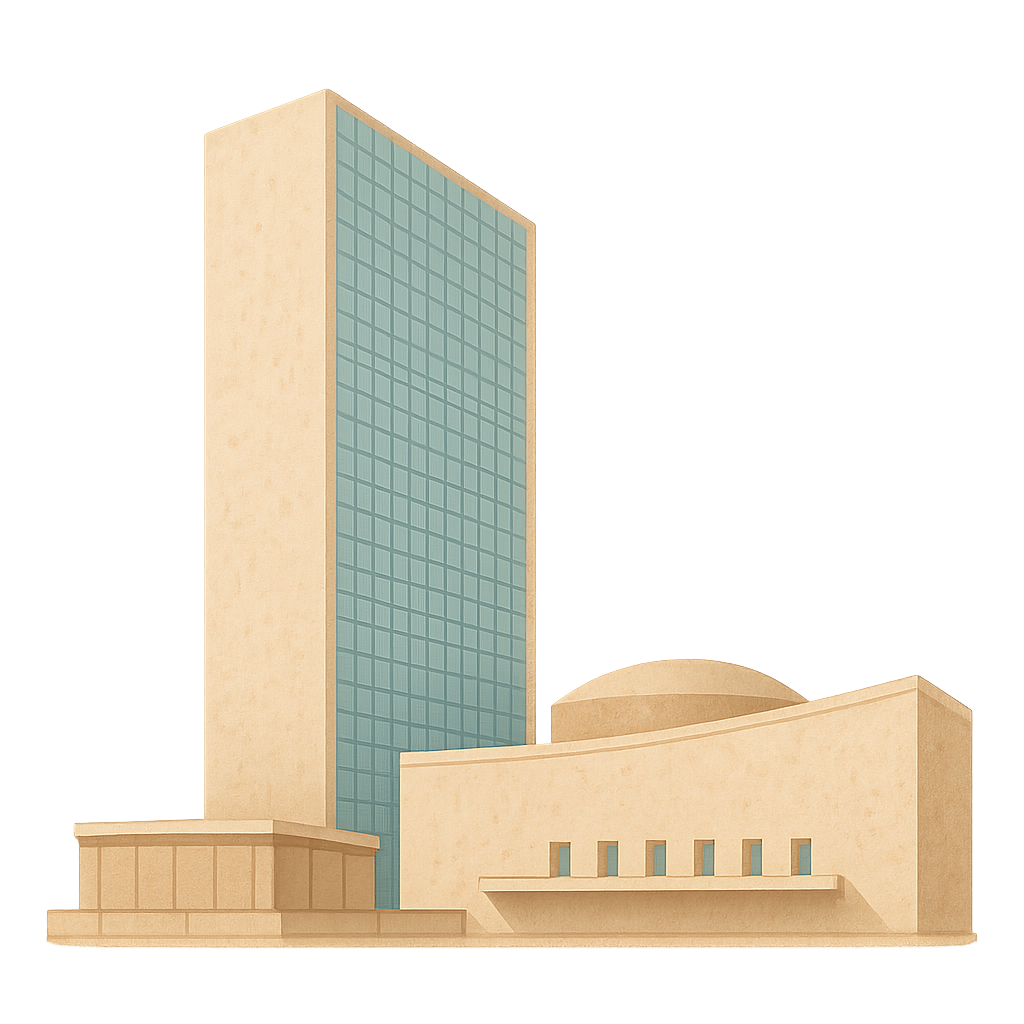
I rise from the edge of a bustling island, a sheer cliff of green glass and Vermont marble reflecting the sky. Beside me, the East River flows silently toward the sea, a constant witness to the comings and goings within my walls. If you stand before me, you’ll see a vibrant, fluttering forest of flags—193 of them, to be exact. Each one is a splash of color, a unique design, and a powerful symbol representing a family of people, a nation with its own story and its own voice. They dance together in the New York City wind, a daily promise of unity. People from every corner of the globe walk through my doors, carrying the hopes and concerns of their homelands. They come here not as strangers, but as neighbors sharing a single, precious planet. I am more than just steel, glass, and stone. I am a stage for dialogue, a workshop for peace, and a house built for the entire world. I am the Headquarters of the United Nations.
My story begins not with a blueprint, but with a powerful idea born from a world in pain. The year was 1945, and humanity was just emerging from the shadows of World War II, a conflict that had touched every continent and left scars on the hearts of millions. The world took a collective breath, exhausted by years of fighting, and a powerful longing for lasting peace echoed across the globe. People knew that something had to change to prevent such a devastating catastrophe from ever happening again. In response to this universal yearning, leaders from 50 countries gathered in San Francisco. On June 26th, 1945, they put their names to a groundbreaking document: the United Nations Charter. This was not just a treaty; it was a blueprint for a new way of living together, a promise to solve problems with words instead of weapons. The United Nations was officially born on October 24th, 1945, the day the Charter was formally approved by a majority of its founding members. It was from this profound hope that I was conceived—I was to become the physical home for this grand experiment in global cooperation.
A House for the World
I rise from the edge of a bustling island, a sheer cliff of green glass and Vermont marble reflecting the sky. Beside me, the East River flows silently toward the sea, a constant witness to the comings and goings within my walls. If you stand before me, you’ll see a vibrant, fluttering forest of flags—193 of them, to be exact. Each one is a splash of color, a unique design, and a powerful symbol representing a family of people, a nation with its own story and its own voice. They dance together in the New York City wind, a daily promise of unity. People from every corner of the globe walk through my doors, carrying the hopes and concerns of their homelands. They come here not as strangers, but as neighbors sharing a single, precious planet. I am more than just steel, glass, and stone. I am a stage for dialogue, a workshop for peace, and a house built for the entire world. I am the Headquarters of the United Nations.
My story begins not with a blueprint, but with a powerful idea born from a world in pain. The year was 1945, and humanity was just emerging from the shadows of World War II, a conflict that had touched every continent and left scars on the hearts of millions. The world took a collective breath, exhausted by years of fighting, and a powerful longing for lasting peace echoed across the globe. People knew that something had to change to prevent such a devastating catastrophe from ever happening again. In response to this universal yearning, leaders from 50 countries gathered in San Francisco. On June 26th, 1945, they put their names to a groundbreaking document: the United Nations Charter. This was not just a treaty; it was a blueprint for a new way of living together, a promise to solve problems with words instead of weapons. The United Nations was officially born on October 24th, 1945, the day the Charter was formally approved by a majority of its founding members. It was from this profound hope that I was conceived—I was to become the physical home for this grand experiment in global cooperation.
Once the idea of the United Nations had a soul, it needed a body. A home. The search for a permanent location ended in 1946 when a philanthropist named John D. Rockefeller Jr. generously donated a 17-acre plot of land right here in the heart of New York City. But who could design a building meant for everyone? The answer could not come from a single mind or a single country. Instead, a Board of Design was assembled, a team of ten renowned architects from around the world. This group, led by Wallace Harrison of the United States, included brilliant minds like Oscar Niemeyer from Brazil and Le Corbusier from France. Their collaboration was a miniature version of the UN's own mission: different perspectives coming together to create something for the common good. On October 24th, 1949—exactly four years after the UN was born—my cornerstone was laid. For the next few years, this patch of land was a symphony of construction until I was officially completed in 1952. I was built not just with steel beams and concrete, but with the collective hope of a world determined to build a better future.
My halls and chambers are where the hard work of peace truly happens. The most famous of my rooms is the vast General Assembly Hall, a space with a soaring dome where all 193 member states have a seat and an equal voice. Here, leaders debate the world’s most pressing issues, from poverty to climate change. Then there is the more intimate Security Council Chamber, a room designed for urgent conversations where critical decisions about global peace and security are made. My entire purpose is to fulfill the mission laid out in the UN Charter: to help nations talk through their differences, to champion the rights and dignity of every human being, and to foster friendship among all people. This commitment was powerfully expressed on December 10th, 1948, with the adoption of the Universal Declaration of Human Rights, a document that serves as a moral compass for all humanity. This work goes far beyond debates. It is seen in the blue-helmeted peacekeepers who protect civilians in conflict zones, and in the tireless efforts of agencies like UNICEF, which works to ensure every child has a healthy and safe start in life. I am a constant, bustling workshop for creating a fairer, more peaceful world.
For over 75 years, I have stood here by the river, a silent witness to history. The path to global peace is not simple; it is filled with disagreements, setbacks, and immense challenges. The world today faces problems that my founders could have barely imagined. But my existence is a testament to a powerful truth: cooperation is not only possible, but essential. The conversations within my walls have evolved to address new threats, like protecting our shared planet from a changing climate and ensuring every person can achieve their full potential through the Sustainable Development Goals. I am not a monument to a finished accomplishment. I am a living, breathing process. I am a reminder that despite our many differences, we are one human family sharing one home. Every day, I stand as a symbol of hope, a beacon of our enduring capacity to work together to build a brighter, more peaceful future for everyone.
Wow facts
About
The United Nations Headquarters in New York City is the primary office of the United Nations, an international organization founded in 1945 to promote peace, security, and cooperation among nations.
Take a Quiz
Question 1 of 5
In the story, the UN Headquarters says it was 'conceived as the physical home for this great idea.' What does the word 'conceived' suggest about the building's origin?
Explore next



Want to do even more?
Go beyond exploring. Unlock tools that turn every story into real learning.

Storypie Plus for families
Full stories, quizzes, and printables. Nights and car rides, sorted.
- Unlimited audio stories
- Create Mode: your child stars in the story
- Offline downloads
- Printable worksheets & coloring pages

Why Storypie for Schools
Students engaged. Prep in seconds. Evenings back to you.
- Worksheets & Quizzes
- Classroom Management
- Formative Assessment
- Custom Curriculum & Lesson Plans
- 27 Languages

Why Storypie for Homeschool
Curriculum done. They'll ask for more. Hours back in your day.
- Worksheet Generator
- First-Person Audio Stories
- Built-in Comprehension Quizzes
- Custom Curriculum & Lesson Plans
- Print & Go Activities