
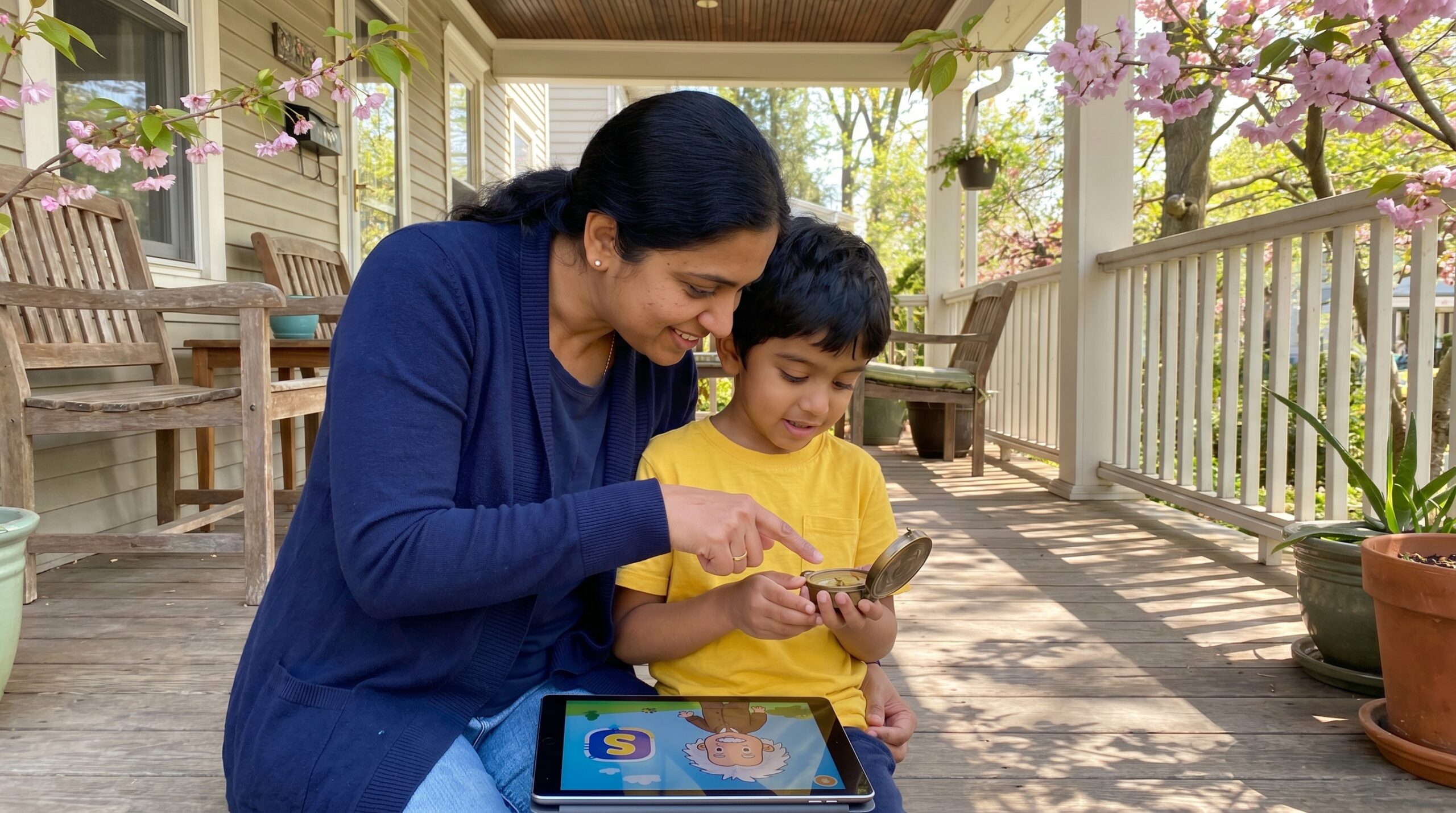
Albert Einstein biography for kids starts with a small, shining moment. As a boy in Ulm, Germany, he loved to ask why. First, his father showed him a pocket compass. The needle moved with an invisible force. That sight stuck in his imagination and sparked lifelong wonder.
Albert Einstein biography for kids: Early life and study
Albert Einstein was born on March 14, 1879, in Ulm, Germany. He grew up curious and a little shy. Next, he studied at the Swiss Federal Polytechnic in Zurich. Later, he earned a PhD from the University of Zurich in 1905. While working at the Swiss Patent Office in Bern, he kept asking questions and doing quiet thinking.
1905 and the annus mirabilis
In 1905, often referred to as his annus mirabilis, Einstein wrote four brilliant papers. For example, he explained Brownian motion and the photoelectric effect. Also, he introduced special relativity and the mass-energy relation written as E = mc2. That year changed physics and made his name famous among scientists.
Big ideas and simple pictures
Einstein’s ideas can seem big, yet we can picture them. For example, imagine a stretchy fabric. Put a heavy ball on it and the fabric bends. Smaller balls roll toward the dent. In this way, general relativity shows gravity as curved space and time.
Also, special relativity asks us to notice clocks. When clocks move fast they tick more slowly to outside observers. Finally, E equals mc squared means mass and energy are closely related, like two sides of the same coin.
Later life, music, and human moments
Einstein loved music and played the violin. He married twice and enjoyed quiet thought. In 1915 he completed general relativity. Then, a 1919 eclipse test showed starlight bending near the Sun. People around the world said wow. In 1921, he won the Nobel Prize for explaining the photoelectric effect, officially receiving the award in 1922.
However, he worried about politics. As the Nazi threat grew, he left Europe in 1933. He moved to Princeton and took a post at the Institute for Advanced Study. There he worked toward a unified theory, a grand idea he never finished. He died on April 18, 1955, in Princeton, New Jersey, at the age of 76.
What he left behind
Einstein left many lasting gifts. He changed how we see space, time, matter, and light. Also, he showed the world how simple curiosity can lead to great discoveries. His life teaches that small questions can become mighty ideas.
Quick timeline
- 1879: Born in Ulm, Germany.
- 1905: Annus mirabilis papers while at the Swiss Patent Office.
- 1915: Completes general relativity.
- 1921: Wins the Nobel Prize in Physics.
- 1933: Moves to the United States and works in Princeton.
- 1955: Dies in Princeton, New Jersey.
Mini activity and reading tips
Try this simple at-home activity to spark curiosity. Show a compass to a child and ask three questions:
- What do you notice?
- What might make the needle move?
- How could we test one idea?
These prompts build observation and vocabulary. Tonight, ask your child for three minutes about why the object works. It boosts curiosity and playful thinking.
Three quick tips for reading with kids:
- Start with a real object, like a compass.
- Keep sentences short and vivid.
- Invite a child to tell the next line.
Read or listen to a story about Albert Einstein now: For 3-5 year olds, For 6-8 year olds, For 8-10 year olds, and For 10-12 year olds. For more, visit Storypie for gentle, age-friendly reads and listens.
Finally, celebrate curiosity. After all, a shining moment and a pocket compass helped shape one of the most playful minds in science.