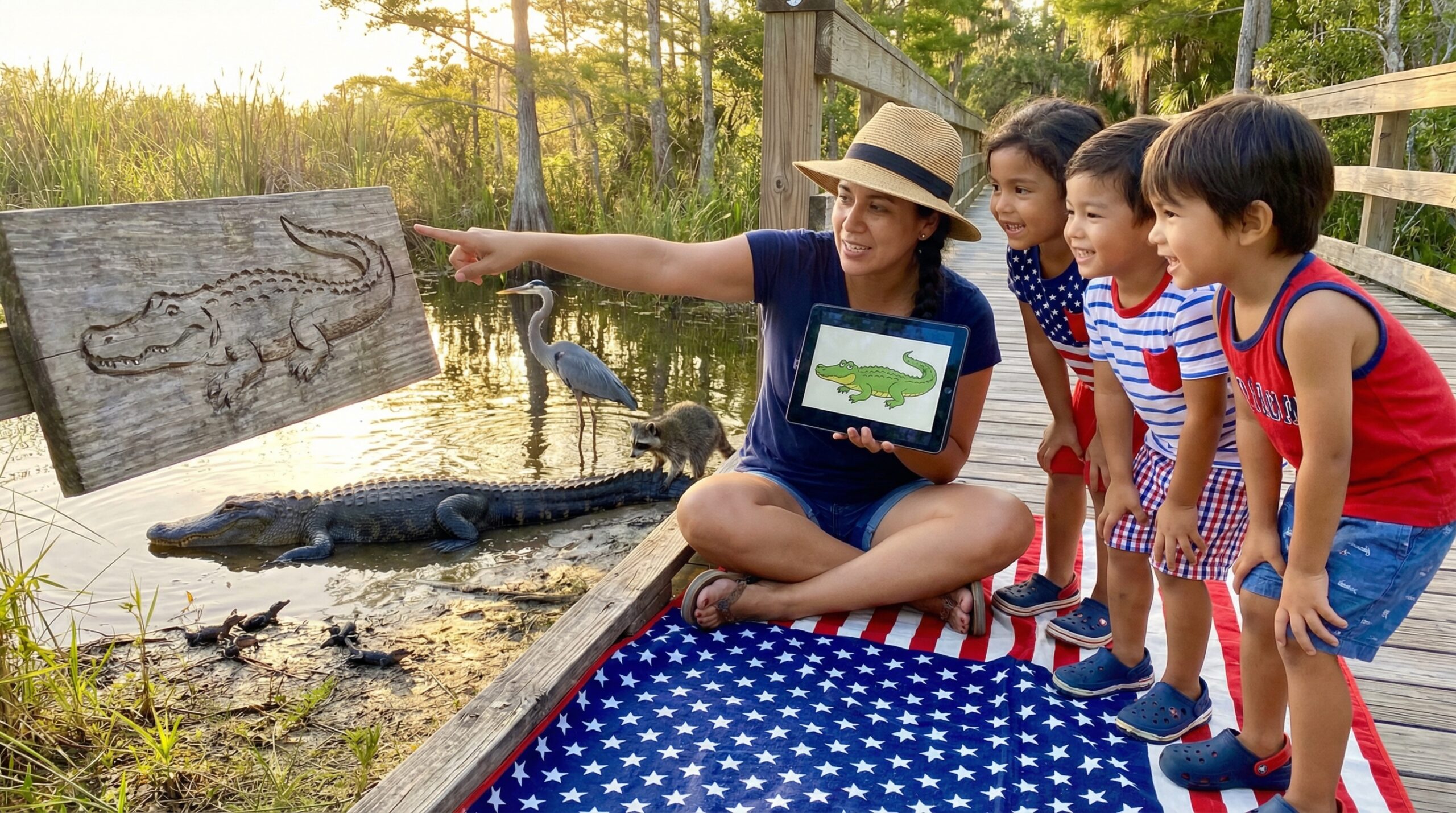
Meet the American alligator, Alligator mississippiensis. American alligator facts for kids show a broad U shaped snout and armored scaly skin. Also, their eyes and nostrils sit high on the head so a gator can see and breathe while mostly hidden.
American alligator facts for kids: Range and habitat
Alligators live across the southeastern United States. They thrive in Florida and Louisiana and across the Gulf and Atlantic coastal plain. They like freshwater marshes, swamps, rivers, ponds, and slow moving water. Brackish wetlands work too. Sunny banks let them bask and warm up. In fact, Florida’s statewide alligator population is estimated at about 1.3 million alligators, while Louisiana’s wild alligator population has rebounded to more than 2 million wild alligators, compared to approximately 100,000 in 1963.
Life cycle in short
Mating happens in spring. Females build mound nests of vegetation and soil and lay about 32 to 46 eggs. Incubation lasts about 63 to 68 days. Nest temperature often decides whether hatchlings are male or female. Hatchlings chirp and stay close to their mother. Young gators eat insects and small fish. Juveniles take bigger prey as they grow. Females may breed by six to seven years. Males usually breed later.
Diet, behavior and cleverness
Young gators eat insects, crustaceans, and small fish. Adults are opportunistic carnivores. They eat fish, turtles, birds, and sometimes mammals. Adult male American alligators typically measure between 10 to 15 feet in length and can weigh up to 1,000 pounds. Alligators ambush prey and use powerful tails to swim fast. They may roll to tear food apart. Because they are ectotherms, they bask to warm up and cool off in water. In winter they slow down and shelter in deeper water or dens.
Quick facts
- Scientific name: Alligator mississippiensis
- Typical clutch: 20 to 50 eggs
- Preferred habitat: freshwater marshes and swamps
- Special trait: eyes and nostrils on top of the head
Ecosystem engineer and comeback tale
Alligators dig and maintain gator holes that hold water in dry seasons. Those holes help fish, turtles, birds, and mammals survive. In other words, gators boost wetland biodiversity. Heavy hunting and habitat loss once drove dramatic declines. Legal protection and recovery programs led to a major comeback. In 1987 managers delisted the species from some protection lists due to recovery.
Safety and family tips
Attacks are rare. Still, teach simple rules. Never feed wild alligators. Keep children and pets away from water edges. Obey posted signs. Avoid swimming at dawn or dusk in alligator country. For ethical viewing, use binoculars, stay on trails, and visit accredited wildlife centers or guided tours. Also, keep dogs leashed and out of shallow water where gators hunt.
Fun prompts and activities
Try these kid friendly ideas to spark curiosity and stewardship:
- Ask: how would you protect a wetland where a mama gator lives?
- Measure your height against an adult gator length on paper.
- Map local wetlands on a state map.
- Build a sandbox gator hole to see how water collects.
These quick activities are playful and surprising. They keep learning light and memorable for kids.
Read or listen to a story about American Alligator now: For 3-5 year olds, For 3-5 year olds, For 6-8 year olds, For 8-10 year olds, and For 10-12 year olds.
Want to listen anytime? Get the Storypie app and enjoy the American alligator tale with your family: Get the app.