English

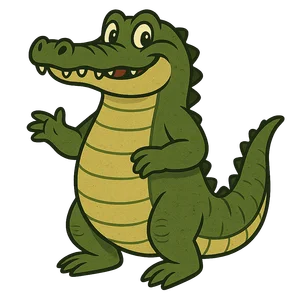
American Alligator
A large reptile native to the southeastern United States, known for its powerful jaws, armored body…
Reads at Grades 6–8 Listens at Grades 4–8
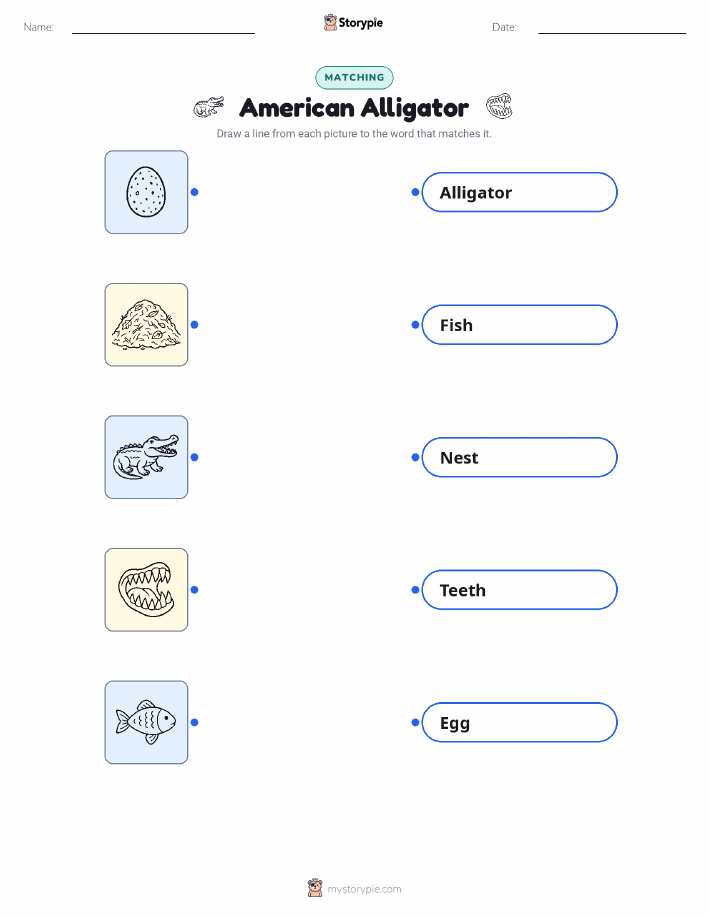
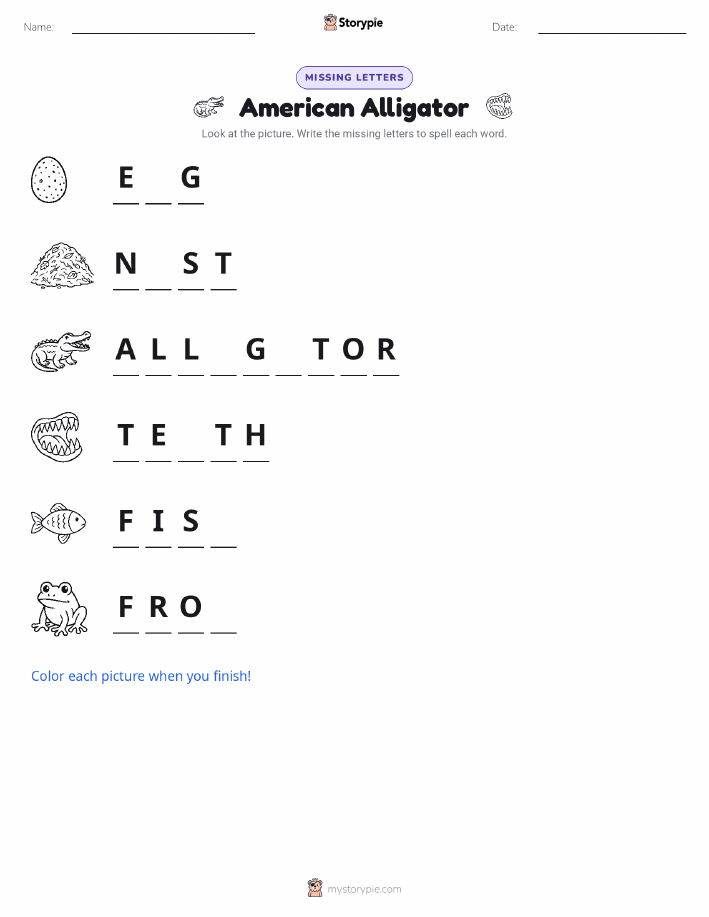
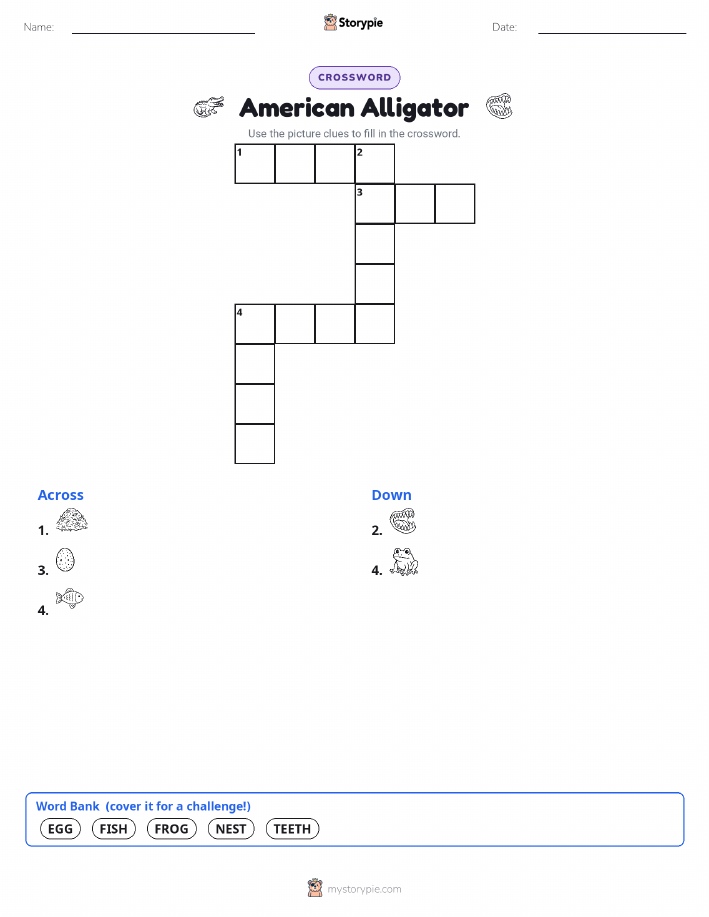
Print & create
Answer keys·No prep·Free with an account
28 worksheets · answer keys · full story · quiz · Ages 10-12 · CEFR B2
Plus adds 244,000+ more stories in 27 languages, audio for every one, and printables for all of them.
Just want American Alligator?
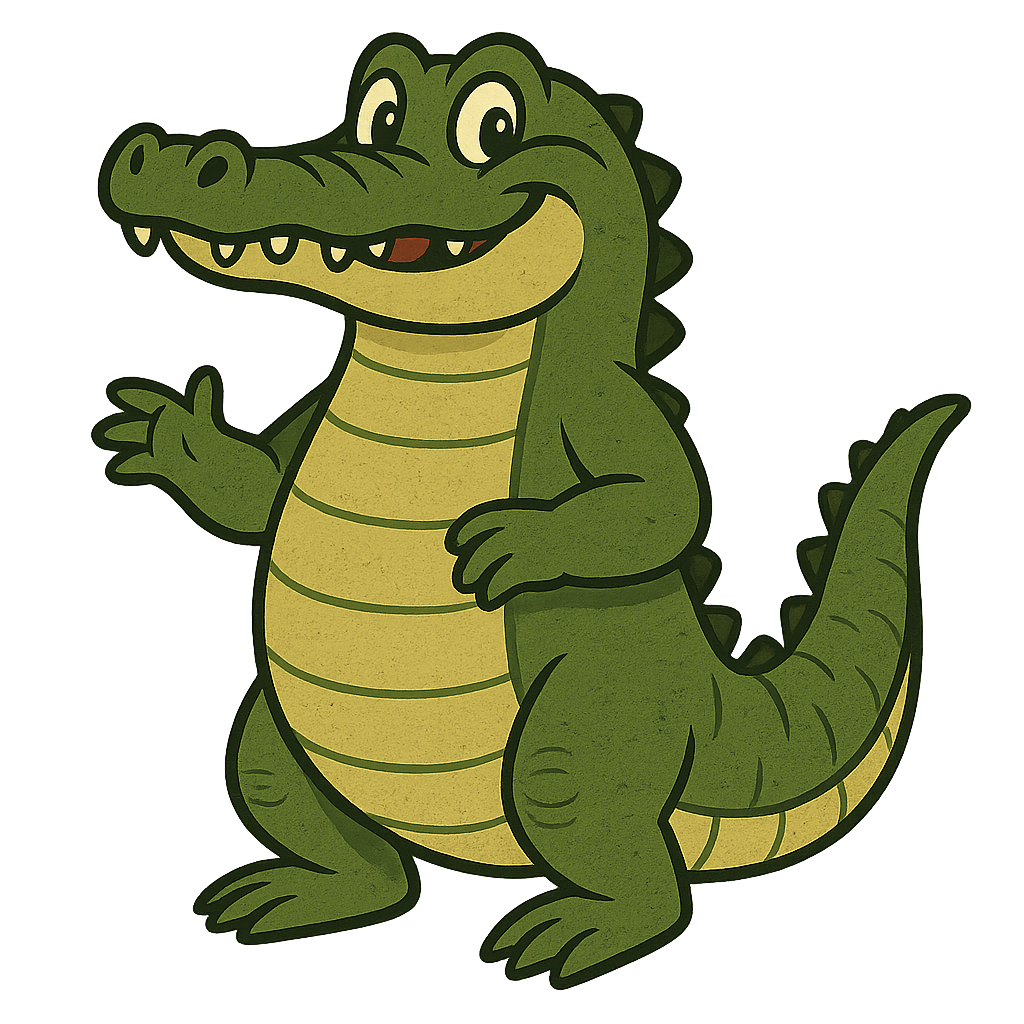
Hello, I am an American Alligator. My story begins long before yours, in a line of ancestors that stretches back millions of years, even before the first humans walked the Earth. My family has seen the world change in countless ways. My own life started in a warm, muddy nest that my mother carefully built from plants and soil. A fascinating secret of my kind is that the temperature of our nest determines our gender; a warmer nest produces males, while a cooler one produces females. When I finally hatched, I was a tiny version of the powerful reptile I would become. For the first two years of my life, I stayed very close to my mother. She was my fierce protector, guarding me and my siblings from predators like raccoons and large birds who saw us as an easy meal. She taught us how to survive in the bustling world of the wetlands, a place filled with both danger and opportunity.
Growing up in the warm, lush wetlands of the American southeast, I learned to master my environment. My body is a perfect machine for this world. My skin isn't smooth; it's covered in tough, armored scales with bony plates called osteoderms embedded within them, like a suit of chain mail. This protects me from harm. My long, muscular tail is my engine in the water, propelling me with incredible speed and force. And then there are my jaws, which are my most famous tool. I am an ambush predator, which means I don't chase my food over long distances. Instead, I wait with immense patience, often with only my eyes and nostrils above the water's surface. When an unsuspecting fish, turtle, or wading bird comes close enough, I strike in a flash. My bite is one of the strongest in the entire animal kingdom, ensuring my meal doesn't escape.
An Alligator's Tale: Architect of the Wetlands
Hello, I am an American Alligator. My story begins long before yours, in a line of ancestors that stretches back millions of years, even before the first humans walked the Earth. My family has seen the world change in countless ways. My own life started in a warm, muddy nest that my mother carefully built from plants and soil. A fascinating secret of my kind is that the temperature of our nest determines our gender; a warmer nest produces males, while a cooler one produces females. When I finally hatched, I was a tiny version of the powerful reptile I would become. For the first two years of my life, I stayed very close to my mother. She was my fierce protector, guarding me and my siblings from predators like raccoons and large birds who saw us as an easy meal. She taught us how to survive in the bustling world of the wetlands, a place filled with both danger and opportunity.
Growing up in the warm, lush wetlands of the American southeast, I learned to master my environment. My body is a perfect machine for this world. My skin isn't smooth; it's covered in tough, armored scales with bony plates called osteoderms embedded within them, like a suit of chain mail. This protects me from harm. My long, muscular tail is my engine in the water, propelling me with incredible speed and force. And then there are my jaws, which are my most famous tool. I am an ambush predator, which means I don't chase my food over long distances. Instead, I wait with immense patience, often with only my eyes and nostrils above the water's surface. When an unsuspecting fish, turtle, or wading bird comes close enough, I strike in a flash. My bite is one of the strongest in the entire animal kingdom, ensuring my meal doesn't escape.
While I am known as a powerful predator, my most important job is that of an 'architect of the wetlands.' I am what scientists call a 'keystone species,' meaning my presence is essential for the health of my entire ecosystem. During the dry season, when water levels in the marsh recede, I get to work. Using my strong snout and powerful tail, I dig out deep depressions in the mud. These 'gator holes,' as they are called, fill with water and become a vital sanctuary for countless other creatures. They are the only places where fish can survive, where birds can come to drink, and where turtles and frogs can find refuge from the heat. My work ensures that life in the wetlands can continue even during the toughest times. I take great pride in knowing that my actions help my entire community thrive.
A century ago, my world became a very dangerous place. During the 1900s, humans began to hunt my species relentlessly. They wanted our tough, patterned skin to make leather goods, and they also hunted us for our meat. So many of us were hunted that our numbers plummeted, and it seemed like we might disappear forever from the swamps and rivers we had called home for millions of years. The situation became critical. By 1967, scientists and conservationists realized we were in serious trouble. In that year, the American Alligator was officially listed as an endangered species, a declaration that meant we were on the very brink of extinction and needed immediate protection to survive.
Being listed as endangered was a turning point for my kind. It was a warning that led to powerful action. The American alligator was listed as endangered in 1967 under a law preceding the ESA, which prohibited hunting. The ESA, enacted in 1973, continued this protection. This law gave us the breathing room we desperately needed. With the threat of hunters removed, our populations slowly but surely began to recover. We are resilient creatures, and given a chance, we thrived. Our comeback was so successful that by 1987, we were officially removed from the endangered species list. Our story is now celebrated as one of the greatest conservation success stories, proving that with dedicated effort, it is possible to bring a species back from the edge.
Today, I continue my life as a guardian of the wetlands. You might hear me before you see me. I communicate with other alligators using a deep, rumbling bellow that can travel for long distances. When I let out this powerful call, the water on my back vibrates and seems to 'dance' in little droplets, a sight to behold. My life is a testament to the resilience of nature. My story shows that all creatures, big and small, have an important role to play. By creating gator holes, I support an entire web of life. My journey from near-extinction to recovery proves that when we show respect for wildlife and its habitats, humans and animals can successfully share this world.
Wow facts
About
A large reptile native to the southeastern United States, known for its powerful jaws, armored body, and role as an ecosystem engineer in freshwater wetlands.
Take a Quiz
Question 1 of 5
What was the main problem the American Alligators faced in the 1900s, and how was it resolved?
Explore next





Want to do even more?
Go beyond exploring. Unlock tools that turn every story into real learning.

Storypie Plus for families
Full stories, quizzes, and printables. Nights and car rides, sorted.
- Unlimited audio stories
- Create Mode: your child stars in the story
- Offline downloads
- Printable worksheets & coloring pages

Why Storypie for Schools
Students engaged. Prep in seconds. Evenings back to you.
- Worksheets & Quizzes
- Classroom Management
- Formative Assessment
- Custom Curriculum & Lesson Plans
- 27 Languages

Why Storypie for Homeschool
Curriculum done. They'll ask for more. Hours back in your day.
- Worksheet Generator
- First-Person Audio Stories
- Built-in Comprehension Quizzes
- Custom Curriculum & Lesson Plans
- Print & Go Activities