
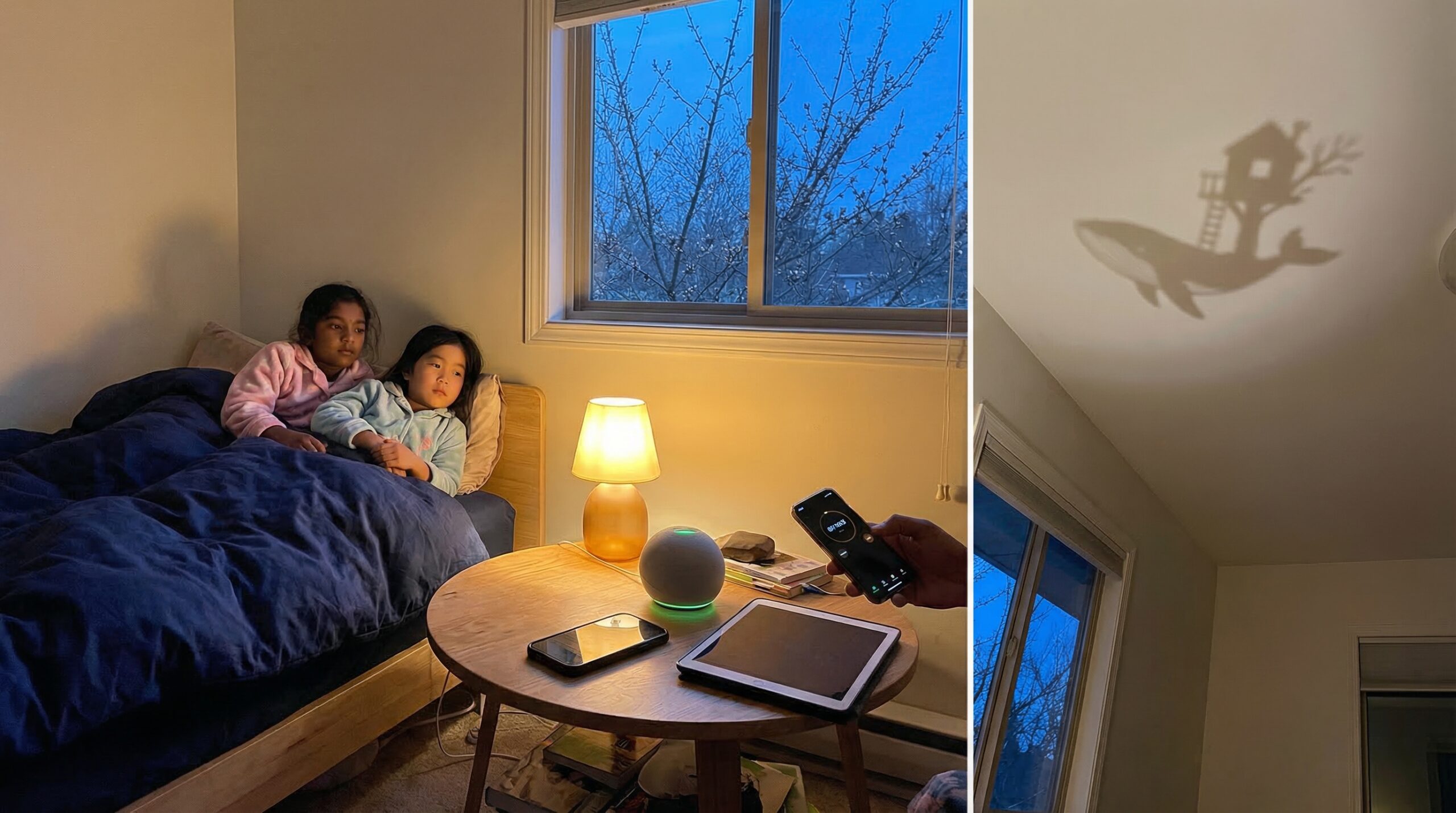
Audio-first bedtime routine puts spoken stories first at night. Parents use short, calm audio to lower cognitive load and spark imagination. It asks little of working memory. It invites big inner pictures. In fact, a 2024 experimental study found that listening to audio can significantly enhance mental imagery, producing higher vividness and larger imagined distances than silence.
Why audio-first helps the brain
Listening reduces visual clutter. Screens add bright images, motion, and choices. Those extras compete for attention. Research shows that audio-only content can lead to lower cognitive strain; a 2024 review found that audio-only content at 2× speed led to 12% lower comprehension scores compared to standard audio-visual content, highlighting the importance of audio in improving comprehension.
Therefore an audio-first bedtime routine removes those demands. The brain keeps plot, feelings, and new words instead of juggling pixels. So comprehension becomes easier and more joyful, as noted in a 2024 mixed-methods study that shows viewers reported significantly higher cognitive load when sound was turned off while watching subtitled videos.
Imagination grows with audio
Audio hands the paintbrush to the child. Instead of a finished picture, they build one inside. For example, listeners often describe scenes with color, sound, and even smell. This is supported by the findings of the aforementioned study, which demonstrates how audio can enhance imagination and cognitive engagement.
Because audio requires mental imagery, kids form richer inner worlds. That inner scene supports creativity, pretend play, and personal meaning. It is wonderfully powerful and often surprising.
Sleep and developmental fit
Also, audio avoids blue light. Light from screens delays melatonin. Consequently a calm voice becomes a wind-down signal.
Additionally, audio fits different ages. For babies it soothes. For preschoolers it scaffolds play. For school-age kids it supports complex stories and inference. Adjust length and detail for age and bedtime.
Language, attention, and inclusion
Hearing well-narrated stories grows vocabulary and sentence rhythm. For pre-readers and children with reading challenges, audio levels the playing field. It is inclusive and immediate. A national survey found that 81% of U.S. podcast listeners multitask while listening, indicating a preference for audio content that allows for reduced cognitive load during other activities.
Common ways parents implement it
Many families choose a single 10 to 15 minute audio each night. Then they dim lights and remove screens. Next they let the voice lead and the imagination follow.
- Pick a calm audio under 15 minutes.
- Use a single short cue to signal wind-down.
- Keep narrators soothing and steady.
Practical cautions and narrator notes
Avoid loud effects or frantic pacing. Also avoid interactive apps that pull attention back to the screen. Monitor volume and content quality.
Therefore offline playback or airplane mode helps keep the night calm. Finally, celebrate attempts more than polish when children share their images.
A personal note and a tiny dare
I began this because my child could not switch off. Ten minutes of audio changed the evening. It became quieter. Imagination bloomed. Bedtimes shortened.
So here is a small dare: tonight try one Storypie audio and listen for the first sentence your child paints in their head. That moment is gold.
To explore calm, short audio choices open the Storypie app. It is a gentle place to start a new ritual.