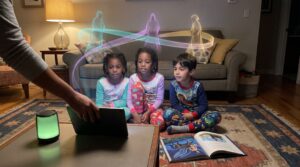
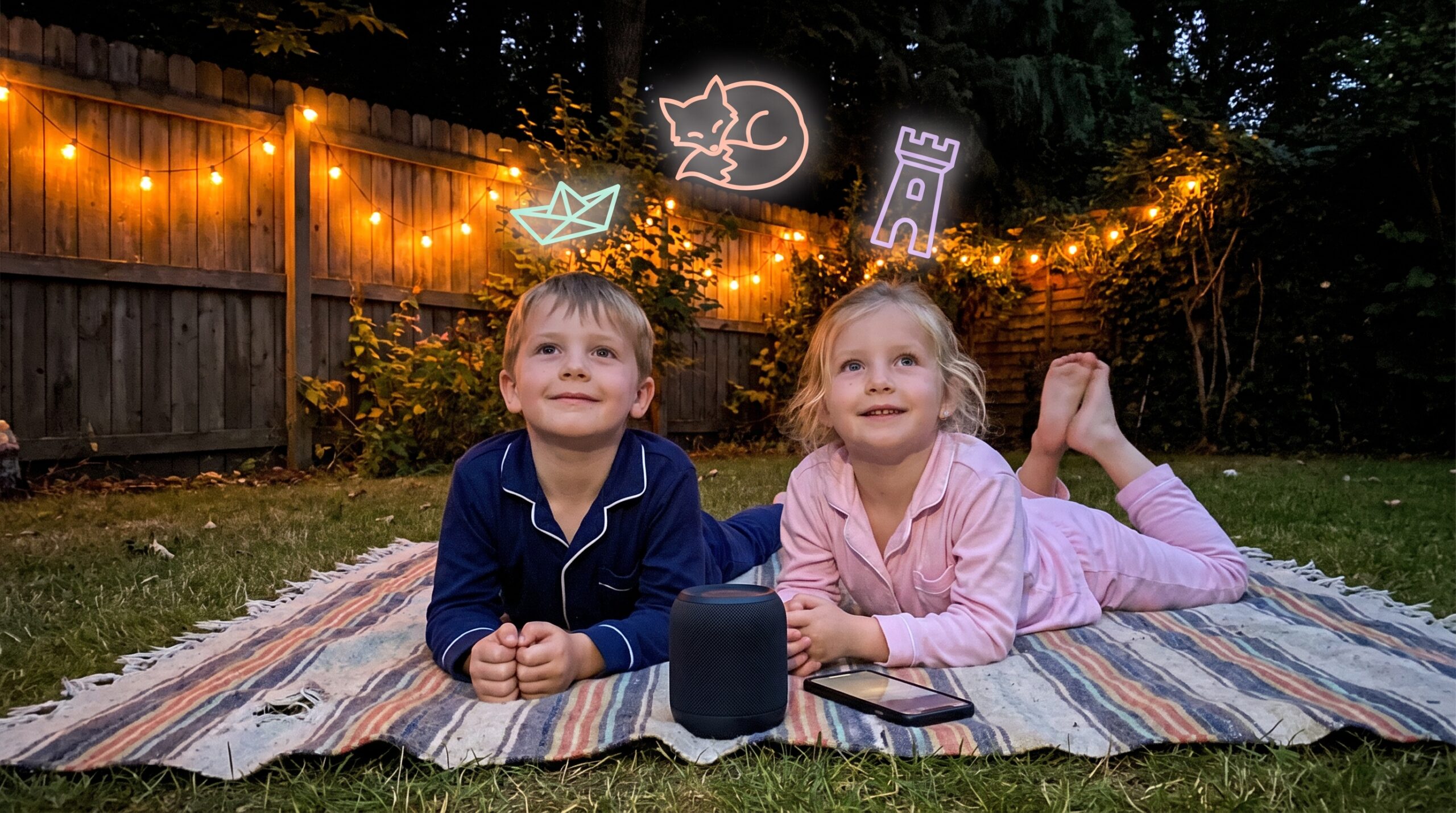
Audio first cognitive load makes room for wonder. When children listen, we remove visual clutter and invite their minds to draw pictures.
Why audio first cognitive load matters
Screens push bright motion, text, and fast cuts. As a result, working memory fills fast. By choosing audio first cognitive load drops. Children can follow plot, hear language, and imagine freely. A randomized trial published in April 2026 found that participants who listened to audio summaries achieved 30% higher retention rates compared to those who studied text; their cognitive load was significantly lower, and engagement ratings were 25% higher in the audio group. This highlights the effectiveness of audio formats in enhancing retention and reducing cognitive load, supporting the audio-first approach, according to Synapse Social.
What listening builds
First, listening lifts language. Kids pick up new words, rhythms, and story patterns when they hear them. A 2023 meta-analysis of the imagination strategy in multimedia learning found positive effects: learning performance improved significantly, particularly when learning material was visible during imagination tasks. This illustrates the importance of imagination in learning, which can be effectively supported by audio-first strategies.
Next, imagination grows. A spoken line like “the lake glimmered” calls for an inner picture. That small act of imagining strengthens creativity and mental imagery. In fact, a 2024 study found that cognitive load can impair brain functioning during auditory and linguistic stimuli processing, further emphasizing the importance of managing cognitive load to enhance engagement with audio content.
Also, attention and pacing improve. Audio keeps a steadier pace than quick videos. Children get time to predict and process cause and effect. A 2024 EEG-based study demonstrated that audio characteristics can reliably estimate cognitive load, reinforcing the importance of audio-first strategies.
Sleep and calm routines
Screens can delay sleep with bright light and fast changes. Instead, a short, gentle story can lower arousal and help children settle.
For summer nights, try a 10-minute Storypie audio to replace a bedtime video. It is portable, soothing, and simple to use.
Where audio shines
- Bedtime: A calm story eases the move to sleep.
- Car rides: Hands-free listening keeps imaginations busy.
- Quiet play: Audio invites free play and story extension.
- Shared listening: Co-listening supports bonding and comprehension.
Accessibility and safety
Audio-first formats widen access for children with visual impairments, dyslexia, or emerging readers. Listening levels the playing field and offers a fair route into stories.
Also, choose calm, age-appropriate narration. Keep devices dim or in airplane mode at night. Prefer external speakers for shared listening and keep volumes safe.
Simple next steps
Try a 10-minute Storypie audio tonight and notice focus and imagination shift. Pause after the story. Ask a short question about the picture your child built and enjoy conversation bloom.
For a gentle start, try a short Storypie audio now: Try a short Storypie audio.
Finally, audio-first listening is a gentle reset. By lowering cognitive load we make room for language, calm, and a little magic.